How a Waiter Crossing La Cienega Boulevard Built a Hospitality Empire
Three decades after a simple elevator delivery, Nobu's founders are reshaping Egypt's Mediterranean coast with hotels, residences, and the quiet logic of organic growth.
The Elevator Pitch
The apartment was on La Cienega Boulevard, tenth floor, late 1980s. Across the street stood a newly opened Japanese restaurant, and each evening a waiter would cross the busy Los Angeles thoroughfare, place a tray of food into the elevator, and send it upward. The man waiting above, Robert De Niro, had stumbled onto something rare: a Japanese kitchen that felt different, one that moved with what he would later describe as a certain sexiness, a pizazz he had never encountered on the East Coast.
It was the beginning of an origin story that has since stretched across three decades and nearly sixty locations worldwide. Today, that story arrives at a new inflection point, not in New York or London or Tokyo, but along the turquoise edge of Egypt's Mediterranean coast, where Nobu Hospitality is staking its most ambitious claim yet: three integrated developments encompassing restaurants, hotels, and branded residences from the shoreline to the capital.
The waiter's restaurant was Matsuhisa, still operating in the same spot today. Its owner, chef Nobu Matsuhisa, had honed a singular style in Lima, fusing Japanese discipline with Peruvian ingredients. When a British film director introduced the two men, De Niro spent thirty minutes in conversation and made a promise: if the chef ever wanted to open in New York, he should call. It took a few years of persuasion, but in 1994 the first collaborative restaurant opened its doors. What followed was not a master plan but a cascade of invitations, each one revealing a new dimension of what the Nobu name could anchor.
The Credibility Economy
De Niro traces the pivot from restaurants to hotels to a single recurring question. Developers kept asking Nobu to join their projects, to lend the brand's presence to shopping centers, hotel lobbies, residential towers. He began to wonder why. The answer, he realized, was the same logic that governs Hollywood casting: bankability. If a name adds credibility, it earns the right to participate more fully in the value it creates.
The proviso evolved accordingly. Nobu would open a restaurant, but only if it could also develop a hotel. Later, residences. Then entire neighborhoods. Meir Teper, cofounder alongside De Niro and the chef, describes the transformation as less strategic blueprint than opportunistic rhythm. A hotel in Toronto led to a request for branded residences in the same tower. Success generated momentum, which generated scale.
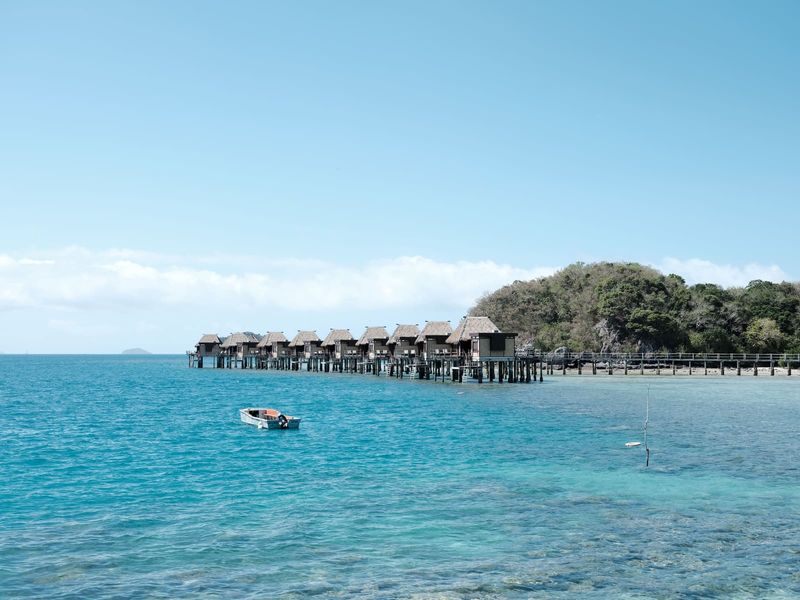
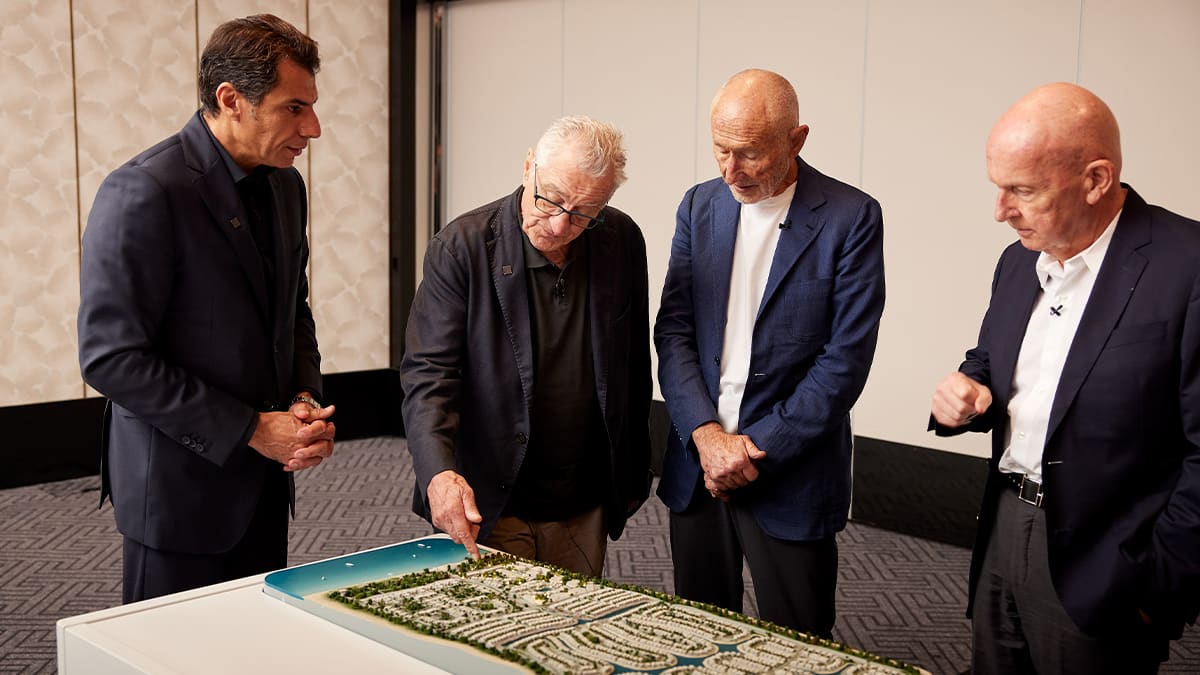
Egypt represents the fullest expression of that rhythm. In partnership with SODIC, a Cairo-based developer with nearly three decades of experience building integrated communities, Nobu is creating three distinct destinations. The first milestone arrived this summer: a restaurant in the Eastown District of New Cairo, designed to introduce the brand ahead of a hotel slated to open in 2027. On the Mediterranean coast, within SODIC's flagship OGAMI development, Nobu Hotel and Residences North Coast will anchor a 440-acre beachfront enclave. A third hotel and residential complex is planned for New Zayed, west of Cairo, roughly twenty minutes from the Pyramids and the Grand Egyptian Museum.
Timing and Transformation
Trevor Horwell, CEO of Nobu Hospitality, frames the Egyptian expansion as a bet on a destination at a moment of profound change. The introduction came through Aldar Properties, a major shareholder in SODIC, during discussions around a separate luxury project on Saadiyat Island in Abu Dhabi. Aldar suggested a meeting with SODIC's leadership. Horwell flew to Egypt, toured the north coast, and recognized a landscape in the middle of a metamorphosis. He had lived in the country years before; the contrast was striking.
The north coast, historically a summer retreat for Cairo's upper middle class, is being reengineered into a year-round luxury destination. Infrastructure has arrived in waves over the past decade: new airports, chartered flights from Europe and the Gulf Cooperation Council nations, road networks that compress travel time. Ayman Amer, general manager of SODIC, notes that room rates along the coast have climbed from two or three hundred dollars per night to over a thousand in the span of two years, driven by an influx of foreign investment from the United Arab Emirates, Qatar, and beyond.
Teper sees the potential for a fundamental shift in how the region is perceived. The Sahel area of the north coast, where Nobu is developing residences, has long been considered a six-month destination. The ambition is to stretch that window into a full calendar, to create a place where villas and houses are not merely seasonal escapes but permanent addresses.
Architecture as Synthesis
The design approach mirrors the culinary philosophy that launched the brand: respect for Japanese form, openness to local material and context. Nobu has enlisted a New York architect who has worked on several of the group's properties worldwide. That architect, in collaboration with SODIC, is integrating Egyptian materials and vernacular elements into the signature Nobu aesthetic, a visual language that balances minimalism with warmth, restraint with sensuality.
Horwell emphasizes that success in any new market depends on blending into the local culture rather than imposing a template. Nobu has practiced this in Abu Dhabi, in Tokyo, in Malibu. Egypt demands the same sensitivity, particularly on a coastline that remains relatively untouched compared to more developed Mediterranean stretches. The group expects to be the first major international hospitality brand to establish a significant presence there; others will likely follow.
The scale of the Egyptian project marks a new chapter not just in geography but in ambition. Nobu is no longer simply placing restaurants inside other developers' projects or even building standalone hotels. It is shaping entire mixed-use communities, neighborhoods where dining, lodging, and residence converge under a single brand identity. The evolution from restaurant to hotel to residential tower to integrated district has unfolded over thirty years, each step building on the credibility and momentum of the last.
From Elevator to Empire
The narrative arc bends back to that elevator on La Cienega Boulevard. A waiter crossing the street, a tray of Japanese-Peruvian fusion fare, a Hollywood actor who recognized something rare and acted on instinct. De Niro's initial pitch to the chef was simple: this will work in New York or London. The instinct proved correct, but the vision has grown far beyond those early coordinates.
Egypt's Mediterranean coast, with its new airports and rising room rates and foreign capital, represents a frontier for a brand that has spent three decades learning how to move between cultures without losing coherence. The partnership with SODIC brings local expertise and infrastructure; Nobu brings a name that has become synonymous with a particular kind of understated luxury, one that prizes craft and subtlety over spectacle.
The expansion into Egypt also reflects a broader shift in the geography of luxury hospitality. The Gulf states have emerged as major players, not just as destinations but as sources of capital and development expertise. Egypt, with its coastline and proximity to Europe and the Middle East, sits at the intersection of those flows. The timing, for Nobu, aligns with a moment when the country is investing heavily in tourism infrastructure and when international investors are paying attention.
The Logic of Organic Growth
Teper's description of the company's evolution, sometimes it just happens without planning, captures a certain entrepreneurial pragmatism. Nobu has not followed a rigid expansion strategy so much as responded to opportunities that align with its core strengths. The question has always been whether a location can support the brand's ethos, whether the local context allows for the kind of synthesis that defined the first restaurant in Tribeca.
Egypt, by that measure, presents both challenge and opportunity. The country's hospitality market is less mature than those in Europe or North America, but that immaturity also means room for definition, for setting standards rather than competing within established hierarchies. The north coast, in particular, offers a relatively blank canvas, a stretch of Mediterranean shoreline that has not yet been carved into the luxury resort enclaves that line much of southern Europe.
The architecture, the partnerships, the phased rollout across three sites, all point to a long-term commitment rather than a speculative gamble. Nobu is betting that Egypt's transformation is durable, that the infrastructure investments and foreign capital inflows represent a structural shift rather than a temporary boom. The brand's track record suggests a cautious approach to expansion, a preference for markets where it can establish a foothold and build over time rather than chasing rapid scale.
A New Chapter, Same Instinct
Three decades after that first New York opening, the fundamentals remain unchanged. Nobu still operates on the principle that hospitality is about synthesis, about finding the balance between global consistency and local character. The menu at a Nobu restaurant in Cairo will feature the same black cod miso that appears in London or Los Angeles, but it will also reflect Egyptian ingredients and tastes. The hotels will carry the same design language, the same attention to material and light, but they will be built with local stone and staffed by local teams.
The Egyptian expansion is ambitious in scale but familiar in logic. It is the same instinct that led De Niro to recognize something special in a Japanese restaurant on La Cienega Boulevard, the same instinct that persuaded a chef to leave Los Angeles for New York, the same instinct that turned a single restaurant into a global portfolio. The waiter who crossed the street and pressed the elevator button could not have known he was setting in motion a hospitality empire, but the man on the tenth floor had a hunch. And now, that hunch is building villas on the Mediterranean.