Where Every Meal Is Safe: Inside America's First Entirely Gluten-Free Hotel
In Monroe, Louisiana, one property has rewritten the rules of hospitality for travelers with celiac disease and gluten sensitivity.
A Breakfast Without Compromise
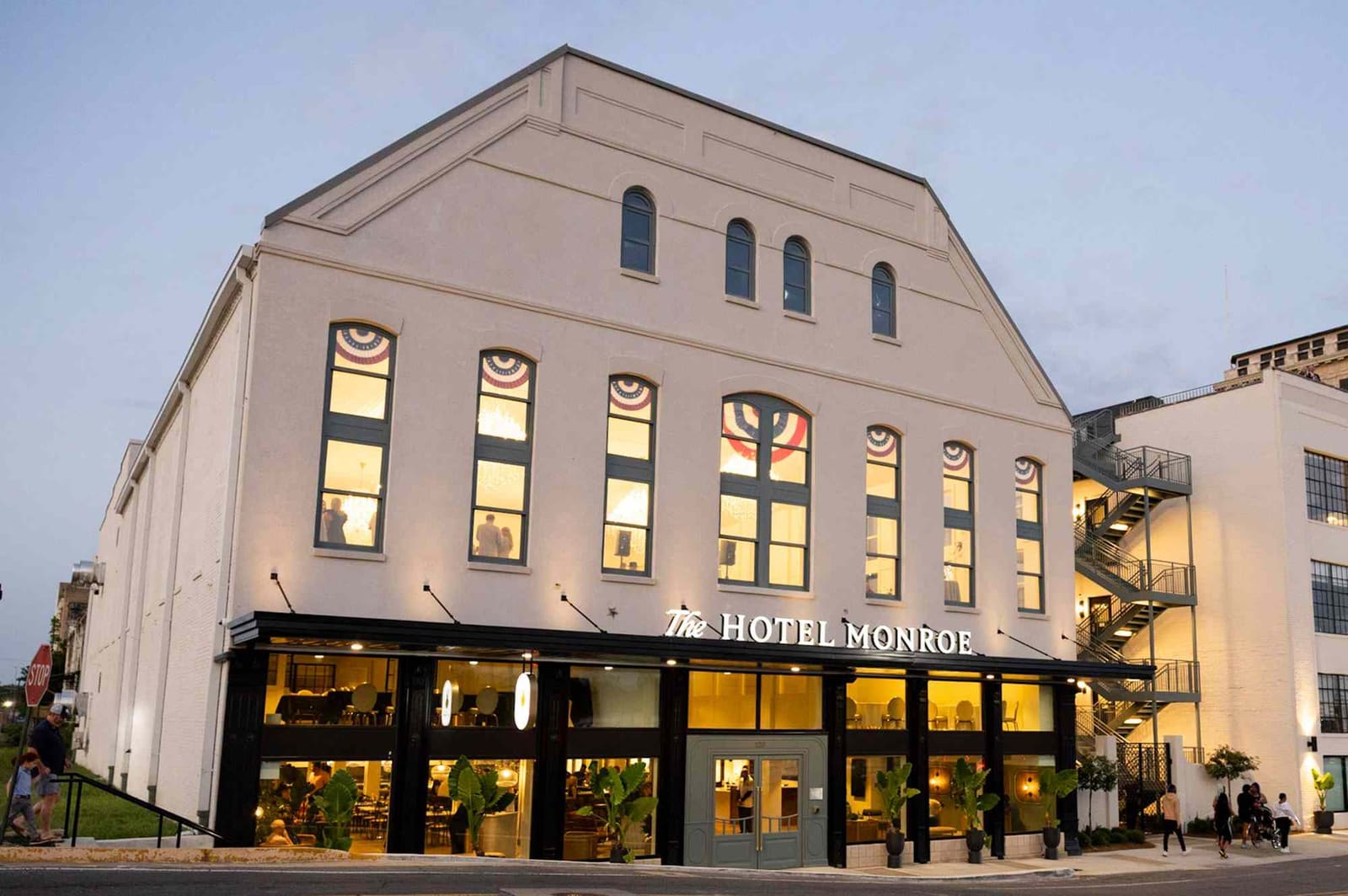
The morning light filters through tall windows onto a plate of beignets, their powdered-sugar coating settling like snow on dark coffee. In most Gulf South kitchens, these pillows of fried dough carry the unmistakable heft of wheat flour. Here, at the Hotel Monroe in Monroe, Louisiana, they do not. Neither does the beer at the bar, the gravy on the evening's chicken, nor the roux that forms the base of a seafood gumbo. The property has built its entire identity around a single, uncompromising principle: zero gluten, anywhere.
For the estimated three million Americans living with celiac disease, and millions more navigating gluten sensitivity, dining away from home remains an exercise in vigilance. Cross-contamination lurks in shared fryers, cutting boards, and even the air of a conventional bakery. Most hotels offer gluten-free options. The Hotel Monroe has gone further, becoming the first lodging in the United States to eliminate wheat, barley, and rye from its entire operation.
The Architecture of Absence
Creating a gluten-free environment is less about addition than subtraction, and the work begins long before a guest checks in. Every supplier must provide documentation. Every ingredient arrives with a certification trail. The kitchen operates under protocols borrowed from medical-grade food service, with separate storage, dedicated equipment, and staff trained to recognize the molecular presence of gluten in unexpected places: soy sauce, salad dressings, the malt in certain vinegars.
The result is not a menu of compromises but a full spectrum of regional cuisine, reengineered. Cornmeal and rice flour stand in where wheat once did. Tamari replaces standard soy. The beer list features only brews made from sorghum, millet, or rice. These are not approximations of familiar dishes but fully realized versions that happen to lack a particular protein. The difference matters to those for whom a trace amount can trigger an immune response lasting days.
Beyond the Plate
The gluten-free mandate extends past the dining room. In-room snack baskets contain only certified products. The complimentary breakfast spread, often a minefield for travelers with dietary restrictions, offers granola, muffins, and pastries that mirror their wheat-based counterparts in texture and flavor. Even the communion wafers available through the concierge, a detail that speaks to the thoughtfulness of the operation, are gluten-free.
This level of control requires more than good intentions. It demands a supply chain willing to meet exacting standards, a culinary team capable of adapting techniques developed over centuries around a single grain, and a business model that accepts the higher costs associated with specialty ingredients. That the hotel exists at all suggests a shift in how the hospitality industry understands dietary needs, not as niche requests to be accommodated but as fundamental aspects of guest experience.
Monroe as Destination
Monroe itself sits in the northeastern corner of Louisiana, a city more often passed through than visited, known locally for its antebellum architecture and as a stop along the Mississippi flyway. The hotel's arrival has given travelers with celiac disease a reason to linger. Online forums devoted to gluten-free travel now list Monroe alongside larger cities, and the property has drawn guests from across the country who have never before stayed in a hotel where they could eat freely from any menu, order room service without interrogation, or attend a banquet without anxiety.
The broader hospitality industry has taken notice. While dedicated gluten-free restaurants have proliferated in major metropolitan areas over the past decade, hotels have been slower to adapt, constrained by scale, cost, and the complexity of managing multiple food outlets under one roof. The Hotel Monroe demonstrates that total elimination, rather than careful segregation, may be the more elegant solution. It removes the cognitive burden from the guest and the liability from the operator.
The Economics of Exclusion
Operating a fully gluten-free hotel is not without financial challenge. Specialty flours cost several times more than all-purpose wheat. Training staff requires ongoing investment. The guest base, while loyal and underserved, remains smaller than the general travel market. Yet the property has found an audience willing to pay a premium for certainty. In an industry built on experience, the ability to offer complete peace of mind has proven to be a differentiator worth the operational complexity.
The model also opens questions about the future of niche hospitality. If a hotel can successfully eliminate gluten, what other dietary frameworks might support an entire property? Could kosher-certified hotels, or facilities built around plant-based cuisine, follow the same blueprint? The success of the Hotel Monroe suggests that the answer may lie not in trying to be everything to everyone but in serving a specific community exceptionally well.
A New Standard
The presence of a completely gluten-free hotel in the American hospitality landscape marks a quiet turning point. For decades, travelers with celiac disease have navigated a world designed around grains they cannot safely consume, carrying their own food, researching restaurants obsessively, or simply accepting the risk of illness. The Hotel Monroe offers an alternative: a space where the default is safe, where every item on every menu is available without modification or explanation.
It is a model built on absence, on the deliberate removal of a ubiquitous ingredient, and in that absence, a kind of freedom emerges. The freedom to order breakfast without listing restrictions. To attend a wedding reception and eat the same meal as every other guest. To travel without the weight of contingency planning. For a small but growing number of travelers, that freedom is worth the journey to Monroe.