In Niseko, the Tax Now Rises With the Room Rate
Three charges on a Niseko winter holiday changed in 2026: Kutchan's town tax rose to 3 per cent of the room rate, Hokkaido added a prefectural levy, and the peak lift pass went to ¥13,500. For a guest in a premium room, the tax line alone is up about 66 per cent a night.
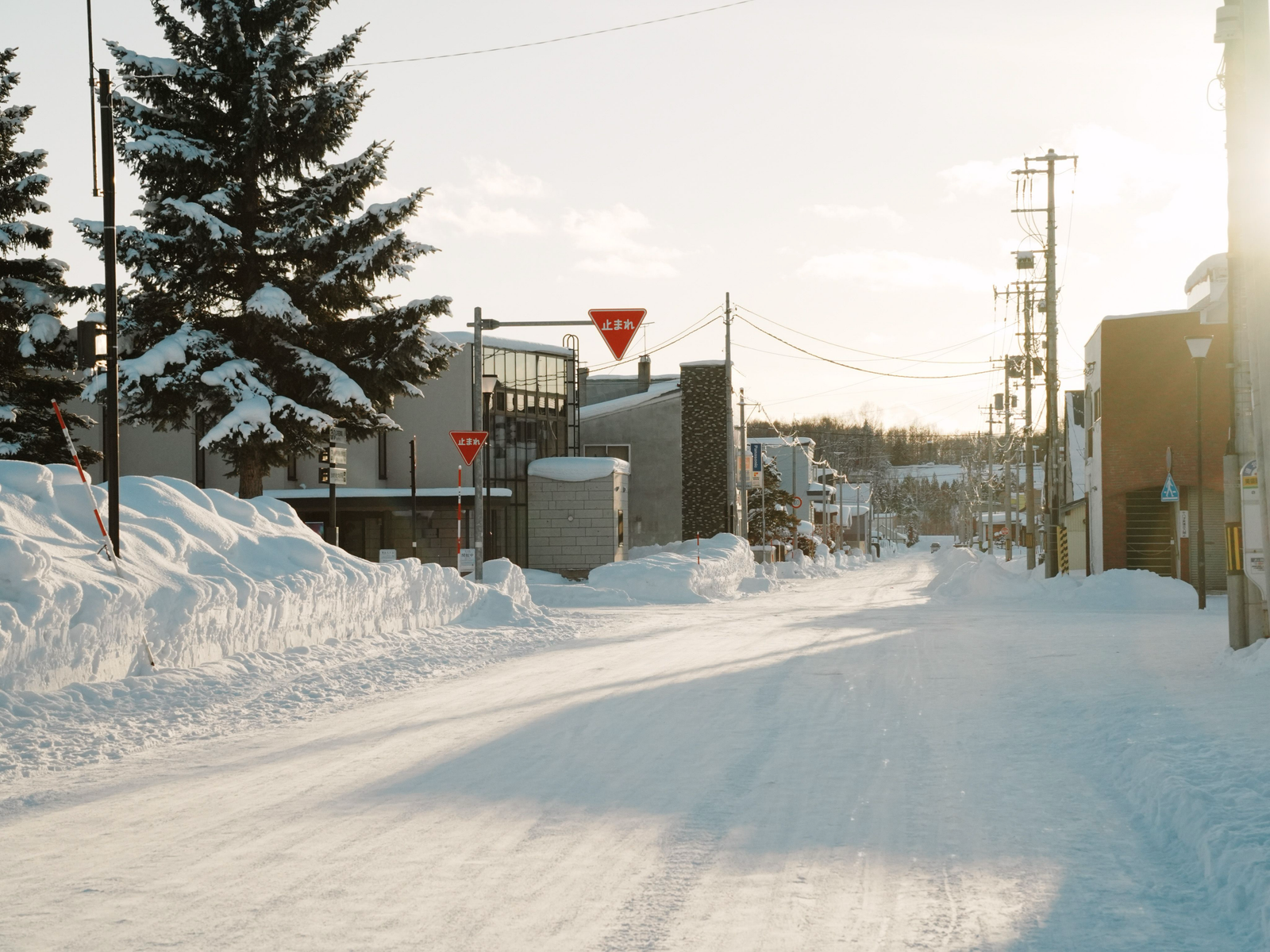
A guest checking into a Hirafu hotel this winter will pay two accommodation taxes they did not pay eighteen months ago, on a base that has itself moved. The structure is worth understanding before the bill arrives, because Niseko has changed the way it charges rather than simply changing the number.
Kutchan Town introduced Japan's first percentage-based accommodation tax on 1 November 2019, at 2 per cent of the room charge. On 1 April 2026 that rate rose to 3 per cent. The town's own tax page gives the reason plainly: the increase was timed to align with Hokkaido's new prefectural accommodation tax, which started the same day, with Kutchan acting as collection agent for both. The prefectural tax is tiered by room rate, at ¥100 a night up to ¥19,999, ¥200 from ¥20,000 to ¥49,999, and ¥500 above ¥50,000.
This matters geographically. Hirafu and Outer Hirafu sit inside Kutchan Town, a separate municipality from Niseko Town, and together they account for the majority of the resort's accommodation. Most visitors who say they are going to Niseko are taxed by Kutchan.
Niseko Town, which covers Annupuri and the Niseko Town side, is on a different timetable and a different system. It introduced an accommodation tax on 1 November 2024 on a fixed scale that topped out at ¥2,000 a night for rooms above ¥100,000. Its council passed an ordinance on 18 December 2025 replacing that scale with a percentage basis, effective 1 November 2026 subject to ministerial consent. C9 Hotelworks, whose market review published on 2 October 2026 flagged the change, gives the new rate as 3 per cent.
What the Change Costs a Premium Guest
The arithmetic is simple and the direction is one-way. C9 reports Niseko's average daily rate in February 2026 at ¥156,773, roughly US$988. Under the old Kutchan regime, a night at that rate carried ¥3,135 in accommodation tax. From April 2026 it carries ¥4,703 in town tax plus ¥500 in prefectural tax, or ¥5,203. That is an increase of about ¥2,068 a night, close to 66 per cent on the tax line.

Niseko's guests are also staying longer, which multiplies the effect. The Niseko winter report for 2025/26 found that 87.6 per cent of international overnight guests stayed four nights or more, and that the share staying eight nights or longer rose from 21.7 per cent to 24.5 per cent. Across eight nights at the February rate, the tax line moves from about ¥25,100 to about ¥41,600.
The lift pass moved in the same season. The Niseko United All Mountain day pass for 2026/27 is ¥13,500 at the counter during the peak window of 24 December 2026 to 28 February 2027, and ¥12,600 outside it. C9 records these as rises of 12.5 and 5 per cent respectively, which implies a single ¥12,000 rate the previous season. Eight peak days now cost ¥108,000 against ¥96,000 a year ago.
Taken together, a visitor booking eight peak nights in a premium Hirafu room with eight days of skiing is paying roughly ¥28,500 more in tax and lift access than the same trip a year earlier, before any movement in the room rate itself. Set against the roughly ¥580,000 the Niseko winter report puts on average inbound spend per visit, of which accommodation is 55 per cent, that is an increment of about five per cent on the total trip.
Why the Room Rate Is Moving Too
The tax base is not holding still. The winter report found that more than 80 per cent of Niseko operators raised prices for 2025/26 and none lowered them, and that nearly two thirds reported revenue growth of at least 5 per cent. Land has moved further: Hirafu land prices rose about 70 per cent between 2020 and 2025, according to an AFP report in March 2026 citing local agents, with Kutchan's winter foreign population now near 3,000 people from some 70 countries and 1,200 units of foreign worker housing approved in autumn 2025.
A percentage tax compounds all of this automatically. When Kutchan designed its system in 2019, that was the stated advantage. It also means the resort's premium segment now carries a charge that climbs with every rate rise, in the same year that 792 new hotel keys arrived looking for guests at the top of the market.
What It Does Not Change
Very little, on the evidence available. A guest paying close to US$1,000 a night for a February room in Hirafu is unlikely to reconsider over ¥2,068. The long-stay share grew in the season that Kutchan was already charging 2 per cent and operators were raising rates across the board, and the United States became Niseko's largest international source market by overnight guests in the same year, with 40,504 guests, up 15.2 per cent.
Price sensitivity in this market, if it shows at all, will show at the edges: in the shoulder weeks, in the mid-market properties, in the families who were deciding between Niseko and Hakuba. It will not show in the suites.
The more interesting consequence is where the money goes. Kutchan states that its accommodation tax funds tourism promotion and community development, and the town raised the collection commission paid to operators from 2.5 to 3.5 per cent for the five years from April 2026 to compensate them for the administrative work. A resort that has just added 46 per cent to its hotel inventory, and that BriefAsia has argued needs its shoulder seasons to work, now has a revenue line that scales with its own winter success and a stated mandate to spend it on exactly that problem.
What to Watch
Whether the internal affairs ministry consents to Niseko Town's percentage switch on schedule for 1 November 2026, and at what rate the ordinance is finally approved. Whether Kutchan publishes its accommodation tax receipts for the year to March 2027, which would show the real size of the base. And whether the 2026/27 lift pass structure, which splits one ¥12,000 rate into a peak and a regular tier for the first time, is followed by hotels doing the same thing to their own calendars.
Sources. Kutchan Town accommodation tax pages (official); Niseko Town accommodation tax ordinance revision notice (official); Hokkaido prefectural accommodation tax schedule as published by Niseko operators; C9 Hotelworks Niseko Tourism and Property Market Review 2026 (2 October 2026); Uchi Insights analysis of the Niseko winter report (3 July 2026); Niseko United 2026/27 lift pass schedule; AFP report on Niseko land prices and foreign workers (21 March 2026).