A New Chapter Unfolds on the Nile
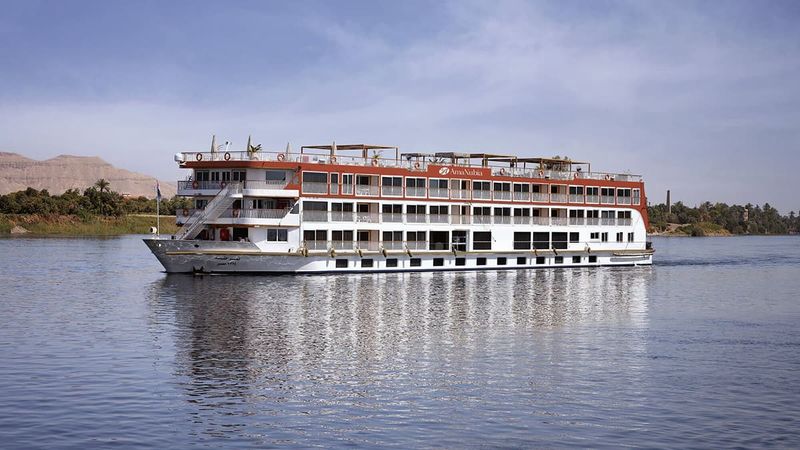
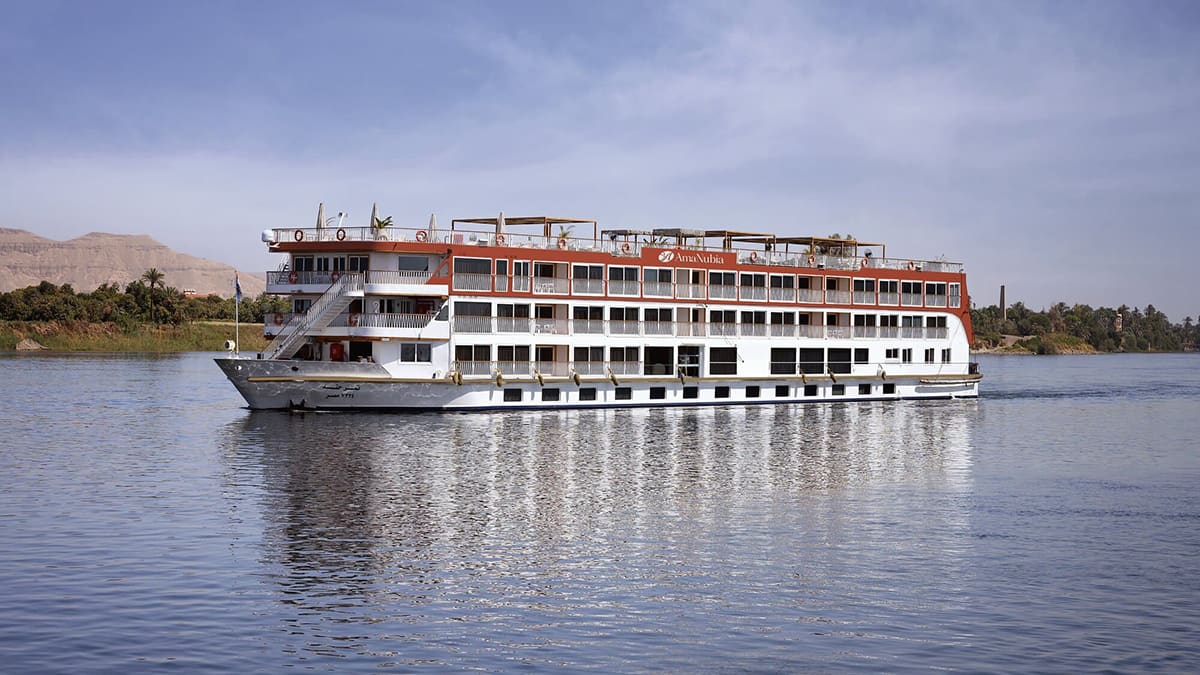
AmaWaterways prepares to unveil AmaNubia this November, a 236-foot vessel designed to carry travelers through Egypt's layered history in intimate, carefully curated comfort.
The River as Portal
There is a particular quality to the light along the Nile in late afternoon, when the sun slants low across sandstone temples and the water takes on a metallic sheen. It is in these hours that the river feels less like a geographical feature and more like a threshold, a passage between epochs. This November, AmaWaterways will introduce AmaNubia, a 236-foot river ship conceived not merely as transport but as a floating lens through which to observe Egypt's millennia-spanning narrative. At Global Chic Voyage, we've watched river cruising mature from utilitarian ferry service into an art form, and the Nile remains one of the few waterways where the vessel and the destination exist in genuine dialogue.
The ship will accommodate seventy-six guests across twenty-three staterooms and fifteen suites, a deliberate constraint that privileges intimacy over scale. River cruising, particularly in Egypt, has long benefited from this calculus: fewer passengers mean quieter mornings at temple doorways, more attentive service, and the kind of unhurried conversation that unfolds over dinner when strangers become co-conspirators in discovery. The owner's suite, spanning 525 square feet on the upper deck, occupies the full beam of the vessel, a spatial generosity that allows for panoramic views of the riverbanks as they shift from cultivated green to desert ochre.
Design as Translation
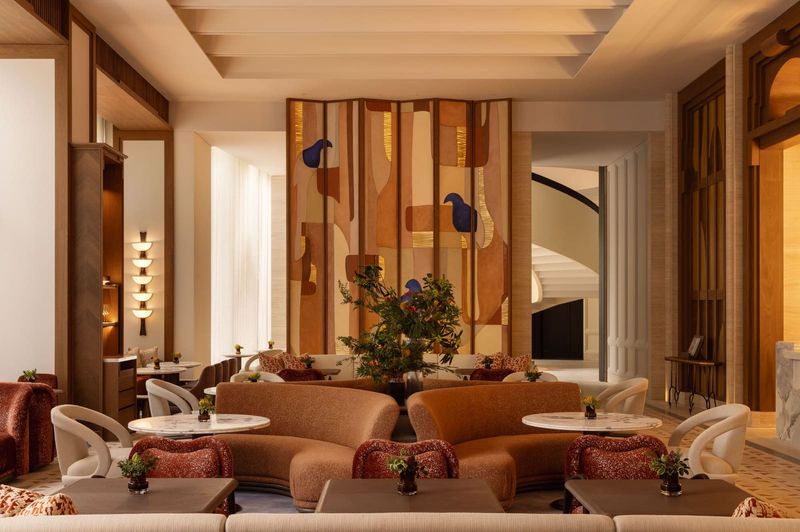
Interior design on river ships often defaults to European classicism, a safe palette of cream and brass. AmaNubia takes a different approach, drawing on the textures, hues, and geometric motifs of pharaonic art. This is not theme-park pastiche but a more thoughtful translation: ochre walls that echo the sandstone of Karnak, cobalt accents reminiscent of lapis inlay, carved screens that nod to mashrabiya without mimicking it outright. The result is a ship that feels contextually grounded, a quality rare in the river-cruise sector, where vessels are often built to serve multiple itineraries and thus remain visually neutral.
The layout itself departs from AmaWaterways' earlier Nile vessel, AmaLilia, which debuted in 2024. While both ships share a 236-foot length and a similar suite of amenities, AmaNubia reconfigures public spaces to encourage different rhythms of movement. The sundeck is more expansive, the wellness area repositioned to capture morning light, the Chef's Table dining venue given a more secluded perch. These are subtle shifts, but they matter; the choreography of a river cruise is largely dictated by how guests circulate through shared and private zones, and AmaNubia's design appears to favor contemplation over congregation.
The Itinerary as Argument
River cruises succeed or fail on the strength of their itineraries, and the Secrets of Egypt and the Nile program makes a clear argument: that the most resonant way to encounter Egypt is through accumulation, through the layering of site upon site until patterns emerge. The journey includes the expected landmarks, the Great Pyramids of Giza, the Sphinx, Luxor Temple, Karnak Temple, the Valley of the Kings, but it also folds in less familiar experiences. A private tour of Abdeen Palace in Cairo, for instance, offers a glimpse into Egypt's more recent royal history, a counterpoint to the pharaonic focus that dominates most itineraries. The Grand Egyptian Museum, still in its early years of operation, provides a curated distillation of artifacts that might otherwise require days of wandering through older institutions.
Optional extensions allow travelers to push beyond the Nile corridor. A visit to Abu Simbel, Ramses II's colossal temple complex on the shores of Lake Nasser, requires an early departure but rewards with scale and audacity: four seated pharaohs, each more than sixty feet tall, carved directly into a cliff face. High tea at the Sofitel Legend Old Cataract in Aswan, the Belle Époque hotel where Agatha Christie drafted Death on the Nile, offers a different kind of immersion, one rooted in colonial-era romanticism rather than ancient grandeur. Further afield, extensions to Alexandria, Dubai, and Jordan suggest that AmaWaterways is positioning the Nile cruise as the anchor of a broader Middle Eastern circuit, a strategy that acknowledges how contemporary luxury travelers construct their journeys: not as isolated trips but as thematic arcs spanning multiple countries and cultural contexts.
The Egyptologist as Interpreter
One of the defining features of AmaWaterways' Nile program is the presence of dedicated Egyptologists on every sailing. This is not incidental. Egypt's archaeological sites are dense with iconography, inscriptions, and architectural codes that remain opaque without informed interpretation. A wall relief at Karnak, for example, might depict a pharaoh smiting enemies, but the composition follows strict conventions: the king's stance, the arrangement of captives, the presence or absence of certain deities, all of these encode political and religious messages that require decoding. An Egyptologist provides that key, transforming what might otherwise be a series of impressive but mute monuments into a legible historical text.
Onboard lectures extend this educational dimension, offering context that enriches subsequent site visits. Topics might range from the mechanics of mummification to the theology of the afterlife, from the engineering of pyramid construction to the politics of the New Kingdom. At Global Chic Voyage, we've found that the best luxury travel experiences are those that balance sensory pleasure with intellectual engagement, and the Egyptologist-led programming on AmaNubia appears designed to achieve precisely that balance.
The Case for River Travel in Egypt
River cruising in Egypt has practical advantages that extend beyond comfort. The Nile functions as a linear spine connecting major archaeological sites, which means that a ship-based itinerary eliminates the need for long overland transfers. You dock within walking distance of temples, board the vessel after a morning of exploration, and wake the next day at a new site. This efficiency is compounded by the security protocols inherent to river cruising: excursions are organized, groups are accompanied, and the ship itself serves as a stable base, a floating hotel that moves with you rather than requiring nightly repacking.
There is also the matter of perspective. Viewing Egypt from the river offers a vantage point that ground-based travel cannot replicate. You see the feluccas with their white sails, the water buffalo standing in the shallows, the villages where mud-brick houses cluster along the banks. You observe how the cultivated strip narrows and widens, how the desert presses close in some stretches and recedes in others. This is the Egypt that existed before modern infrastructure, the Egypt of seasonal floods and agricultural rhythms, and it remains visible from the river in ways that highways and airports obscure.
Partnership and Continuity
AmaWaterways has anchored its Nile program with partnerships designed to ensure continuity of experience. Guests begin with a stay at the Four Seasons Hotel Cairo at The First Residence, a property on the Nile's west bank that extends the level of service and attention to detail one expects onboard. This is a deliberate choice: the transition from land to water should feel seamless, not jarring, and the Four Seasons provides that bridge. Similarly, the optional extensions to high-end properties like the Sofitel Legend Old Cataract signal a commitment to curating the entire journey, not just the river segment.
Catherine Powell, CEO of AmaWaterways, has spoken of Egypt's renewed appeal, a resurgence driven by travelers seeking destinations that combine historical depth with cultural richness. The Nile, she notes, offers a rare combination: a waterway of genuine beauty and a corridor through one of the world's most storied civilizations. AmaNubia, in this context, is both a response to demand and a bet on Egypt's enduring magnetism.
Looking Ahead
The launch of AmaNubia this November represents more than the addition of a single vessel to AmaWaterways' fleet. It signals a broader recalibration within luxury river cruising, a shift toward ships that are not merely comfortable but contextually resonant, that engage with their destinations at a deeper level. We've seen this trend emerging across the sector, from the Mekong to the Danube, and the Nile is a fitting stage for its continuation. The river has been a highway for millennia, carrying pharaohs and conquerors, traders and pilgrims. Now it will carry a new generation of travelers, ones seeking not just to see Egypt but to inhabit it, however briefly, in a manner that balances reverence with curiosity.
For those considering a Nile journey, AmaNubia offers a compelling proposition: a vessel designed with intention, an itinerary that layers ancient and modern, and a commitment to interpretation that transforms sightseeing into understanding. The river, after all, is still there, still flowing north through the desert, still carrying stories. The question is only how attentively we choose to listen.