Capella Taipei Rewrites the Rules of Urban Luxury
In a city known for its energy, André Fu's latest project invites travelers to slow down - then venture out again with a guide who knows every hidden corner.
A Glass Door That Changes Everything
There is a moment, just after you step through the entrance of Capella Taipei, when the city's velocity seems to drop away. Outside, Songshan hums with the familiar rhythm of any prosperous Asian district - office towers, residential blocks, the rustle of plane trees lining the boulevards. Inside, the air shifts. Curved lines replace hard corners. Travertine underfoot absorbs sound. Light filters through textile panels rather than bouncing off polished marble. At Global Chic Voyage, we've watched luxury hotels in Asia wrestle with a question: how do you honor a city's dynamism without replicating its pace? Capella Taipei, which opened its doors earlier this year, offers one of the more compelling answers we've encountered.
The project belongs to André Fu, the Hong Kong architect whose portfolio spans continents but whose sensibility remains rooted in a particular understanding of Asian domesticity - the idea that a home, however grand, should feel like a series of intimate rooms rather than a single vast statement. His brief here was "modern mansion," and he interpreted it not as a call for opulence but as permission to layer textures, to carve out alcoves, to let a spiral staircase become sculpture. The result is a property with eighty-six rooms, none of which feel like cells in a tower. They feel, instead, like retreats within a retreat.
The Living Room as Philosophy
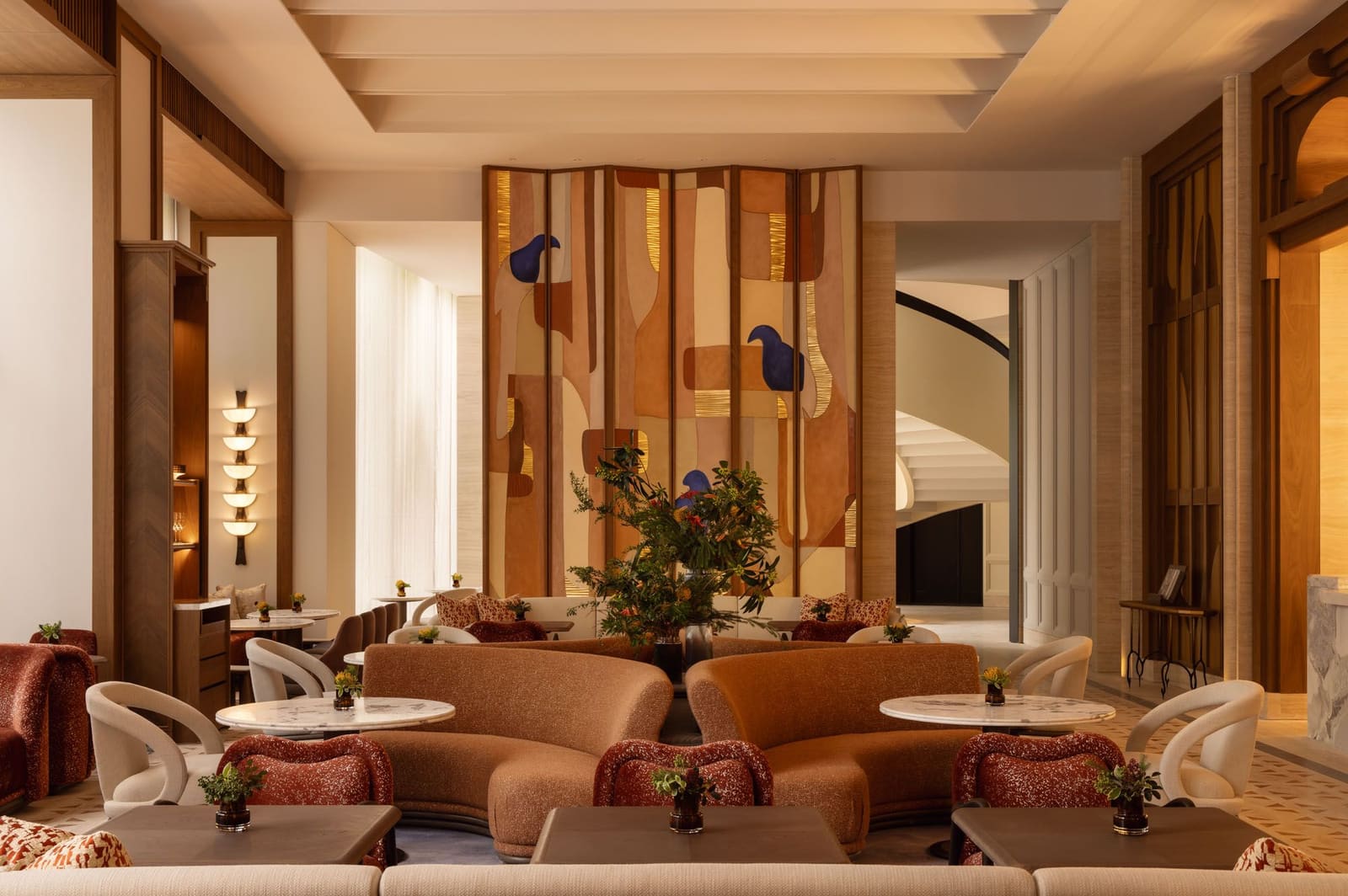
On the fourteenth floor, the Living Room does what its name suggests - it invites lingering. This is not a lobby lounge designed to funnel guests toward restaurants or elevators. It is a space conceived for the in-between hours: the late morning when you've finished breakfast but aren't yet ready to face the streets, the early evening when you've returned from the city and want to decompress before dinner. Art Deco furniture, chosen for its curves rather than its pedigree, clusters in conversational groupings. Wood paneling warms the walls. The effect is residential without veering into pastiche.
We've noticed a trend in recent years - properties that mistake grandeur for hospitality, that assume travelers want to be awed rather than accommodated. Fu's work here suggests a different calculus. The design is confident enough to be quiet. It doesn't announce itself. It simply makes you want to stay a little longer, to order another pot of oolong, to watch the light change over the rooftops.
Culturists, Not Concierges
What sets Capella Taipei apart from its peers, however, is not the interiors but the philosophy that animates them. The hotel employs a team it calls Capella Culturists - guides who function less like concierges and more like curators of urban experience. They lead excursions to the tea farms of Pinglin, where the air is cool and the leaves are still hand-rolled. They arrange workshops for younger travelers who want to learn the mechanics of bubble tea, that Taiwanese export that has conquered the world. They know which night markets are worth the crowds and which temples are quieter at dawn.
This is not a new idea - luxury hotels have long offered bespoke itineraries - but the execution here feels different. The experiences are not bolt-ons, add-ons to justify a rate. They are woven into the property's identity. The message is clear: we want you to love this building, but we want you to love Taipei more.
It is a generous stance, and one that aligns with a broader shift we've tracked across Asia. The best properties no longer position themselves as sanctuaries from the city but as gateways to it. They understand that travelers who book a high-end hotel in Taipei are not fleeing urbanism - they are seeking a richer, more textured version of it.
A Rooftop Pool That Earns Its Views
The pool occupies a corner of the fourteenth floor, its edges aligned with the skyline. Taipei 101 rises in the near distance, its bamboo-inspired silhouette still dominating the skyline two decades after completion. The water is warm year-round, and the design is restrained - no cabanas, no DJ booth, no attempt to turn the space into a scene. It is a place to swim, to float, to let the city become backdrop rather than subject.
We have swum in rooftop pools across Asia, and many of them feel like exercises in branding - Instagram-ready, aggressively styled, more interested in being photographed than used. This one feels different. It is designed for guests who are actually staying at the hotel, not for day-trippers hunting content. The distinction matters.
Plume and the Art of the See-and-Be-Seen
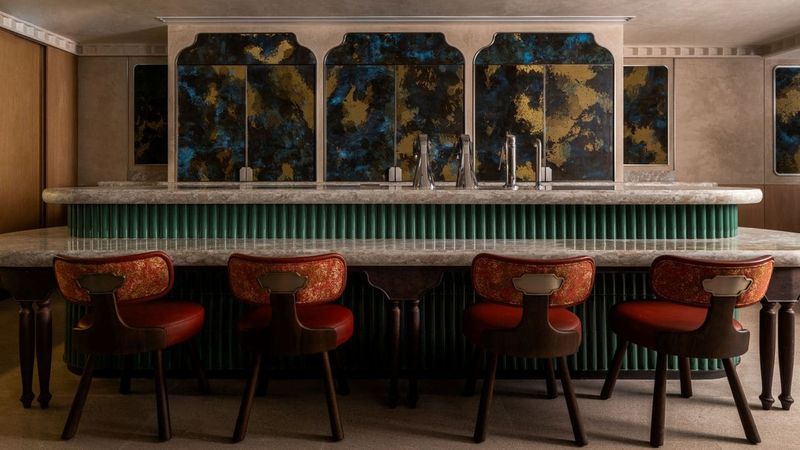
Downstairs, Plume occupies the role every luxury hotel needs filled: the restaurant that draws locals, that becomes a destination independent of the rooms upstairs. The menu is not revolutionary - French technique, Asian ingredients, the usual high-wire act - but the execution is assured. The dining room is intimate without feeling cramped, and the service strikes that difficult balance between attentive and unobtrusive.
What we appreciate about Plume is its self-awareness. It knows it is a scene, and it does not apologize for it. Taipei's dining culture has matured rapidly over the past decade, and the city now supports a tier of restaurants that rival anything in Hong Kong or Singapore. Plume positions itself within that conversation, not above it.
Glasshouse and the Geography of Night
A short walk from the main building, Glasshouse operates as a satellite venue - three floors, three bars, each with its own temperament. Tilt, on the ground level, has emerged as the most talked-about of the trio. The cocktail program is built around Taiwanese ingredients: kumquat from the east coast, guava from the central highlands, sand ginger and tangerine from farms the bartenders visit personally. The drinks are inventive without being fussy, and the space fills early with a mix of hotel guests and neighborhood regulars.
We have long believed that the best hotel bars are the ones that do not feel like hotel bars - the ones that locals claim as their own. Glasshouse, by virtue of its standalone location and its emphasis on Taiwanese terroir, achieves this. It is a hotel amenity that has outgrown its category.
The Question of Context
Capella Taipei arrives at a moment when Taiwan's hospitality industry is undergoing a quiet renaissance. The island has always been a draw for travelers interested in food, in culture, in the particular blend of Chinese, Japanese, and indigenous traditions that shape daily life here. But for years, the hotel landscape lagged behind the destination's appeal. International brands operated efficient properties, but few of them engaged deeply with place.
That is changing. Capella Taipei is part of a cohort of openings - some independent, some affiliated with global brands - that take Taiwan seriously as a design and culinary destination. They are not simply importing a formula. They are hiring local architects, sourcing local materials, building relationships with local artisans and producers. The effect is cumulative. Each property raises the bar, and the city's hospitality culture becomes richer for it.
Why This Matters Now
At Global Chic Voyage, we return again and again to a central question: what does it mean for a hotel to belong to a place? Capella Taipei offers one version of an answer. It does not try to be Taipei in miniature, does not pepper the interiors with clichéd references to night markets or temple architecture. Instead, it creates a space that feels both distinct and rooted - a space that could only exist in this city, in this neighborhood, at this moment.
The test of any hotel is not how it photographs but how it feels after three days. Do you still want to be there? Do you understand the city better because of it? Capella Taipei passes that test. It is a base camp, a retreat, a lens through which Taipei comes into sharper focus. And in a region where new luxury hotels open every month, that clarity is worth celebrating.