Where Brick Walls and Radial Corridors Became a Sanctuary
Inside a Meiji-era prison in Nara, heritage architecture meets considered luxury - and the past finds a quieter purpose.
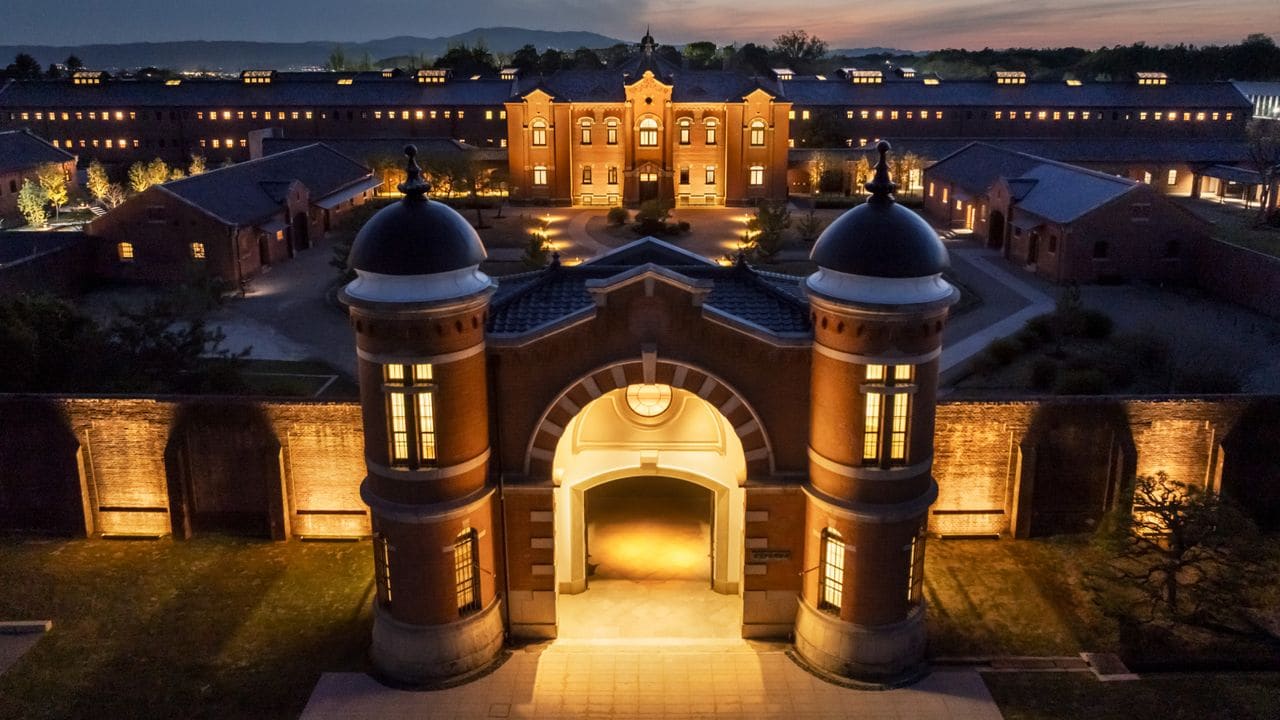
A Gate That Closed, Then Opened Again
Stand at the iron gate on a residential street in northern Nara and the red brick façade offers little prelude to what lies within. Completed in 1908, this Romanesque complex was the final chapter in Japan's so-called Five Great Meiji Prisons, structures designed to signal the country's embrace of Western penal philosophy and architectural ambition. Architect Keijiro Yamashita looked to the radial prison model pioneered by John Haviland in the United States, creating five cell blocks that fanned out from a central surveillance point - a geometry of control made elegant by brick and steel. For more than a century, the building held inmates. In 2017, the last prisoners departed. The complex was designated an Important Cultural Property, and the question became not whether to preserve it, but how to give it new life without erasing the weight it carried.
Today, two institutions share the site: the Nara Prison Museum, which examines Japan's criminal justice system with unsparing clarity, and Hoshinoya Nara Prison Hotel, which occupies the old cell blocks with a reverence for materiality and restraint. This is not a novelty stay. The designers did not sanitise the architecture or play up the prison motif for effect. Instead, they let the building speak - its high barred windows, its exposed steel beams, its narrow corridors - and layered in warmth through textiles, light, and the small rituals of hospitality.
The Architecture of Constraint
Rie Azuma of Azuma Architect & Associates led the transformation, working within the rigid parameters of heritage designation. The before-and-after comparisons reveal how little changed structurally, and how much changed atmospherically. The skylights remain. The whitewashed railings remain. The steel support beams that once held the weight of incarceration now hold the weight of memory. What Azuma introduced - plush pewter carpeting patterned with navy sunburst medallions, layered contemporary lighting, a Western Art Deco colour palette - does not compete with the original fabric. It tempers it.
In the public spaces, wood plank flooring stretches beneath what was once the chapel, now a lounge where afternoon tea is served and evening fragrance-blending workshops unfold. The doors are shorter than modern standard, a detail that reminds visitors of the era's different proportions. Art appears sparingly: a few pieces chosen to reflect the optimism and chromatic vibrancy of early twentieth-century Japan, when modernity felt like possibility rather than erasure.
Outside, landscape architect Hiroki Hasegawa of Studio Onsite designed a courtyard where a raised white boardwalk threads through ornamental grasses. Tables and chairs are scattered for coffee or reading in the sun. The pleasure of open air takes on particular resonance here, beneath windows that once framed only sky for men in solitary confinement.
Rooms Carved from Cells
Each of the 48 suites was formed by combining nine, ten, or eleven original cells into a single long, narrow space. The eleven-cell deluxe suites offer the most breathing room, with dressing areas furnished with chaise longues, complimentary minibars stocked with local spirits, CD players styled like vintage record machines, regional teas, bath salts, and thick wool-blend socks made in Nara - a small gesture that speaks to the property's attention to tactile comfort.
In every room, the prison-issue white plaster was carefully stripped away to reveal the hand-laid red brick beneath. Some walls remain raw. Others are clad in warm wood panelling or hand-brushed in shimmery silver-grey or cerulean paint. The ceilings soar. The barred windows, reframed in new wood, admit no view of the street or neighbouring rooftops - only treetops and sky. Sunlight filters through those clerestory openings and casts shifting patterns on the brick throughout the day, a slow choreography of light and shadow that becomes the room's most dynamic feature. The effect is not claustrophobic. It is cocooning, a privacy that feels almost monastic.
Meals as Ritual, Not Routine
Dining at Hoshinoya Nara Prison Hotel follows the strict reservation timetables common to Hoshino Resorts properties. Breakfast offers three paths: Japanese, Meiji-style, or Western, each abundant with seasonal fruit and rice or bread assortments. Dinner is the Gastronomy Chronicle, a French-inspired progression through the twentieth century. The meal opens with five small bites representing Western culture's arrival in the Meiji era, continues with breaded sole in Albert sauce, and closes with a fluffy chocolate mousse cake. The tone is light-hearted, more culinary theatre than historical lecture.
Lunch is not served at the hotel itself, though the adjacent museum offers curry bread - a nod to the prison's institutional past reimagined for visitors. For drinks, guests cross the courtyard to the Dining Lounge, a former storehouse now fitted with jewel-toned upholstery and a glimmering wall of windows. An old gramophone is hand-cranked by staff during evening soirées, filling the space with the crackle and warmth of early recordings. It is a small gesture, but one that anchors the experience in a specific temporal register: not nostalgia, exactly, but a kind of temporal curiosity.
Spaces for Stillness
There is no spa, no pool, no fitness centre. The hotel's public life revolves around the lounge, the former chapel with its soaring ceilings buttressed by thick wooden beams and soft rosewood floors. One wing, flooded with sunlight filtered through translucent windows, offers complimentary green tea in the morning and sparkling sake in the evening, along with plush armchairs and chaises. The opposite wing contains private alcoves with deep sofas, places to retreat entirely. The layered contemporary lighting creates an atmosphere that feels airy and relaxed, a counterpoint to the building's more austere origins.
Hotel guests also enjoy complimentary access to the Nara Prison Museum and exclusive after-hours entry to preserved Cell Block D. It is worth spending time there. The museum does not shy away from the realities of incarceration, offering a sobering look at Japan's current criminal justice system alongside the building's history. The hotel and museum exist in dialogue, not competition. The hotel offers respite; the museum offers context.
A Location at the Edge
Nara Prison sits at the northern edge of the city, surrounded by residential streets rather than tourist corridors. Nara itself is a popular day trip from Kyoto, home to several UNESCO World Heritage sites. Todai-ji Temple and the 660-hectare Nara Park, where hundreds of sacred deer roam freely, are a short taxi ride away. The hotel's location is not convenient in the conventional sense, but it is intentional. The distance from the city's main attractions reinforces the property's identity as a retreat - a place to withdraw, to reflect, to sit with stillness.
The Question of Comfort
Some guests remain apprehensive about sleeping in a former prison. It is an understandable hesitation. The building carried suffering; it held lives in suspension. The designers did not erase that history, but they did not sensationalise it either. What they created is a space where heritage architecture is preserved and elevated without becoming a gimmick, where the materiality of the past is honoured but not fetishised. The staff, many transferred from other Hoshino properties, bring warmth and assurance. The afternoon teas and gramophone soirées enliven the space without trivialising it.
Hoshinoya Nara Prison Hotel positions itself as a turn-of-the-century heritage stay, leaving the prison's more sombre narratives to the museum. It is a careful calibration, one that allows guests to engage with the building's history at their own pace and depth. For those seeking a more classic Japanese atmosphere or a more central location, Nara offers other options. But for travellers drawn to architecture that carries memory, to spaces where function and form have been radically reimagined, this property offers something rare: a building that has found a quieter purpose, and in doing so, invites its guests to do the same.