Where Lagerfeld Once Stayed: Monte-Carlo Beach Returns with Mahdavi Interiors and a New Italian Kitchen
A 1920s Riviera landmark rewrites its next chapter through considered design, seasonal cooking, and a private peninsula restaurant overseen by Simone Zanoni.
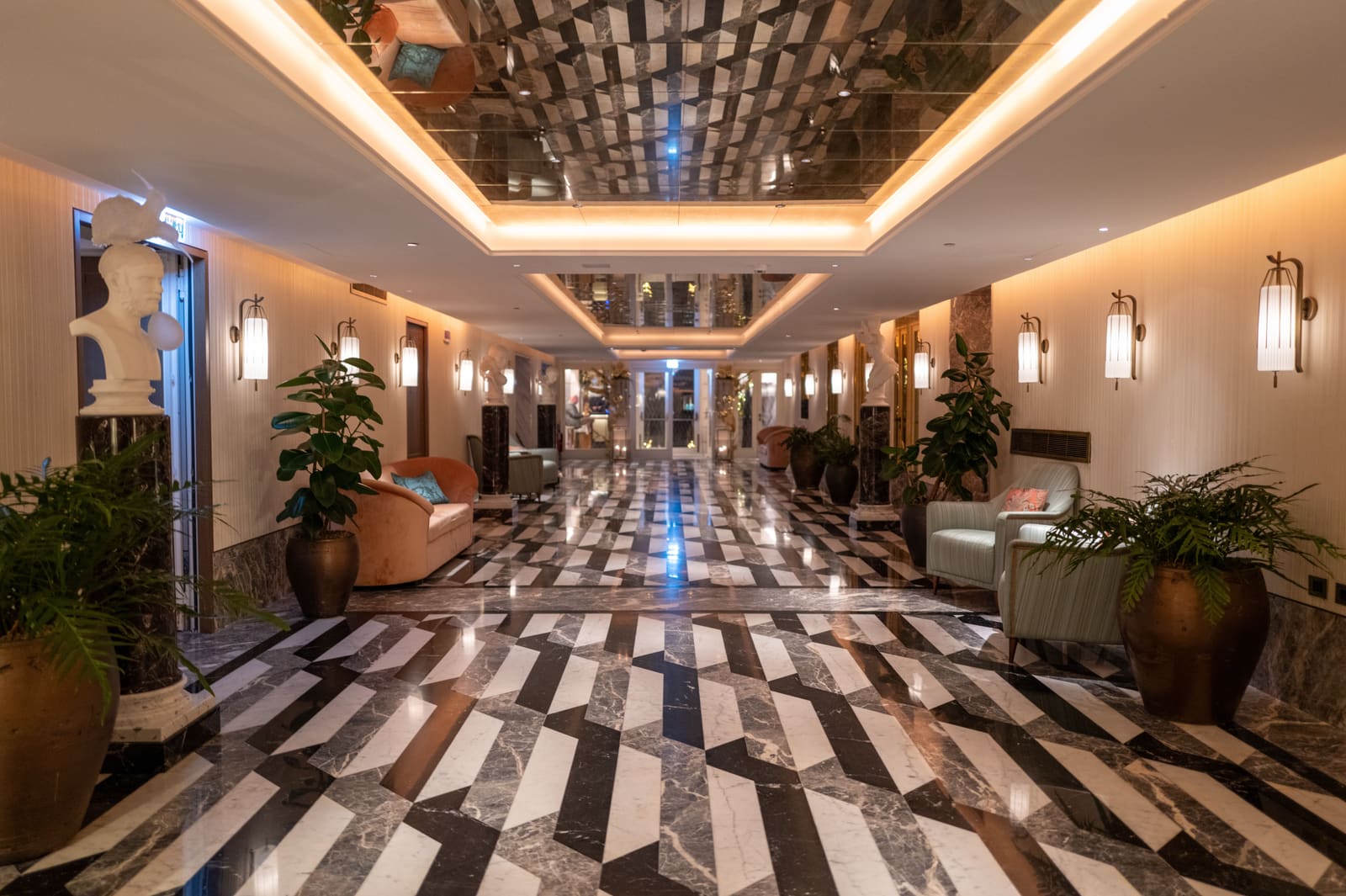
A Lobby That Changes Your Posture
The first thing the Monte-Carlo Beach hotel does is straighten your spine. Step through the white-walled lobby and something shifts: the light off the water, the faint salt in the air, the implicit invitation to slow down and notice. This is a building that opened in the 1920s with Marlene Dietrich among its early guests, a place where Karl Lagerfeld later staged Chanel campaigns alongside Helmut Newton. Yet the real trick is not nostalgia. It is the way the hotel, now stewarded by Monte-Carlo Société des Bains de Mer, continues to commission work that feels immediate rather than reverential.
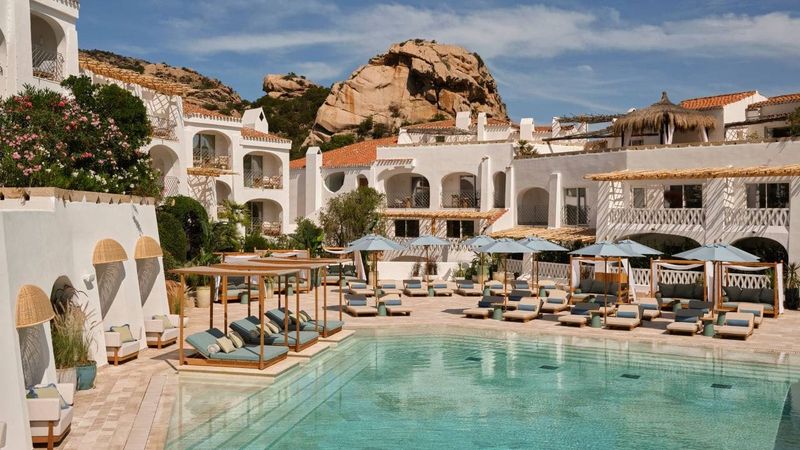
India Mahdavi refreshed the interiors in 2024, and her hand is everywhere: terracotta balconies that catch the afternoon sun, rattan chairs at the poolside restaurant that suggest ease without sacrificing line. Elsewhere, Provençal designer Simon Porte Jacquemus dressed the beach pier's sunloungers in his signature stripes, turning the act of lying down into something closer to theatre. The effect is cumulative. You arrive for the myth; you stay because the myth has been updated with taste and precision.
Eating Through the Seasons
Food here is not an afterthought but a reason to visit across all twelve months. During summer, crepe stands appear on the sand. Year-round, Le Deck serves straightforward classics alongside views of an Olympic-sized pool, the kind of dishes that do not announce themselves but deliver quietly: grilled fish, vegetables dressed simply, bread worth remembering. At Maona Monte-Carlo, the menu leans Greek, built around meze that invite sharing and conversation in equal measure.
The newest arrival, however, is La Vigie Zanoni Monte-Carlo, perched on a private peninsula with sightlines over the Mediterranean. Chef Simone Zanoni, whose résumé includes Le George in Paris and La Mamounia in Marrakesh, has taken over the space, which sits just below Villa La Vigie, the private residence Lagerfeld once owned and which guests can now book. The walk to the restaurant matters: a narrow path through pine trees that resets expectation before you reach the dining room.
Zanoni's Theory of Simplicity
Zanoni describes La Vigie as elegant but relaxed, a place where people come to enjoy life rather than perform it. His cooking follows that logic. The menu marries French technique with Italian instinct, centred on fresh fish, vivid vegetables, and dishes with weight. The seafood paccheri and risotto have become early signatures, built on a pantry philosophy the chef articulates without fuss.
"For me, it's very simple," Zanoni explains. "You need great olive oil, beautiful tomatoes, fresh basil, lemons, seasonal vegetables, fresh fish and, of course, good pasta. When the ingredients are exceptional, you don't need to complicate things."
He suggests beginning with a spritz, then moving to something chilled, a white or a light rosé. Sharing is encouraged. The figliata, a giant mozzarella, makes a compelling starter; the fior di latte gelato closes the meal with clarity rather than excess. The restaurant's position, both geographical and conceptual, reflects a broader shift in how legacy properties calibrate tradition and relevance.
What Mahdavi Understood
Interior design at this scale is often about restraint, and Mahdavi's intervention at Monte-Carlo Beach demonstrates what happens when a designer reads a building's bones rather than imposing a signature wholesale. Her terracotta balconies do not fight the architecture; they amplify its geometry. The rattan at Le Deck does not shout resort cliché; it breathes and bends with the climate. These are small moves with large consequence, the kind that guests register subconsciously but remember long after checkout.
Jacquemus's striped sunloungers operate on a different frequency. They are unabashedly graphic, almost irreverent, yet they work because the hotel has earned the confidence to play. This is not a property clinging to grandeur but one willing to let contemporary voices shape its present tense. The balance between Mahdavi's quiet precision and Jacquemus's bold gestures suggests an institution comfortable holding multiple ideas at once.
The Lagerfeld Shadow
Villa La Vigie, the private home above the restaurant, adds a curious layer. Lagerfeld's former residence is now available for rental, transforming what was once a personal retreat into a bookable experience. The decision could feel opportunistic, but in practice it reads as continuity. Lagerfeld understood the Riviera as a place where work and leisure blurred, where creativity was inseparable from setting. Opening the villa to guests extends that philosophy rather than exploiting it.
The proximity to La Vigie Zanoni Monte-Carlo creates an ecosystem: dine on the peninsula, retreat to the villa, wake to the same view that once framed Chanel campaigns. It is a narrative loop that feels deliberate without being heavy-handed, a way of honouring history by making it livable rather than museumified.
Why This Model Matters Now
The Monte-Carlo Beach hotel offers a case study in how heritage properties can evolve without erasure. Many historic hotels either ossify, afraid to touch what worked decades ago, or overcorrect, chasing trends that render them unrecognisable. This property does neither. It invites designers and chefs whose work is legible in the present moment, then gives them room to interpret rather than dictate.
The result is a place that feels layered rather than static. Dietrich's ghost is here, but so is Mahdavi's terracotta. Lagerfeld's campaigns echo, but so does Zanoni's mozzarella. The hotel does not ask you to choose between then and now; it suggests both can coexist if the curation is sharp and the ego is checked. That is a rare quality in luxury hospitality, where the instinct is often to over-explain or under-deliver.
The Long View from the Peninsula
Standing on the path to La Vigie, pine trees filtering late sun, it becomes clear what Monte-Carlo Beach has managed. This is not renovation as spectacle but as conversation, a property in dialogue with its past and its region. The Riviera has always attracted people who understand that pleasure requires structure, that indulgence without taste is merely excess. The hotel's current iteration honours that tradition by refusing to coast on it.
Zanoni's cooking, Mahdavi's interiors, Jacquemus's stripes: these are not decorations but arguments about what a Riviera institution can mean in 2026. The answer, it turns out, is not a single vision but a series of overlapping gestures, each confident enough to stand alone yet generous enough to coexist. The legend endures not because it is preserved in amber but because it is still being written, one considered decision at a time.