When Stone and Velvet Meet: A Season Among Edinburgh's Most Intimate Hotels
From whisky-lit drawing rooms to rooftop bars perched above castle ramparts, Scotland's capital unfolds through stays that understand the art of layering old and new.
The Texture of Arrival
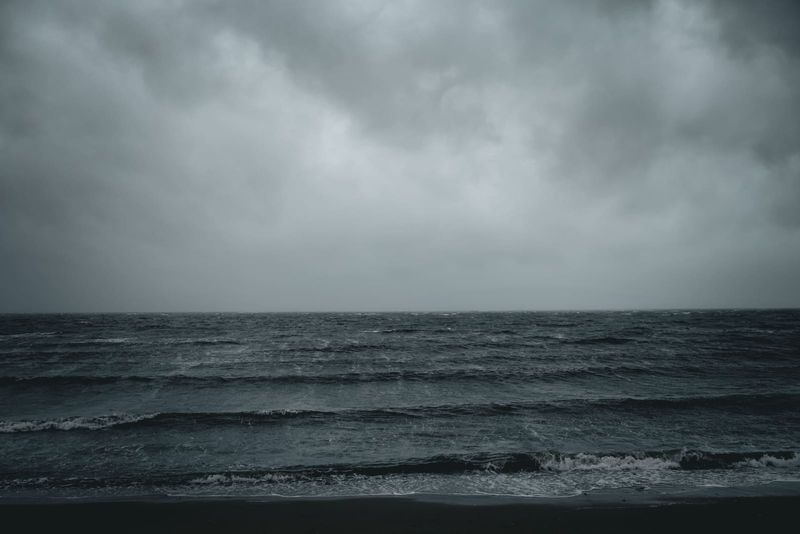
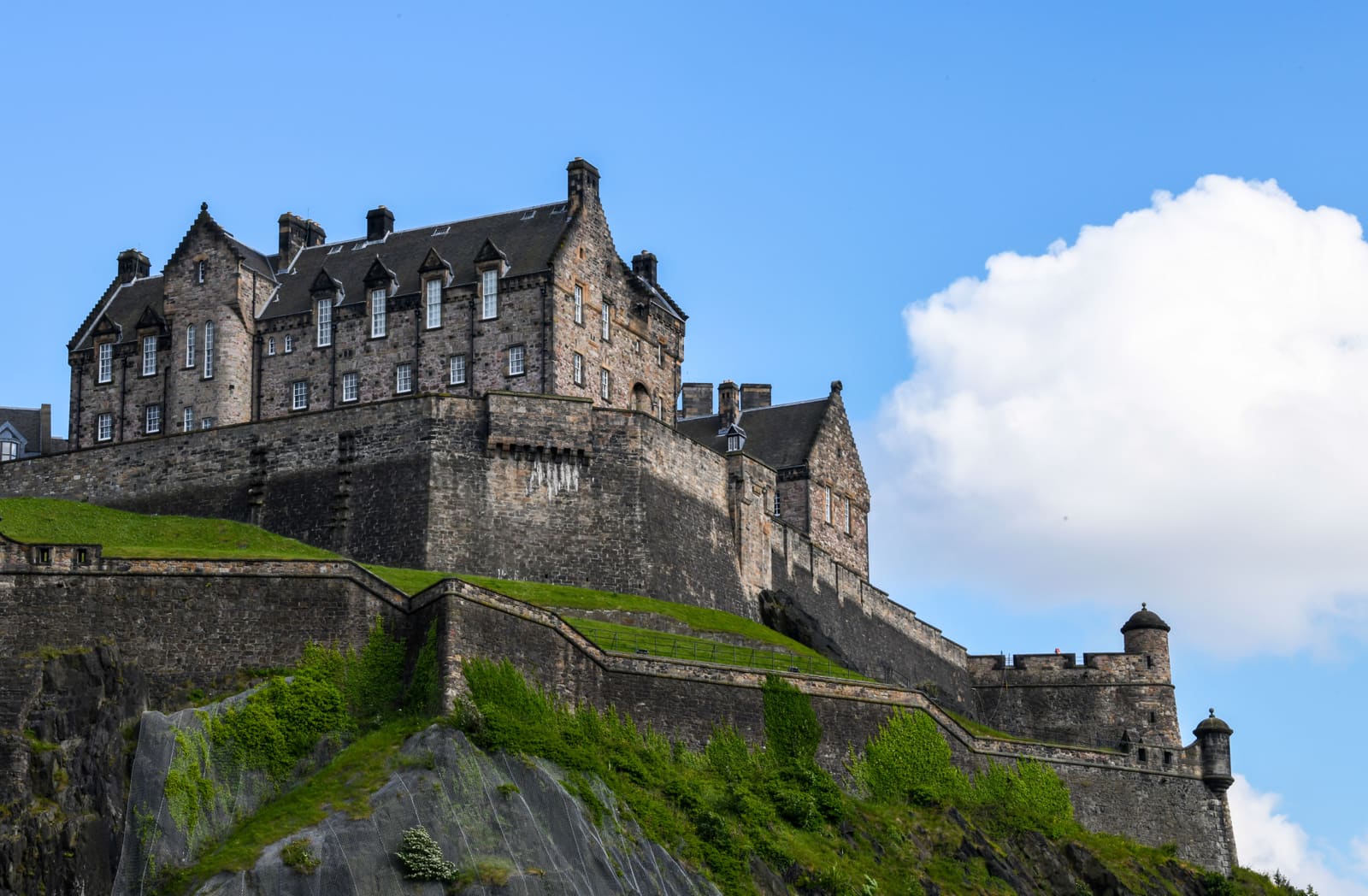
Stand on Princes Street at dusk and watch the castle turn from grey to amber under the streetlights. The city does this - shifts from one mood to another without announcement, stone façades warming under the sun or closing in under cloud. Edinburgh's hotel landscape mirrors that restlessness, a mix of Victorian confidence and contemporary ease, properties that lean into tartan and oil paintings as readily as they embrace geometric side tables and flamingo coat hooks.
What makes a stay here compelling is not grandeur alone - though there is plenty of that - but the willingness to layer. A neo-Renaissance building might harbour a subterranean spa lined with living walls of eucalyptus and fern. A members club might welcome non-members to its rooftop bar and let them drink in views of the Firth of Forth alongside the regulars. The city's hospitality sector has, in recent years, added properties that sit comfortably beside heritage anchors, and the result is a scene that rewards the curious traveller willing to look past the obvious landmarks.
Gleneagles Townhouse: Where the Staff Remember Your Name
The original Gleneagles sits in rural Perthshire, a property of considerable legend. Its urban sibling, Gleneagles Townhouse, operates on a different frequency - ostensibly a members club, though it functions in most respects as a hotel open to all. Non-members can book rooms, dine in the restaurant, and order cocktails on the rooftop terrace without needing a key to the inner sanctum.
What distinguishes the Townhouse is not its décor, though the interiors are carefully composed, but the presence of senior staff. They remember names. They linger to chat. They ask after your well-being in a manner that feels less like protocol and more like genuine interest. In an industry where such gestures have become rare, the effect is quietly disarming.
The rooftop bar offers front-row seats to the castle, a view that never quite loses its potency no matter how many times you've seen it. Below, the restaurant turns out dishes that justify the journey on their own merits. The rooms themselves are layered and comfortable, designed for extended stays rather than brief stopovers.
The Balmoral: A Grand Tour Without Leaving the Building
Opened in 1902 as the North British Railway Hotel, The Balmoral anchors the eastern end of Princes Street with neo-Renaissance assurance. Rocco Forte Hotels took stewardship years ago, and under the creative direction of Olga Polizzi, the interiors have become a kind of compressed tour of Scotland - golden lichens and fern greens from the lowlands, heathery purples from the moorland, stony greys and sultry blues lifted from the Highlands and islands.
Brasserie Prince follows a similar logic, applying French technique to Scottish ingredients. The menu includes Normandy onion soup and steak tartare, dishes that honour both traditions without forcing a marriage between them. The result is cooking that feels considered rather than showy.
The hotel's clock, a fixture on the Edinburgh skyline, runs three minutes fast - a quirk introduced to help travellers catch their trains on time. The practice continues today, though now it serves to nudge guests toward lunch reservations rather than railway timetables. On Hogmanay, the clock is reset to match the actual hour, a concession to the city's outsized devotion to New Year's Eve.
The Hoxton: Raspberry Headboards and a Working Fountain
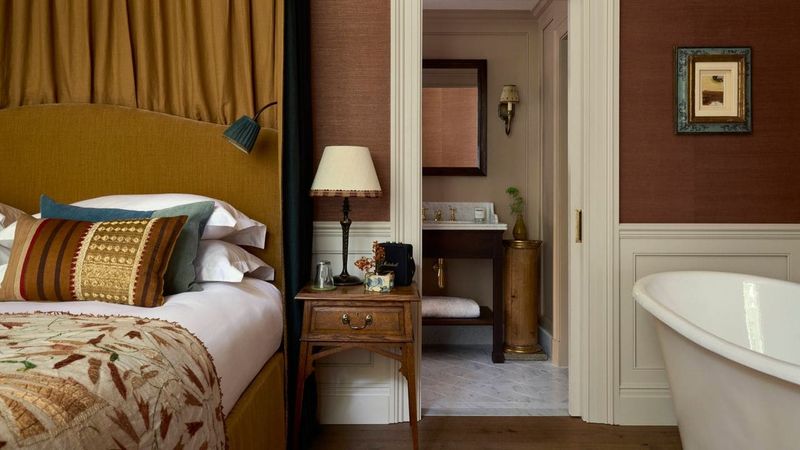
The Hoxton arrived in Haymarket in 2025, bringing with it the brand's signature mix of heritage bones and irreverent detail. Curved cornicing meets raspberry-coloured headboards, brass accents, and flamingo-shaped coat hooks - a collision that ought to feel chaotic but somehow coheres.
The property comprises around 200 rooms, ranging from compact bunk setups to sprawling family quarters with original sash windows. All share a layered, lived-in quality, as though the rooms have been assembled over time rather than installed in a single sweep.
Downstairs, Patatino channels a sun-drenched Italian trattoria, complete with striped awnings, a working fountain, and a menu built around fresh pasta and wood-fired pizza made with Scottish produce. There is also a five-seat cinema, light-filled event spaces, and a lobby bar that transitions from morning coffee to evening cocktails without missing a beat.
The location, steps from Haymarket Station and within easy reach of the city centre, makes the hotel as practical as it is polished. It is the kind of place that works equally well for a solo traveller passing through and a family settling in for a long weekend.
100 Princes Street: The Seclusion of a Members Club, the Service of a Hotel
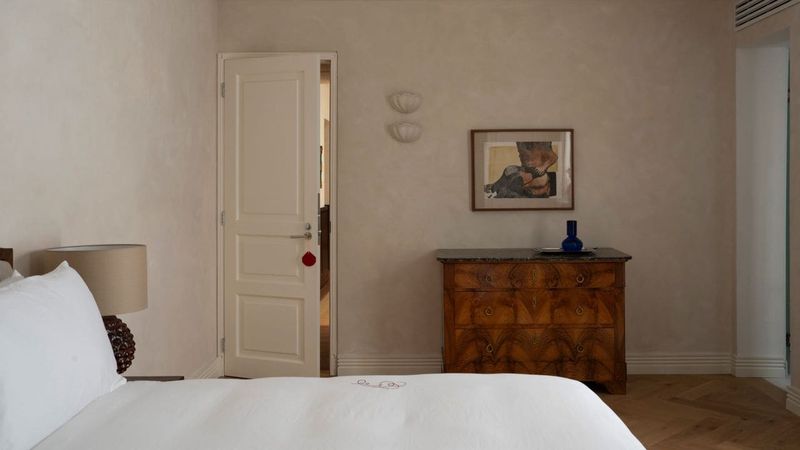
There is no doorman here, just a black flag bearing the number 100. Inside, the property unfolds across five floors of low-lit, velveteen elegance. The 30 rooms are discreet, many dressed in reddish or greenish tones drawn from bespoke tartans commissioned for the hotel.
The Wallace, a leather-walled lounge and bar on the second floor, is furnished with vintage globes and oil paintings of steamers battling storm-lashed seas. From here, guests can watch the setting sun strike Edinburgh Castle, a view that remains rare even for locals who have spent years in the city.
Beyond the building, the hotel offers a curated list of experiences - fishing on the River Tweed with a packed lunch, private visits to the atelier of designer Araminta Campbell, where guests can commission bespoke fabrics. There is storage for golf bags downstairs, a nod to the property's role as a city stopover before journeys north to Muirfield or St Andrews, or to the fly-fishing beats beyond.
Kimpton Charlotte Square: A Penguin Classic in Hotel Form
Kimpton Charlotte Square reads like a Penguin Classic - part Arthur Conan Doyle, part Muriel Spark - set-designed with prints, maps, and travel memorabilia that riff on the golden age of exploration. Polished banisters lead upstairs to bedrooms furnished in a well-upholstered Edwardian style, complete with succulents, letterpress-style illustrations, and record players. If you are fortunate, your room will include a copy of Ziggy Stardust.
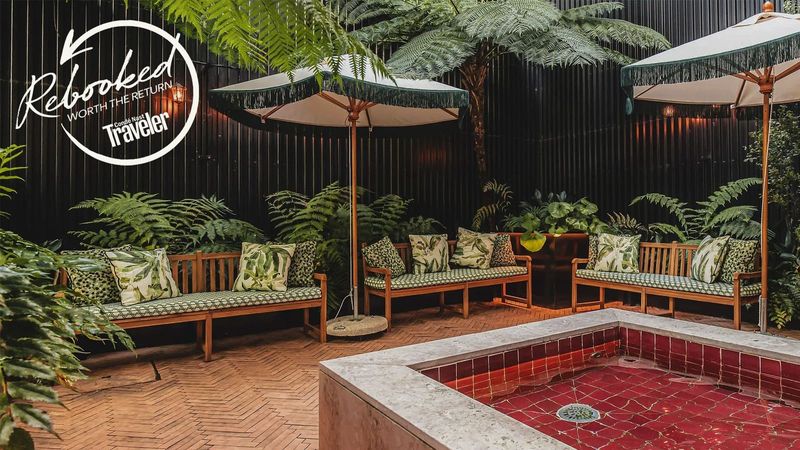
The subterranean spa continues the foliage theme established in the hotel's central sky-lit restaurant, with a living wall home to lavender, ferns, and eucalyptus. Facial treatments begin with a full assessment of skincare goals and conclude with deep massage work on cheeks, arms, and legs. Afterwards, guests are encouraged to try the UK's first sound wellness room, a space designed for sensory recalibration.
The hotel occupies a sweet spot between intimacy and polish, small enough to feel personal but equipped with the amenities of a larger property.
InterContinental Edinburgh The George: Georgian Rooftops and Liturgical Greens
A hotel has occupied this site on George Street since 1881. Today, InterContinental Edinburgh The George spreads across five adjoining townhouses, though the property is larger than its street presence suggests. Two modern extensions, nearly invisible from the pavement, bring the room count to over 200.
Some of the finest views are found on the upper floors of the modern wings, which overlook a patchwork of Georgian rooftops and private gardens, with the Firth of Forth visible in the distance. The interiors employ a subdued palette - neutral oatmeals and greys accented with liturgical greens, blues, and purples. Original architectural features have been preserved, and the design mixes Victorian-style leather armchairs and velveteen sofas with contemporary pendant lamps and geometric side tables.
Burr & Co, the hotel's café, has become a neighbourhood fixture, popular with locals as much as guests. The property may lack the dramatic flourish of The Balmoral or the theatrical edge of The Witchery, but it occupies a superb location in the heart of the New Town and delivers its hospitality with modesty and grace.
Virgin Hotels Edinburgh: Postmodern Mischief on Victoria Street
Virgin Hotels Edinburgh sits on curvy, hilly Victoria Street, a prime stretch of the UNESCO-listed Old Town. The building, originally known as the India Buildings, retains much of its 19th-century charm - the three-tiered domed rotunda is especially striking - but the interiors lean toward carefully choreographed postmodern mischief.
The 222 rooms are configured thoughtfully, pale and creamy in tone with vivid red accents. The eight Grand Chamber suites each offer something unexpected - a mezzanine decorated in the style of a Bedouin tent, for instance. The Commons Club Restaurant and Bar hold their own in a city crowded with excellent eateries, turning out dishes that are both playful and serious.
The hotel strikes a balance between whimsy and purpose, a property that knows when to nod to Sir Richard Branson's penchant for self-referential touches and when to let the architecture and the cooking speak for themselves.
The Witchery: For Travellers Who Like Their Interiors Gothic
The Witchery would be Count Dracula's choice of accommodation were he to visit Edinburgh. The property leans into the theatrical, with interiors that embrace velvet, dark wood, and candlelight. It is not a hotel for those seeking minimalist restraint or Scandinavian simplicity. Instead, it offers immersion in a particular kind of Gothic romance, the sort that pairs well with a stormy evening and a glass of claret.
The rooms are richly layered, each one a study in maximalist detail. The dining room, equally dramatic, has built a reputation that extends well beyond the hotel's guest list. For travellers drawn to Edinburgh's darker, more mysterious side - the city of narrow closes, hidden courtyards, and whispered history - The Witchery offers a stay that honours that mood without tipping into parody.
Why Layering Matters
Edinburgh's hospitality landscape succeeds not because it has reinvented the wheel but because it understands the value of layering - old and new, grand and intimate, Scottish and international. The best properties here do not force a single narrative. They allow the city's contrasts to coexist, offering rooftop bars alongside tartan-lined drawing rooms, contemporary pasta alongside steak tartare, record players alongside sound wellness rooms.
For the traveller, this means choice. A stay in Edinburgh can be as theatrical or as understated as you wish, as rooted in history or as forward-looking. The city's hotels have learned to accommodate both impulses, and in doing so, they reflect the character of Edinburgh itself - a place that shifts from stone to velvet, from ancient to evolving, without ever losing its sense of self.