Lollipop: A Superyacht Where Whimsy Meets the Water
The eighth hull in Moonen's 122 Martinique series trades maritime convention for candy-coloured rebellion, proving that serious craftsmanship and playful design need not be mutually exclusive.
A Name That Announces Intent
There are vessels christened after Greek goddesses, obscure Latin phrases, or the owner's first profitable venture. And then there is Lollipop, a name that suggests either a complete lack of self-seriousness or an abundance of it, depending on how one views the tradition of nautical nomenclature. The 37-metre superyacht, the eighth hull in Moonen's 122 Martinique series, carries her confectionery moniker with the sort of confidence that only comes from knowing exactly what you are.
Where most yachts of this calibre lean into the visual language of restrained elegance, Lollipop opts for something closer to visual delight. It is an approach that could have veered into kitsch but instead lands somewhere more interesting: a kind of studied playfulness, the sort that requires considerable skill to execute without collapsing into pastiche.
The Martinique Lineage
Moonen's 122 Martinique series has, over the years, established a reputation for balancing Dutch engineering rigour with adaptable interior schemes. The platform itself is proven: a steel hull paired with an aluminium superstructure, twin Caterpillar engines, and a range that permits transatlantic crossings without drama. By the time Lollipop emerged as the eighth iteration, the technical fundamentals were well understood, leaving the design team free to explore less predictable territory.
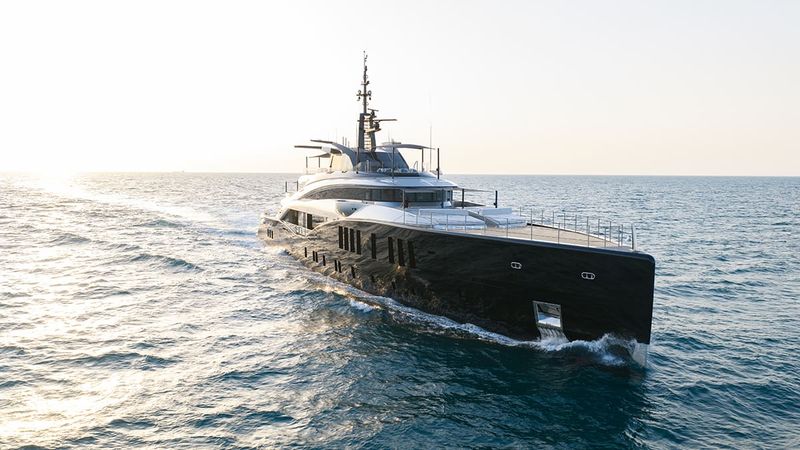
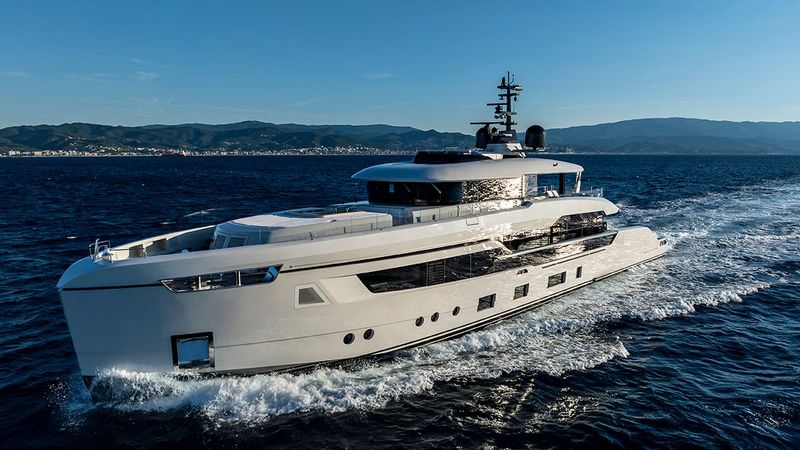
The exterior silhouette remains recognisably Martinique: a plumb bow, sweeping sheer line, and a profile that prioritises volume over flash. The hull's sleek lines suggest speed even at anchor, though the yacht's true strength lies in her spacious decks rather than her top speed. What distinguishes Lollipop from her sisters is not the bones but the skin, or more precisely, what happens beneath it.
An Interior That Refuses to Whisper
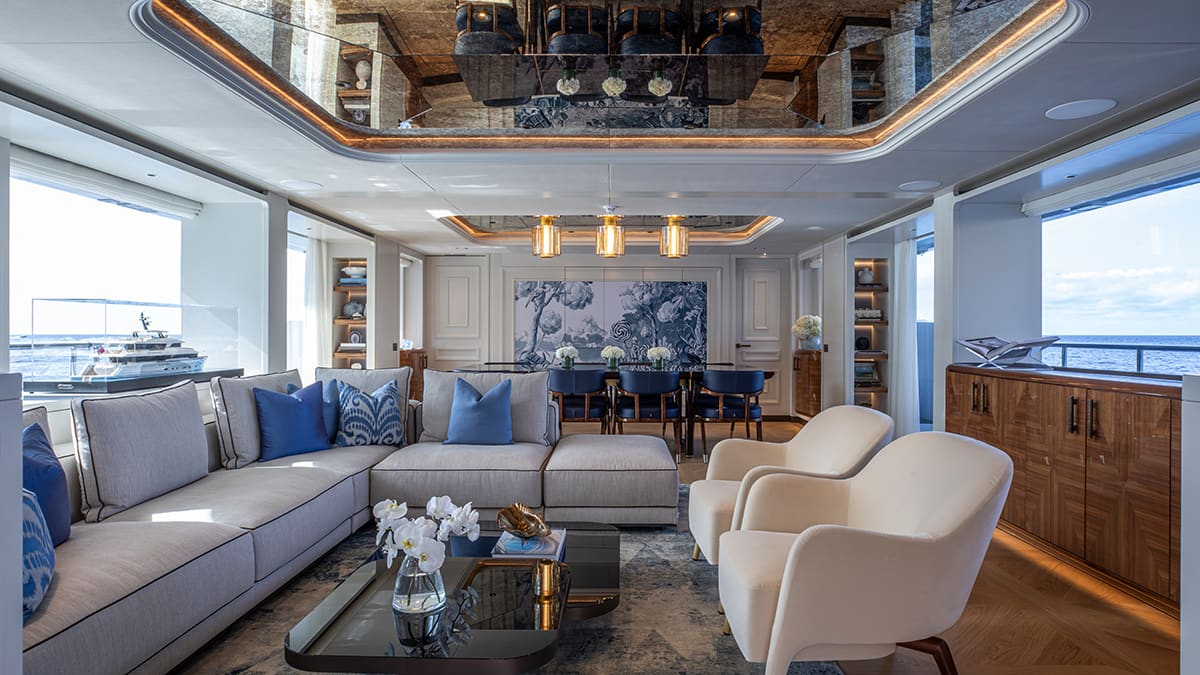
Step inside and the maritime design rulebook is promptly set aside. The dining room features a mural that would not be out of place in a contemporary art gallery, a bold sweep of colour and form that dominates the space without overwhelming it. It is the sort of gesture that signals intent: this is not a yacht designed to fade into the background of any anchorage.
The cabins continue the theme, though with a lighter touch. Rather than doubling down on visual exuberance, the sleeping quarters balance whimsy with comfort, ensuring that the design concept enhances rather than disrupts the experience of rest. One cabin in particular demonstrates this equilibrium, with soft textures and restrained colour accents that nod to the yacht's playful spirit without shouting about it.
The staircase becomes a sculptural element in its own right, a helical ribbon that connects the yacht's multiple levels while serving as a visual anchor. It is the kind of detail that reveals itself slowly, rewarding those who take the time to notice how light plays across its surfaces at different times of day.
Outdoor Spaces That Invite Lingering
The upper deck offers a hot tub positioned to take advantage of sightlines rather than simply occupying available square metreage. It is a subtle distinction but one that speaks to a broader design philosophy: every element serves both a functional and an aesthetic purpose.
The sundeck extends the indoor palette into open air, creating a continuity of experience that many yachts struggle to achieve. Here, the tension between shelter and exposure is carefully calibrated, with shade structures that frame views rather than block them.
Aft, the deck configuration prioritises flexibility, accommodating both intimate gatherings and larger social occasions without requiring furniture to be constantly rearranged. It is the sort of practical consideration that owners appreciate long after the initial visual impact has settled into familiarity.
The Broader Conversation
Lollipop arrives at a moment when yacht design is grappling with questions of identity. As the industry matures, a certain visual homogeneity has crept in, with many vessels becoming difficult to distinguish from one another at a distance. The pressure to appeal to resale value often flattens individuality, producing yachts that are technically impeccable but visually forgettable.
In this context, a vessel that embraces a clear point of view becomes notable not merely for what it looks like but for what it represents: a willingness to prioritise character over consensus. Whether that character will age gracefully is a question only time can answer, but the alternative, a safe middle ground that offends no one and delights few, hardly seems preferable.
The Martinique platform's proven seaworthiness provides a foundation that allows such experimentation without compromising performance. It is a reminder that innovation in yacht design need not be structural to be meaningful. Sometimes, the most interesting developments happen in the space between engineering and imagination.
What Endures
Years from now, when the novelty of Lollipop's aesthetic has either dated or become classic, what will likely remain is the yacht's underlying proposition: that luxury need not be synonymous with severity, that playfulness can coexist with craftsmanship, and that a vessel can be both serious in its construction and lighthearted in its presentation.
The maritime world has always had room for eccentricity, from racing yachts painted in sponsor livery to explorer vessels bristling with antennae and tenders. Lollipop occupies a different niche, one where the eccentricity is aesthetic rather than functional, a choice made not out of necessity but out of conviction.
Whether that choice resonates with charterers and potential buyers will depend less on the merits of the design itself than on their appetite for vessels that announce themselves before the first line is tied. For those who view a yacht as an extension of personal identity rather than a floating hotel, Lollipop offers a compelling argument: that the sea, for all its grandeur, can also accommodate a little sweetness.