
When Convention Becomes Constraint: A 31-Metre Explorer That Reimagines the Owner's Realm
Antonini Navi's latest steel-hulled vessel places the master suite where the helm station belongs, and in doing so questions a century of assumptions about hierarchy at sea.
A Ceremony in La Spezia
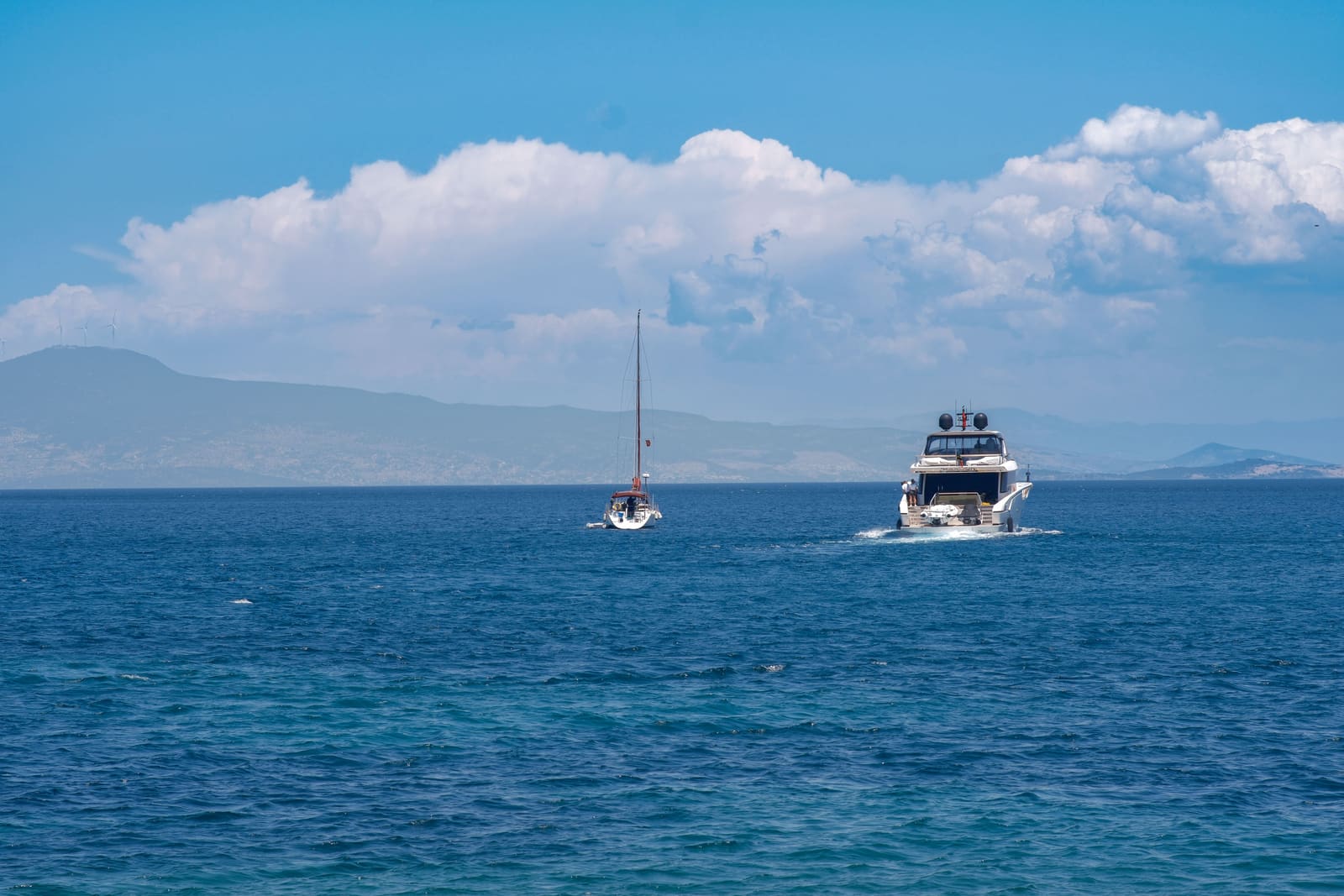
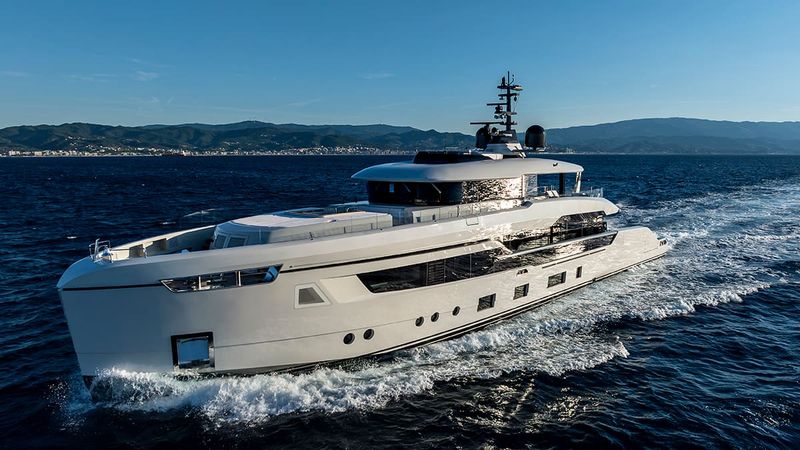
In early November, a 31-metre steel hull slipped into the Ligurian Sea from Antonini Navi's yard in La Spezia, absent the fanfare that typically accompanies a launch of this scale. The ceremony was private, the guest list curated, and the vessel herself - christened Hanaa - bore none of the visual excess that has come to define the category. What she carried instead was a floor plan that inverts a set of design conventions so embedded in the superyacht world that most yards no longer question them.
The Italian builder has spent the past eighteen months working to a brief that asked not for incremental refinement but for structural rethinking. The result is a four-deck explorer that measures just over thirty-one metres yet organises its interior volume in a manner more commonly associated with vessels half again her length. Exteriors come from Hydro Tec, interiors from Hot Lab, and the logic governing both departs from the template that has governed steel-hulled displacement yachts since the category cohered in the late twentieth century.
The Absence at the Centre
Step aboard Hanaa and the first anomaly presents itself immediately: there is no formal salon on the main deck. The space where convention would place upholstered seating, occasional tables, and perhaps a baby grand has been given over to a single, undivided social zone that runs nearly the full beam of the hull. A central lounge flows aft into the cockpit without threshold or transition, and forward the volume extends to a bow terrace carved into the hull itself - a sheltered pocket that can serve as dining area, workspace, or simply a place to sit apart from the collective.
This is not minimalism for its own sake. The decision to eliminate the salon reflects a calculation about how owners actually inhabit vessels of this size. Formal receiving rooms, the argument goes, belong to an earlier era of yachting, one in which the vessel functioned as floating embassy and the owner as host to a rotating cast of acquaintances. Today's owners, particularly those commissioning explorer hulls, tend to travel with smaller, more intimate groups, and the spaces they value are those that permit both congregation and retreat without requiring either.
The galley sits adjacent to this main-deck expanse, and crucially, so does the crew mess. Placing crew quarters on the main level rather than relegating them to the lower deck represents another departure from orthodoxy. The rationale is operational: direct galley access shortens service routes, reduces noise in guest corridors below, and acknowledges that efficiency on a vessel this size depends on compressing the distance between preparation and delivery. It is a choice that privileges function over the symbolic separation of service and served, and in that sense it is quietly radical.
Elevation as Privacy
The more conspicuous inversion occurs one level up. On the upper deck, where most 30-metre yachts would place a sky lounge or secondary salon, Hanaa locates both the helm station and the owner's suite. The pairing is unusual but not without precedent; what distinguishes this iteration is the degree to which the owner's quarters have been conceived as a private domain rather than the principal cabin in a hierarchy of cabins.
The suite opens aft onto a terrace furnished with a lounge bar and Jacuzzi, creating a threshold space that is neither fully interior nor fully exterior but rather a third condition that exploits the temperate climates in which vessels of this type tend to operate. The arrangement allows the owner to occupy the vessel without descending into the social life of the main deck, a kind of vertical privacy that megayachts achieve through sheer scale but that smaller hulls must engineer through layout.
This upper-deck positioning also resolves a perennial tension in yacht design: the question of where to place the owner when the forward main-deck suite - long considered the most desirable position - comes at the cost of obstructing sightlines from the helm and complicating the relationship between wheelhouse and living quarters. By elevating the owner's realm, Antonini Navi effectively separates command from residence while granting both unobstructed views and a degree of remove from guest circulation.
The Mathematics of Volume
Above the owner's deck, the sundeck spans roughly seventy-eight square metres, a figure that Antonini Navi describes as among the most generous in the category. The claim is difficult to verify without a comprehensive survey of competing hulls, but the space itself - fitted with a dining table, barbecue station, and sun pads - reads as more than adequate. What matters is not the absolute area but the proportion: on a vessel of this length, devoting nearly a fifth of the total deck area to a single open-air level represents a choice to prioritise exterior volume over additional interior cabins or storage.
Below the main deck, four guest cabins occupy the lower level alongside three crew cabins, an engine room of considerable size, and a garage capable of housing a tender up to five metres in length. The layout is conventional at this level, which is to say it adheres to the logic that has governed displacement yachts for decades: guests forward, crew aft, machinery amidships. The innovation, such as it is, lies in what has been omitted rather than included. There is no VIP suite on this deck, no attempt to mirror the owner's quarters in miniature. The cabins are equal in status, which flattens the hierarchy and simplifies the social calculus for groups travelling together.
Steel, Aluminium, and the Question of Range
Hanaa's hull is steel, her superstructure aluminium, a combination that prioritises seaworthiness and range over speed. Twin diesel engines deliver a maximum velocity of thirteen knots, a cruising speed of twelve, and a range of 4,000 nautical miles at ten knots. These are not figures that quicken the pulse, but they are figures that permit extended passages without refuelling - a practical consideration for an explorer hull intended to operate far from established marina infrastructure.
The choice of steel also signals a philosophical position. In an era when composite construction dominates the production yacht market and even semi-custom yards increasingly favour fibreglass for its mouldability and weight savings, opting for steel is an assertion of durability and repairability. Steel hulls can be welded in remote shipyards; composite hulls cannot. For owners who intend to venture into regions where the nearest yard with advanced composites capability may be a thousand miles distant, the material becomes part of the vessel's utility.
The Lineage of the Explorer
The explorer category itself - compact, steel-hulled, long-range - has its roots in converted commercial vessels and expedition craft rather than in the leisure yacht tradition. The aesthetic that defines the type borrows more from North Sea trawlers and research vessels than from the gleaming white megayachts of the Mediterranean summer season. Hanaa fits within this lineage, though her interiors, executed by Hot Lab, soften the industrial severity that sometimes accompanies explorer design.
What the category offers, and what Hanaa exemplifies, is a kind of autonomy. A 4,000-nautical-mile range permits crossings that would require mid-ocean refuelling on a faster, lighter hull. The garage accommodates a tender large enough to serve as a genuine shuttle rather than a token dinghy. The crew quarters, sized and positioned for extended passages, acknowledge that long-range cruising depends on crew well-being as much as mechanical reliability. These are not features that photograph well in still images, but they are features that matter once the vessel leaves the dock.
Delivery and the Spring Season
Hanaa's launch in November positions her for a spring 2027 delivery, which suggests a commissioning period of roughly five months. That interval will involve sea trials, systems integration, final fit-out, and the inevitable adjustments that accompany any bespoke build. By the time she reaches her owner, the Mediterranean season will be beginning, and the vessel will enter service in the waters for which her layout seems particularly suited: temperate, accessible, and forgiving enough to permit the kind of unhurried cruising that a twelve-knot hull encourages.
Whether Hanaa's layout will influence subsequent builds in the 30-metre category remains to be seen. Yacht design moves slowly, and the industry tends to reward incremental variation rather than wholesale reinvention. But the vessel poses a question that is worth asking: if the conventions that govern superyacht interiors were developed for a different era and a different set of assumptions about how owners use their vessels, what happens when those assumptions no longer hold? Antonini Navi's answer, in steel and aluminium, is now afloat.
- RETREATWhen Shipyards Turn to Shadow: The New Language of Luxury at Sea
- RETREATWhere Wellness Meets the Water: Inside a New Italian Superyacht
- RETREATWhen Less Becomes More on the Water: A Turkish Yard Rethinks Yacht Design
- RETREATWhere Steel Meets Sky: The Explorer Yacht Reborn as Floating Architecture