The Longevity Deck: How the World's Newest Superyachts Are Rewriting the Itinerary Around Wellbeing
From hyperbaric chambers to ice baths at sea, a new generation of private vessels is placing vitality at the helm of design.
The Morning Route
There was a ritual aboard the 74-metre explorer yacht cruising from Bali toward Sweden. Every morning over coffee, a father and son would select their route: easy, moderate, or demanding. Then they would head ashore with a crew member who doubled as wellness coach, running along coastal paths while the vessel sailed ahead to meet them at the finish line. Back on deck, ice baths waited. This pattern held for three months, the rhythm of exertion and recovery structuring each day far more than any lounge chair ever could.
The anecdote, shared by a former deckhand turned expedition planner, captures something larger than one family's holiday regimen. Over the past half-decade, the culture aboard the world's most expensive private vessels has undergone a transformation. Beach clubs, once synonymous with languid afternoons and chilled rosé, now house treadmills and free weights. Helipads convert into pickleball courts. The crew roster increasingly includes yoga instructors, massage therapists, and chefs trained in longevity nutrition.
Designing the Vessel Around the Body
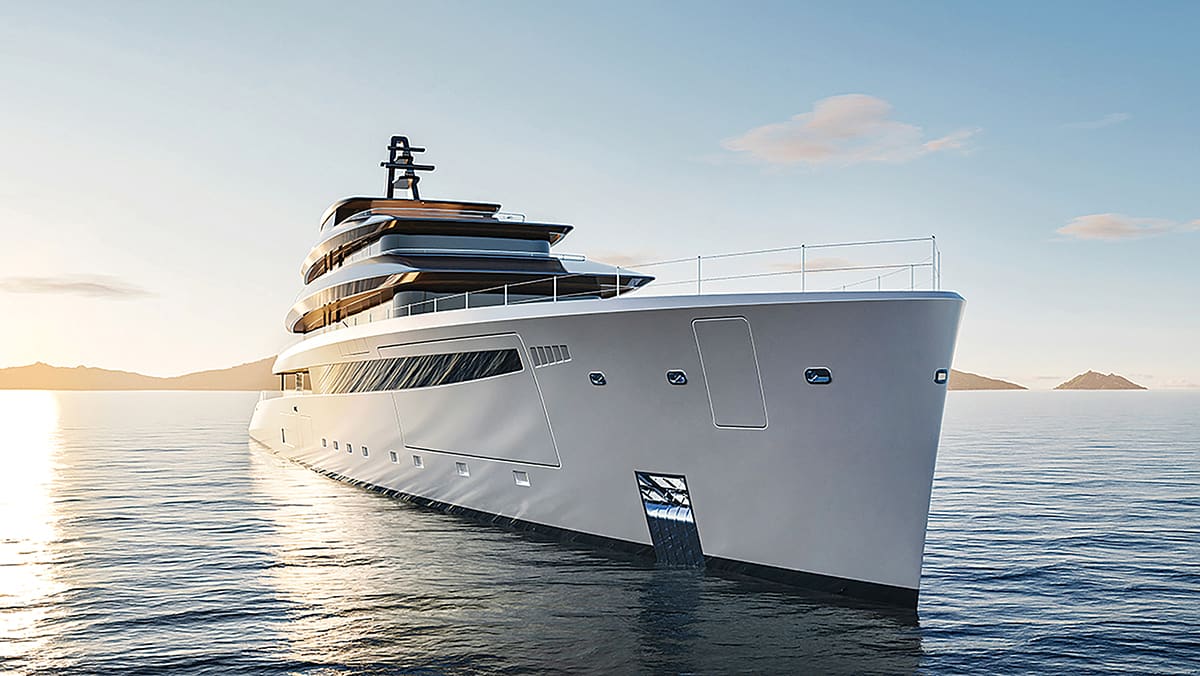
The shift is architectural. Where wellness amenities were once squeezed into leftover square footage, they now dictate the blueprint. Heesen's 72-metre Project Ananda, unveiled in June, devotes nearly 100 square metres of its beach club to a suite that includes sauna, steam room, ice bath, snow shower, treatment room, and hyperbaric chamber. The design language is clinical precision meeting marine luxury.
The 122-metre Lürssen Kismet, launched two years prior, features a Balinese-inspired spa equipped with cryotherapy, ice-shaving stations, and chromotherapy baths alongside traditional sauna and plunge pool. On the 115-metre Ahpo, also by Lürssen, Venetian studio Nuvolari Lenard structured the entire vessel around extended voyaging and sustained vitality. Circulation patterns, spatial hierarchy, and interior atmosphere were all calibrated to support what co-founder Dan Lenard describes as healthy living at sea, a concept that extends well beyond the sky-deck gymnasium or meditation pavilion.
Longevity, he notes, is becoming a new expression of luxury. It is less about what one owns and more about how one inhabits time.
The Wellness Roster
Crew training has followed suit. Those seeking positions aboard the most sought-after yachts now pursue advanced certifications: 200-hour yoga teacher training, sports massage diplomas, plant-forward culinary programmes. One former crew member recounts mornings that began at six and stretched until mid-afternoon, filled back-to-back with guest exercise sessions aboard a prestigious sailing superyacht and its support vessel. The gym, he observed, had become the social heart of the boat.
This professionalisation reflects a broader recalibration of priorities among owners. The checklist of amenities, once sufficient, has given way to something more systemic: an environment engineered to affect sleep quality, energy levels, and recovery. Air purification, circadian lighting, acoustic insulation, and thermal regulation are no longer optional upgrades. Heesen's owner, Laurens Last, expects these elements to become standard in yacht design, embedded at the blueprint stage rather than retrofitted.
Entry-Level Vitality
The wellness imperative is not confined to the largest launches. California entrepreneur Scott Blum, unable to find an existing model that matched his active routines, commissioned the 43-metre Sea Rover series, now under construction in the Netherlands. The spa, gymnasium, and sports court occupy the prime bridge-deck real estate. An atrium-style skywell channels natural light through every level. Cold and hot plunge pools, infrared therapy walls, and treatment spaces determined the interior dimensions before a single stateroom was drawn.
Blum's directive was explicit: the yacht was to be designed around the gym and spa. Everything else followed. It is a reversal of the traditional superyacht hierarchy, which placed entertaining and lounging at the centre and fitness at the periphery. Here, the vessel becomes a floating infrastructure for vitality, a platform where the pursuit of longevity shapes the architecture rather than competing with it.
The Atrium and the Ice Bath
What distinguishes this wave of design is not simply the presence of equipment but the way space is organised to privilege it. The skywell aboard Sea Rover, for instance, is not decorative; it serves a physiological function, flooding lower decks with daylight to regulate circadian rhythm. The placement of the spa on the bridge deck, rather than tucked into a lower hold, signals its centrality to the vessel's purpose.
Similarly, the hyperbaric chamber aboard Project Ananda is not an eccentric add-on but part of a broader suite calibrated for recovery and cellular health. These are interventions more commonly associated with regenerative medicine clinics than recreational craft. Their migration to the marine environment reflects both the ambitions of owners and the evolving expertise of designers willing to integrate medical-grade infrastructure into leisure spaces.
Beyond Conspicuous Consumption
There is an ideological dimension to this shift. The superyacht, long a symbol of conspicuous consumption, is being reimagined as a tool for conscious living. The emphasis on longevity, on optimising the body's capacity to endure and thrive, reframes luxury not as indulgence but as stewardship. It is a narrative that resonates with a cohort of owners who measure wealth not only in assets but in years of vigorous health.
This is not to suggest that excess has been abandoned. These are still vessels that cost tens of millions, staffed by teams whose sole purpose is to anticipate need. But the nature of that need has evolved. The ice bath at dawn, the infrared session after lunch, the carefully calibrated lighting in the stateroom: these are rituals of maintenance, not decadence.
The Ecosystem of Recovery
The most ambitious projects approach wellness not as a feature set but as an ecosystem. Nuvolari Lenard's work on Ahpo illustrates this: every design decision, from the width of corridors to the palette of finishes, was considered for its impact on the occupant's physical and mental state. The result is a vessel where the environment itself is therapeutic, where architecture and routine align to support sustained wellbeing over weeks or months at sea.
This holistic thinking is spreading. Dutch Design's Sea Rover, Heesen's Project Ananda, and Lürssen's recent launches all reflect a design philosophy that treats the yacht as a total environment rather than a collection of rooms. Air quality, natural light, thermal comfort, and acoustic isolation are woven into the fabric of the vessel, creating conditions that support not just comfort but resilience.
The Finish Line at Sea
The father and son who ran coastal routes from Bali to Sweden were not outliers. They were early adopters of a pattern that is now shaping the industry. The yacht is no longer a backdrop for leisure; it is an active participant in the pursuit of longevity. The architecture reflects this shift, prioritising recovery and vitality over spectacle.
As the industry matures, the question is no longer whether wellness belongs aboard but how deeply it can be integrated. The answer, judging by the latest launches, is: all the way down to the hull. The superyacht is becoming a floating clinic, a spa, a gymnasium, and a home, all calibrated to extend not just the voyage but the years that follow.