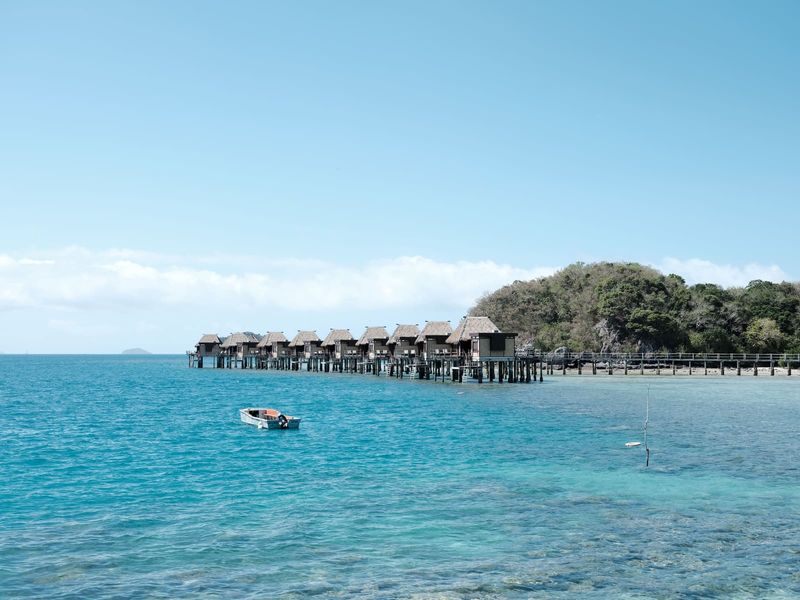
The Language of Coastal Rooms: Decoding What Your Hotel View Really Means
Between oceanfront suites and ocean-view chambers lies a geography of semantics - and several hundred dollars in nightly rates.

The Vocabulary of Proximity
There is a particular morning ritual practiced by travelers who have paid premium rates for proximity to water: the slow approach to floor-to-ceiling glass, the first glimpse of horizon, the private audit of whether the view was worth the surcharge. At Global Chic Voyage, we've watched guests perform this same choreography in properties from the Maldives to Big Sur, and the satisfaction or disappointment that follows often hinges on a single adjective buried in the booking description.
The hospitality industry has developed an entire taxonomy for rooms that face water, and the distinctions are anything but arbitrary. An oceanfront accommodation typically means your balcony or terrace sits as close to the water as architecture and erosion setbacks will allow. You hear waves as ambient sound rather than distant suggestion. Salt air moves through your room with each door opening. The ocean is not something you view - it is something that shares your immediate environment.
An ocean-view room, by contrast, occupies a more flexible category. It promises sightlines to water but makes no guarantees about proximity, angle, or obstruction. You might enjoy an unimpeded panorama from an upper floor, or you might crane past neighboring balconies and landscaping to catch a wedge of blue between palm fronds. Both technically deliver on the promise; only one delivers on the fantasy most guests carry when they book coastal accommodations.
The Economics of Sightlines
The rate differential between these categories can swing from modest to staggering depending on property and season. A beachfront resort in Tulum might add thirty percent to the nightly rate for oceanfront placement, while a legacy property in Waikiki can double the price for rooms that open directly onto sand. The markup reflects not only desirability but also inventory scarcity - most hotels have far more rooms with partial water views than they do with unobstructed, immediate access to the shoreline.
What complicates the equation is the lack of standardized definitions across the industry. One property's oceanfront might be another's ocean-facing. A third might introduce categories like ocean-adjacent or partial ocean view, each with its own rate tier and its own relationship to the water. The language becomes a kind of cartography, mapping concentric circles of proximity that guests must decode before they book.
We've found that the most transparent properties provide floor plans or photographic evidence of sightlines from specific room categories. The least transparent rely on aspirational language and allow guests to discover the reality only upon check-in, by which point dissatisfaction becomes a matter for the front desk rather than the booking engine.
What the View Includes - and Excludes
An oceanfront room in a well-designed property considers not only the water itself but also the frame through which you experience it. The best examples eliminate visual clutter: no power lines bisecting the horizon, no service roads between terrace and tide, no neighboring structures interrupting the sightline. The architecture treats the ocean as the primary design element, and everything else recedes.
Ocean-view rooms, because they occupy a broader and more varied category, can include anything from sweeping vistas on upper floors to sliver glimpses through architectural gaps. Some offer stunning perspectives that oceanfront guests never see - elevated angles that capture the full sweep of coastline, the play of light on distant water, the sense of geographic scale that ground-level proximity sometimes sacrifices. The hierarchy of desirability is not always as linear as pricing suggests.
Then there are the rooms that occupy linguistic gray zones: garden view with ocean glimpse, city view with water beyond, mountain view with coastal backdrop. These hybrid categories reflect the reality that many properties sit in complex landscapes where multiple elements compete for attention. A room that faces inland but opens onto a courtyard with a fountain and tropical planting might offer a more serene and restorative experience than a fourth-floor ocean view that requires you to step onto a narrow balcony and peer past railings.
The Question of Worth
Whether the premium for oceanfront placement justifies itself depends less on universal standards than on individual travel rituals. Guests who spend their days exploring off-property and return only to sleep may find little value in immediate water access. Those who structure their stay around private sunrise meditation, in-room dining with a view, or the ability to move seamlessly between suite and beach will find the surcharge essential rather than extravagant.
There is also the matter of memory and narrative. The story you tell about a trip - to yourself, to companions, to the audience that follows your travel chronicles - often hinges on iconic moments, and waking to the sound of waves breaking just beyond your terrace window is the kind of detail that anchors recollection. An ocean-view room might offer a perfectly lovely stay; an oceanfront room offers the raw material for nostalgia.
We've noticed, too, that the value equation shifts with repeat visits. First-time guests often prioritize the most premium placement, wanting to experience the property at its aspirational peak. Return visitors sometimes opt for mid-tier categories, having already satisfied their curiosity about the top-shelf experience and now more interested in exploring different parts of the property or redirecting budget toward other aspects of the trip.
Securing the View You Want
The mechanics of booking the ideal coastal room require a combination of advance planning, strategic timing, and occasionally, direct negotiation. Properties typically release their most desirable inventory - oceanfront suites, corner rooms with wraparound views - well in advance, and these categories often sell out during peak season months before standard rooms reach capacity. Booking early provides not only availability but also leverage for requests: specific floor preferences, particular orientations, rooms at the quiet end of a corridor.
Loyalty program members and guests booking directly through a property rather than third-party platforms often gain access to room selection tools that show exact placement within the building. These interfaces allow you to choose not just a category but a specific unit, turning the process from abstract hope into concrete planning. The difference between a third-floor oceanfront room at the noisy center of a resort and a sixth-floor oceanfront corner room at the tranquil edge can be profound, yet both fall within the same rate category.
There is also value in candid communication with reservations teams. A brief phone call or email clarifying what you mean by oceanfront - unobstructed sightlines, proximity to sand, minimal ambient noise from public areas - can surface options or caveats that the website's dropdown menus never reveal. Some properties maintain unofficial hierarchies within their official categories, and a knowledgeable agent can steer you toward the superior options if you ask the right questions.
When Elevation Trumps Proximity
Not every coastal property follows the assumption that closer is better. In destinations with dramatic topography - cliff-side resorts in Santorini, hillside retreats overlooking the Amalfi Coast, terraced properties descending toward Caribbean coves - the most coveted rooms often sit well above sea level, trading immediate beach access for commanding perspectives that encompass miles of coastline.
These elevated placements offer a different relationship to water: contemplative rather than immersive, painterly rather than tactile. You sacrifice the ability to step directly onto sand, but you gain the sense of occupying a privileged vantage point, a private observatory where the ocean becomes a living canvas that shifts with weather and light. For travelers who value visual drama over physical proximity, the tradeoff is not a compromise but an upgrade.
The same principle applies to urban coastal hotels, where upper-floor ocean views might look out over rooftops and harbor activity before reaching water, but the composite scene - the layered geography of a city meeting the sea - tells a richer story than an isolated focus on waves and sand. Context matters as much as content, and the most satisfying views are often those that situate the ocean within a broader sense of place.
The Unspoken Considerations
Beyond the language of categories and the mechanics of booking lies a set of subtler factors that shape whether a room delivers satisfaction. Orientation matters: east-facing oceanfront rooms flood with morning light but lose the sun early; west-facing rooms offer sunset vistas but can overheat by mid-afternoon. Noise levels vary not just by proximity to water but by location relative to pools, beach bars, and pedestrian pathways. Privacy depends on sightlines not only toward the ocean but also from neighboring rooms, public spaces, and beach areas.
Some properties address these variables with thoughtful design: terraces set at staggered heights to prevent overlooking, strategic landscaping that buffers sound without obstructing views, blackout systems that allow guests to control light without sacrificing the connection to outdoors. Others leave guests to navigate these tradeoffs on their own, discovering only after check-in that their oceanfront balcony is also the most public room in the resort.
At Global Chic Voyage, we've come to see the question of ocean view versus oceanfront as less about decoding hospitality jargon and more about clarifying what kind of relationship to place you seek during a stay. The language properties use is imperfect, often maddeningly so, but it gestures toward real differences in how you will inhabit a space and experience a destination. The view you pay for is not just a vista; it is a framework for attention, a daily ritual, a parameter that shapes memory.
The wisest approach, we've found, is to treat the booking process as a form of research rather than transaction - to ask questions, request specifics, consult floor plans, and remain skeptical of euphemism. The ocean will still be there regardless of which room you occupy. But the quality of your encounter with it, the ease with which it enters your daily rhythm, the degree to which it becomes a presence rather than a postcard - that is what the language of coastal rooms attempts, however imperfectly, to name.