Inside Somma: Where Puglian Tradition Meets Zero-Waste Philosophy
Chef Mirko Febbrile transforms a former school library into a culinary classroom, teaching the ancient art of cucina povera one course at a time.
The Library That Became a Lesson
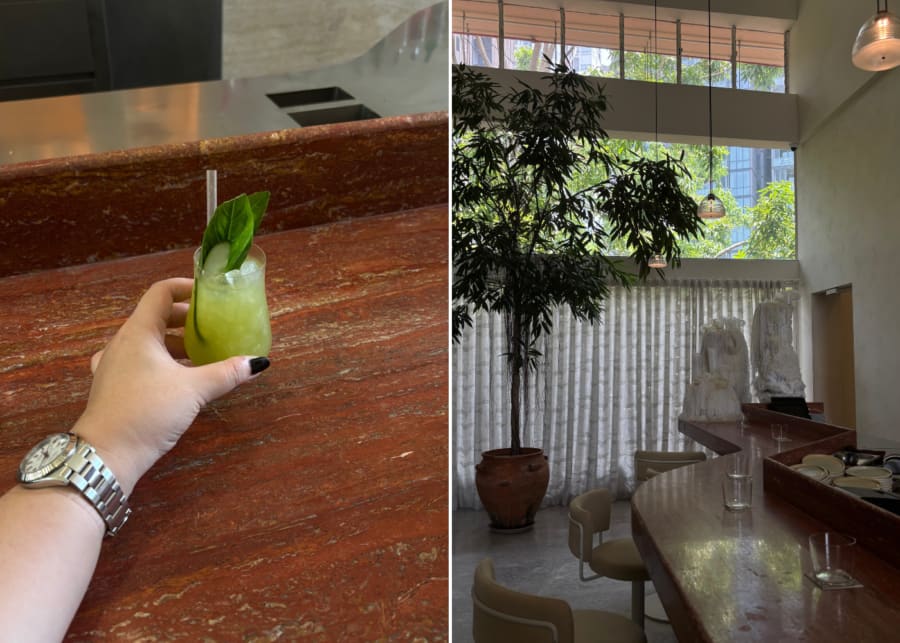
The fourth floor of New Bahru carries an unusual inheritance. Where teenage girls once turned pages in silence, diners now experience something equally instructive, though delivered through taste rather than text. The space retains a certain pedagogical quality, not in its architecture but in its approach, a place where meals arrive accompanied by stories of their making.
Chef Mirko Febbrile has built his restaurant around cucina povera, the Italian tradition of waste-nothing cooking that transforms humble ingredients through patient technique. It is kitchen wisdom passed through generations, the kind learned at a grandmother's elbow rather than culinary school. Here, corn silk becomes broth. Carrot trimmings age cheese wheels. Even the flowers meet the plate.
The experience begins downstairs at Bar Somma, where a welcome drink of lemon and cucumber prepares the palate. Then comes the ascent, the opening of doors, and an unusual greeting: the entire kitchen team standing in formation, presenting snacks that preview the meal ahead. This season brings corn transformed into clear umami broth, every part of the plant contributing flavor. Artichokes arrive slow-cooked and fried, finished with aged lardo and peppers. The kitchen staff explain each preparation with visible enthusiasm, turning aperitif into introduction.
A Region on the Plate
Puglia emerges course by course, not as postcard but as lived experience. The family's own olive oil, pressed from their final harvest of Coratina olives, arrives with bread. A fried zucchini flower rests in whipped ricotta, echoing the simple vegetable-and-cheese meals of the region's home kitchens. The sourdough itself carries local character, made with semola, carob, and burnt wheat, its high hydration yielding a crust that shatters and a crumb with spring.
The bread course presents a particular challenge to restraint. The ricotta pool invites scarpetta, that Italian practice of mopping sauce with bread, and the combination proves difficult to abandon. Most diners pace themselves through early courses; this one inspires different behavior.
Summer in southern Italy means stone fruit at peak sweetness, raw fish dressed simply, and families preparing passata in quantity for winter meals. The Meridian course condenses these rituals into a single plate. Yellowfin tuna meets fresh nectarine, accompanied by tomato sorbet that tastes of cold gazpacho perfected. The sorbet particularly surprises, achieving a savory-sweet balance that feels both familiar and inventive.
Milk-fed lamb arrives without the funk that often accompanies the protein. Cooked slowly over embers, the rack develops crackling-crisp fat while the meat stays tender. The restaurant encourages eating with hands here, a return to family-table informality. Towels follow for cleanup.
Pasta as Philosophy
Two pasta courses anchor the menu, each introduced with ceremony. For the Rural Cooking course, staff wheel out a clay-wrapped eggplant and crack it open tableside, revealing the vegetable's transformation through ancestral technique. Combined with lardo and red chimichurri, the dish achieves a stew-like consistency that radiates comfort despite its refined presentation.
The Plains course represents the kitchen's most extreme expression of cucina povera. More than twenty kilos of carrots stew for three to four days, reducing to a single liter of concentrated sauce. The result resembles molasses in both texture and intensity, aggressively sweet with peppery undertones. Tossed with spaghettone made from ancient Khorasan wheat, the pasta captures Somma's entire philosophy in a few bites. The flavor borders on overwhelming, its richness testing the palate's capacity, yet the dish commands attention through sheer commitment to process.
The Cellar Classroom
After savory courses conclude, staff guide diners to the wine cellar for an optional cheese experience. Somma collaborates with Italian farms to source cow, sheep, and buffalo milk cheeses, aging the wheels in-house and flavoring them with ingredients otherwise destined for disposal. Four varieties arrive with beverage pairings, alcoholic or otherwise, each cheese carrying unexpected notes.
The Pecorino Val d'Orcia, made from sheep's milk and aged with red carrots, figs, tomato preserves, and chamomile, achieves a sweet-salt interplay that feels both familiar and novel. A buffalo milk Bluefalo offers a gentler approach to blue cheese, less aggressive than typical varieties though still polarizing. The cheese experience operates independently of restaurant reservations, available as a standalone booking for those seeking education without the full meal.
The Calculation of Value
Somma's six and eight-course menus begin at prices that prompt consideration. The portions follow fine-dining convention, prioritizing composition over volume. Diners seeking fullness as the primary metric may leave unsatisfied. Yet satisfaction arrives through different channels here: the explanation of technique, the transparency of process, the sense of participating in preservation of tradition rather than mere consumption.
Chef Febbrile has declined to offer greatest-hits Italian cuisine, the familiar shapes and flavors that signal comfort through recognition. Instead, he presents Puglia as it exists in memory and practice, filtered through a zero-waste lens that honors the region's resourceful spirit. The meal concludes not with dessert alone but with the option to purchase the family's olive oil, a tangible connection to the sourcing that underpins every course.
The former library space suits this approach. Knowledge still gets shared here, though it now travels through taste and narrative rather than printed page. Whether that education justifies the investment depends on what diners seek: a meal that fills, or one that teaches while it feeds. Somma commits firmly to the latter, trusting that some guests will value the lesson as much as the lunch.