Ko Olina: Where Oahu Reveals Its Quieter Shore
Beyond the familiar Waikiki crowds, this west-coast enclave offers lagoons, culinary finesse, and a rhythm calibrated to the tides rather than the tour-bus schedule.
A Different Threshold
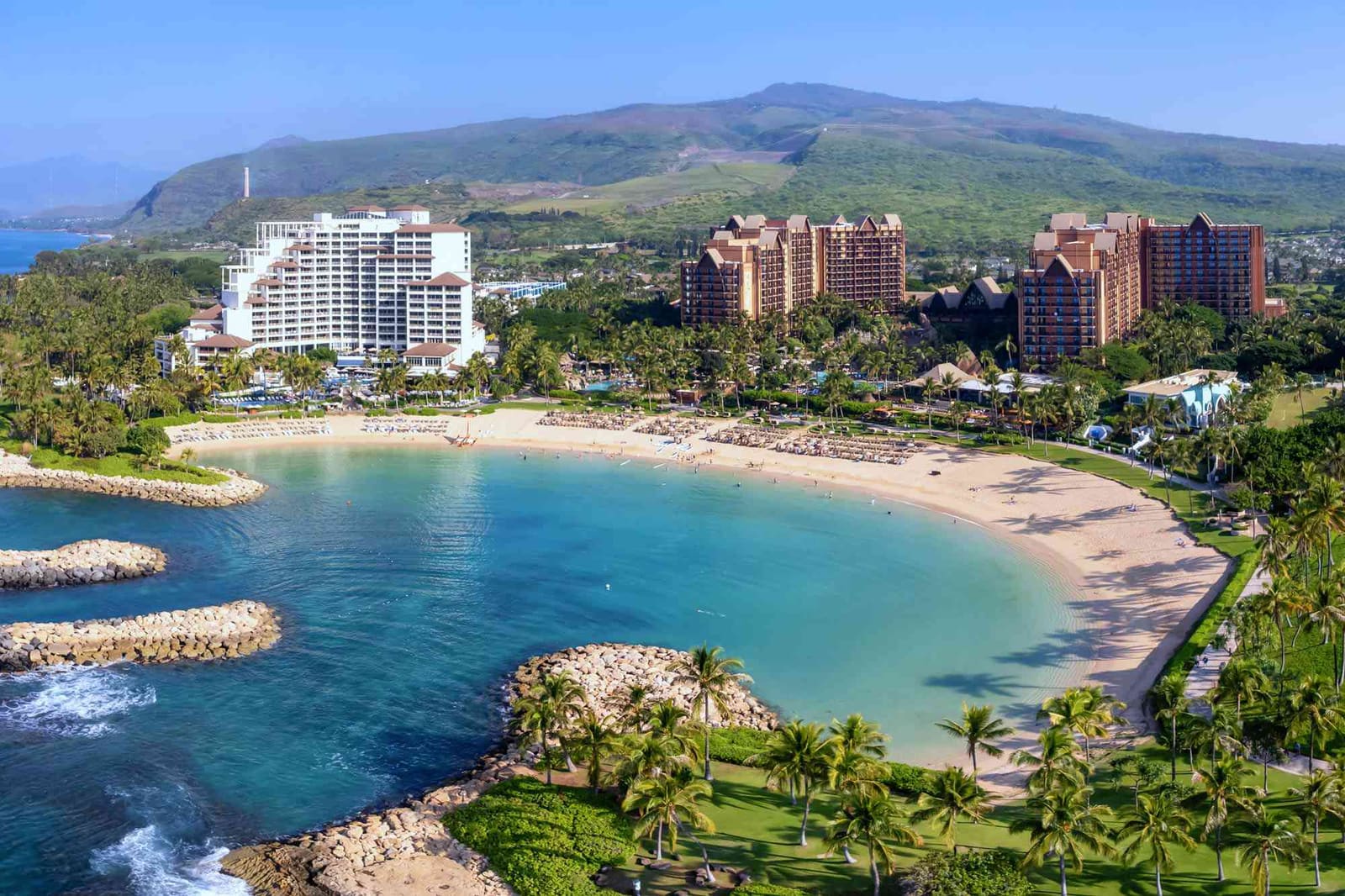
The road from Honolulu curls west, tracing the coast until the high-rises thin and the shoreline opens into a series of crescent bays, each sheltered by man-made breakwaters that calm the Pacific into something resembling a turquoise bathtub. This is Ko Olina, a 642-acre resort community on Oahu's leeward coast where the rhythm shifts perceptibly from the capital's frenetic energy. The air here carries less diesel, more plumeria. The beaches empty by mid-afternoon. It is not wilderness, nor does it pretend to be, but it occupies a middle ground between Waikiki's density and the North Shore's raw swell, a calibrated ease that appeals to travellers who prefer their tropics with infrastructure intact.
The name translates loosely to "place of joy," a designation that reflects less the ecstatic and more the contented. Ko Olina was master-planned in the late 1980s, carved from former plantation land into a constellation of resorts, golf courses, and four lagoons engineered to offer safe swimming year-round. The engineering is evident but not ungraceful. The lagoons are ringed by white sand imported to soften the volcanic base, and the water within them is startlingly clear, filtered by the tide but protected from the open ocean's unpredictability. Families wade in without worry. Snorkellers drift over reef fragments colonised by bright wrasse and the occasional green sea turtle, unbothered by current.
The Culinary Anchor
Dining in Ko Olina skews resort-centric, which historically meant competent but uninspired. That calculus has shifted as properties invest in chefs capable of more than convention menus. Aulani, the Disney property, houses Makahiki, a buffet operation that surprises with its commitment to local sourcing: Kona coffee, Big Island honey, Maui onions, and fish pulled from waters within sight of the dining room. The breakfast spread leans into Hawaiian staples, Portuguese sausage and taro hash alongside the expected pancakes, a nod to the archipelago's layered immigration history.
For those seeking a more composed experience, Noe at the Four Seasons Ko Olina offers Italian technique filtered through island availability. The pasta is made in-house, the seafood changes with the catch, and the wine list favours European producers with the occasional Napa inclusion. The dining room opens onto the lagoon, and the design is deliberate: low-backed chairs, unobtrusive lighting, a palette of sand and driftwood that refuses to compete with the view. It is expensive, unapologetically so, but the execution justifies the outlay.
Off-resort, options narrow. The nearby Kapolei commercial district offers strip-mall pragmatism: poke counters, plate-lunch windows, a scattering of chain franchises. Monkeypod Kitchen, a local mini-chain, bridges the gap with a menu that balances accessibility and ambition. The fish tacos are respectable, the pizzas wood-fired, the mai tais potent enough to erase the memory of airport queues. It is not destination dining, but it functions, and for travellers weary of resort pricing, it offers reprieve.
Where to Anchor
Accommodation in Ko Olina splits between two poles: the Disney-branded Aulani, purpose-built for families, and the Four Seasons, which courts a quieter, more moneyed demographic. Aulani is unsubtle in its theming, a sprawl of fantasy Hawaiiana complete with a lazy river, character breakfasts, and a replica of a traditional village that reads more theme park than ethnography. Children adore it. Adults tolerate it, or, occasionally, succumb. The property does invest in cultural programming, hula lessons and ukulele workshops led by local practitioners, which lends a veneer of authenticity beneath the branded veneer.
The Four Seasons, by contrast, cultivates restraint. The architecture is low-slung, the interiors favour koa wood and lava stone, and the pools are designed for laps rather than cannonballs. Service is attentive without hovering, a hallmark of the brand. Rooms face either the lagoon or the golf course, and the latter, counterintuitively, offers better sunrise views, the light spilling over the Waianae Range in gradients of apricot and rose. The spa menu runs long, treatments incorporating lomilomi massage and pohaku hot-stone therapy, techniques rooted in Native Hawaiian healing traditions, though adapted for the resort spa's sixty-minute appointment slots.
A smaller contingency of vacation rentals dots the periphery, condominiums marketed to those willing to trade concierge service for kitchen access and lower nightly rates. The quality varies. Some units are meticulously maintained, others show their age. Proximity to the lagoons remains the primary selling point, and for multi-generational groups or extended stays, the equation tilts in their favour.
Lagoon Rituals and Beyond
The four lagoons are Ko Olina's raison d'être, each accessible to the public despite their resort adjacency. Lagoon One fronts Aulani and skews youngest in demographic. Lagoon Four, at the far end, draws fewer crowds and offers the best snorkelling, the breakwater harbouring more established coral and correspondingly more fish. Mornings are optimal: the water undisturbed, the light angled to reveal every grain of sand below. By afternoon, the lagoons fill with paddle-boarders and kayakers, the rental kiosks doing brisk business.
Beyond the lagoons, Ko Olina offers golf, the course designed by Ted Robinson and notable primarily for its oceanfront holes and the improbable number of black swans imported to populate the water hazards. The layout is forgiving, the conditioning immaculate, and the greens fees reflect both. Non-golfers might explore the Ko Olina Marina, departure point for catamaran charters and sunset sails, or venture further afield to the Kahe Point Beach Park, locally known as Electric Beach for the warm-water outflow from the adjacent power plant that draws manta rays and eagle rays in numbers that thrill divers.
Cultural offerings remain modest. The weekly luau at Aulani is professionally executed but formulaic, the narrative arc familiar to anyone who has attended such an event elsewhere in the islands. For deeper engagement, one must drive: the Polynesian Cultural Center lies an hour north, Pearl Harbor forty minutes east. Ko Olina itself is not a place of pilgrimage but of pause, a locale that privileges rest over revelation.
The Calculus of Choosing West
Oahu's west side has long played second to the island's more storied coasts. Waikiki commands name recognition, the North Shore waves and fame, the Windward side drama and greenery. Ko Olina offers none of these in superlative form. What it provides instead is convenience paired with calm, a resort environment engineered to minimise friction. The beaches are safe, the dining adequate to excellent, the accommodations polished. It suits travellers for whom Hawaii functions less as adventure and more as interlude, a place to decompress rather than conquer.
The sunsets here are dependable, the western exposure ensuring nightly performances of gold bleeding into indigo, best viewed from the lagoon's edge with feet in the shallows. Clouds permitting, the island of Niihau appears on the horizon, a faint silhouette that serves as reminder of the archipelago's breadth. It is easy, in Ko Olina's constructed tranquillity, to forget the volcano and the reef, the geology and the history, the complexity beneath the ease. But for those content to let complexity recede, to accept the trade of depth for comfort, Ko Olina delivers precisely what it promises: a place calibrated for joy, the uncomplicated kind.