The Private Cay That Proved Seclusion Can Still Exist in the Caribbean
On a 96-acre island off Andros, one writer discovered what happens when nature is allowed to lead the conversation.
The Problem with Paradise Found
There is a particular melancholy that accompanies watching a place you love become too popular. It starts with subtle shifts: a new resort tower on the horizon, a beach that requires reservations, the slow creep of boutiques selling the same linen tunics you saw three islands ago. The Caribbean, for all its enduring beauty, has not been immune to this transformation. Islands that once felt like secrets now feel like sets, designed for consumption rather than contemplation.
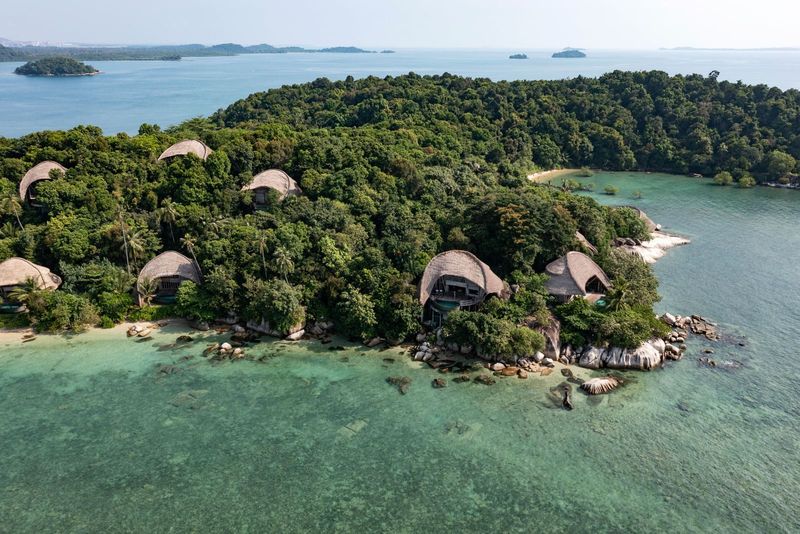
Against this backdrop of commercialisation, Kamalame Cay exists as something of an anomaly. Situated on a private barrier island spanning 96 acres off the coast of Andros in the Bahamas, the property demands commitment from its visitors. There is no casual drop-in. Guests must either route through Nassau and board a ten-minute puddle jumper to Fresh Creek Airport, or arrange passage on one of the resort's Coco seaplanes departing Fort Lauderdale, which land directly on the water beside that iconic shoreline. The journey itself becomes a filtering mechanism, ensuring that those who arrive truly want to be nowhere else.
An Architecture of Restraint
The grounds do not announce themselves with grand gestures. Palm trees frame sandy paths that remain deliberately unpaved and unmarked, cultivating the aesthetic of shipwreck rather than resort. Hermit crabs, thousands of them, traverse the property with an ease that suggests they are the true residents; human guests are merely temporary inhabitants of their domain. Golf carts serve as the primary mode of transport, not out of luxury but necessity, navigating terrain designed to resist the kind of manicured order that defines so many Caribbean properties.
The 21 seaside rooms and suites subscribe to a philosophy of barefoot elegance. Whitewashed wood, linen curtains, and accent pieces inspired by marine life create spaces that feel intentionally minimal without veering into asceticism. These are rooms designed for sleep and little else, an acknowledgement that the true theatre lies beyond their walls. For larger parties, a collection of villas accommodates between four and twelve guests, each varying in architecture and sightline but unified in their refusal to compete with the landscape.
The Tyranny of Choice, Dissolved
Modern travel often suffers from an excess of options. Itineraries become checklists; relaxation transforms into optimisation. Kamalame Cay sidesteps this exhaustion through geography. With Andros home to fewer than 8,000 residents despite being the Bahamas' largest island by landmass, there are no bustling towns to explore, no restaurant districts to research, no cultural sites demanding attention. The resort itself becomes the universe, and the limitation proves liberating.
Activities exist, naturally. Mongoose fat-tyre bicycles, paddleboards, and kayaks await those seeking exertion. The resort organises excursions for reef fishing, lionfish spearing, and bonefishing. Snorkellers and divers benefit from proximity to the world's third-largest barrier reef, a nearly 200-mile ribbon of coral tracing Andros's eastern coast. The island also claims the planet's highest concentration of blue holes, those eerie sinkholes and cave systems that puncture both forest floors and offshore shallows, inviting exploration for those inclined toward the subterranean.
But equally valid is the choice to do none of this. To spend hours in water so calm it barely qualifies as ocean, bobbing in place while the horizon stretches uninterrupted. To observe sea turtles, stingrays, and tropical fish without the mediation of a guided tour. To recognise that witnessing is itself an activity.
The Rhythm of Disconnection
In an era when global events cascade through screens with relentless velocity, certain places offer the possibility of productive ignorance. Kamalame Cay provides this service not through digital detox programmes or wellness manifestos, but through simple geographic fact. The island sits far enough from centres of population and commerce that the world's urgencies arrive muted, if they arrive at all.
The on-site restaurant, bar, meeting house, freshwater pool, and gift shop provide structure without imposing schedule. Menus shift according to what the surrounding waters and land yield, a practice that roots meals in place rather than expectation. Staff members cultivate familiarity over formality, an approach that sidesteps the performative hospitality sometimes endemic to luxury properties. There are no butlers hovering, no orchestrated experiences designed to manufacture spontaneity. Instead, there is competence laced with warmth, the kind that emerges when people genuinely enjoy their work rather than merely executing it.
What Remains Unmarked
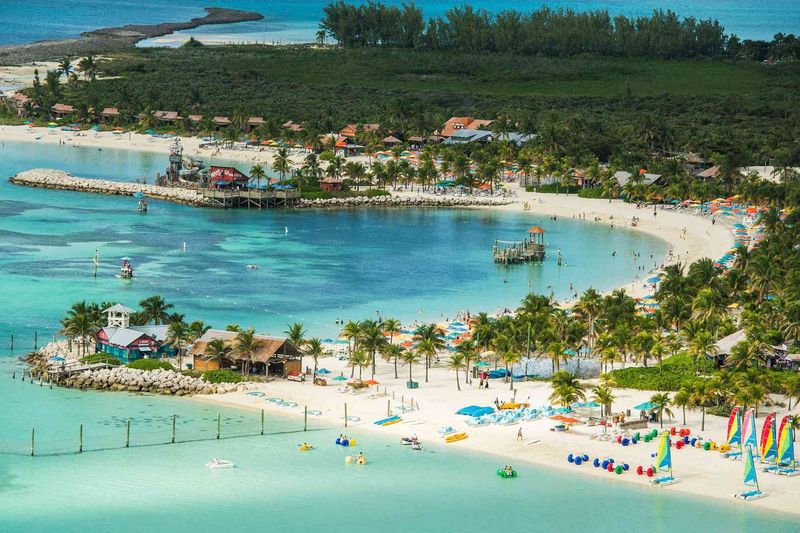
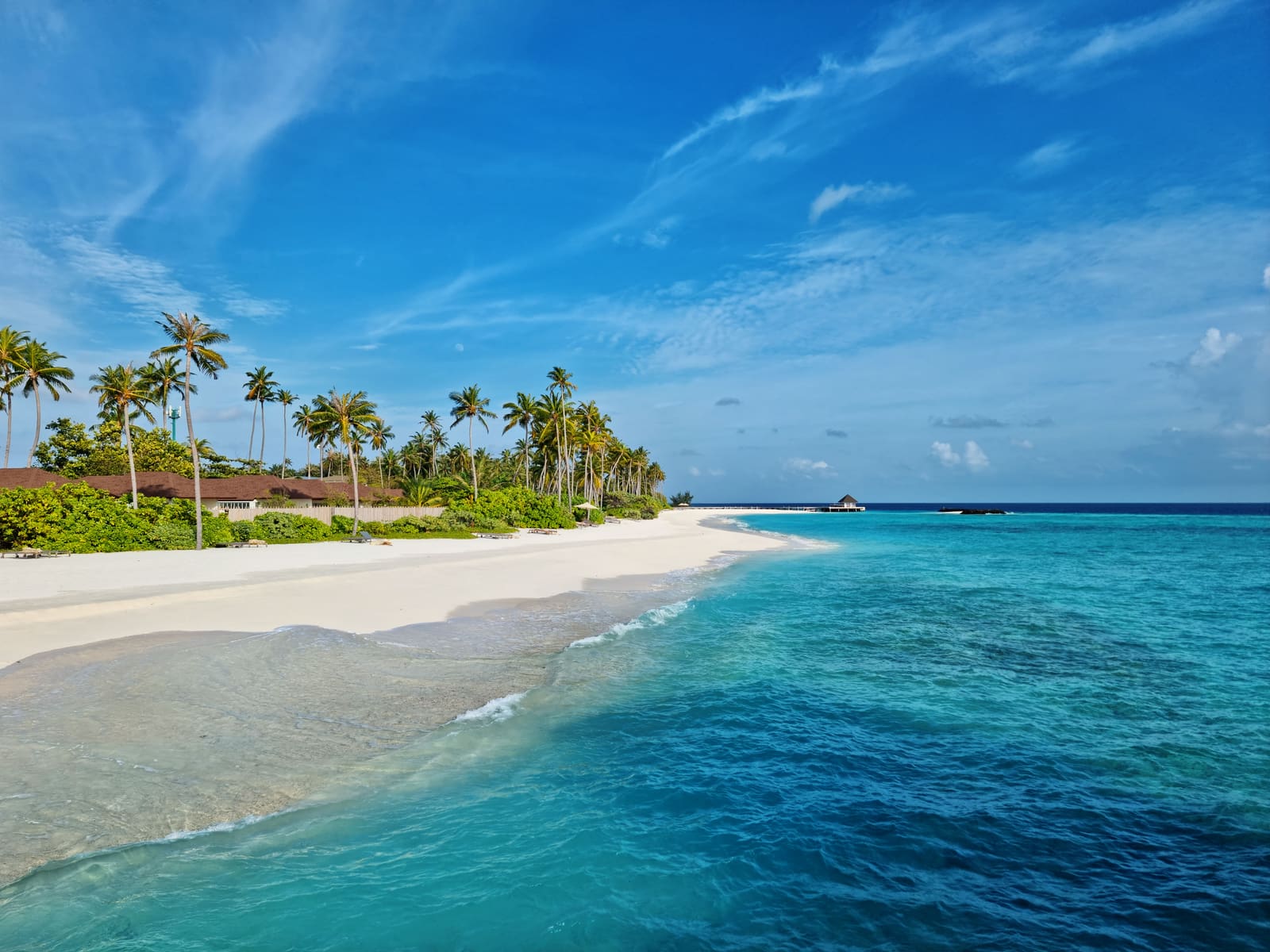
The beaches at Kamalame Cay stretch long and nearly waveless, their sand possessing that talcum-powder texture the Caribbean has trademarked. But the revelation is not the sand itself; it is the absence of others upon it. Even during peak occupancy, the shore feels privately held, as though each guest has been granted exclusive access to their own section of coastline. Hours pass unmarked by anything other than the sun's transit across the sky, that ancient clock still functioning where digital ones have been silenced.
This is not a property that traffics in transformation. There are no sunrise yoga sessions promising enlightenment, no spa treatments claiming to realign chakras. The overwater spa stocks products from Osea Malibu and delivers treatments competently, but it does not pretend to offer anything beyond physical relaxation. The honesty is refreshing. Kamalame Cay does not promise to change you; it simply provides the conditions under which you might, if you're so inclined, change yourself.
The Value of Repetition
Return visits to the same property carry a particular pleasure, distinct from the thrill of discovery. Familiarity allows for deeper noticing: the way light hits a specific palm at a certain hour, the route stingrays follow along the shallows, the subtle menu shifts that mark seasonal transitions. Kamalame Cay rewards this kind of attention, revealing itself in layers rather than all at once.
Boat excursions to neighbouring cays offer variation within the theme. Some of these tiny islands disappear entirely at high tide, existing only temporarily before the ocean reclaims them. Picnics on such ephemeral land carry a peculiar romance, a reminder that even geography is negotiable in this part of the world. Shelling expeditions yield treasures that feel earned rather than purchased. Private celebrations staged on these vanishing islands acquire an almost mythical quality, events that exist only in memory once the tide erases all physical evidence.
When Isolation Becomes Luxury
The contemporary definition of luxury has expanded to include experiences once considered basic: silence, darkness, solitude. Kamalame Cay traffics in these increasingly rare commodities without fanfare. The property does not market its remoteness as deprivation but as its primary asset, a stance that requires confidence. In a hospitality landscape obsessed with amenities and add-ons, offering less becomes its own form of abundance.
The villas, in particular, understand this calculus. Their minimalist design is not about withholding but about editing, removing everything that might compete with the elemental experience of being on an island in the ocean. Whitewashed surfaces reflect Caribbean light; linen curtains filter it. Accent pieces reference marine life without resorting to literal seashell kitsch. The effect is one of careful curation that appears effortless, the hardest aesthetic to achieve and the most pleasant to inhabit.
The Barrier Reef as Neighbour
Andros's barrier reef, stretching nearly 200 miles, functions as both ecological wonder and practical amenity. For divers and snorkellers, it provides endless terrain to explore, a living structure more complex than any human-built architecture. But even for those who never venture beneath the surface, the reef's presence shapes the experience. It calms the waters, creating those nearly waveless conditions that define Kamalame's beaches. It supports the fish populations that make every swim an aquarium experience. It reminds, simply by existing, that humans are recent arrivals in a system far older and more intricate than any resort.
The blue holes scattered across Andros add another dimension to the island's geography. These sinkholes, formed over millennia, descend into darkness both on land and offshore. Some connect to vast underwater cave systems; others drop hundreds of feet before ending abruptly. They represent a kind of inverse architecture, spaces defined by absence rather than presence, and they exert a gravitational pull on the imagination even for those who never dive them.
What Cannot Be Replicated
Certain experiences resist scaling. Kamalame Cay's appeal lies partly in what it cannot become: a chain, a brand, a concept exported to other islands. The property's specific geography, its isolation, the particular quality of light that filters through Andros's atmosphere, these elements bind it to place in a way that defies replication. This singularity has become its own form of value in an era of homogenised travel experiences.
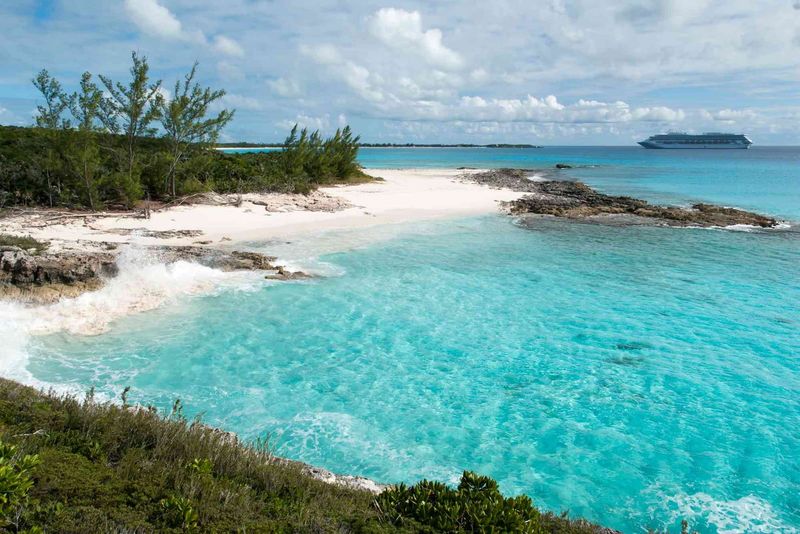
The surrounding waters, impossibly turquoise in that specific Caribbean way, provide a colour palette that shifts throughout the day. Morning light renders them almost translucent; midday sun deepens them to sapphire; late afternoon introduces hints of jade. Spending hours in this water, allowing the body to float suspended between surface and depth, becomes a form of meditation that requires no instruction. The ocean does the work; the visitor need only surrender to it.
The Case for Doing Nothing
Contemporary culture often treats rest as something to be earned, scheduled, optimised. Kamalame Cay proposes an alternative: that doing nothing might be the point rather than a prelude to doing something. That watching hermit crabs navigate their territorial disputes carries as much value as any organised activity. That feeling sand between toes and salt on skin constitutes a full day's agenda.
This philosophy permeates the property without being explicitly stated. There are no guilt-inducing activity boards, no staff members encouraging guests to make the most of their stay. The assumption is that guests already know what they want, and what they want is probably very little beyond sun, water, and the sound of palm fronds rustling in trade winds. It is a generous assumption, one that treats visitors as capable of structuring their own time without external prompting.
Where Paradise Holds
The Caribbean will continue to evolve, new resorts will rise, islands will court developers, and the balance between preservation and profit will shift according to forces larger than any single property can control. Against this inevitable change, places like Kamalame Cay matter not because they resist time but because they move through it at their own pace. The hermit crabs will continue their migrations, the tides will erase and rebuild shorelines, and the barrier reef will persist in its slow work of sheltering the island from open ocean.
For those seeking the kind of seclusion that has become genuinely rare, the journey to Andros offers proof that it still exists. Not as a performance of remoteness, not as luxury cosplaying as simplicity, but as the real article: an island that prioritises nature over narrative, where the most memorable moments are often the ones that would photograph least dramatically. A body floating in calm water. A beach with no footprints but your own. The particular quality of silence that emerges when human noise recedes and the ocean's rhythm becomes audible again.