A Private Encounter With Highland Cattle in the Shadow of a Scottish Castle
Glenapp Castle's "Coos & Ewes" experience trades drawing-room formality for the quiet company of Scotland's most iconic livestock.
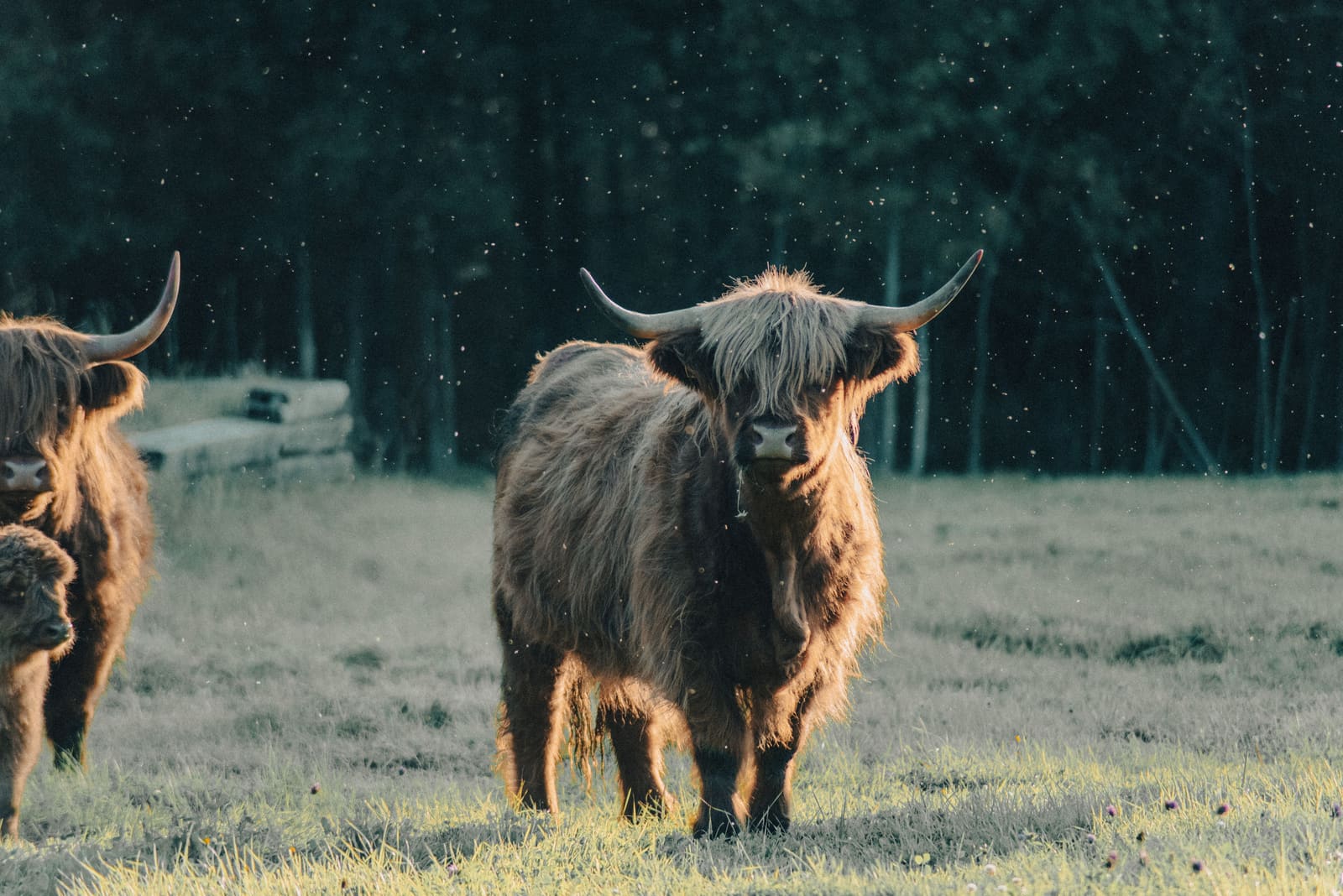
The Unexpected Appeal of Livestock
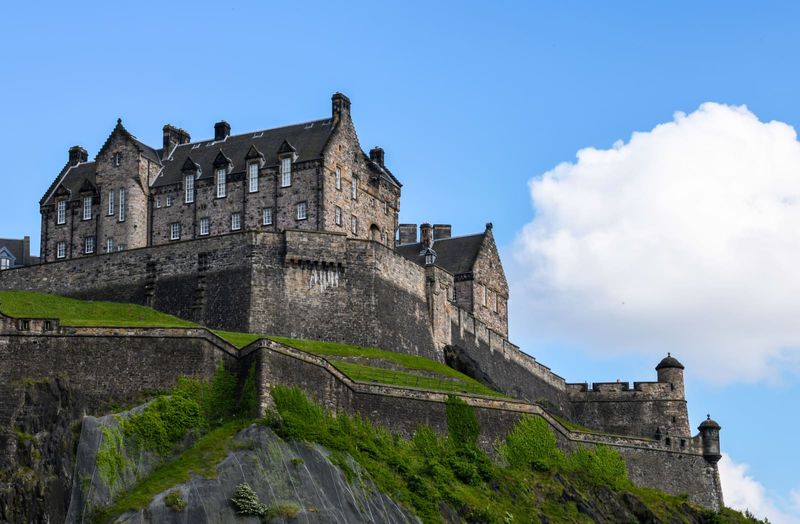
There is a particular quiet that settles over grazing land at mid-morning - no engine hum, no conversation, only the rustle of grass and the occasional low bellow. At Glenapp Castle, a turreted estate in Ayrshire that has spent more than a century watching over the Firth of Clyde, that quiet now forms the backbone of an experience designed to put guests at arm's length from some of Scotland's most recognisable residents: Highland cattle.
The property has introduced a private tour it calls "Coos & Ewes", a deliberate step away from the polished rituals - afternoon tea, candlelit dining, walled-garden strolls - that typically define country-house hospitality. Instead, visitors are guided across pasture to meet the estate's small herd of Highland cows and a flock of sheep, animals that have grazed these hills long before luxury tourism arrived.
What the Tour Offers
The experience is structured as a private walk, led by estate staff familiar with the temperament and history of each animal. Guests are invited not merely to observe but to approach, touch, and spend time in close proximity to the cattle - creatures whose shaggy coats and wide-set horns have become shorthand for the Scottish Highlands, yet whose disposition is notably calm.
The sheep, too, are part of the itinerary, though they tend to command less attention. The real draw is the cattle themselves, whose presence on the estate serves both practical and aesthetic purposes. They graze the land, yes, but they also anchor the property in a working agricultural tradition that predates its reinvention as a luxury retreat.
Why Cattle, Why Now
The rise of animal-focused experiences in hospitality is not new, but it has accelerated in the past decade as travellers have grown weary of curated distance. Alpaca walks in the Cotswolds, goat yoga in California, donkey sanctuaries in Provence - these are attempts to introduce texture, and a measure of unpredictability, into itineraries that can otherwise feel hermetically sealed.
Highland cattle occupy a particular niche within this trend. They are native, iconic, and - crucially - photogenic without being exotic. They do not require the ethical scaffolding that surrounds elephant sanctuaries or tiger reserves. They are simply there, part of the landscape, and their inclusion in a guest experience feels less like novelty and more like an invitation into the estate's everyday life.
Glenapp Castle, which operates as a five-star property with seventeen rooms, has historically positioned itself within the realm of formal hospitality: chandeliers, four-poster beds, multi-course dinners. The addition of a livestock encounter represents a calculated pivot towards informality, a recognition that luxury increasingly means access rather than distance.
The Setting
Ayrshire is not the rugged, heather-clad Highlands that dominate postcard imagery of Scotland. It is softer, greener, a patchwork of farms and low hills that slope towards the Irish Sea. Glenapp Castle sits within thirty-six acres of woodland and garden, with views that stretch across water towards Ailsa Craig, the volcanic plug that rises from the Firth of Clyde.
The estate was built in the 1870s as a private residence and has changed hands several times, most recently settling into its current incarnation as a small luxury hotel. The grounds retain much of their Victorian design - walled gardens, rhododendron groves, specimen trees - but the surrounding farmland remains in active use, leased to local graziers or managed by the estate itself.
It is this working landscape that the "Coos & Ewes" tour traverses. The walk takes guests beyond the manicured perimeter into pasture, where the aesthetic shifts from ornamental to functional. The cattle are not kept for show; they are part of a grazing rotation, moved between fields according to season and grass height.
The Broader Context of Animal Tourism
Scotland has long capitalised on its wildlife - red deer, golden eagles, puffins on the outer islands - but domestic livestock have only recently entered the tourism equation in any formalised way. Highland cattle, in particular, have become a subject of considerable online attention, their appearance lending itself to the kind of shareable imagery that drives contemporary travel marketing.
This has created a small but growing market for cattle encounters, particularly among visitors from urban centres who may have little exposure to farm animals. Glenapp Castle's offering is relatively restrained compared to some: there is no feeding component, no souvenir photograph package, no attempt to anthropomorphise the animals beyond their natural behaviour.
The experience is framed instead as an educational walk, a chance to learn about breed history, land management, and the role of livestock in maintaining the estate's ecological balance. It is, in other words, an attempt to ground the encounter in something more durable than novelty.
What It Means for Country-House Hospitality
The introduction of livestock encounters at properties like Glenapp Castle signals a broader recalibration within the luxury hospitality sector. The traditional country-house model - inherited from the Edwardian era, refined through the mid-20th century, and revived in the 1990s as boutique hotels took root - has always relied on a certain remove. Guests were invited to enjoy the landscape, but not necessarily to engage with it.
That model is now under pressure. Travellers increasingly expect immersion, not observation. They want to understand how a place works, what sustains it, who tends it. Livestock, in this context, become a bridge between the aesthetic and the operational, between the hotel and the land that surrounds it.
Whether this shift will endure beyond the current moment is an open question. Animal encounters are labour-intensive, weather-dependent, and require a level of staff expertise that not all properties can sustain. But for now, they offer a way to differentiate, to provide something that cannot be replicated in a spa treatment or a tasting menu.
The Quiet Transaction
There is something fundamentally un-transactional about standing in a field with a Highland cow. The animal does not perform. It does not seek approval. It simply exists, in its own rhythm, indifferent to the guest's presence beyond a mild curiosity. That indifference, paradoxically, is part of the appeal.
In an industry built on service and anticipation - where every need is met before it is articulated - the cattle offer a rare experience of neutrality. They are not there to please. They are there because they live there, and the guest has been granted temporary access to their world.
It is a small reversal, but a meaningful one. And it suggests that luxury, at its most evolved, is not about what can be orchestrated for you, but about what you are allowed to witness on its own terms.