When November Arrives in the Lion City
As monsoon clouds gather over the equator, Singapore fills its calendar with champagne, ceramics, and late-autumn rituals that blur the line between festivity and everyday pleasure.
The Geography of Pleasure in a Wet Season
November in Singapore arrives with rain. Not the gentle drizzle of temperate autumn but the heavy, drum-like downpour of the northeast monsoon, which turns pavements into rivers and sends pedestrians sprinting for shelter. Yet the city has long since learned to fold inclement weather into its social rhythms. Galleries open their doors wider. Markets move under cover. Bars host lectures instead of mere cocktails. The result is a calendar that treats the wet season not as interruption but as invitation - a reason to gather indoors, to linger longer, to let one event bleed into the next.
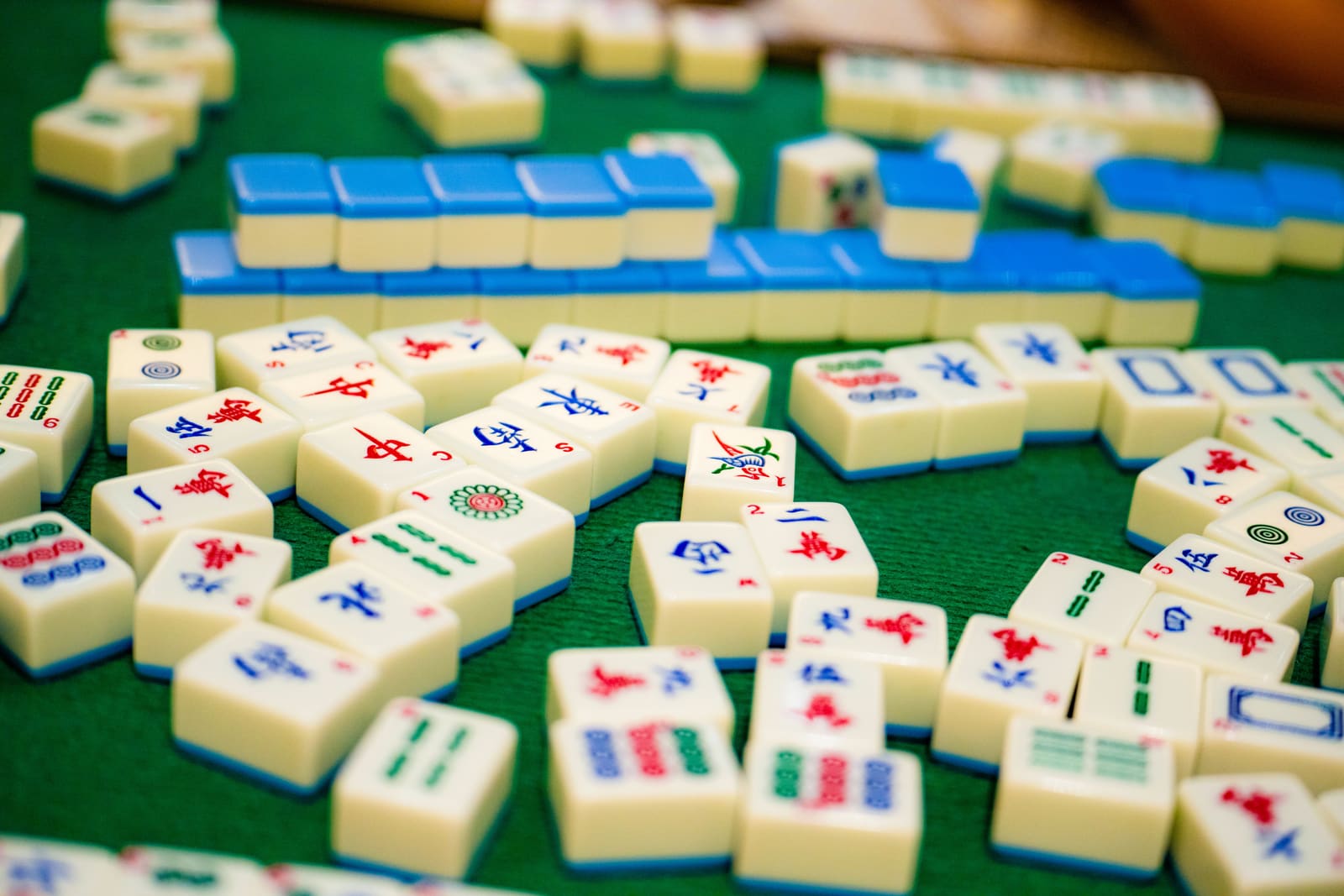
At New Bahru, a cluster of shophouses near the Tiong Bahru estate, Mahjong Palace returns for another session on 10 November. Participants choose between two tables: green for beginners guided by teachers, red for independent players ready for three-point minimum games in the Hong Kong style. The event unfolds in Bar Somma's private room, where the clatter of tiles mingles with the clink of glassware. It is a small detail, but one that captures the city's knack for hybridising tradition with contemporary sociability - mahjong as both pastime and performance, game and gathering.
Across town at Marquee, the nightclub inside Marina Bay Sands, Above 30 Club marks its first anniversary on 21 November with an afternoon session. The timing is deliberate: doors open at 2pm and close by 7pm, early enough for attendees to make dinner reservations and still be home at a reasonable hour. The playlist leans on 2000s anthems, a nod to millennial nostalgia, and the event speaks to a demographic that still craves club energy but no longer wants to stumble out at dawn.
Clay, Cinema, and the Architecture of Community
The Singapore International Film Festival runs until 1 November, its 37th edition presenting more than 100 films from over 50 countries. Among them are 25 Singapore productions, a figure that reflects the city's growing confidence as both subject and storyteller. Venues include the National Museum, Filmhouse, and Oldham Theatre, each space lending its own atmosphere to the screenings - colonial grandeur, intimate blackbox, vintage charm.
Later in the month, the Singapore Clay Festival occupies the Singapore Chinese Cultural Centre from 6 to 8 November. Clay makers from multiple countries display their work, and the festival offers workshops alongside masterclasses led by practitioners whose hands have shaped the medium for decades. Ceramics, with their slow process and tactile appeal, offer a counterbalance to the city's relentless pace. A vase or decorative plate becomes not just ornament but artefact - proof that something was made, not merely consumed.
At Tigress in Orchard Central, Netwerk hosts Bar Lectures on 20 November, a format borrowed from London's pub-lecture circuit. The evening's theme is "Haunted Singapore," a survey of 200 years of local ghost stories, myths, and historical oddities. The event includes one complimentary drink, and the ticket price positions it somewhere between education and entertainment - a model that acknowledges the modern drinker's hunger for narrative alongside their gin.
Markets and the Rituals of Acquisition
New Bahru's ECA: Merry Market returns from 27 to 29 November with more than 80 brands, 90 per cent of them Singapore-grown. The fair spans food, retail, wellness, arts, and culture, and five brands will make their Singapore debut during the run. It is the kind of market that rewards the browser as much as the buyer, where the act of discovery becomes its own form of pleasure.
Boutiques Singapore: The Gifting Edition takes over the F1 Pit Building from 20 to 22 November, gathering 300 local brands under one roof. The emphasis is on exclusivity - limited launches, small-batch goods, items that resist mass production. Categories range from homeware and jewellery to books and pantry staples, the latter a reminder that luxury in Singapore increasingly resides in the everyday: a jar of artisan sambal, a bottle of cold-pressed oil, a bar of single-origin chocolate.
The Affordable Art Fair, running from 26 to 29 November at the same venue, offers contemporary works from over 95 galleries, all priced below 15,000 US dollars. The cap is intentional, designed to lower the threshold for first-time collectors and to position art as accessible rather than rarefied. Tickets can be purchased using the SG Culture Pass, a government-issued voucher that subsidises cultural participation - a policy detail that underscores the city-state's ongoing experiment in engineering a creative class.
Champagne as Everyday Currency
Champagniac, the city's only champagne festival, returns from 13 to 15 November at the National Gallery's Supreme Court Terrace. Founded by five champagne enthusiasts, the event challenges the drink's association with special occasions, arguing instead for its place in daily life. The festival includes tastings, masterclasses, and a VIP programme that grants access to a private room, eight premium pours, and a sommelier-led tour.
The argument is less about affordability - though organisers insist there are labels for everyday drinking - than about demystification. Champagne, in this telling, is not a symbol but a beverage, one with terroir and technique worth understanding. The festival's location, in a converted courthouse with neoclassical columns and soaring ceilings, lends a certain gravitas to the proposition. Here, under vaulted arches, the ritual of tasting becomes both sensory and intellectual, a way of slowing down in a city that rarely does.
The Calendar as Curatorial Act
What emerges from November's lineup is not a single narrative but a constellation of micro-events, each one a small exercise in world-building. A mahjong night becomes a lesson in cross-generational play. A champagne festival reframes luxury as accessibility. A market curates not just products but identities, offering shoppers a way to signal taste, values, and allegiance to the local.
The month's events share a common trait: they resist passive consumption. Attendees are asked to learn, to make, to taste with intention. Even the afternoon club session, ostensibly pure hedonism, is framed as a lifestyle choice - a way of reclaiming nightlife for those who no longer want to sacrifice the following day.
In a city where land is scarce and every square metre must justify its existence, events become infrastructure. They animate spaces, create temporary communities, and give residents reasons to move through the city in new patterns. The F1 Pit Building, normally associated with high-speed motorsport, transforms into a venue for slow contemplation. The National Gallery's courthouse terrace, once a site of judgment, becomes a place of pleasure.
Rain, Ritual, and the Rewards of Staying Put
November's weather imposes a kind of discipline. Outdoor plans are made with contingency. Umbrellas become essential carry. But the rain also creates pockets of intimacy - the shared shelter, the crowded café, the decision to stay put rather than venture out. The city's event organisers understand this, and they programme accordingly. Film festivals, art fairs, and indoor markets thrive precisely because the weather makes lingering indoors feel less like confinement and more like choice.
There is something particularly Singaporean in this alchemy - the way the city absorbs a challenge and turns it into occasion. The monsoon becomes not obstacle but opportunity, a reason to gather, to drink champagne in the afternoon, to learn about ghosts over cocktails, to discover that a ceramic vase can hold more than flowers.
The month rewards those who resist the urge to flee for drier climates. It asks instead that visitors and residents alike lean into the season, to find pleasure not despite the rain but within its rhythms. The calendar becomes a kind of map, charting a course through wet streets and air-conditioned rooms, each event a waypoint in a longer journey through the architecture of urban life.
As the year winds down and the city begins its tilt toward December's festivities, November stands as a bridge - a month that acknowledges the year's fatigue while offering just enough novelty to keep curiosity alive. The champagne flows, the tiles clatter, the galleries fill. Outside, the rain falls. Inside, the city gathers itself for one more round.