The Five Wardrobe Anchors That Carry You Through Any Airport
Long-haul polish begins not with a full suitcase, but with a handful of pieces that refuse to wrinkle, fade, or fail.

The Departure Gate as Stage
There is a particular species of traveller who arrives at the gate looking as though the journey has already polished rather than depleted them. Their clothes bear no memory of the security queue, no crease from the taxi ride, no compromise with comfort. They move through the terminal with the quiet assurance of people who have solved a problem the rest of us are still wrestling with: how to dress for twelve hours in a aluminium tube without surrendering either dignity or ease.
The solution, it turns out, is not a matter of budget or brand loyalty. It rests instead on a small arsenal of foundational pieces, garments chosen not for their novelty but for their refusal to betray you mid-flight. These are items that layer without bulk, that breathe without looking athletic, that transition from boarding to baggage claim without demanding a costume change in a lavatory the size of a broom cupboard.
What follows is not a packing list but a philosophy: five categories of clothing that serve as the skeleton of a considered travel wardrobe, accessible at price points that begin well below the cost of checked luggage.
The Knit That Holds Its Shape
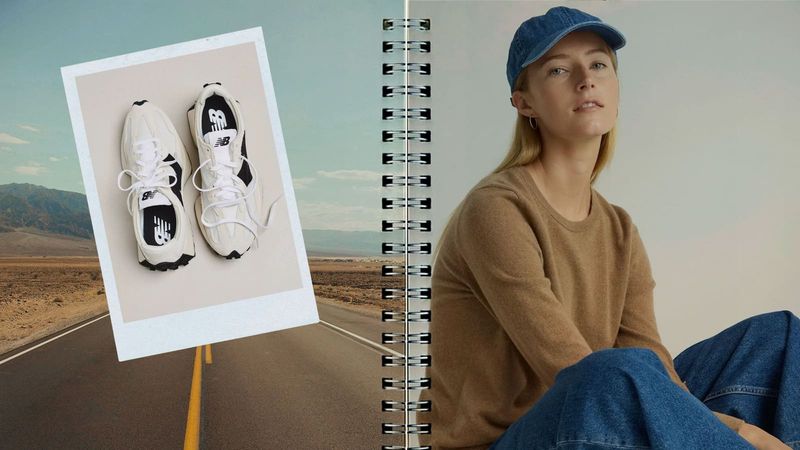
The cornerstone of any travel wardrobe is a fine-gauge knit top, preferably in merino wool or a technical blend engineered to resist both odour and deformation. This is not the moment for chunky cable-knits or anything that requires careful folding. You want something slim enough to slip beneath a blazer, substantial enough to stand alone, and forgiving enough to endure being stuffed into an overhead bin.
The ideal iteration sits close to the body without clinging, covers the waistband of your trousers, and comes in a shade that does not broadcast every spill from the beverage service. Charcoal, navy, or a muted olive will carry you further than stark white or pale grey. The neckline matters less than the fabric's memory: after six hours compressed against a seatback, it should still look intentional.
Price points range widely, but even mass-market retailers now stock merino-blend tops that perform well above their cost. The investment is not in the label but in the fibre content. Read the tag. If it lists polyester first and natural fibres as an afterthought, keep looking.
Trousers Engineered for Sitting
The second anchor is a pair of trousers cut from a fabric with mechanical stretch, ideally woven rather than knit. Denim, unless it is the rare variety engineered with elastane and a mid-rise that does not dig into your abdomen at cruising altitude, is a poor choice. So too are linen blends that emerge from a long-haul looking as though they have survived a natural disaster.
What you want is a trouser that reads as tailored from a distance but behaves like athleisure up close. Ponte knits, technical wool blends, and certain iterations of stretch cotton twill all qualify. The waistband should sit comfortably when seated, the rise should be generous enough to avoid constant adjustment, and the leg should taper without strangling the ankle.
Colour, again, is strategic. Black is practical but can read severe; charcoal or deep navy offers the same versatility with slightly more warmth. A flat front is generally preferable to pleats, which can add bulk when compressed into an economy seat for hours on end.
These trousers exist at every price tier. Even budget chains now produce versions with four-way stretch and moisture-wicking properties. The key is to try them on while sitting, not just standing. If they bind, gape, or require a belt to stay in place, they will not serve you well at altitude.
The Third Layer That Travels Light
The jacket or cardigan you choose as your third layer is perhaps the most critical piece, because it must perform multiple functions: it regulates temperature across wildly variable cabin climates, it provides pockets when you need to stash a passport or boarding pass, and it lends structure to an otherwise casual outfit.
A lightweight blazer in a non-crushing fabric, such as a wool-polyester blend or technical ponte, is one option. It should be unlined or only half-lined, so it packs without bulk and breathes without trapping heat. The shoulders should be natural rather than padded, and the length should cover the hip bone without extending past it.
Alternatively, a long-line cardigan in a fine knit can offer similar benefits with even greater flexibility. Look for one with substantial buttons or a zip closure, so it does not gape open when you lean forward to retrieve something from beneath the seat. Avoid anything with excessive drape or volume; you are aiming for streamlined, not bohemian.
Both options exist at accessible price points. The deciding factor is fit and fabric resilience. Hold the garment in your fist for ten seconds. If it emerges deeply creased, it will not survive a transatlantic flight in wearable condition.
Footwear That Functions as Foundation
Shoes present a particular challenge in travel dressing: they must be substantial enough to walk several kilometres through terminals, easy enough to remove for security screening, and refined enough to carry you from the plane to a meeting or dinner without looking out of place.
The answer, for many seasoned travellers, is a low-profile leather or suede slip-on, ideally with a cushioned insole and a sole that provides traction on polished terminal floors. Loafers, clean leather trainers, and certain Chelsea boots all qualify. Heels above five centimetres are impractical; ballet flats, unless exceptionally well-made, offer insufficient support for the distances involved.
The shoe should be broken in before travel. Blisters at 35,000 feet are a special kind of misery. It should also be dark enough to hide scuffs and made from a material that tolerates the occasional spill or puddle.
Entry-level options abound, particularly in leather-look synthetics that have improved dramatically in recent years. The priority is comfort and a clean silhouette. A simple, well-maintained shoe will always read better than an expensive one that looks tired.
The Scarf as Swiss Army Knife
The fifth and final anchor is not a garment but an accessory: a large, lightweight scarf in a natural fibre. Cashmere is ideal but not essential; a fine wool or modal blend will perform nearly as well at a fraction of the cost.
This piece serves as blanket, pillow, privacy screen, and the single most effective tool for elevating an otherwise utilitarian outfit. Draped correctly, it lends polish to the simplest combination of knit and trousers. Wrapped around the shoulders, it provides warmth without the bulk of an additional layer. Folded and tucked into a carry-on, it occupies almost no space.
The colour should complement your core wardrobe but need not match precisely. A subtle pattern or texture can add visual interest without clashing. Avoid anything too delicate or dry-clean-only; this is a working garment, not an heirloom.
Scarves at every price point are available year-round. The difference between a twenty-pound version and a two-hundred-pound one is often a matter of hand-feel rather than function. Both will serve you well in transit.
The Sum of Small Choices
There is no magic to dressing well for air travel, only the accumulated wisdom of small, deliberate choices. Each of these five pieces exists in isolation in most wardrobes already. The shift is in recognising them as a system, a set of interlocking elements that together create a look both resilient and refined.
The cost of entry is low. The return, in comfort and confidence, is disproportionately high. And unlike so much of what we carry with us when we travel, these are not items you will leave behind in a hotel drawer or regret packing. They are the quiet infrastructure of a life in motion, the pieces that let you arrive looking not as though you have survived the journey, but as though you have enjoyed it.