Summer in the Kingdom: How Bangkok's Creative Class Stays Cool
Three cultural insiders reveal the rituals, escapes, and quiet luxuries that make life in tropical heat not just bearable, but beautiful.
The Art of Living With Heat
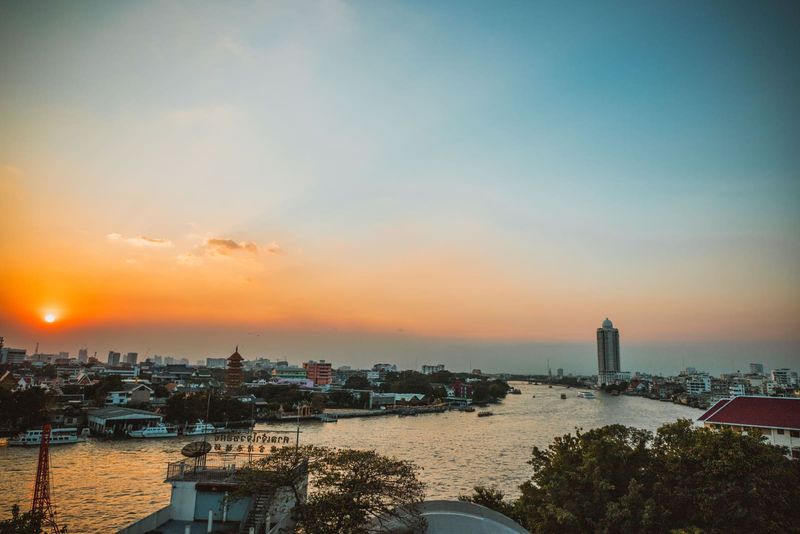
There is a particular quality to summer in Thailand that defies the calendar. It does not arrive in June and depart in September. Instead, it lingers, shape-shifting between monsoon downpours and bone-dry afternoons, never quite releasing its grip. The people who have built their lives here - who program festivals, curate exhibitions, spin records until dawn - have learned something the rest of us are only beginning to understand: that surviving heat is not about escape, but about negotiation.
At Global Chic Voyage, we've watched Bangkok's creative community refine this negotiation into something approaching art. They do not simply endure the tropics; they choreograph their lives around it, building rhythms that honor both ambition and rest, work and water. We asked three of them to open their suitcases and share what summer means when you live at the equator.
The Festival Architect's Mountain Refuge
Pranitan Phornphrapha has spent years creating spaces where thousands gather under open skies. As the founder of Scratch First, the company behind Wonderfruit, Thailand's answer to the great music festivals of the West, he understands crowds, heat, and the alchemy that happens when both collide. This October, he will debut Chapters Kyoto, a more intimate cultural gathering limited to one hundred participants, a deliberate pivot from spectacle to conversation.
When asked where he finds restoration, his answer is immediate: mountains. Not beaches, despite growing up surrounded by coastline. The energy of elevation grounds him, he explains, a paradox that makes perfect sense when you meet someone who spends his professional life orchestrating controlled chaos.
This summer took him first to the Swiss Alps, to Villars-sur-Ollon and then Gstaad, ostensibly to deliver his children to summer camp but really - as he admits - to carve out time for wandering. Then Shanghai for another school run, and finally the Maldives, where he plans to surf between islands during shoulder season, when the waves rise and the crowds thin.
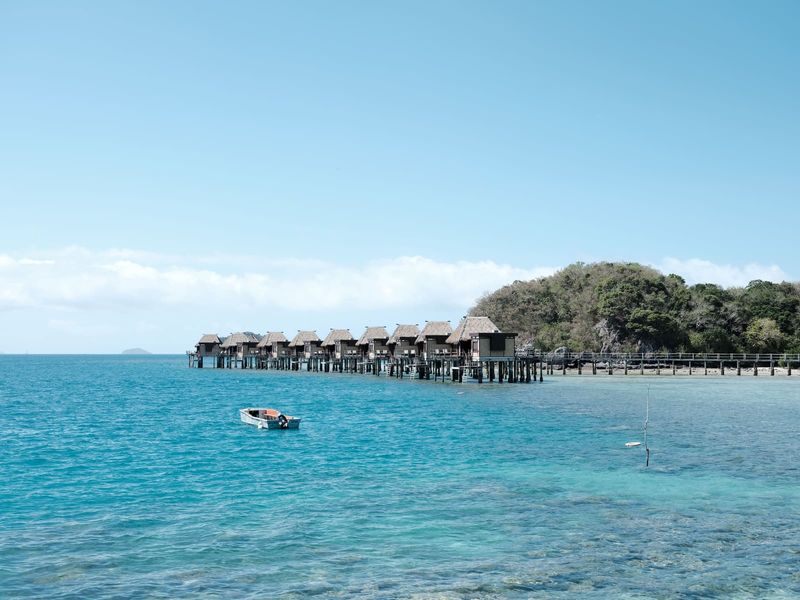
His choice of accommodation reveals a philosophy. Soneva Fushi, the original barefoot luxury property, appeals not for its amenities but for its wildness. He describes it as Robinson Crusoe, which is another way of saying he seeks islands that have not been tamed, that still hold some vestige of what they were before tourism arrived. His suitcase reflects this: shorts, swim trunks, naturally dyed basics from Industry of All Nations, and two pairs of sunglasses - classic Ray-Bans and a Japanese label called Nackymade.
He reads four or five books simultaneously, a habit that mirrors the way he moves through the world. Currently rotating through his attention: a study of trees and their hidden communication networks, an examination of the Sackler family's role in the opioid crisis, and an academic text on Southeast Asian history spanning a thousand years. His holiday playlist leans toward cinematic jazz, particularly a collaboration between an English electronic musician and a Senegalese artist, the kind of cross-continental fusion that mirrors his own work. And he never brings his laptop on vacation, a discipline that feels increasingly radical.
The Curator Who Cannot Pack Light
Adulaya Hoontrakul became the youngest director of the Bangkok Art and Culture Centre in 2022, a position that placed her at the helm of one of Southeast Asia's most important publicly funded contemporary art institutions. This October, she will co-curate the Bangkok Art Biennale, a citywide exhibition titled "Angels and Mara" that will occupy venues across the capital until late February 2027.
Her relationship with summer is more conflicted than Phornphrapha's. She is drawn equally to mountains and beaches, to trekking and diving, and she refuses to choose between them. Koh Tao, one of Thailand's premier dive sites, serves as her quick escape, reachable by a short flight and boat ride. But some of her most vivid memories come from high-altitude treks, including one through Sikkim in northern India, where the landscape unfolds slowly, step by step, in a way that flying can never replicate.
This August, if she can carve out the days, she hopes to attend the Sā Ladakh Biennale, a ten-day event that requires participants to trek between villages in the Himalayas. It is the kind of commitment that reveals what matters to her: art that cannot be separated from place, from the physical act of arrival. In September, she will trade altitude for the Dolomites, a road trip through northern Italy's limestone peaks.
She is an unrepentant overpacker, a confession she makes with zero embarrassment. A ten-day trip to Okinawa with only carry-on luggage remains one of the worst experiences of her life, she says, and she has gladly returned to lugging oversized suitcases filled with options for every conceivable weather scenario. Her beach bag is a lime-green Loewe shopper, large enough to swallow her Kindle, AirPods, sunblock, and a rotation of specialist eyewear. She abandoned designer sunglasses years ago in favor of brands that prioritize function, though her Ray-Bans have served her faithfully for five years.
Her Kindle holds half-read books, a digital graveyard of good intentions. She has been working through a study of looted artworks scattered across Western collections, but keeps getting pulled toward memoirs by provocative writers with strong, unapologetic voices. One recent favorite chronicled a period of addiction with unflinching honesty, offering both a break from academic papers and a window into experiences far from her own.
Her most unexpected essential? A handheld fan powerful enough to nearly blow-dry her hair. She bought it before a trip to the Netherlands during the early days of a European heatwave, recognizing that a continent unaccustomed to sustained heat would be unprepared. It proved prescient.
The DJ Who Reads the Wind
Paul Sirisant has lived several professional lives. As a former executive at Universal Music Thailand and a working DJ for three decades, he understands how sound moves through space, how energy builds and dissipates. Now, as CEO of Cloud 11, a Snøhetta-designed mixed-use development in Bangkok that opened this July, he applies that same sensibility to architecture and urban planning. The project dedicates space specifically to production studios, musicians, filmmakers, and designers, a recognition that creative work requires both infrastructure and community.
His method for escaping Bangkok's heat is more technical than romantic. He wing foils, a sport that requires reading thermal wind patterns created when superheated ground sends air rising. There is a lake ten kilometers from Sukhumvit where conditions align regularly, and Hua Hin, a coastal town south of the capital, offers some of the best thermal wind anywhere on the planet, he explains.
Summer typically takes him and his family to Taplow, near Windsor in England, where they keep a place. The appeal is straightforward: fresh air, open roads, and Legoland fifteen minutes away, with none of the lines and hassle that plague theme parks in more crowded destinations. His suitcase holds Timo boardshorts, two pairs of sunglasses - Oakleys for running, Oliver Peoples for everything else - and a collection of vintage T-shirts from Bangkok's Chatuchak market, sleeves cut off to create airflow. His children find this habit mortifying, which may be part of the appeal.
He is currently reading a memoir by Richard Russell, the founder of XL Recordings, the label behind The Prodigy, The XX, Dizzee Rascal, and Adele. Sirisant is drawn to contemporary music history, to the stories of how unlikely combinations of artists and vision coalesce into cultural moments. His phone holds Rekordbox, an integrated DJ software that remains connected to his sets. After thirty years behind the decks, he remains particular about organization, color-coding every track by energy level.
He has a habit of DJing for his family in the car, queuing songs to introduce his children to music adjacent to their current interests. They have discovered Japanese rock through anime, so he bridges that with bands like Muse, same intensity and range but different geography. He falls in love with new music constantly, most recently a artist named Kelsey Lu, discovered through a magazine interview.
His drink of choice shifts with the light. Natural orange wine during the day for its palate-cleansing acidity. At night, white spirits - gin, tequila, vodka - always with soda, always clean and light. And his top tip for staying cool? Understand the wind. Learn how it flows in each season, how it changes, how it moves through the city. He is a surfer at heart, and no matter where he travels, he figures out wind direction first. Everything else follows from that.
The Thread That Runs Through
What links these three is not taste, though their preferences reveal a shared attraction to craft and authenticity. It is something more fundamental: a refusal to treat summer as an enemy. They have each developed a personal cartography of heat, mapping escapes that restore rather than distract, packing essentials that reflect genuine need rather than aspiration.
Phornphrapha seeks wildness within luxury, islands that remember what they were. Hoontrakul refuses to choose between altitude and ocean, between solitude and urban energy, and packs accordingly. Sirisant reads the invisible, tracking wind and thermal patterns the way others check weather apps.
There is a lesson in their approach for those of us who treat summer as something to survive, who count down days until autumn. Heat, they suggest, is not a problem to solve but a condition to understand. And once you understand it - once you learn how wind moves, which islands remain wild, when shoulder season offers the best waves - summer stops feeling endless and starts feeling like possibility.
The tropics have always attracted outsiders seeking transformation, escape, some version of paradise. But the people who live there year-round, who build careers and raise families and create culture under relentless sun, have access to a different kind of knowledge. They know that paradise is not a place you visit. It is a rhythm you learn, a negotiation you refine, a suitcase you pack with intention. And sometimes, it is simply understanding which way the wind blows.