Where Barcelona Eats Now
In a city whose dining scene has long been synonymous with grand gestures and Michelin stars, the most exciting tables today are those rewriting the rules - quietly, irreverently, and with a tortilla machine humming in the corner.
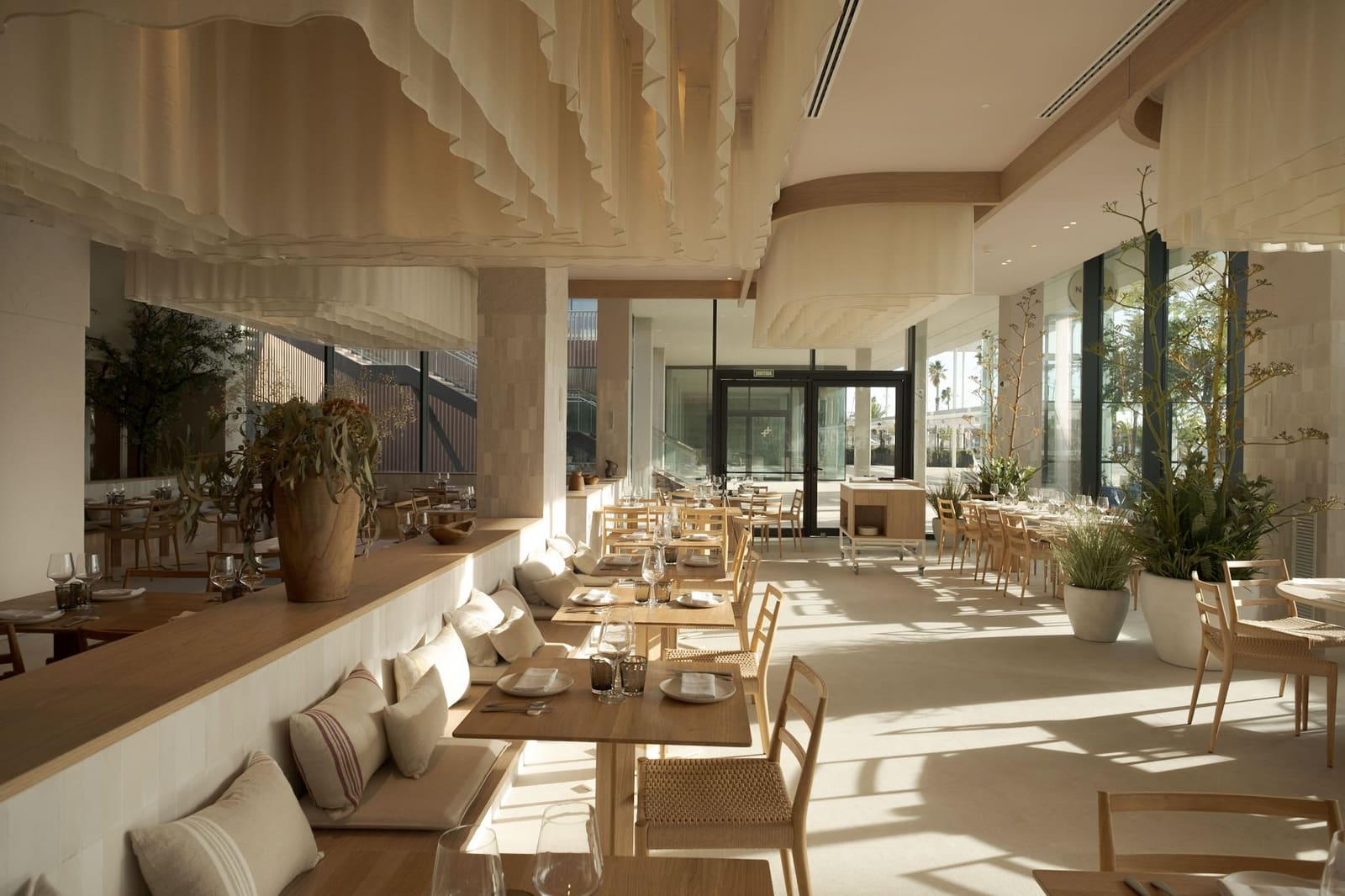
A Tortilla Machine and a Thesis
The first thing you hear at Xuba Tacos is the rhythmic clatter of the tortilla machine, a mechanical heartbeat under the din of voices and the hiss of the open kitchen. The space on Carrer de Mallorca is bright, chaotic, unapologetically loud - stools set close enough that you can smell your neighbour's beer-battered sea bass taco, which is to say, close enough to make you order your own.
Antonio Sáez, the Mexican chef behind the venture, once steered Martín Berasategui's Lasarte when it held two Michelin stars. His partner, Raúl Salcido, managed luxury hotels. Neither fits the archetype of the taco-slinger, and Xuba is no ordinary taquería. The blue corn tortillas are made in-house and hold their shape through the last bite. The red tuna tostada balances velvety fish against a whisper of heat and a satisfying crunch. The sea bass taco, battered to a golden crisp and topped with shredded cabbage, arrives so juicy it demands a second order. For those who chase heat, a few drops of salsa macha elevate it further.
This is not fusion for the sake of novelty. It is craft meeting context, a Mexican sensibility landing in Eixample with confidence intact.
The Grilled Cheese That Defies Logic
Franca, a few streets away, presents a different kind of defiance. The exposed brick and white linen suggest formality, but the menu dismantles expectation with quiet precision. Joshua McCarty, the California-born co-founder and co-chef, has no interest in the trends circulating through Barcelona's kitchens - no gildas, no tuna tartare arranged like gemstones, no Catalan cannelloni making its ritual appearance.
Instead, there is bucatini in a sauce that reads like a collision between puttanesca and meunière: tomatoes, capers, olives, anchovies, noisette butter. There is a roast pork rib eye for two, generous and unapologetic, paired with a summer salad of tomatoes and stone fruit. And then there is the sea-and-mountain bikini, a grilled cheese sandwich that swaps melted Gruyère for tender squid and arrives with a smoked pork sauce on the side.
It sounds improbable. It tastes inevitable.
Nostalgia, Baked Under Cheese
At Casa Fiero, nostalgia is the organising principle. Where the team's previous venture, Maleducat, leaned into the avant-garde, Casa Fiero celebrates the cooking of Catalan grandmothers - slow, generous, unafraid of fat. On a Tuesday night at nine o'clock, the restaurant is full: banquettes, bar stools, tables for two, all occupied by diners who look as though they have been here before and will return.
The rib-eye steak, cooked on a Josper grill, comes with a pile of fries. The roasted leeks wear a fresh almond vinaigrette. The steak tartare is chopped fine and crowned with smoked egg yolk. But the dish that draws repeat visits is the macaroni: roasted beef brisket, tendons, and pork cheeks folded into pasta, smothered in three types of cheese, baked until the top squeaks under the fork.
It is decadent in the way that only grandmothers' cooking can be - unapologetically rich, impossible to finish, utterly worth the attempt.
Asia by Way of Catalonia
Mantis takes the region's culinary vocabulary and runs it through an entirely different grammar. The chefs draw on their own culture and their travels across Asia, producing dishes that feel less like fusion than translation. An escudella - a traditional Catalan Christmas soup - is deconstructed and tucked into a soupy dumpling. A fricandó, the slow-cooked beef and mushroom stew beloved across Catalonia, is loaded with shiitake, stir-fried, and finished with a three-day demi-glace reduction. They call it fricanwok, and it sells as quickly as the Asian carbonara wonton: a fried dumpling base topped with Iberian pork jowl and creamy carbonara spiked with house-made XO sauce.
The effect is disorienting in the best sense - Spain, Italy, Hong Kong, all at once, none diminished.
Argentine Roots, Catalan Soil
Piedra, in Sant Gervasi, wears its influences openly. Gonzalo San Martín and Soledad Lema, an Argentine couple who have been together since adolescence, have built a menu that honours their homeland without replicating it. The crisp milanesa, the pillowy sweetbreads, the meaty empanada - all carry the unmistakable stamp of Argentina. But so do the vegetables, seasonal and hyperlocal, sourced largely from the organic farmers at Can Fisas. San Martín's companion on one visit remarked that the generous assortment of produce reminded him of home as much as the meat did.
The dining room is minimal: white walls, pared-back wood, warm lighting. An open kitchen is separated from the main space by a high wooden counter with four stools, where the most committed diners perch, close enough to watch the sweetbreads hit the pan.
Three Stars and a Squid Tartare
Cocina Hermanos Torres, in Les Corts, is one of only four restaurants in Barcelona to hold three Michelin stars. Twins Sergio and Javier Torres built their reputations at Dos Cielos, the Michelin-starred restaurant at the Meliá Barcelona Sky Hotel, before opening Hermanos Torres - a riskier, more avant-garde proposition.
The cooking here is built on juxtaposition: wildly contrasting textures and temperatures, ultra-modern interpretations of dishes their grandmothers might have made, unexpected flavour pairings that land with precision. The squid tartare arrives smooth as butter, bathed in chicken consommé, topped with a generous dollop of caviar. When in season, the sweet Maresme peas from Catalonia are paired with Iberico ham, each pea bursting like bubble wrap under the teeth.
The wine pairings, often an afterthought at tasting-menu restaurants, are worth the splurge here - a rarity.
Minimalism and a Queue
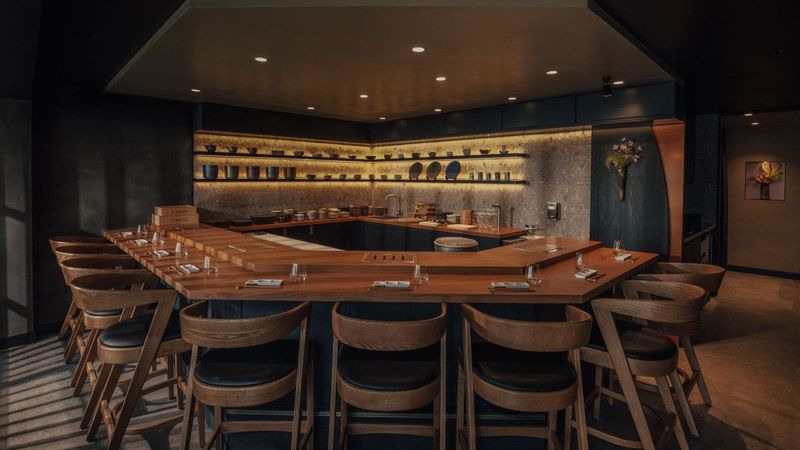
Akiro Hand Roll Bar does not take bookings, and most evenings a line forms outside. Inside, the aesthetic is Japanese minimalism: light-wood panelling, good lighting, diners seated in an orderly row along the bar and at the windows. The restaurant specialises in Nikkei-style hand rolls, but the nigiris and sashimis are equally compelling.
Nikkei cuisine, with its elaborate blends of rich mayonnaise and tropical fruit, can overwhelm. Akiro accommodates both purists and maximalists: the tuna toro sashimi is perfect in its simplicity, while the flambéed eel nigiri, topped with ginger jam, molasses, and salted rocoto-chilli chocolate, is unabashedly decadent.
The queue is worth it.
Rice by the Sea
Nuara, at Vila Olímpica del Poblenou, occupies the beachfront real estate where many tourists end up disappointed by mediocre paella. Nuara is not mediocre. The family behind it has been serving some of the best rice in Barcelona for six decades, and the current iteration is both trendy and rooted.
Begin with oysters, optionally topped with caviar, or Andalusian-style calamari, lightly battered. The tuna tartare, made from Balfegó tuna and served with creamy burrata, is excellent. Then the rice: traditionalists will want the thin-crusted, crispy version topped with red Mediterranean shrimp. Those inclined towards risk can try the mar i muntanya - surf and turf - with squid, pork belly, and mushrooms.
The grilled catch of the day, for those not in the mood for rice, is also excellent.
The Meatbar Where No One Speaks English
Bardeni el Meatbar, two blocks from la Sagrada Familia, somehow remains untouched by the overtourism that defines the neighbourhood. The red-and-black decor suggests a French bistro, but the clientele is decidedly local. On a Friday night, the room is packed with Catalan speakers, and the cured picanha - the house speciality - arrives at nearly every table.
Dani Lechuga, whose surname translates to "lettuce" (a fact he is well aware of), opened the restaurant two decades ago. The focus has never wavered: meat, prepared with precision, served without ceremony.
What Holds
Barcelona's dining scene has always attracted pilgrims, drawn by the promise of innovation and the weight of tradition. What has shifted in recent years is the balance. The most exciting tables today are not those chasing accolades or replicating what worked a decade ago. They are the ones asking what it means to cook in this city now - how to honour Catalan roots while acknowledging that the people eating here, and the people cooking here, come from everywhere.
The answer, increasingly, is not fusion but fluency: a comfort with multiplicity, an ease with borrowing and lending, a refusal to treat tradition as fixed or foreign influence as dilution. The tortilla machine at Xuba hums. The squid at Franca defies logic. The macaroni at Casa Fiero bakes under its blanket of cheese. And the city, as it has always done, eats until dawn.