Inside the Mountain Retreat Where China's Creatives Are Reclaiming Time
In Yunnan's high-altitude sanctuary of Dali, a new generation is trading metropolitan ambition for something older and infinitely more elusive.
The Calculus of Contentment
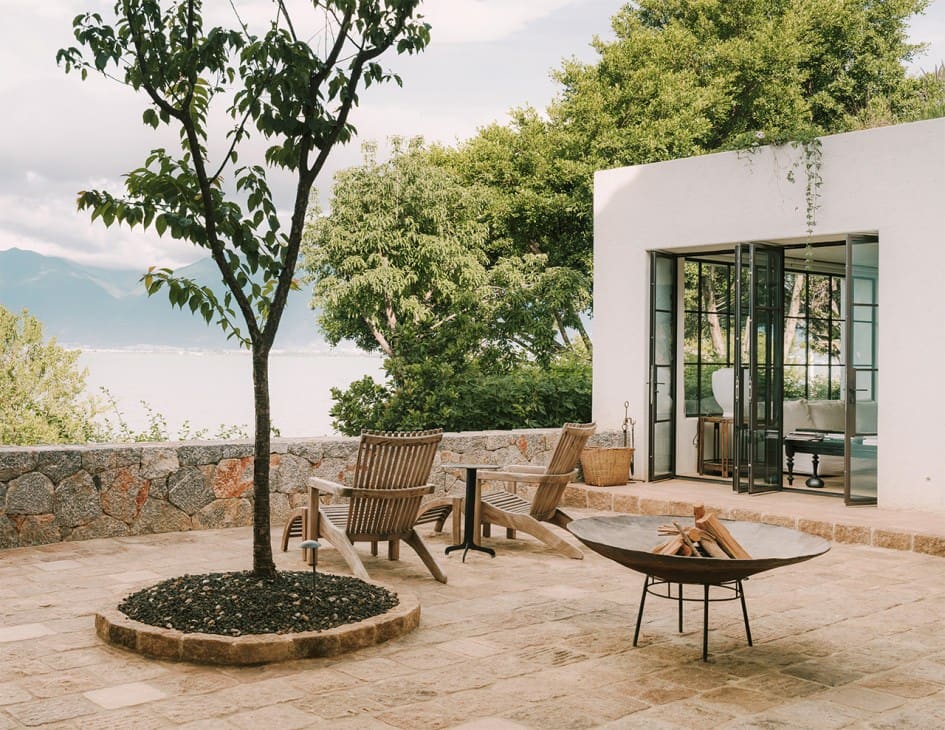
At 1,900 metres above sea level, where the Cangshan range meets the pale expanse of Erhai lake, a question is being answered not with words but with one-way tickets. Designer Xie Ke, who arrived from Chongqing two decades ago, frames it plainly: why defer pleasure until the body is too tired to receive it? The calculus that governs China's coastal metropolises - long hours, longer commutes, the promise of reward perpetually deferred - has begun to feel less like ambition and more like a contract written in someone else's hand. Dali, a subtropical highland city in Yunnan province, has become the place where that contract is quietly torn up.
The Dali Bai Autonomous Prefecture People's Government recorded 407,000 domestic migrants in 2025, a 49 per cent rise over the previous year. The numbers tell part of the story. The rest lives in the rhythm of mornings that don't begin with alarm clocks set for corporate warfare, in kitchens where produce comes from valleys rather than logistics chains, in evenings measured not by deadlines but by the angle of light on water.
A Geography of Permission
Yunnan holds 25 officially recognised ethnic minorities within its borders, and Dali sits at the heart of that plurality. The city's remoteness - both physical and administrative - has allowed a kind of social porousness rare in China's eastern anchors. An old proverb captures it: the mountains are high, the emperor is far away. Distance, in this case, has bred not isolation but a distinct form of liberty.
For those fleeing what locals call "996 culture" - workdays stretching from nine in the morning until nine at night, six days running - Dali offers an alternative architecture of time. Xie Ke left his interior design career in 2004 precisely because the velocity of urban life had ceased to clarify anything. He spent years shuttling between Chongqing and Dali, staying in guesthouses run by proprietors who swept their own floors and tended their own gardens. By 2006, he had built a second residence in the Shan Shui Jian neighbourhood, a four-storey structure whose entrance descends into the basement - a deliberate inversion, a pause built into the threshold.
His architectural philosophy has since expanded into hospitality. Qing Shan 49, a seven-room retreat overlooking Erhai lake, and Qing Shan Hot Spring, set within a historic courtyard, both reflect a design language drawn from rural Chinese vernacular and the naturalistic setting that surrounds them. The projects are less about luxury than about tempo: they invite guests to notice what speed erases.
The Ingredients of Elsewhere
Chef Xu Kai arrived in 2022 after stints at Eleven Madison Park and The French Laundry, followed by a year in Shenzhen that left him financially solvent and spiritually depleted. Half his salary disappeared into rent; the other half bought him little contact with landscape or culture. He departed on a motorcycle, traversing provinces until Dali's particular combination of altitude, biodiversity, and culinary possibility persuaded him to stop.
His restaurant, Trout, sources everything within Yunnan's borders: sour honey harvested from rainforest hives, foraged mushrooms, cured ham from Jianchuan county, catfish pulled from the Mekong. The province's microclimates and ethnic diversity yield an ingredient library that shifts with the seasons. Pu'er, historically synonymous with tea, now produces coffee that has attracted international attention; Yunnan wines, once dismissed, are finding serious advocates. Xu Kai's hyper-local approach - furniture, crockery, wine, all provincial - is both an aesthetic choice and a quiet argument about what constitutes value.
Furniture designer Shun Li Li, known as Dengzhou, moved to Dali from Wenshan in 2008 for university and never left. She transforms scrap timber and leftover metal into sculptural objects, and credits the city's tight creative network for her evolution into textile weaving. Collaboration here is less transactional than communal: artisans cook together, hike together, exchange techniques. Dengzhou plans to open a homeware shop dedicated to the work of other local makers, a gesture that reflects Dali's ethos of reciprocity.
The Friction of Arrival
Popularity, of course, carries its own distortions. In Xizhou, an ancient town near Dali known for its courtyard architecture and markets, national chains - bubble tea, coffee, ice cream - have established footholds. Rents have climbed, though a three-bedroom apartment in Dali's old town still runs around 5,000 yuan per month, roughly 40 per cent less than comparable space in central Shanghai.
Brian Linden, an American entrepreneur who has lived in Dali for more than 20 years, watches the transformation with cautious ambivalence. In 2008, he invested one million US dollars to restore a traditional Bai courtyard gatehouse, converting it into the Linden Centre, a hotel oriented around cultural exchange. He worries that newcomers - himself included - arrive with capital and preferences that allow them to curate their surroundings rather than inhabit them fully. Existing social structures bend under the weight of migration; the question is whether they will break or simply reconfigure.
Yet Yujiang Mou, the centre's chief executive and a Dali native, sees the influx as generative. Locals, he notes, have learned new business models from foreigners; younger generations now have reasons to remain rather than migrate eastward. Wang Yiyang, founder of fashion label Zuczug, partners with the Linden Centre to bring employees and designers on immersion trips, forging collaborations with rural craftspeople across Yunnan. The exchanges are imperfect, but they are exchanges nonetheless.
The Wages of Elsewhere
What Dali offers, in the end, is not escape but reorientation. The city's subtropical highland climate and dramatic topography - lake on one side, mountains on the other - create a physical container for a different set of priorities. The creatives arriving here are not rejecting work; they are rejecting the premise that work must consume all available hours and that reward must always arrive later, in some theoretical future when the body is less able to enjoy it.
The term "tang ping" - to lie flat - has become shorthand for opting out of relentless competition. But in Dali, lying flat looks less like withdrawal and more like recalibration. Days still contain labour, but the labour is chosen, scaled to human measure, and punctuated by the kind of stillness that allows thought to settle. Xie Ke's basement entrance, Xu Kai's foraged mushrooms, Dengzhou's scrap-metal sculptures - these are not gestures of retreat but of reengagement, a decision to place attention where it might actually bear fruit.
The city's independent spirit, forged in remoteness and nurtured by diversity, continues to attract those who sense that the dominant script no longer serves them. Whether Dali can absorb this wave of arrivals without losing the qualities that drew them remains an open question. But for now, the mountains remain high, the emperor remains distant, and the lake reflects a sky unobstructed by the architecture of hurry.