Where Istrian Vines Meet the Adriatic: Croatia's Quietly Sophisticated Hotel Scene
Beyond the yacht parties and historic walled towns, a new generation of Croatian hideaways promises wine cellars, pine-fringed spas, and the kind of Adriatic views that linger long after checkout.
The New Riviera Chic
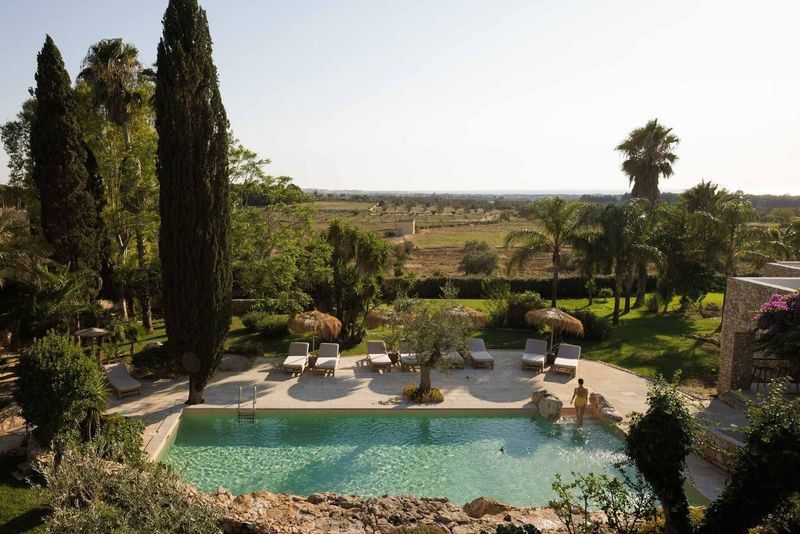
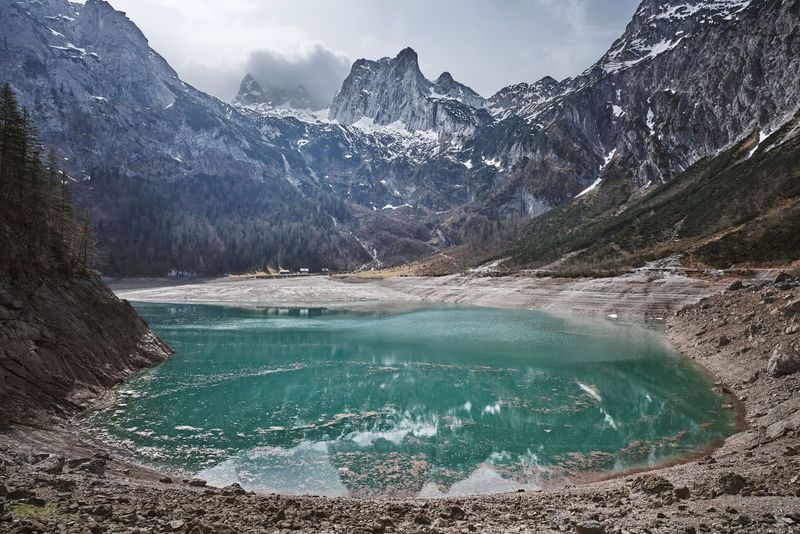
There is a particular quality to late afternoon light along the Istrian Peninsula, the way it catches on terraced vineyards and turns the Adriatic into a sheet of hammered silver. For decades, Croatia's appeal rested on its natural drama: the medieval stonework of Dubrovnik, the island-dotted coastline, the turquoise lakes hidden in forested valleys. But the country's hotel scene lagged behind, a patchwork of serviceable guesthouses and a handful of grand dame properties that predated the wars of the 1990s.
That imbalance has quietly corrected itself. Over the past fifteen years, a wave of thoughtfully conceived hotels has emerged, properties that understand the difference between luxury and ostentation, between proximity to ancient towns and immersion in them. These are not the yacht-party palaces that once defined Adriatic glamour. They are wine estates where guests can walk among the vines before dinner, clifftop retreats designed for families who want both adventure and downtime, island boltholes where the architecture dissolves the boundary between terrace and sea.
The shift reflects a broader maturation. Croatia is no longer the "new" Mediterranean hotspot, breathlessly discovered and then overrun. It has settled into a more confident identity, one that values its bucolic hinterlands as much as its coastline, that knows how to balance accessibility with seclusion.
Rovinj: Glass, Stone, and the Art of the Sunrise Swim
Perched above the tumble of terra-cotta roofs and yacht masts that define Rovinj's Old Town, Grand Park Hotel Rovinj occupies a rare position: close enough to the medieval quarter to feel its pull, elevated enough to float above it. The building itself is a study in contrasts, glass and stone arranged in clean modernist lines, softened by pine forests that press close to the property's edges.
Inside, the aesthetic leans toward low-key Riviera chic. Corridors double as gallery spaces, hung with contemporary work that feels genuinely curated rather than decorator-selected. The restaurants and bars follow suit, spaces where design and art converge without announcing themselves. It is the kind of environment where you notice the details gradually: the way light filters through a particular window, the texture of a chair's upholstery, the angle of a sculpture in the garden.
The spa sprawls across nearly 41,000 square feet, a labyrinth of saunas, steam rooms, treatment areas, and a relaxation zone that extends into the gardens. One of the pools edges toward infinity, framing the Adriatic in a way that makes the horizon feel almost tangible. Early morning is the ideal time to claim it. Before breakfast, before the hum of conversation begins, the pool is empty, and the sea belongs entirely to whoever wakes early enough.
Istrian Countryside: Vines, Olives, and the Relais & Châteaux Standard
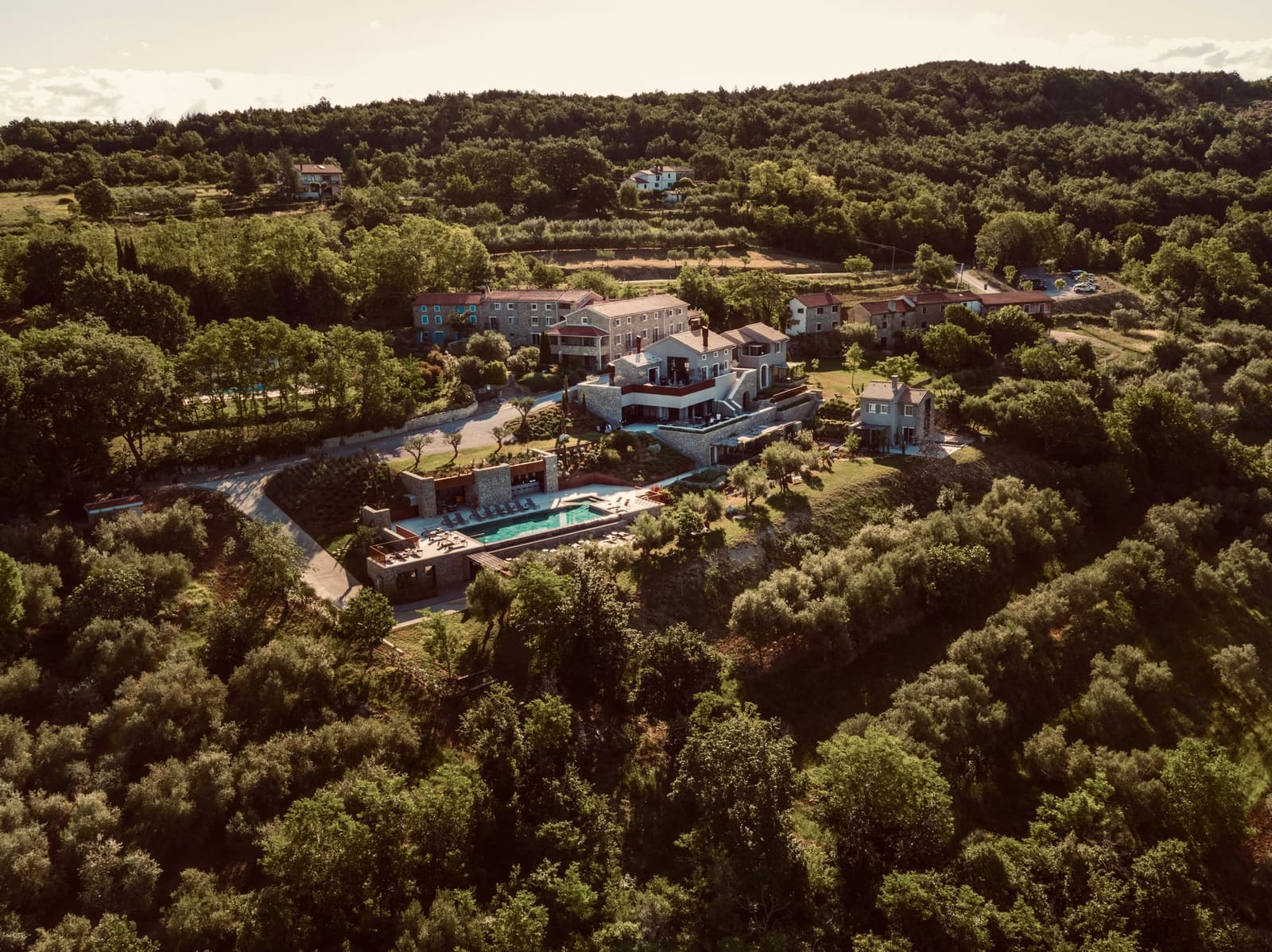
Twelve hectares of Istrian countryside, more than 40,000 vines, seven hectares dedicated to vineyards, olive groves stretching toward the horizon: Meneghetti Wine Hotel and Winery reads less like a hotel and more like a working agricultural estate that happens to accommodate guests. The property earned its Relais & Châteaux designation in 2013, a nod to its ability to marry luxury with a deep, unforced sense of place.
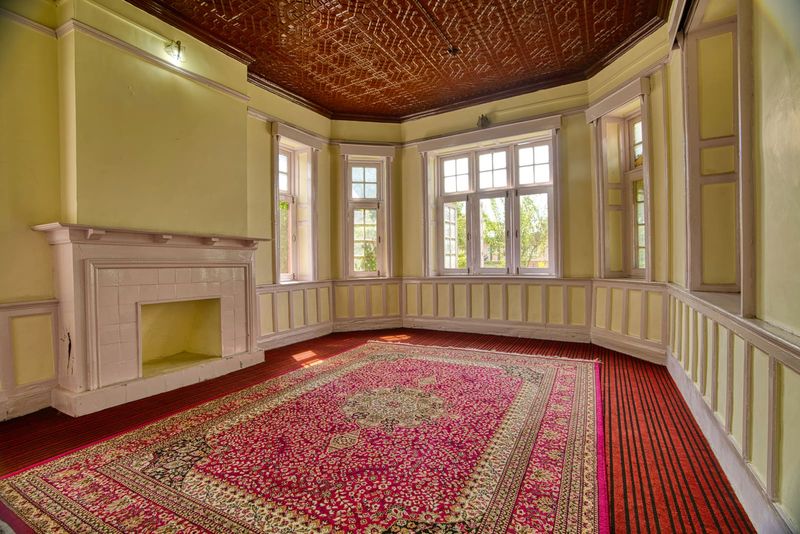
The accommodations range from boutique hotel rooms to private villas and multi-room residences, 58 in total. The interiors share a common vocabulary: wooden floors, exposed beams, rugs with an oriental sensibility, furniture that bridges antique and modern, color palettes drawn from earth and stone. Each space feels distinct yet cohesive, variations on a theme rather than cookie-cutter repetition.
Oliveto, the casual dining option, sits poolside and open to the air, the kind of place where lunch stretches into late afternoon and a single glass of something cold becomes two, then three. The main restaurant operates at a different register: white tablecloths, a location nestled between vines and olive trees, menus built around what the garden yields that week. The food is local not as a marketing claim but as a practical matter; the ingredients are often harvested within sight of the dining room.
A recent addition, The Boho Beach Club, lies just over a mile from the main estate. Guests can take the shuttle or borrow a bike and follow gravel paths through tree-lined lanes to the coast, where loungers and cabanas wait for those willing to trade vineyard views for the sea.
Dubrovnik: Cliffs, Game of Thrones, and a Rooftop Negroni
Villa Dubrovnik clings to the cliffs a short walk from the Old Town, positioned to capture two views: the turquoise expanse of the Adriatic toward Lokrum Island in one direction, the stacked terra-cotta rooftops of Dubrovnik's historic quarter in the other. The property offers 55 rooms, including suites and residences designed with families in mind. Beds are generously proportioned, balconies face the water, and the overall effect is one of spaciousness without sprawl.
The hotel's activity roster leans toward adventure: horseback riding through the Konavle countryside, ATV safaris, sea kayaking along the Old Town walls, private tours tracing Game of Thrones filming locations. Back at the property, an indoor pool stretches toward floor-to-ceiling windows that frame the ocean, a spa offers the expected array of treatments, and yoga and Pilates classes run on a regular schedule.
Restaurant Pjerin occupies a terrace and operates at the fine-dining end of the spectrum, serving five-course tasting menus paired with Croatian wines, all with Old Town views as accompaniment. Giardino Restaurant takes a more relaxed approach, set under century-old pines on an ancient stone terrace. And then there is Galanto Bar, Dubrovnik's only rooftop bar, where sunset is less a time of day and more a performance, the sky shifting through shades of gold and rose as the Adriatic darkens below. The house Negroni arrives with a Dubrovnik twist, the specifics of which the bartenders guard with cheerful possessiveness.
The Pakleni Islands: Four Suites and the Sailing Crowd
The Pakleni Islands have long served as a mooring spot for sailors and day-trippers making the ten-minute boat ride from Hvar Town. Accommodation options across the archipelago remain limited, mostly rustic guesthouses scattered among the islands. Zori Timeless Hotel, located on the island of Sveti Klement, breaks that mold.
Iva and Renato Tomlinović, who spent decades running a waterside restaurant that fed the yachting crowd, expanded their operation to include just four suites. Split-based architects Zrinka and Vatroslav Visković designed the spaces to blur the line between indoors and out. Terraces are vast, furnished with hammocks, sun loungers, plush sofas tucked into alcoves, marble tables for al fresco meals, Knoll chairs, outdoor showers, and private pools or hot tubs. Palm trees frame sea views, and the overall atmosphere invites the kind of indolence that requires no apology.
Chef Siniša Jevrosimov helms the kitchen, crafting menus that blend Croatian culinary traditions with international influences. The wine list leans heavily on Croatian vintages, still underappreciated outside the country but increasingly recognized by those who take the time to explore them. Staff members navigate the list with knowledge and enthusiasm, making recommendations that feel personal rather than scripted.
Hvar: Wellness, Swim-Up Bars, and Silk Road Apartments
Hvar Island anchors several distinct hotel experiences, each catering to a different vision of the Adriatic escape. Adriana Hvar Spa Hotel sits five minutes from the ferries and five minutes from the Old Town, a location that could spell chaos but instead delivers a surprising balance. The wellness focus defines the property. The spa, though compact, punches above its weight: one sauna features a floor-to-ceiling glass window overlooking the sea, a detail that reframes the entire experience. Val Marina restaurant, positioned at the water's edge, serves both buffet and à la carte options, the kind of place where breakfast can stretch into brunch without anyone noticing.
Amfora Hvar Grand Beach Resort occupies a private bay and targets families explicitly. The hotel sits a five-minute walk from the nearest beach and operates its own beach club, Bonj "Les Bains." Restaurants and bars include the inevitable swim-up pool bar, a feature that delights children and offers weary parents a cold drink within arm's reach. Cascading pools, water slides, and a full roster of activities keep younger guests occupied, while the town remains close enough for when the inflatable armbands lose their appeal.
On Korčula Island, Lešić Dimitri Palace takes a different approach entirely. The property offers five serviced apartments within a restored stone palace, each themed around the Silk Road, from China to India. The concept nods to Marco Polo, whose birthplace the island claims. Apartments come with kitchens, though an in-house chef is available for those who prefer not to cook. The palace also houses a Michelin-starred restaurant with views over the untouched coastline, a setting that rewards lingering.
Maslina Resort, located in Stari Grad rather than Hvar Town, embraces mindful luxury as both philosophy and practice. The hotel has undertaken reforestation efforts in the area and employs sustainable materials and practices throughout the property. The spa menu ranges from traditional massage to vibrational healing, sound therapy, herbal tonics, and treatments using therapeutic-grade essential oils. Yoga, meditation, and fitness classes run daily. The interiors draw their color palette from the surrounding pine forests and olive groves, creating spaces that feel calm and intuitive. Stari Grad itself, a UNESCO-protected town, offers a quieter alternative to the bustle of Hvar Town, a geography that the Maslina exploits to full advantage.
The Architecture of Retreat
What unites these properties is less a shared aesthetic than a shared understanding of what retreat means in the Croatian context. It is not about isolation or inaccessibility. Most of these hotels sit within easy reach of historic towns, ferry ports, beaches. But they have mastered the art of creating psychological distance, of making guests feel removed even when they are not.
The architecture plays a role. Whether it is the glass-and-stone modernism of Grand Park Rovinj, the restored palace walls of Lešić Dimitri, or the vine-surrounded buildings of Meneghetti, the design choices root each property in its specific geography. These are not hotels that could be airlifted to another coastline without losing their essential character.
The emphasis on local ingredients, local wines, local materials reinforces that rootedness. Croatian wine remains one of the country's quieter success stories, a category that has improved dramatically over the past two decades but still flies under the radar for many international travelers. The hotels on this list treat wine not as an afterthought but as a central part of the experience, whether through extensive lists, on-site vineyards, or pairings that showcase regional producers.
Beyond the Walled Towns
Croatia's appeal has always rested on its ability to deliver multiple experiences within a compact geography: ancient walled towns, island-hopping by ferry, national parks with waterfalls and lakes, a coastline that rivals anything in the Mediterranean. The country's hotel scene has finally caught up to that complexity, offering properties that match the sophistication of the landscape.
These are places where you can walk through a working vineyard before dinner, where the spa sauna frames the Adriatic in floor-to-ceiling glass, where the rooftop bar serves a Negroni variation as the sun sets over medieval rooftops. They are hotels that understand the value of a sunrise swim in an empty infinity pool, of a terrace large enough to lose an afternoon, of a wine list that introduces you to producers you have never heard of but will remember.
The transformation has been gradual, unfolding over years rather than arriving all at once. But the result is a hotel landscape that no longer feels like it is catching up, that instead feels fully realized, confident in what it offers and whom it serves. Croatia has moved past the breathless discovery phase, past the growing pains of sudden popularity, and into something more enduring. The vines are still there, the Adriatic still turns silver in the late afternoon light, and now the places to stay are worthy of both.