The Quiet Death of Candlelight in the Age of LED Table Lamps
As hospitality spaces drown in adjustable downlighters, a veteran observer makes the case for returning to the bronzy glow of real flames

A Forest of Lamps on Every Table
Walk into nearly any hotel restaurant, neighborhood bistro, or softly lit lounge today and you will encounter the same sight: a small forest of LED table lamps, their adjustable heads poised like sentries over bread plates and wine glasses. A server sweeps past, taps the stem three times in a practiced flourish, and the lamp dims to something approximating the color of candlelight. The gesture has become ritual, as codified as the presentation of a menu or the pour of water. At Global Chic Voyage, we have watched this transformation unfold over the past decade, as rechargeable downlighters migrated from design showrooms to ubiquity, displacing the very element they were meant to emulate.
There was a time when a single candle or glass oil vessel commanded a table. The flame cast a bronzy glow that softened faces, made food look more inviting, and lent an outstretched hand or a wristwatch a subtle glamour. Light pooled rather than flooded, and diners moved through meals in a kind of visual intimacy. The table lamp, in its earliest iterations, was conceived to replicate that effect in spaces where overhead illumination was minimal or nonexistent. It was punctuation, not sentence. A small circle of warmth in an otherwise dim room.
When Brightness Betrays Intention
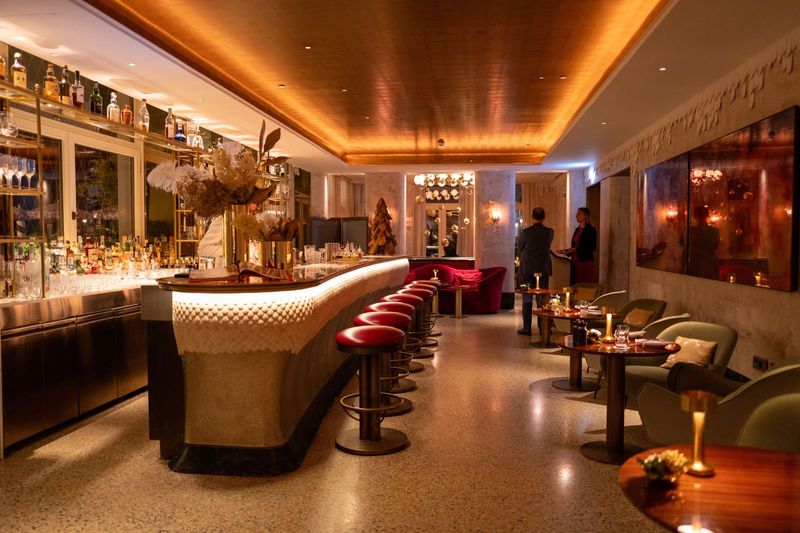
Yet somewhere along the way, the logic inverted. Restaurants that already blaze with overhead spotlights and LED strips now deploy table lamps as well, layering light upon light until the cumulative effect resembles not a dining room but a showroom floor. We have sat in establishments in the Gulf and across Southeast Asia where the ambient brightness is high enough to conduct surgery, yet each table is crowned with its own adjustable lamp, adding not atmosphere but clutter. The question lingers: are these backups against power failure, or simply objects placed because convention now demands them?
The irony is that the technology intended to create mood often does the opposite. Plastic LED candles flicker in hurricane lamps across hotel lobbies and resort spas, their artificial glow a simulacrum that undermines rather than enhances the intended experience. The eye knows the difference, even if the mind does not immediately register it. A real flame dances, consumes oxygen, responds to breath and movement. An LED blinks in programmed intervals, lifeless and static. The gulf between the two is the gulf between presence and imitation.
The Case for a Chef d'Ambience
Perhaps what the hospitality industry needs is not more lighting systems, but fewer and better ones, overseen by someone who understands that atmosphere is not the sum of lumens but the interplay of shadow, warmth, and restraint. Imagine a role dedicated not to wine or bread service but to light itself: a chef d'ambience who moves through the dining room adjusting flame height, repositioning candles, reading the mood of each table and responding in real time. The lapel pin would bear not a cluster of grapes but a small flame, a visual shorthand for the craft.
This is not nostalgia for its own sake. It is a recognition that certain technologies, for all their convenience, cannot replicate the qualities they were designed to replace. The same logic applies to fireworks, which once marked holidays and weddings with sulfur and spark, now often supplanted by drone displays that trace precise geometries in the sky but lack the visceral thrill of combustion. Precision is not always preferable to poetry.
Returning to the Source
We have spoken with designers and restaurateurs who are beginning to push back against the proliferation of LED table lamps, opting instead for candles in brass holders or hand-blown glass vessels. The shift requires more labor: wicks must be trimmed, wax replaced, flames monitored. But the payoff is immediate. Skin tones warm, conversations soften, the dining room becomes a theater of small, flickering lights rather than a grid of uniform brightness.
For those hosting at home, the principle holds. A box of matches and a collection of well-made candleholders, whether vintage brass or contemporary glass, will do more for an evening's ambience than any number of rechargeable lamps. The glow forgives imperfections, highlights textures, and draws the eye inward rather than scattering attention across a brightly lit field.
The Limits of Simulation
The broader question is why hospitality professionals, many of whom are trained to attend to every detail of service and presentation, have allowed lighting to become an afterthought outsourced to complex systems that few staff members know how to operate. Touch screens smudged with kitchen grease, preset modes that do not correspond to the time of day or the mood of a room: these are the symptoms of an industry that has mistaken technology for atmosphere.
Lighting is not a problem to be solved with more equipment. It is an art that requires attention, restraint, and an understanding of how human beings respond to warmth and shadow. The best dining rooms we have encountered in the past year, from a family-run trattoria in Umbria to a minimalist izakaya in Kyoto, share a common trait: they use light sparingly, and when they do, it is almost always fire.
A Modest Proposal for August Evenings
As summer evenings lengthen and gatherings move indoors, there is an opportunity to reconsider how we light the spaces we inhabit. Pull out the brass candlesticks, the glass votives, the ceramic holders that have sat unused in a cupboard. Strike a match. Let the flame settle and steady. Watch how it changes the room, how it draws people closer, how it makes even the plainest table feel considered.
The LED table lamp will not disappear, nor should it in contexts where flexibility and safety are paramount. But its dominance in hospitality is worth questioning, especially when the original source, candlelight, remains more effective, more beautiful, and more true to the experience of gathering around a table. Atmosphere is not something that can be tapped into existence with three touches on a lamp stem. It is built slowly, with attention and care, and it begins with understanding the difference between light and glow.