When the Vegetables Arrive Before the Permits: Inside Oyatte's Long Road to Opening
Chef Hasung Lee turned a six-year dream and a farm friendship into New York's hardest reservation, navigating four postponements and a flooded basement along the way.
A Spreadsheet of Ferments
There is a moment in every ambitious restaurant opening when the vision collides with the permit office, when the furniture sits somewhere on I-95, and when the chef realizes that the soft-opening guest count and the actual opening night bear no resemblance to one another. For Hasung Lee, that moment stretched across four postponements, a leaking basement, and a reservation system that doubled his intended covers on day one.
At Global Chic Voyage, we've watched enough restaurant openings to know that the prettiest menus often mask the messiest backstories. Oyatte, Lee's vegetable-forward tasting room that opened earlier this year in New York, is no exception. What sets it apart is not just the eight courses of hyper-seasonal produce or the pedigree behind them, but the quiet tenacity required to bring a six-year idea to a very full dining room.
Lee began collecting references in 2020. The vision was clear from the start: vegetables would anchor everything. Not as virtuous side notes or token nods to seasonality, but as the structural spine of the menu. He had spent years in kitchens where precision was doctrine, places like Gramercy Tavern, Atomix, The French Laundry, and Geranium in Copenhagen. Each taught him a different grammar of restraint and intensity. The question was how to translate that into something that felt like his own.
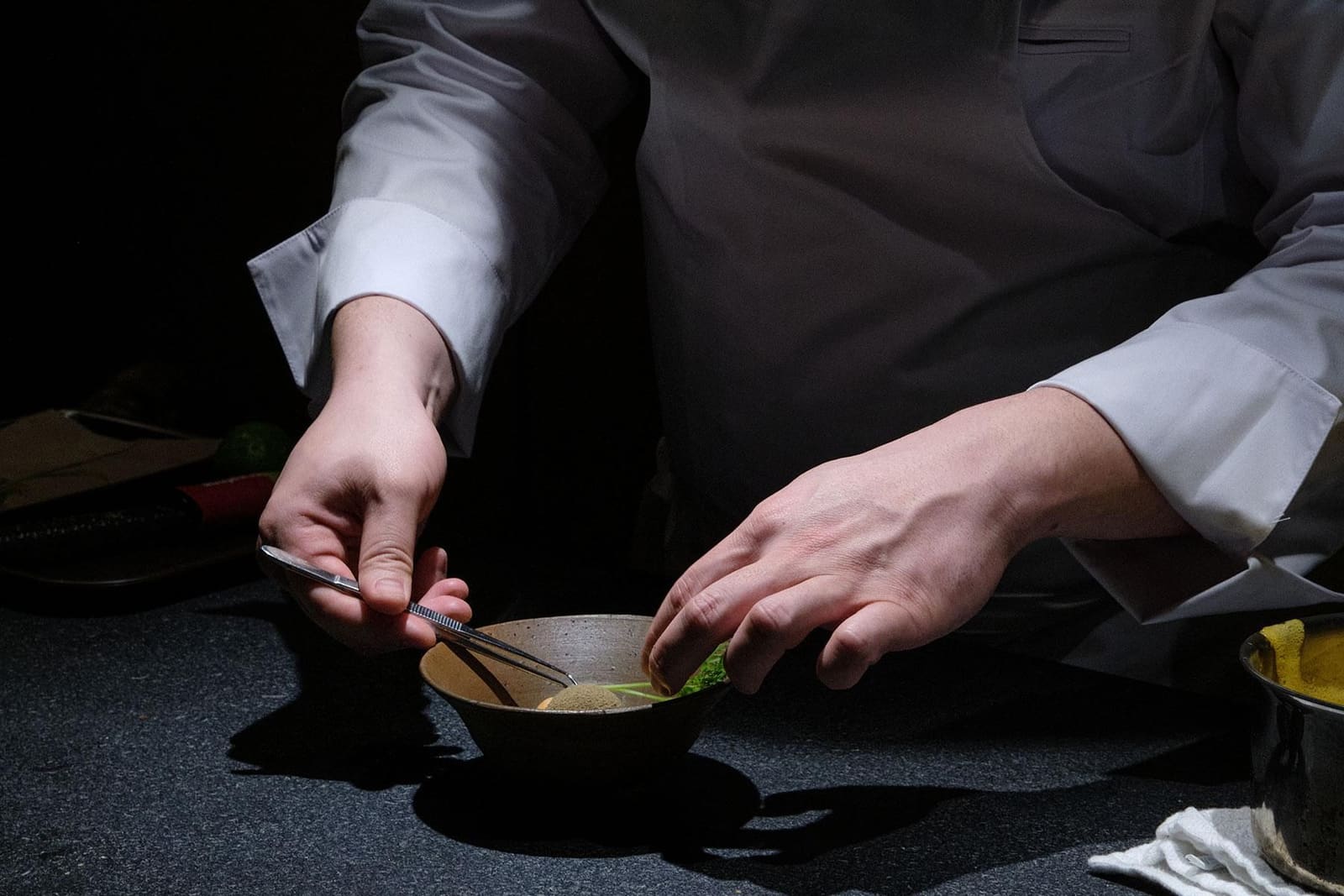
The answer arrived through timing and friendship. Brett Ellis, who runs Crown Daisy Farm about ninety miles north in Staatsburg, became both supplier and collaborator. The farm's output, hyper-local and meticulously tended, would become the raw material. To capture its full range, Lee built what he describes as a very long spreadsheet: fruits, vegetables, nuts, even tree bark, all fermenting at different stages, each one a potential building block for a dish that might arrive months later.
The Netflix Question
By the time Lee appeared on Netflix's cooking competition series earlier this year, Oyatte was already in motion. The show offered visibility, and Lee hoped it might open doors to investors. It did, though he secured funding before the episodes even aired. What the show also delivered was a flood of recognition, the kind that turns a tasting-menu restaurant into a perpetually sold-out one.
Lee admits the filming experience felt oddly liberating. For once, he could focus entirely on cooking, with no operations or business concerns bleeding into the margins. The stress, when it came, had less to do with the cameras and more to do with collaboration. In one challenge, seasoned chefs were paired against a younger cohort. Lee's team had never worked together, and the clash of training styles, fine dining's demand for exactitude versus a looser improvisational approach, created friction. That, he says, was the most frustrating stretch.
The portrayal that emerged, calm under pressure, unbothered by the stakes, was mostly accurate. But it also flattened the texture of what it actually takes to open a restaurant when the infrastructure refuses to cooperate.
Fifty-Five Covers on Night One
Opening day was supposed to be controlled. Lee envisioned thirty covers, a manageable number that would allow the kitchen to find its rhythm without the high-wire act of a packed house. Then the reservation platform experienced a technical issue. When the doors finally opened, after four postponements driven by delayed permits, late furniture deliveries, and unfinished construction, the restaurant was suddenly handling fifty-five covers across three turns. More than double the plan. Nearly triple the soft-opening pace of twenty guests per night.
The basement, as it turned out, had its own ideas about timing. Heavy rain brought leaks. It has continued to leak with each storm since. Lee has flagged the problem repeatedly with the landlord. Repairs are underway, but old buildings have their own logic, one that does not bend easily to a chef's schedule or a dining room's needs.
At Global Chic Voyage, we've seen how the physical realities of a space, the bones and plumbing and weatherproofing, can quietly shape the emotional arc of a restaurant. Oyatte's basement leak is not romantic. It is simply one more variable in a long list of things that must be managed, worked around, absorbed into the daily rhythm of service.
Micro-Seasons and the Limits of Planning
New York's growing seasons do not follow a tidy calendar. Lee talks about micro-seasons, the brief windows when a particular green or root or blossom is at its peak, and the need to respond in real time. The fermenting spreadsheet is part of that response, a way to extend the life of ingredients and layer complexity across dishes that might not see a plate for weeks.
This approach requires a kind of dual vision: one eye on what is arriving from the farm today, the other on what is quietly transforming in jars and crocks, building flavor in the background. It is the culinary equivalent of long-term planning in a context that resists predictability. You can map out your menu, source your relationships, build your systems. But you cannot control when the rain will flood the basement or when a reservation platform will malfunction on opening night.
The menu at Oyatte reflects Lee's years in kitchens where every step had to be exact. But it also reflects a willingness to adapt, to let the produce dictate the direction, to acknowledge that the plan and the reality will always diverge. That divergence, he says, is where the learning happens.
What Stays, What Changes
In the short stretch since opening, Lee has settled into a rhythm of problem-solving that feels less about crisis management and more about calibration. The lesson, as he describes it, is straightforward: if you do not give up, a solution eventually surfaces. It might not be elegant. It might involve mopping the basement after every rainstorm. But it arrives.
We have watched this pattern repeat across the restaurants we return to year after year. The ones that endure are rarely the ones that launched flawlessly. They are the ones that learned to absorb setbacks without losing sight of the original vision. Oyatte's vision, vegetables as the center of gravity, a tasting menu built on fermentation and micro-seasonal timing, has remained intact even as the infrastructure around it wobbled.
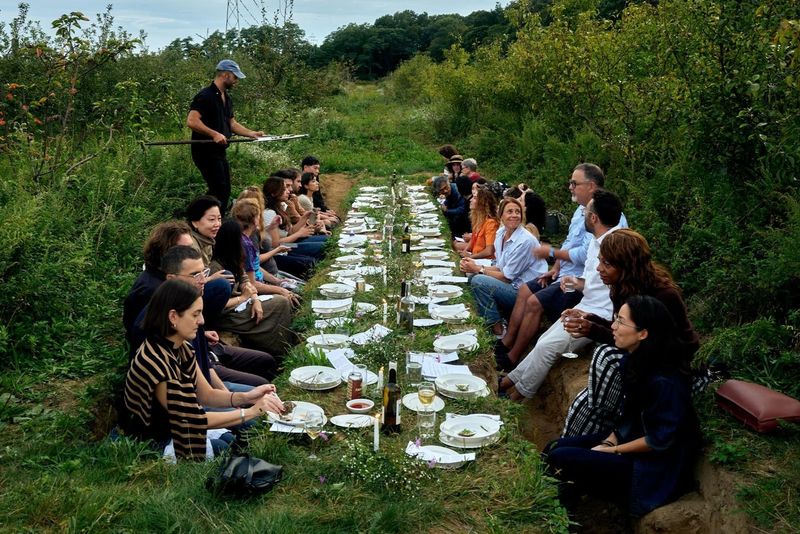
The dining room is full every night now. Guests who watched Lee on screen want to see what he builds on the plate. The recognition on the subway is infrequent but genuine. And the spreadsheet of ferments continues to grow, each entry a small bet on a future dish, a way of planning a picnic even when the weather refuses to be predicted.
What Comes Next
Oyatte is still finding its footing, adjusting covers, refining the flow between kitchen and dining room, negotiating with a landlord over a leak that will not quit. But the bones of the restaurant, the partnership with Crown Daisy Farm, the fermentation program, the eight-course structure, feel settled. This is not a restaurant chasing trends or pivoting with each season. It is a restaurant built on a six-year accumulation of ideas, relationships, and references, now finally open to the scrutiny and appetite of New York diners.
At Global Chic Voyage, we are less interested in the hype cycle around a new opening than in what remains after the initial rush fades. Oyatte's test will be whether the rigor and inventiveness that Lee brought to other kitchens can translate into something sustainable under his own name. The early signs, sold-out books, a menu that shifts with the farm's output, a chef who has learned to navigate postponements without abandoning the plan, suggest that the answer is yes.
The basement will still leak. The permits will still arrive late. But the vegetables, fermented and fresh, will continue to arrive from Staatsburg, and Lee will continue to build his dishes around them, one micro-season at a time.