When a Parisian Brasserie Takes Over a Cutlery Shop in Chelsea
La Nouvelle Garde's first London address brings checkerboard floors, buttered lobster, and a distinctly French approach to hospitality to Sloane Square.
The Cutlery Shop Is Gone
The building at 1 Sloane Square once housed David Mellor's cutlery showroom, a temple to British industrial design where knives and forks were displayed like gallery objects. Now the space belongs to Brasserie Olivia, the first venture outside France for La Nouvelle Garde, a group that operates ten restaurants across the country, from Lille in the north to Marseille on the Mediterranean coast. Five of those establishments are in Paris, where the formula has proven durable: checkerboard tiles, all-day service, and a menu that prizes consistency over invention.
The timing is notable. Sloane Square is in the middle of a dining resurgence. A new iteration of Martino's has taken over the old Hugo Boss site. Clare Smyth's Corenucopia has opened around the corner on Holbein Place. The team behind the Walmer Castle is preparing a pub for autumn. Into this crowded field comes a brasserie that makes no apologies for being French, and makes no effort to adapt its formula to local tastes beyond a few historical nods to the English aristocracy's love affair with the Riviera.
Cross-Channel Architecture
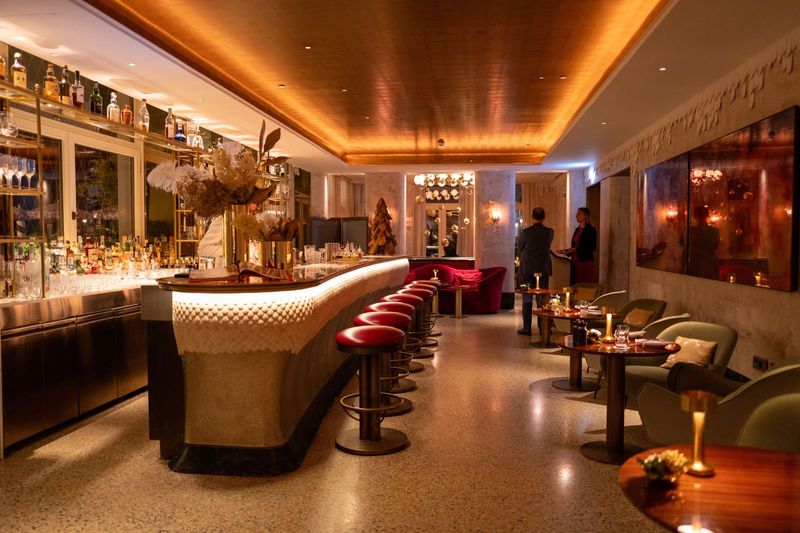
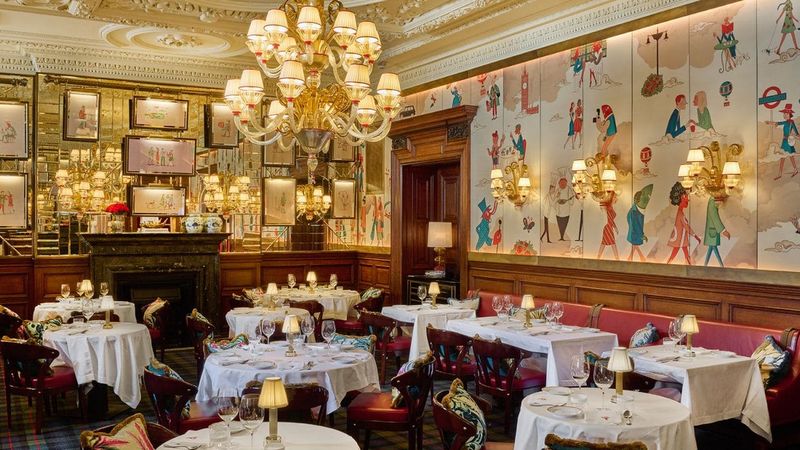
The design language is unmistakably Gallic. A pavement terrace spills onto the square, planted with greenery that softens the urban geometry. Inside, the checkerboard floor establishes the rhythm, black and white tiles laid in a pattern that has anchored French brasseries for more than a century. Mirrors multiply the light that pours through wraparound windows, and Murano-style chandeliers hang from the ceiling, their glass catching and diffusing the glow.
But co-founder Charles Perez looked beyond Paris for his references. The inspiration, he has said, came from the grand hotels of the Côte d'Azur in the 1920s, when the English upper classes decamped to the South of France for long stretches of sun and leisure. It was an era of cultural exchange, when British aristocrats brought their expectations of service and the French responded with a particular brand of elegance that was both formal and relaxed.
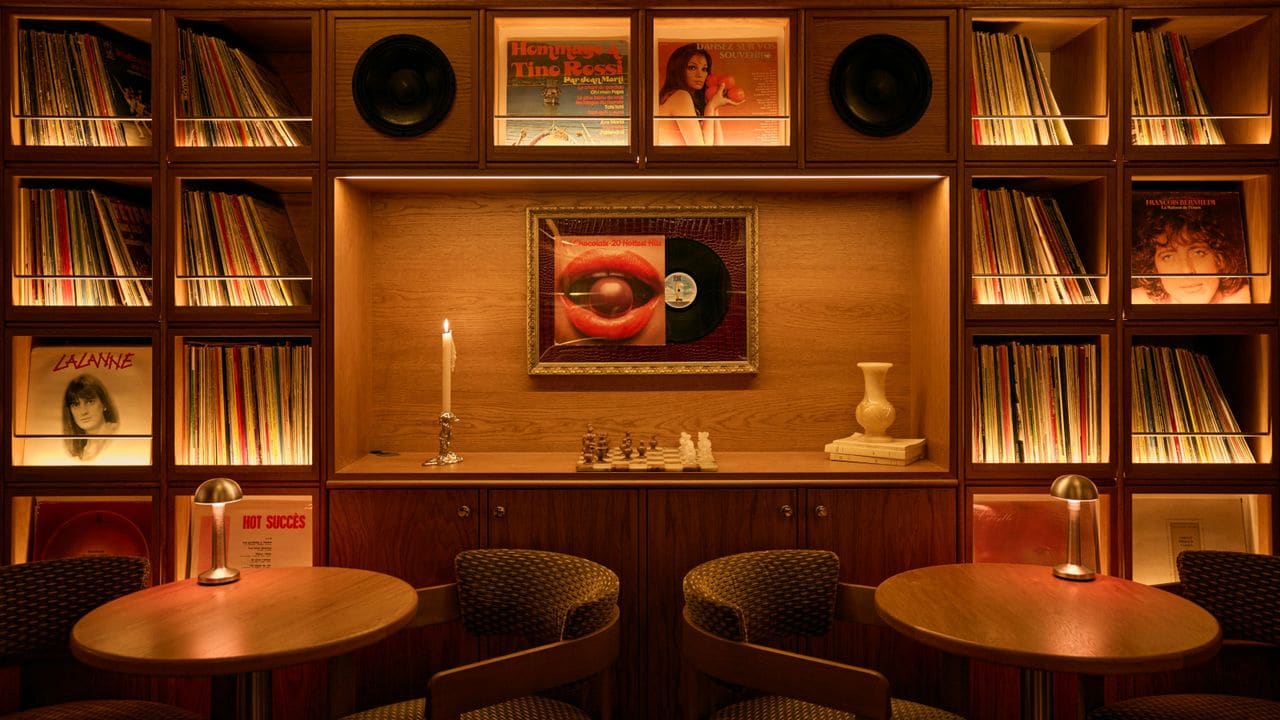
Mark Bithrey, whose London studio B3 Designers has shaped eight of La Nouvelle Garde's restaurants, describes the approach as filtered through a contemporary sensibility rather than literal recreation. Textiles from Pierre Frey introduce layers of color and texture. Vintage posters and postcards from the South of France line the walls, but they function as atmosphere rather than nostalgia. The result is a space that feels richly appointed without tipping into theme-restaurant territory, a balance that requires careful calibration in a city where French clichés are easy to fall into.
The wraparound windows keep the dining room connected to the square outside, a transparency that breaks with the more enclosed, cocoon-like interiors of traditional Parisian brasseries. It is a concession to London's different relationship with natural light, and to the neighborhood's expectation that restaurants should engage with the street rather than turn inward.
The Logic of the Menu
Head chef Rachide Sambu Baldé brings experience from Galvin La Chapelle, where old-school French technique was the foundation, and The Five Fields, where modern fine dining pushed boundaries. At Brasserie Olivia, he is working within a different set of constraints. The brasserie model does not celebrate the chef's creativity. It celebrates the kitchen's ability to execute a fixed repertoire with precision, day after day, meal after meal. The dishes are not original. They are standards, and the test is whether they are done correctly.
Gougères arrive filled with molten Parmesan, the pastry light and airy, the cheese sharp enough to cut through the richness. A plate of crudités presents garden-fresh vegetables alongside salsa verde, a simple preparation that depends entirely on the quality of the produce. Foie gras, marinated in brandy, is soft enough to spread with minimal pressure, its richness balanced by the alcohol's bite. Bavette steak is cooked rare, served with a pile of frites that are crisp on the outside, fluffy within, and generously salted.
An oyster counter handles shellfish shucked to order, the selection changing with availability. Lobster tanks allow diners to choose their own crustacean before it is prepared, typically with garlic butter that amplifies the sweetness of the meat. The approach is theatrical but functional, a reminder that brasseries emerged as places where bourgeois diners could see their food before it was cooked, a transparency that signaled quality and freshness.
Dessert follows the same logic. Crêpe Suzette, the flambéed pancake finished with orange butter and liqueur, lacks the silky extravagance of versions served at hotels like The Ritz, but it also costs a fraction of the price. The comparison is instructive. Brasserie Olivia is not competing with haute cuisine. It is offering accessible luxury, the kind of meal that can be repeated regularly without financial strain.
The wine list reinforces this positioning. More than twenty wines are available by the glass, all French, with a focus on value rather than prestige labels. It is a list designed for experimentation, for trying a glass of something unfamiliar without committing to a full bottle.
The Question of Welcome
Perhaps the most telling detail is the policy on dogs. They are not merely tolerated but actively welcomed, a stance that aligns with French dining culture, where small dogs are a common sight in restaurants, often tucked into handbags or sitting quietly at their owners' feet. In London, where pet policies vary widely and many establishments ban animals outright, this is a point of differentiation.
It also signals a broader philosophy. Brasseries, at their best, function as neighborhood anchors, places where the same customers return regularly, where the staff recognize faces, where the rhythm of service accommodates both quick lunches and leisurely dinners. Olivia is open from breakfast through late-night service, designed to capture the post-theatre crowd from the Royal Court as well as morning coffee drinkers and afternoon diners.
This model requires a different kind of consistency than fine dining. A restaurant that serves only dinner can focus its energy on a single service. A brasserie that operates from morning until late evening must maintain quality across multiple shifts, with a kitchen that can pivot from eggs and pastries to oysters and steak without faltering. The challenge is logistical as much as culinary.
The Riviera and the Aristocracy
The 1920s reference is worth unpacking. The South of France became a fashionable destination for the English upper classes after the First World War, when rail connections improved and the climate offered an escape from London's damp winters. The Riviera's grand hotels catered to this clientele with a blend of French sophistication and British comfort, creating a hybrid culture that influenced architecture, fashion, and food.
Bithrey's design for Olivia draws on this moment without replicating it literally. The textiles, the color palette, the layering of materials all evoke an era when cross-channel exchange was at its peak. But the space is not a period piece. The furniture is contemporary, the lighting is modern, and the overall effect is one of reference rather than recreation.
This approach reflects a broader trend in luxury hospitality, where historical inspiration is filtered through a minimalist aesthetic that avoids the clutter of full-scale nostalgia. The goal is to suggest a feeling, a mood, rather than to transport diners to a specific time and place. It is a more subtle form of escapism, one that allows the present to coexist with the past.
Sloane Square's Dining Density
The concentration of new openings in this corner of Chelsea is no accident. Sloane Square sits at the intersection of several affluent neighborhoods, with a population that dines out frequently and has high expectations. The Royal Court Theatre provides a built-in evening crowd. The proximity to Knightsbridge and Belgravia extends the catchment area.
But density brings competition. Martino's, Corenucopia, and the forthcoming pub from the Walmer Castle team all target slightly different segments of the market, but there is overlap. Brasserie Olivia's advantage is its flexibility. By operating all day, it can capture morning coffee, business lunches, pre-theatre dinners, and late-night drinks, maximizing use of the space and spreading revenue across multiple dayparts.
The all-day model also allows for a different kind of relationship with customers. A restaurant that is only open for dinner is a destination. A brasserie that is open from breakfast onward can become a habit, a place that integrates into daily routines. This stickiness, if achieved, provides a more stable revenue base than relying on evening covers alone.
The Export Question
La Nouvelle Garde's expansion to London raises questions about how well the brasserie format travels. The group's ten French locations benefit from a cultural context where the brasserie is a familiar, even essential, part of the dining landscape. Londoners have their own traditions: the pub, the gastropub, the Italian trattoria, the Indian curry house. The French brasserie exists in the city, but it is not native.
Success will depend on whether Olivia can establish itself as more than a novelty. The design is polished, the menu is competent, and the location is strong. But the real test will come in the months ahead, when the initial curiosity fades and the restaurant must rely on repeat business. Can it become a neighborhood fixture, or will it remain a destination for special occasions and tourists?
The answer will likely hinge on consistency. Brasseries succeed by being reliable, by delivering the same quality meal after meal. The format is forgiving of minor variations, but it is unforgiving of major lapses. A single bad experience can break the habit, sending customers to one of the many other options within walking distance.
The Butter and the Tiles
There is something to be said for a restaurant that knows what it is. Brasserie Olivia does not pretend to be revolutionary. It does not chase trends or invent dishes. It takes a model that has worked in France for more than a century and transplants it to London with minimal adaptation. The checkerboard tiles, the buttered lobster, the welcoming policy for dogs, all point to a confidence in the formula.
Whether that confidence is justified will depend on execution. The ingredients are in place. The kitchen has the experience. The dining room has the atmosphere. What remains is the harder work of building a clientele, of becoming the kind of place that people return to not because it is new, but because it is good, and because it is there, open and ready, from breakfast until the last customer leaves after the theatre lets out.