Lagoon, Sky, and the Geometry of Stillness
Bora Bora's overwater sanctuaries and coral gardens reframe what it means to begin a marriage far from shore.
A Geography Built for Two
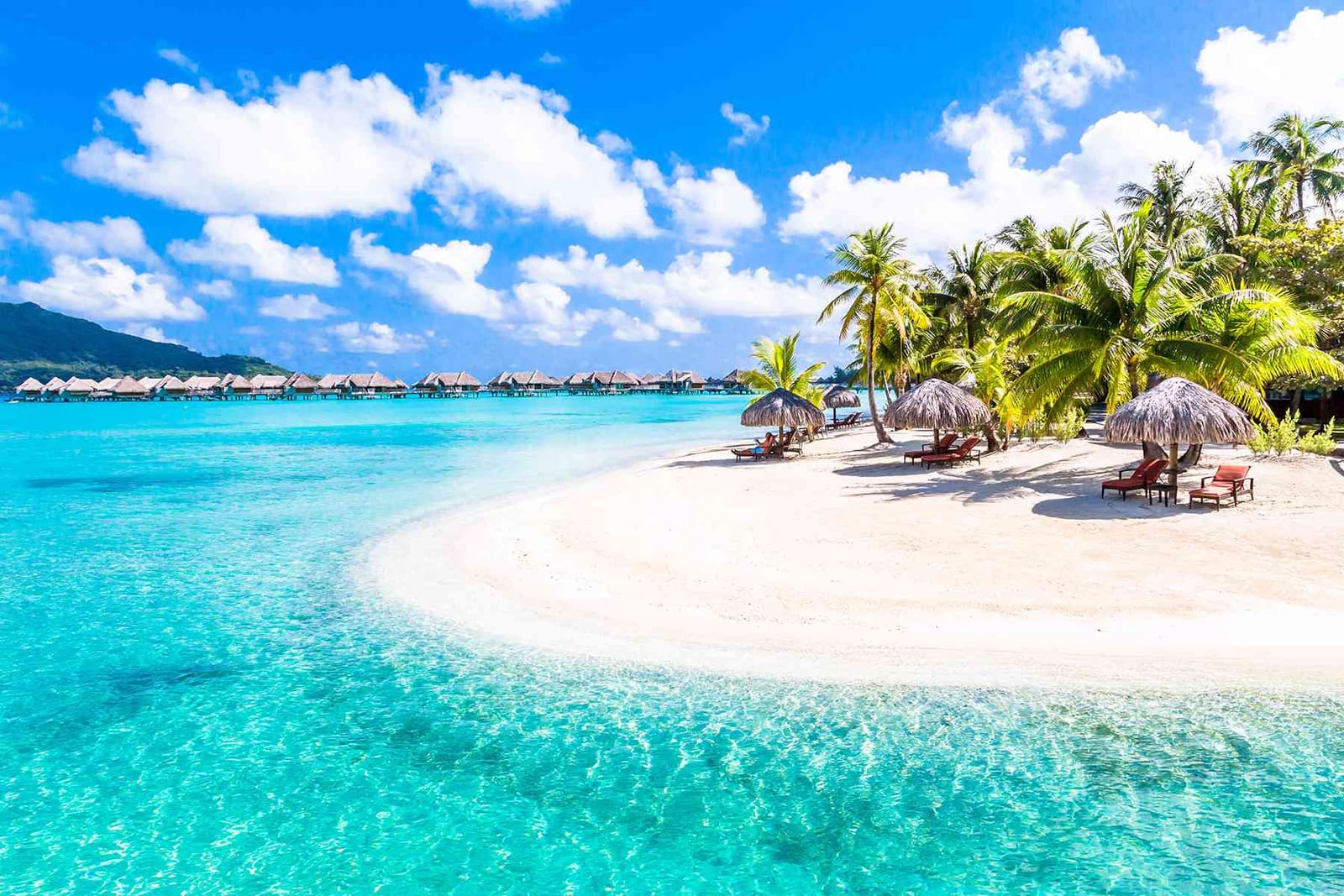
The volcanic peak of Mount Otemanu rises above a lagoon so calm it reflects the clouds, and somewhere in that stillness lies the reason couples have been sailing here for decades. Bora Bora, a 30-square-kilometre island in French Polynesia's Society archipelago, sits 260 kilometres northwest of Tahiti. Its topography is simple: a central massif surrounded by a barrier reef that encloses a lagoon in fifty shades of blue, from cobalt to turquoise so pale it vanishes into white sand.
What makes the place exceptional for honeymooners is not novelty but refinement. The overwater bungalow, now a global hospitality cliché, was perfected here in the 1960s. The design remains unchanged: thatch roof, glass floor panel, private deck, ladder into water warm enough to swim in year-round. The lagoon itself is shallow, rarely deeper than four metres inside the reef, which means visibility is extraordinary and the sense of enclosure complete.
The Case for Sleeping Above Water
Overwater accommodation is not merely scenic. It reorients the rhythm of a day. You wake to the sound of water lapping against pylons, not traffic or air conditioning. Breakfast arrives by outrigger canoe. The floor reveals stingrays gliding beneath your feet. There is no beach to cross, no towel to claim. You step directly into the lagoon, and the transition from sleep to swim takes less than a minute.
The architecture is deliberate. Wide eaves shade the interior without blocking views. Outdoor showers face open water. Privacy is engineered through spacing: neighbouring bungalows are far enough apart that you see them only as silhouettes. The effect is isolation without loneliness, a balance difficult to achieve on land.
Several properties have refined this model. The St. Regis Bora Bora Resort positions its villas along the eastern edge of the lagoon, where morning light is softest. The Four Seasons Resort Bora Bora arranges its overwater suites in a crescent facing Mount Otemanu, so the peak is visible from every deck. Conrad Bora Bora Nui places its bungalows on the southern side, where the reef is closest and snorkelling requires no boat.
Beneath the Surface
The lagoon is not decoration. It is habitat. Blacktip reef sharks patrol the shallows. Lemon sharks rest in the sand. Eagle rays pass in formation. The coral gardens inside the barrier reef are dense with parrotfish, butterflyfish, and triggerfish. Visibility often exceeds 30 metres.
Snorkelling here requires no guide, no certification, no particular athleticism. You swim from your deck and within minutes encounter marine life that would require a daylong excursion elsewhere. The water temperature hovers around 26 degrees Celsius year-round, warm enough that a wetsuit is optional. The lagoon's shallow depth means even nervous swimmers can stand if needed.
The coral itself is recovering. Cyclones in previous decades damaged portions of the reef, but protection measures introduced by French Polynesian authorities have allowed regeneration. The healthiest sections lie along the western and southern edges of the lagoon, where boat traffic is minimal and the reef structure remains intact.
The Ritual of the Lagoon Tour
Every resort offers a variation of the same excursion: a half-day circuit by motorised outrigger, stopping at shallow coral patches, a motu islet for lunch, and a sandbar where stingrays gather. The itinerary is formulaic, but the experience is not. The stingrays, accustomed to decades of feeding by tour operators, approach without hesitation. They are smooth, muscular, larger than you expect. Holding one feels like holding a breathing kite.
The motu lunch is simple: grilled fish, coconut bread, fruit. The setting is Robinson Crusoe without the hardship: white sand, palm shade, water so clear you see your feet at chest depth. It is difficult to overstate how much beauty can be contained in a small, flat island with nothing on it but trees.
When to Arrive
Bora Bora's dry season runs from May through October, with cooler temperatures and lower humidity. November through April is wetter and warmer, though rain typically arrives in short bursts rather than daylong downpours. Cyclone season officially spans November to April, but direct hits are rare.
The island's peak season aligns with Northern Hemisphere summer and the Southern Hemisphere winter, roughly June through September. Prices rise, availability tightens, and the lagoon sees more boat traffic. Shoulder months, particularly May and October, offer better value and quieter water without sacrificing weather.
French Polynesia uses the Pacific franc, though US dollars are widely accepted. English is spoken at all major resorts, though French remains the administrative language. The time zone is 10 hours behind Coordinated Universal Time, which places it far behind both Europe and the eastern United States, a factor worth considering when planning calls home.
What Honeymooning Here Actually Requires
Getting to Bora Bora involves flying into Tahiti's Faa'a International Airport, then taking a 50-minute domestic flight to Bora Bora Airport on Motu Mute. From there, resorts send boats to collect guests. The entire journey from Los Angeles takes roughly 11 hours in the air, not counting layovers. From Europe, expect at least 20 hours of travel.
Cost is the other consideration. Overwater bungalows start around 1,200 US dollars per night and climb quickly. Meals are expensive: dinner for two at a resort restaurant can easily exceed 300 dollars. Groceries are limited and pricey, as nearly everything is imported. Budget travellers will find Bora Bora inhospitable.
But for couples willing to spend, the island delivers something increasingly scarce: genuine remoteness paired with flawless infrastructure. The water is as clear as advertised. The service is polished without being intrusive. The landscape does not require filters or exaggeration. It simply is what it appears to be, which in an age of digital manipulation feels almost radical.
The Stillness at the Centre
What Bora Bora offers, ultimately, is not adventure but immersion. The days blur together: swim, eat, sleep, repeat. There are no museums, no historic districts, no cultural performances that feel anything but staged. The island's indigenous Polynesian culture exists, but it is not the reason people come here. They come for the lagoon, the light, and the chance to spend a week doing almost nothing in a place of almost absurd beauty.
That narrowness of focus is the point. A honeymoon is not a research trip. It is a pause, a recalibration, a week when the only decision that matters is whether to snorkel before or after breakfast. Bora Bora excels at facilitating that kind of purposeful inertia. The overwater bungalow becomes a floating capsule, the lagoon a private sea, the reef a garden you tend simply by looking.
The geometry of the place reinforces this. The barrier reef is a circle. The lagoon is a bowl. The horizon is unbroken. There is no through-traffic, no next destination visible in the distance. You are here, and here is enough.