Asia’s Hospitality Boom Is About More Than Hotels
Asia’s hospitality market is gaining renewed momentum, as strong tourism flows, expanding development pipelines and rising demand for wellness, lifestyle and destination experiences reshape the region’s competitive landscape.
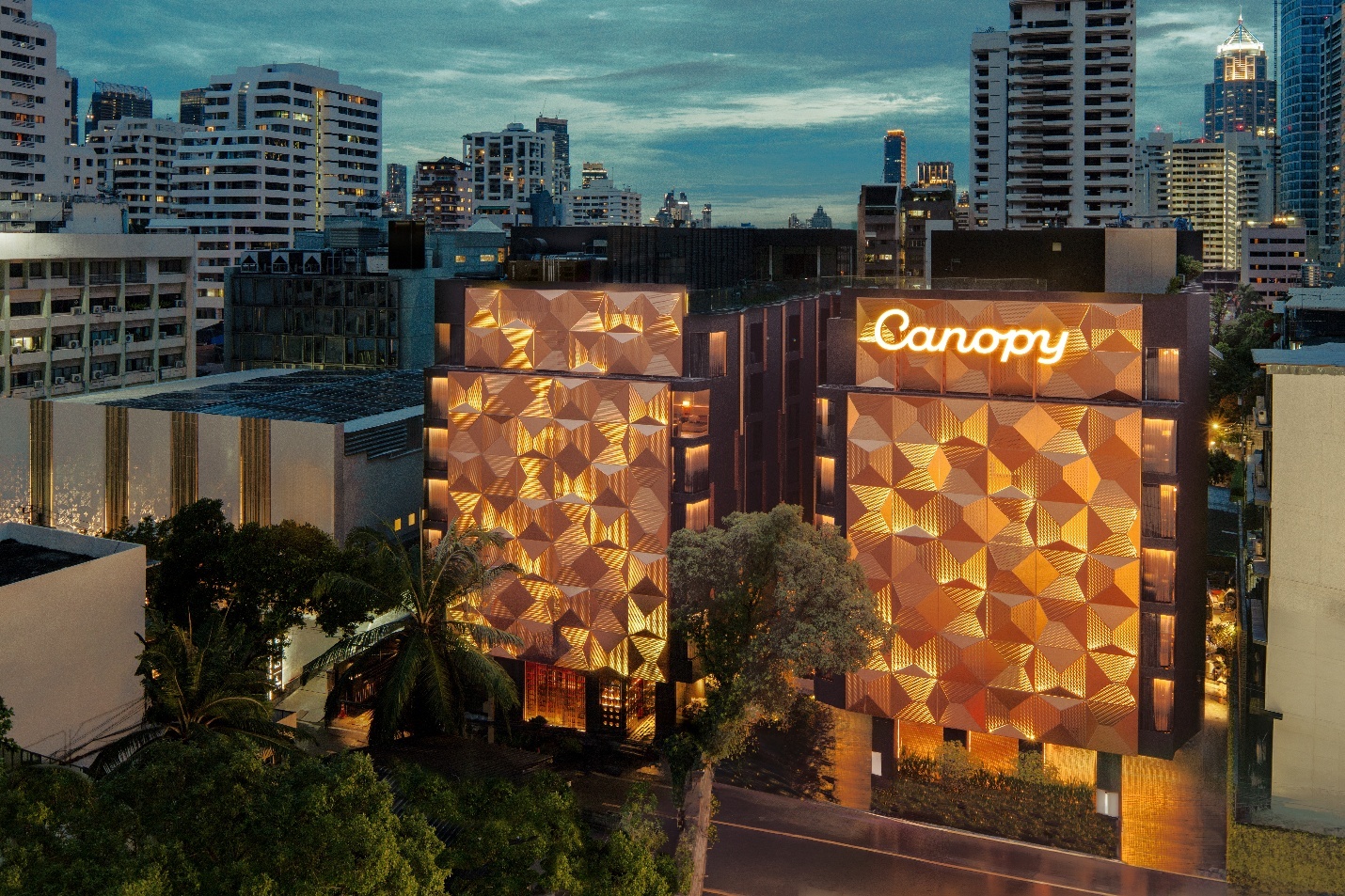
Asia’s hospitality landscape is entering a particularly busy moment. Across the region, new hotels, resorts, restaurants, wellness retreats and destination experiences are appearing at a pace that is reshaping not only where travellers stay, but what they expect from a stay. From Bangkok and Singapore to Bengaluru, Vietnam, and the Philippines, established hospitality capitals are being joined by a growing number of destinations where the next generation of Asian travel is taking form.
The scale of development tells part of the story. According to Lodging Econometrics, the hotel construction pipeline in Asia Pacific excluding China reached a record 3,588 projects and 626,448 rooms at the end of Q2 2026. Projects under construction stood at 989, while 1,119 projects were already in the early planning stage, accounting for 45% of the total pipeline.
But numbers alone do not capture what is changing.
Increasingly, Asia’s hospitality story is one of variety: new urban hotels designed around culture and lifestyle, resorts that make landscape part of the experience, and wellness destinations responding to a traveller who is placing greater value on restoration, food, and longevity.
In other words, the region is not simply adding more places to stay. It is expanding the ways in which people travel.
A region moving with renewed momentum
The development cycle is being supported by renewed investment activity across the region.
According to JLL, Asia Pacific hotel investment transactions reached US$6.8 billion in the first half of 2026, representing a 54% year-on-year increase and the region’s strongest first-half performance since 2019. The increase came despite a more disciplined investment environment, with investors placing greater emphasis on market fundamentals, asset quality and due diligence.
Hotel operating performance has also remained positive. JLL reported that Asia Pacific RevPAR increased 2% year-on-year through September 2025, with performance varying considerably between markets. In the same period, Vietnam continued to gain momentum while Thailand recorded a 4% decline in RevPAR as some tourist demand shifted towards other destinations in the subregion, particularly Vietnam.
The picture is therefore broader than a simple hotel-building cycle. More travellers are returning to Asia, investment activity is strengthening, and destinations that were once secondary choices are increasingly becoming part of the international travel conversation.
A hotel boom with a different character
The current development cycle is notable not only for its scale, but also for the continued strength of the upper end of the market.
Lodging Econometrics indicated that luxury and upper-upscale projects remained significant components of the Asia Pacific excluding China construction pipeline in 2026, alongside record levels of overall development activity.
International hotel groups are responding accordingly.
Marriott International, for example, recorded its third consecutive year of record development signings in Asia Pacific excluding China in 2025, securing 187 deals representing more than 28,000 rooms - a 32% increase in signed rooms year-on-year. India led the region with 99 signings and approximately 12,000 rooms.
Hilton has likewise continued expanding its luxury and lifestyle portfolio across Asia Pacific, with more than 15 luxury and lifestyle openings planned across the region during 2026, including eight new brand entries into Asian markets.
The significance is less about the individual flags than the range of experiences now being brought into the region.
A luxury stay in a major Asian capital can mean a high-rise urban retreat, a design-led lifestyle hotel, or a private sanctuary hidden within a historic neighbourhood. Elsewhere, it might mean a villa surrounded by tropical landscape, a wellness programme rooted in local traditions, or a resort designed around a particular coastline.
The boundaries between accommodation, lifestyle, and destination experience are becoming increasingly fluid.

Wellness is becoming a major part of the Asian travel economy
Few areas illustrate the evolution of Asian hospitality more clearly than wellness.
The momentum is now visible not only in hotel concepts, but in the wider travel economy. A 2026 market analysis estimates that the Asia-Pacific wellness tourism market was worth US$187.8 billion in 2025 and is expected to reach US$204.2 billion in 2026, with the market forecast to grow at an annual rate of 8.7% through 2031.
The Global Wellness Institute is also placing increasing emphasis on Asia’s role in the next phase of wellness. In its 2026 outlook, the organisation describes Asia as a US$2 trillion wellness market, with wellness travel, spas, beauty, traditional medicine, wellness real estate, architecture and design among the sectors shaping the region’s next chapter.
The implications for hospitality are already visible.
Wellness is no longer necessarily confined to a spa treatment or a dedicated retreat. It is appearing through sleep-focused stays, longevity programmes, healthy dining, movement studios, thermal experiences, nature immersion, and quieter forms of hospitality. Increasingly, these elements are being integrated into the overall identity of a property rather than treated as supplementary amenities.
Thailand offers a particularly telling example of this shift. The country is hosting the 2026 Global Wellness Summit in Phuket, bringing together international leaders across wellness, travel, investment, and related sectors. The choice of Thailand reflects the country's established position within Asia's wellness ecosystem while also highlighting how wellness is becoming increasingly intertwined with destination development and hospitality.
For travellers, the result is a broader understanding of what a restorative escape can be, and for hotels, a reason to think beyond the traditional guestroom-and-spa model.

The investment story is becoming more selective
The renewed flow of capital into Asian hospitality does not mean every destination or every project is being treated equally.
JLL’s 2026 investment research points to a market where investors are deploying capital with greater selectivity, focusing on markets with resilient operating fundamentals and conducting deeper due diligence. Yet the overall direction remains positive: US$6.8 billion in transactions in H1 2026, up 54% year-on-year, marks a significant acceleration in hotel investment activity.
The 2025 investment picture also showed growing confidence in hotel assets. JLL had forecast Asia Pacific hotel investment volumes to exceed US$13.3 billion in 2026, following a year in which the sector recorded approximately 2% RevPAR growth through September.
This selectivity matters. The current wave of hospitality development is not only about adding rooms, but also about identifying the right destination, the right concept, and the right experience - whether that means a design-led urban hotel, a wellness retreat, a destination resort, or a lifestyle property embedded within a local neighborhood.
New markets are changing the map
The development pipeline also reveals how the geography of Asian hospitality is evolving.
At the end of Q2 2026, India, Vietnam, Japan, Indonesia, and Thailand were the five largest hotel construction markets in Asia Pacific excluding China, together accounting for 74% of the region’s total pipeline. Bangkok led the region’s cities with 67 projects, followed by Bengaluru with 51.
The numbers point towards a hospitality map that is becoming more dispersed.
India’s scale is particularly notable, while Vietnam continues to combine strong tourism growth with an expanding pipeline of international and luxury hotels. Thailand remains a major hospitality market, Japan continues to attract substantial investment, and Indonesia is developing opportunities beyond its established resort centres.
At the same time, individual destinations are beginning to build their own hospitality identities.
Bengaluru represents the growing intersection of business, technology, and lifestyle travel. Vietnam is developing a wide range of coastal, urban, and cultural destinations. Thailand combines mature tourism infrastructure with increasingly sophisticated wellness and lifestyle offerings. Indonesia continues to build beyond Bali, while Japan’s enduring cultural appeal is being complemented by new urban and regional experiences.
For travellers, this means a greater choice of journeys and more reasons to look beyond the familiar gateway cities.

From five-star service to a sense of place
Perhaps the most interesting development is that the language of hospitality itself is changing.
Service remains fundamental, but it is increasingly being accompanied by questions of identity: Where is this place? What does it taste like? Who made it? What traditions does it carry? How does the landscape influence the architecture? And what will a traveller remember after leaving?
These questions have become particularly relevant in Asia, where international hospitality brands operate alongside independent hotels, local operators, destination specialists, and long-established wellness traditions. The result is an increasingly layered hospitality scene in which global standards and local character can coexist.
For travellers, that makes the region particularly compelling. A familiar hotel brand can offer reassurance, but the most memorable stays are often those that could only exist in that particular place.
A new season for Asia’s hospitality storytellers
This rapidly changing landscape also raises a question of recognition: which hotels, resorts, restaurants, destinations, and hospitality leaders are setting the tone for what comes next?
That question sits at the heart of the 2027 Asia Hospitality Awards (AHA), which has opened its new season under the theme “Visionary Asia”. The programme brings together 30 categories across five disciplines - Hotel, Resort, Lifestyle & Wellness, Cruise & Yacht, and Special Achievement - reflecting the increasingly diverse nature of hospitality across the region.
The 2027 AHA is looking beyond accommodation alone, with categories spanning fine dining, local restaurants, hotel restaurants, bars and lounges, spas, wellness retreats, cruise operators, destination management companies and hospitality leadership.
It is a fitting moment for such a platform. As Asia’s hospitality landscape expands into new destinations and new forms of experience, the stories worth following are no longer limited to the grandest hotels. They are also found in the places quietly changing how we travel, eat, rest, and reconnect with a destination.
The 2027 Asia Hospitality Awards are now open for registration, with the season culminating in the Winners’ Night in Bangkok, Thailand, in May 2027.
For more information, visit https://ahawards.co/.