The Aristocratic Art of Summer: How Europe's Great Estates Still Define Escape
From Tuscan wine country to the Peloponnesian hills, the season's most discerning travelers chose heritage properties that marry history with quietude.
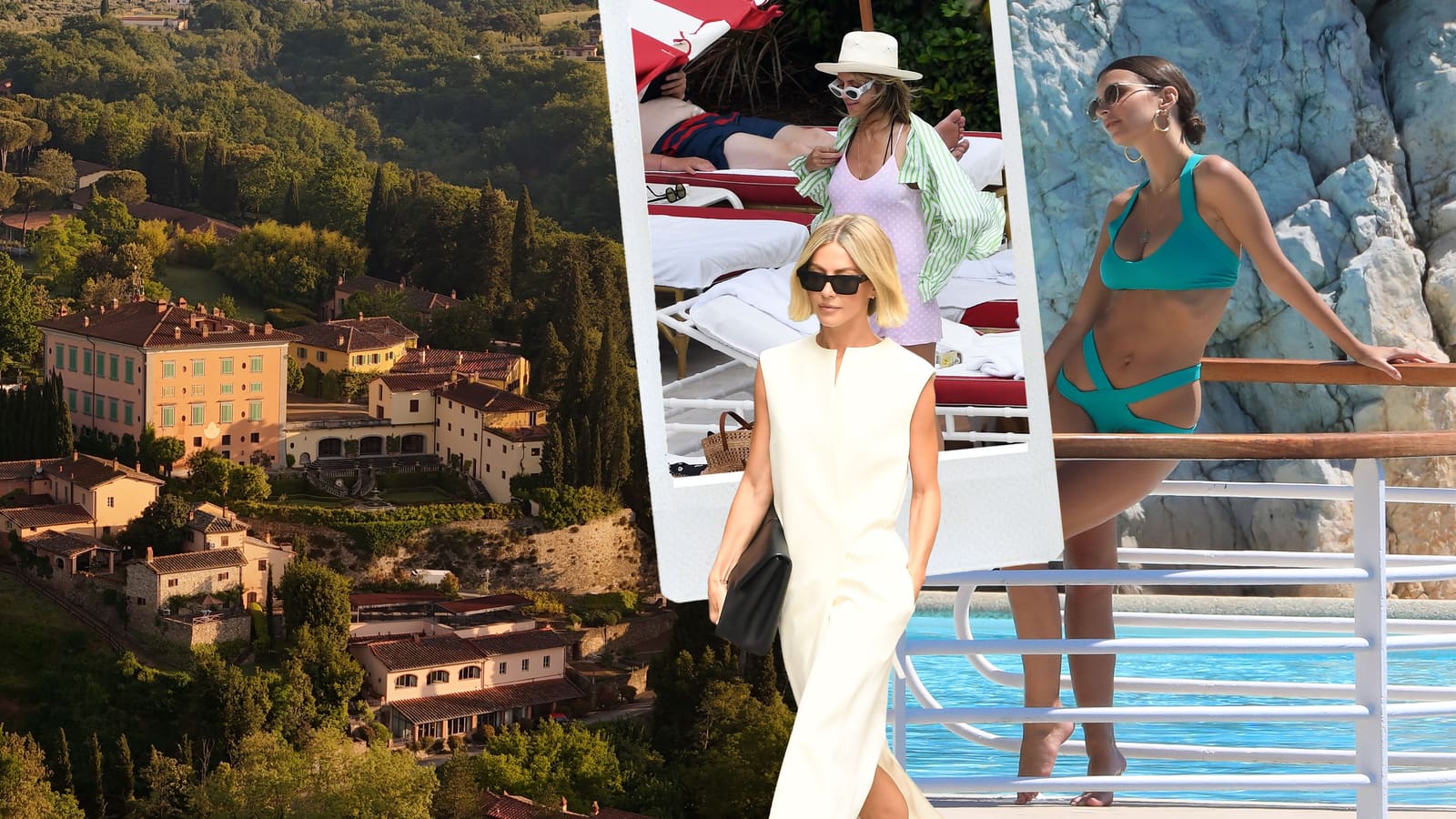
The Ritual Returns
There is a particular moment in late spring when Europe begins its transformation. The air in the South of France takes on a golden weight. The Aegean turns from slate to cerulean. And the migration begins, as it has for generations: a slow, deliberate movement toward beauty, toward slowness, toward estates that understand the difference between luxury and ostentation.
This past season reminded us why certain properties endure. At Global Chic Voyage, we've watched the hospitality landscape shift toward spectacle, toward the Instagram-ready and the algorithmically optimized. Yet the travelers we admire most continue to seek something older and more patient: places where family legacies are measured in centuries, where architecture speaks to the land rather than shouting over it, where a day can unfold without agenda.
The choices made this summer tell a story not of novelty but of return. To Tuscany's wine country, where medieval villages have been coaxed back to life within working agricultural estates. To the Athenian Riviera, where mid-century glamour has been revived with a lighter touch. To the Peloponnese, where ancient Greek proportions still govern contemporary design. These are not hotels that chase trends. They are places that have learned, over decades or centuries, how to hold space for genuine rest.
The Ferragamo Vision in Valdarno
Il Borro sits in a stretch of Tuscany that most visitors miss, halfway between Florence and Arezzo, where the hills roll without interruption and the crowds thin to nothing. The Ferragamo family acquired the estate in 1993, a 2,718-acre property anchored by a restored medieval village. What they built there over three decades is neither a museum nor a resort in the conventional sense, but something closer to a working cultural ecosystem.
Salvatore Ferragamo Jr. oversees the wine and hospitality operations; his sister Vittoria directs the sustainability and farm-to-table dining programs. The estate produces its own Sangiovese and olive oil, certified organic. Chef Andrea Campani leads four restaurants across the property, drawing from what the land yields each season. The 40 suites occupy stone buildings that date back centuries, their interiors carefully balanced between preservation and comfort.
When guests arrive for extended stays, the rhythm becomes clear. Mornings often begin with horseback riding through the vineyards. Afternoons might include pasta-making classes in the estate kitchen, working with flour milled on-site. Wine tastings happen in the cellars, where the family's collection spans both their own vintages and selections from neighboring estates. There is no pressure to fill the hours. The estate is designed for lingering.
This is Tuscany at its most authentic, removed from the tour-bus circuits of Chianti yet deeply rooted in the agrarian traditions that define the region. The Ferragamo family has resisted the urge to polish away the rough edges. The village streets are uneven. The stone walls bear centuries of weathering. The pace is dictated not by concierge recommendations but by the land itself.
Sardinia's Northern Refuge
The Costa Smeralda has long been synonymous with Sardinian summer, but the island's northern coast offers a different proposition. Hotel Capo d'Orso occupies a private seaside park, its buildings nestled into the landscape rather than dominating it. The five-star property maintains its own marina and provides direct access to secluded coves that remain invisible from the main coastal roads.
What distinguishes Capo d'Orso is its commitment to thalassotherapy, the practice of using seawater for therapeutic benefit. L'Incantu Thalasso & Spa sources seawater continuously, filling outdoor pools equipped with hydromassage jets. The treatments draw from both modern wellness protocols and traditional Mediterranean practices, emphasizing movement and mineral absorption rather than passive indulgence.
The surrounding geography invites exploration. The La Maddalena Archipelago lies just offshore, a collection of islands and granite outcroppings where the water takes on an almost unreal clarity. Private boat charters navigate between hidden beaches and small coastal towns, stopping for cliff diving and long lunches at family-run trattorias. The landscape here is rugged and unsentimental, shaped by wind and salt rather than human intervention.
Sardinia has managed to preserve something rare: a coastline that resists overdevelopment, where luxury means access to nature rather than insulation from it. Capo d'Orso understands this balance. The accommodations are refined, but the focus remains outward, toward the sea and the islands beyond.
Athenian Riviera Revived
One&Only Aesthesis opened in 2023 on 128 acres of protected pine forest in Glyfada, a deliberate effort to revive the Athenian Riviera's mid-century golden age. The property nods to the 1960s, when this coastline attracted European aristocracy and Greek shipping families, before mass tourism reshaped the region. The design language is light and uncluttered, with private bungalows and villas scattered along the coastline, many with private plunge pools.
The pine forest remains the defining feature. Guests move through it on bicycles, the air scented with resin and salt. The property includes padel courts, a spa with traditional Greek sauna rituals, and multiple swimming areas that blur the line between pool and sea. But the real draw is the sense of seclusion, the feeling that you've stepped into a private coastal enclave rather than a conventional resort.
Athens itself lies just minutes away, a proximity that allows for cultural immersion without the logistical friction of staying in the city center. Day trips to the Acropolis or the National Archaeological Museum are easy to arrange, but the property encourages a different rhythm: long mornings with books by the pool, unhurried meals, afternoon swims, evenings spent watching the light change over the Mediterranean.
The Athenian Riviera has spent decades in the shadow of the Greek islands, but properties like Aesthesis are making a case for the mainland coast. The landscape is gentler here, more forgiving, with a cultural infrastructure that the islands often lack. It's a different kind of Greek summer, less about dramatic cliffs and whitewashed villages, more about pine-shaded ease and proximity to one of the world's great historical capitals.
Aman's Ancient Greek Geometry
Amanzoe sits above the Peloponnese coast near Porto Heli, its architecture a meditation on ancient Greek proportions. Natural stone, marble accents, columns that echo classical antiquity without mimicking it directly. The 38 guest pavilions are freestanding structures, each with a private plunge pool, positioned to maximize views of the olive groves and coastline below.
Aman properties have a reputation for a particular kind of serenity, a deliberate removal from the world. Amanzoe delivers on this promise while remaining deeply engaged with its landscape. The resort includes an open-air amphitheater where performances are held under the stars. The spa offers eight treatment rooms and a Watsu pool, where therapists guide guests through aquatic bodywork sequences designed to release tension through buoyancy and gentle manipulation.
The surrounding region rewards exploration. Spetses, a short boat ride away, retains its old-world character: narrow alleyways, traditional fish taverns, a pace that hasn't changed in decades. Porto Heli itself offers a glimpse of everyday Greek coastal life, with morning markets and harbors filled with working fishing boats alongside pleasure craft.
What Amanzoe understands, and what distinguishes it from more transactional luxury properties, is the value of space and silence. The resort doesn't overwhelm with programming or activities. It provides a framework, then steps back. Days unfold according to internal rhythms rather than external schedules. This is hospitality as curation rather than orchestration.
Parisian Discretion
La Réserve Paris occupies a Haussmannian mansion just off the Champs-Élysées, one of the smallest hotels in the city to hold an official Palace rating. With only 40 rooms, all serviced by private butlers, the property operates more like a grand private residence than a conventional hotel. Interiors feature damask silk and Carrara marble, a restrained elegance that speaks to old Parisian wealth rather than contemporary flash.
The hotel houses Le Gabriel, a three-Michelin-starred restaurant that has become a destination in its own right. The dining room maintains the mansion's original proportions, with high ceilings and oversized windows that flood the space with light. The menu changes seasonally, drawing from both classic French techniques and more contemporary interpretations, executed with the precision that Michelin stars demand.
Paris during Haute Couture Week is a study in contrasts: the spectacle of the shows set against the city's enduring architectural beauty. La Réserve provides a buffer, a place to retreat between front-row seats and gallery openings. The location allows easy access to the Grand Palais and other show venues, while the scale of the property ensures privacy in a city that can feel relentlessly public.
What makes La Réserve compelling is its refusal to announce itself. There is no grand entrance, no dramatic lobby reveal. The hotel operates quietly, almost invisibly, serving a clientele that values discretion above all else. This is Parisian hospitality at its most refined: attentive without being intrusive, luxurious without being showy, elegant in a way that requires no explanation.
Coppola's Southern Italian Dream
Palazzo Margherita sits in Bernalda, a hilltop town in Basilicata that most travelers pass through without stopping. Francis Ford Coppola bought the 19th-century palazzo in 2004, drawn by the fact that his grandfather, Agostino Coppola, was born here. He spent six years on the restoration, a family project that involved hand-painting frescoes, relaying original marble floors, and reviving the historic garden.
The property operates as a nine-suite boutique hotel, but it feels more like staying in a family home. The Coppola influence is everywhere: in the film screenings projected onto palazzo walls, in the cooking lessons held in the garden, in the Aglianico wine tastings that draw from local producers. The aesthetic is neither minimalist nor maximalist but deeply personal, a reflection of one family's connection to a specific place.
Basilicata remains one of Southern Italy's least-touristed regions, a landscape of ancient hill towns and rugged coastline that has resisted the kind of development that has transformed Tuscany and Umbria. Palazzo Margherita offers a way into this world, providing both comfort and context. The staff, many of them locals, share stories about the town's history and recommend family-run restaurants in the surrounding countryside.
What Coppola understood when he undertook this project is that luxury in Southern Italy is inseparable from place. The palazzo doesn't try to transport you elsewhere. It roots you firmly in Bernalda, in its rhythms and traditions, in the particular quality of light that defines this stretch of coast. The restoration honors the building's history while making it livable, a balance that requires both resources and restraint.
Mallorca's Bohemian Refuge
Belmond La Residencia occupies the hills above Deià, a village on Mallorca's north coast that has attracted artists and writers since the 1950s. The hotel comprises two manor houses dating to the 16th and 17th centuries, set among olive and citrus groves below the Tramuntana mountains. The 67 rooms are individually decorated with antiques, and the property maintains an art collection that reflects Deià's bohemian legacy.
The north coast of Mallorca operates on a different frequency than the south. There are no megaclubs, no all-inclusive resorts, no party boats clogging the harbors. Instead, there are stone villages built into the mountainside, family-run restaurants serving grilled octopus and fried squid, hidden coves accessible only by foot or boat. La Residencia captures this energy without trying to package it for mass consumption.
Cala Deià, a rocky inlet below the village, is home to Ca's Patró March, a cliffside restaurant that has been serving the same menu of fresh seafood for decades. The approach is simple: whatever came in that morning, grilled or fried, served with local wine and bread. This is Mallorcan tradition at its most elemental, unchanged by trends or tourism.
La Residencia understands that its role is not to compete with the landscape but to provide a comfortable vantage point from which to experience it. The hotel offers cooking classes, art workshops, and guided hikes through the Tramuntana, but the real luxury is the freedom to do nothing at all. To sit by the pool with a book. To wander through the groves. To let a day pass without agenda or accomplishment.
Cannes and the Art Deco Return
Hôtel Martinez opened in 1929 on La Croisette, Cannes' famous boulevard, an Art Deco landmark that has defined the city's hospitality landscape for nearly a century. After a $173 million renovation completed in 2018, the 410-room property joined The Unbound Collection by Hyatt, a careful restoration that preserved the ivory façade and Neo-Deco interiors while updating the infrastructure for contemporary comfort.
The hotel maintains a private beach club and pier, a garden pool, and the Carita spa, but its real asset is its position at the center of Cannes' cultural calendar. During the film festival in May, the Martinez becomes a kind of unofficial headquarters, hosting dinners, premieres, and the endless parade of industry figures who define the event. The property knows how to navigate this intensity while maintaining its essential character.
Cannes outside of festival season is a different proposition entirely: quieter, more focused on the pleasures of the Riviera itself rather than the spectacle that descends each spring. The Martinez serves both versions of the city, adapting its energy to match the calendar. This flexibility, this ability to be both stage and sanctuary, is what has allowed the hotel to endure for nearly a century.
The French Riviera has always been about a certain kind of performance, a willingness to be seen and to see. The Martinez understands this dynamic better than most. It provides the setting without dictating the script, allowing guests to shape their own experience within a framework of Art Deco elegance and Mediterranean ease.
The Thread That Holds
What unites these properties is not price point or aesthetic or even geography, though they share a European footprint. It's a philosophy of hospitality that prioritizes depth over novelty, that understands luxury as the freedom to slow down rather than the obligation to keep moving. These are places built to last, designed for return rather than first impression.
At Global Chic Voyage, we've spent years visiting hotels that promise transformation and deliver only transaction. The estates and properties that drew the most discerning travelers this summer operate differently. They don't promise to change you. They simply provide the space and the silence necessary for you to remember who you are when the noise falls away. That, more than any amenity or service, is the aristocratic art they've preserved.