Where Elephants Linger at the Gates and Suites Float Above the River
Anantara's new tented camp along Zambia's Kafue River offers an extraordinary vantage on wilderness, where design and hospitality conspire to soften every journey.
A Journey Measured in Hours, Rewarded in Moments
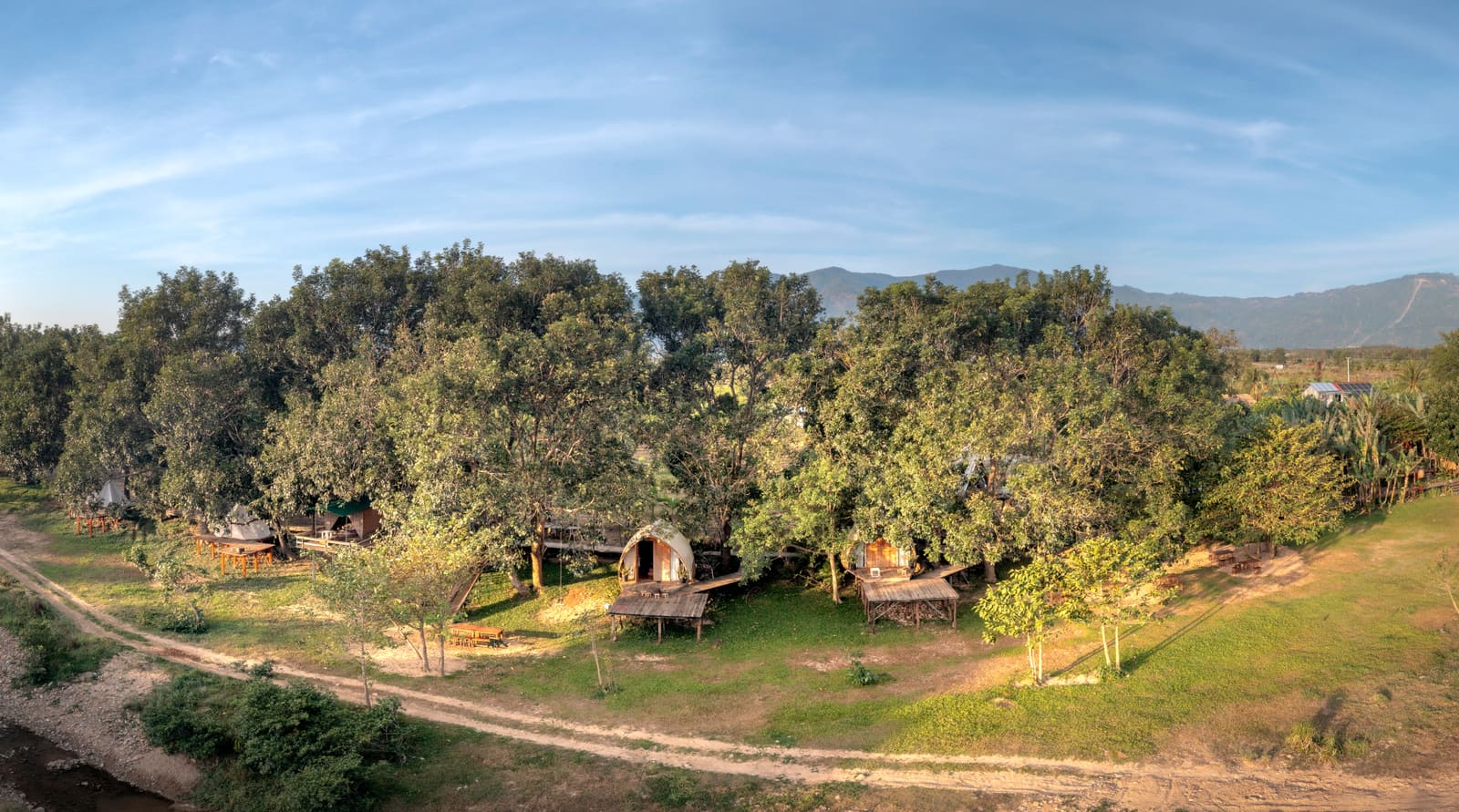
The road to Anantara Tented Camp Kafue River is long by any measure: an intercontinental flight, a short domestic hop, then five hours by vehicle over terrain that tests both suspension and resolve. The camp will soon have its own airstrip, but for now the passage demands patience. When the 4x4 finally rolls into camp after dark, glowing lanterns mark the path to a villa perched three metres above the ground, connected by walkways that wind like tributaries through the canopy.
Dawn reveals what darkness concealed. The Kafue River, one of Africa's longest waterways at 1,576 kilometres, flows gently past the camp's edge. Elephants wade into the shallows. Hippos surface, their broad backs slick with water. A mother elephant and her calf graze near the entrance, unbothered by human presence. Monkeys chatter in the branches overhead. Eagles and kingfishers call across the water. The journey, however arduous, dissolves into irrelevance.
Elevated by Design, Rooted in Place
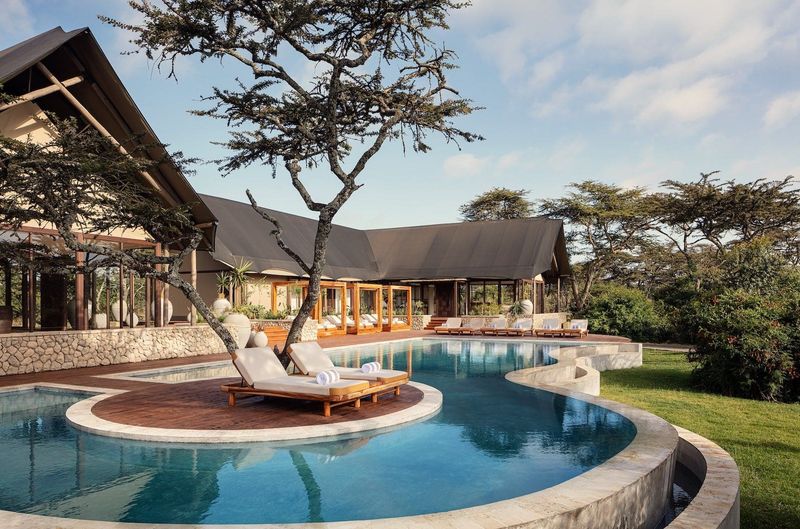
Anantara opened the camp in September 2026 after three years of construction, building every structure on stilts to minimise impact on the floodplain and to offer guests a perspective normally reserved for birds. The result is a camp that hovers above the landscape, its various pavilions linked by wooden walkways that follow the natural contours of the site.
Meg Ralph, whose South Africa-based studio handled the interiors, rejected the tired visual language of safari lodges: no animal prints, no colonial nostalgia. Instead, she worked in abstraction. Wall hangings echo giraffe patterning through clusters of geometric shapes. Fringed textiles integrate directly into the architecture. Tables hold books on regional craftsmanship. Curved wicker lights anchor each space, sculptural and functional in equal measure. The interiors feel tactile, vibrant, deliberate, a counterpoint to the wild immediacy just beyond the glass.
Villas That Unfold Like Secrets
The camp comprises ten Kafue Pool Villas and three Horizon Terrace Suites, each named after native trees. At the threshold of each villa, a small alcove holds shoes, umbrellas, blankets and an Instax Mini camera, free to use throughout the stay. Beyond that, the space opens dramatically. Glass sliding doors form the entire river-facing façade, erasing the boundary between interior and landscape.
The living area occupies one side, equipped with a fridge and coffee machine. The sleeping area stretches to the other, with a generous bed, walk-in wardrobe and desk. Further in, a dressing table sits adjacent to a built-in spa suite, allowing treatments to unfold in private. The bathroom centres on a large soaking tub, flanked by double sinks that overlook the terrace. The shower converts into a sauna and steam room, a luxury that feels earned after hours in the open air.
Outside, each villa extends into a private realm: an outdoor shower, a plunge pool, a seating area and a kitchen that permits dining at any hour without leaving the sanctuary of one's own space.
The Horizon Terrace Suites ascend even higher, 14.3 metres above ground, accessed by glass lift. From that elevation, the view spans 360 degrees, taking in both river and park in a panorama rarely available in safari camps. It feels less like accommodation and more like residence among the treetops.
Safaris by Land and Water
Each guest is assigned a villa host, a dedicated team member who orchestrates the rhythm of the stay. Early-morning cappuccinos arrive without request. Escorts guide guests to safari departure points. The itinerary bends to preference rather than programme.
Morning safaris through Kafue National Park begin just after dawn, when the light is low and animals are active. Rangers, knowledgeable and observant, identify camouflaged wildlife: rare birds, leopards, elephants, warthogs. Coffee and biscuits appear mid-drive, served in the bush. The experience is unhurried, attuned to the pace of the landscape.
For those drawn to water, river safaris offer a different cadence. Hippos surface with startling regularity; spotting one in the Kafue is as unremarkable as sighting livestock in an English field. The temptation to swim is real, but ill-advised. Crocodiles and hippos share these waters, and neither accommodates casual bathers.
A practical note: long trousers and long-sleeved tops help guard against insect bites. Avoid blue and black, favoured colours of the tsetse fly, which is persistent and unpleasant.
Dining Between River and Bush
Meals are inspired by the setting but tailored to individual taste. Luzuba Harvestry, the main dining pavilion, serves as the social centre, though guests may choose to eat in their villas at any time. More unconventional options include a sunken pontoon floating mid-river, an intimate setting for private dinners, and sundowner stations out in the bush where mojitos and gin and tonics, the latter made with local 1964 Gin, are poured as the light fades.
The food itself draws on regional ingredients and techniques, though the kitchen adapts freely. Flexibility, not rigidity, governs the menu.
A Gym That Floats, Fires That Gather
The camp's fitness suite, fully equipped with Technogym apparatus, floats on the river itself, the first such installation in Africa according to Anantara. Exercise becomes observation; the view from the treadmill takes in elephants at the water's edge, birds skimming the surface, the slow passage of hippos downstream.
Each suite includes a private spa area, ideal for massages or facials without leaving one's villa. But the true gathering point emerges at day's end, around three giant fire pits in the main pavilion. Deep chairs encircle the flames. Guests share stories, mocktails in hand, the firelight soft against the encroaching dark. It is here, in this simple ritual, that solitary travellers become a transient community.
Hospitality as Infrastructure
Anantara positions the camp as a benchmark for eco-tourism, and the environmental considerations are genuine: stilted construction, minimal disturbance to the floodplain, integration with the natural hydrology of the site. But what ultimately defines the experience is less the infrastructure than the attentiveness woven through every interaction. Villa hosts anticipate needs before they are voiced. Rangers adjust routes based on guest interest. The kitchen reshapes menus without fuss. Kindness, in this context, is not a flourish but the foundation.
Stays begin at £5,500 per room per night, based on two guests sharing a suite, with full board, premium beverages, game drives and massage treatments included. The price reflects both the remoteness of the location and the calibre of care embedded in every hour. For those who measure travel not in miles but in moments, the cost is secondary to the return: a place where elephants linger at the gates and suites float above the river, where the journey is long but the arrival is everything.