
The Quiet Allure of Fort Lauderdale: Where Florida Learns to Whisper
Beyond the spring break mythology lies a city that has mastered the art of coastal sophistication - one that rewards return visits with layers most travelers never see.
SI
6 Jul 2026 · 5 MIN READ · UPDATED 17 AUG 2026
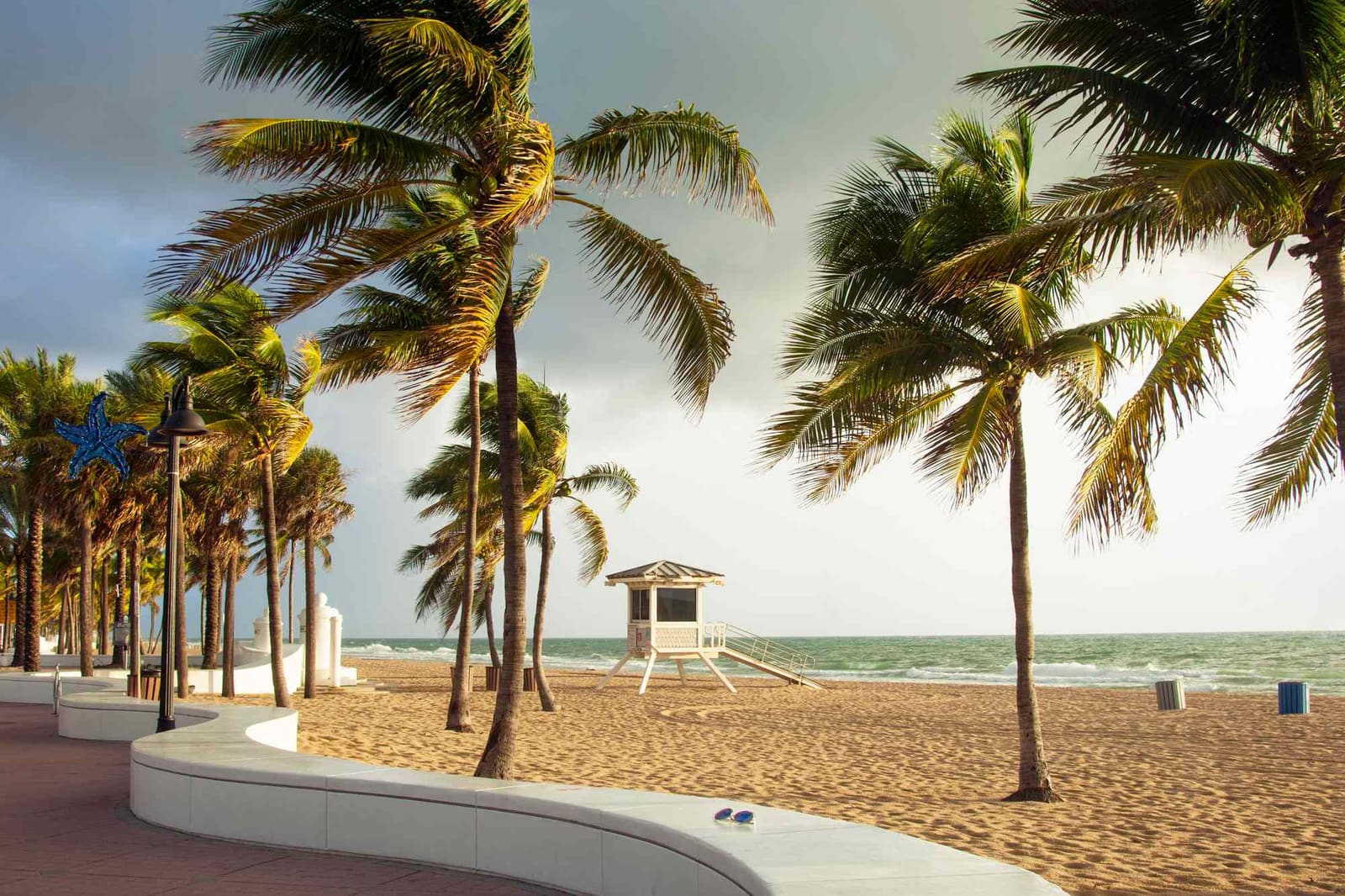
A City That Whispers Rather Than Shouts
There's a particular quality to the light along Fort Lauderdale's coastline in the early morning - something softer than Miami's neon glare, less performative than Palm Beach's polished gleam. It's the light of a place that no longer needs to announce itself, that has quietly evolved from spring break punchline to a destination worthy of genuine curiosity. At Global Chic Voyage, we've watched this transformation unfold over repeated visits, each return peeling back another layer of a city that rewards patience and attention.
The beaches here stretch for seven miles, but numbers fail to capture what draws us back: the way the sand holds a finer grain than its southern neighbor, the absence of aggressive beach club culture, the locals who arrive at dawn for their swim and disappear before the first tour bus rolls in. This is Florida at a whisper rather than a shout, and in an age of overtourism and Instagram frenzy, that restraint feels almost revolutionary.
The Michelin Moment and What It Actually Means
When Michelin inspectors turned their attention to Florida, Fort Lauderdale's inclusion in the starred constellation surprised no one who had been paying attention. The city had been building a culinary infrastructure for years - not through flashy celebrity chef imports, but through the quieter work of talented practitioners who chose this coastline for reasons beyond real estate speculation.
The recognition validated what local food enthusiasts already knew: that serious dining had taken root here, nurtured by access to both Atlantic seafood and the agricultural richness of interior Florida. What matters more than the stars themselves is the ecosystem they represent - a critical mass of suppliers, trained kitchen talent, and diners sophisticated enough to sustain restaurants that prioritize craft over concept.
We've eaten our way through enough coastal cities to recognize the difference between culinary theatre and genuine gastronomic culture. Fort Lauderdale increasingly offers the latter, with dining rooms where the focus remains on the plate rather than the Instagram frame, where seasonal Florida ingredients are treated with the seriousness they deserve rather than deployed as tropical props.
The Hotel Evolution: From Spring Break to Spring Awakening
The accommodation landscape tells its own story of transformation. Where once generic resort towers dominated the beachfront, a new generation of properties has emerged - hotels that understand luxury as experience rather than thread count, that design for the traveler who has seen enough marble lobbies to recognize when one has something meaningful to say.
These are not the behemoths of South Beach, nor the old-money bastions of Palm Beach. Fort Lauderdale's best hotels occupy a middle ground that feels increasingly rare: sophisticated without stuffiness, designed with intention but not overthought. The rooms look toward the ocean but don't treat it as wallpaper; the public spaces encourage lingering without forcing conviviality.
What strikes us most on return visits is how these properties have integrated themselves into the city's rhythm rather than standing apart from it. Their restaurants welcome locals, their pools don't require wristbands, their concierges know the neighborhoods beyond the tourist corridor. This is hospitality as civic participation, and it changes the texture of a stay entirely.
The Beach Itself: An Argument for Subtlety
In a state where beaches often feel like outdoor nightclubs or exclusive preserves, Fort Lauderdale's shoreline maintains an almost anachronistic accessibility. The sand remains public, the atmosphere democratic, the experience refreshingly free of the commercial apparatus that has colonized so many American coastlines.
This is not to suggest some pristine wilderness - Fort Lauderdale is unambiguously urban, and its beach reflects that reality. But there's a balance here that other Florida cities have lost or never possessed. You can walk for miles without encountering a velvet rope. You can spread a towel without navigating a maze of rental furniture. You can swim without dodging jet skis or party boats.
The water itself deserves mention: warmer than the Atlantic has any right to be this far north, clear enough to see your feet, gentle enough for the most anxious swimmer. These are not dramatic waves for surfing mythology, but the kind of reliable, swimmable ocean that becomes part of a daily routine rather than a special occasion. We've come to appreciate this predictability as its own form of luxury.
The Neighborhoods Beyond the Beachfront
What keeps us returning, ultimately, is not the shoreline itself but the city that stretches west from it. Fort Lauderdale rewards the traveler willing to venture beyond the hotel zone, to explore neighborhoods that don't appear in glossy brochures but contain the actual life of the place.
The arts district along Flagler Village pulses with the energy of a community still becoming rather than already arrived - galleries in converted warehouses, restaurants in former industrial spaces, the creative churn of a neighborhood in productive flux. Las Olas Boulevard offers a more polished experience, its boutiques and sidewalk cafes evoking a certain mid-century vision of sophisticated Florida living. The Riverwalk ties these zones together, a pedestrian spine that transforms Fort Lauderdale from car-dependent sprawl into something approaching walkable urbanism.
These neighborhoods operate on a human scale increasingly rare in American resort cities. You can actually live here, not just vacation, and that lived-in quality permeates the visitor experience. The coffee shops know their regulars, the bookstores curate rather than warehouse, the farmers market on Saturday morning draws actual farmers. Tourism exists alongside daily life rather than replacing it.
The Architecture of Transformation
Buildings tell stories, and Fort Lauderdale's built environment narrates a city in productive tension with its past. The mid-century motels that once defined the beachfront are vanishing, replaced by glass towers that could exist anywhere. But in the blocks behind the beach, in the residential neighborhoods spreading west, a remarkable collection of Florida modernism survives - flat roofs and jalousie windows, carports and terrazzo, the optimistic geometry of postwar prosperity.
This architectural inheritance matters more than nostalgia might suggest. It grounds Fort Lauderdale in a specific time and place, provides texture and variation, offers an alternative to the homogenizing forces of luxury development. The best recent projects here engage in dialogue with this modernist legacy rather than erasing it - reinterpreting its lessons about light and ventilation and indoor-outdoor flow for contemporary tastes.
We've noticed on recent visits an increasing sophistication in preservation efforts, a growing recognition that Fort Lauderdale's architectural heritage represents not an obstacle to progress but a foundation for distinctive development. This is the work of decades, not seasons, but the trajectory feels promising.
Why We Return
The question underlying any travel writing is ultimately personal: why this place rather than another, why return rather than explore something new? For Fort Lauderdale, the answer lies in its particular combination of ease and discovery, familiarity and surprise.
This is not a city that demands anything of its visitors. You can arrive, claim your beach chair, order your cocktail, and depart having experienced exactly what you expected. But Fort Lauderdale also rewards curiosity, reveals depth to those willing to look beyond the shoreline, offers the pleasures of a place still becoming rather than already perfected.
The beaches remain the foundation - reliable, beautiful, accessible. But what brings us back is everything that surrounds them: the restaurants that have found their voice, the hotels that understand hospitality as more than service, the neighborhoods that feel lived-in rather than staged, the sense of a city that has matured without losing its essential Florida ease.
In an era when so many destinations feel over-discovered, Fort Lauderdale occupies valuable territory: known but not overrun, developed but not precious, sophisticated but not exclusionary. The light here still whispers rather than shouts, and in that restraint lies an invitation worth accepting again and again.
Photo: John Coletti / Getty Images
Spot something wrong? Email editors@globalchicvoyage.com. We log every correction publicly.
RELATED
SEE ALL →
25 Jul 2026 / 5 min
21 Jul 2026 / 5 min
20 Jul 2026 / 5 min
10 Jul 2026 / 5 min