
The Salt-Trimmed Edge of Martha's Vineyard
Beyond the summer crowds and inherited cottages, a New England island quietly rewrites the rules of American coastal escape.
SI
25 Jul 2026 · 5 MIN READ · UPDATED 17 AUG 2026
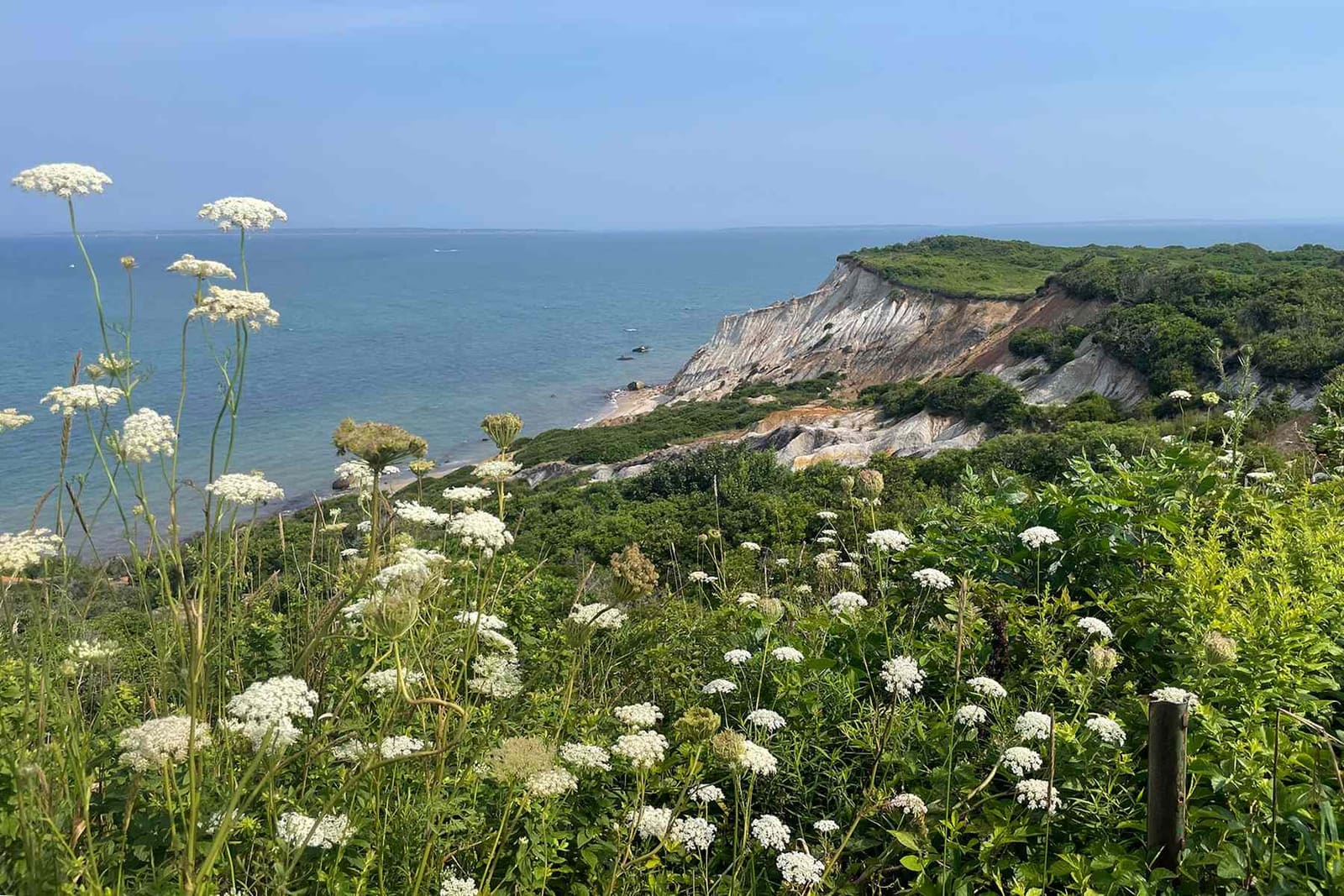
A Shore That Defies Simple Description
The ferry from Woods Hole arrives not with fanfare but with the low groan of engines cutting back, the smell of diesel mixing with salt air. At Global Chic Voyage, we've watched travelers step onto Martha's Vineyard expecting one kind of island and discovering another entirely. This is not the Caribbean's languor, nor the Mediterranean's sun-baked intensity. It is something quieter, more deliberate: a seven-mile stretch of sand at South Beach where the Atlantic meets scrub oak and rosa rugosa, where summer light turns golden by six in the evening and the architecture still speaks in shingles and widow's walks.
Martha's Vineyard sits just off the Massachusetts coast, separated from Cape Cod by a narrow sound that might as well be an ocean for the way it preserves a distinct sense of place. The island measures roughly one hundred square miles, small enough to traverse in an afternoon yet complex enough in character that many visitors never leave the same town twice. Six townships, each with its own cadence: Edgartown's white captains' houses and brick sidewalks, Oak Bluffs with its gingerbread cottages painted in sherbets and pastels, the working harbor of Menemsha where fishing boats still unload their catch at dawn.
The Geography of Twenty Shores
The island's claim to twenty beaches is not marketing hyperbole but geological fact, each cove and strand shaped by different currents, different exposures. South Beach stretches three miles along the island's southern rim, a barrier beach that takes the full brunt of the Atlantic. The water here is colder, the waves more insistent. Families spread blankets near the parking lot; surfers wade out past the break.
Contrast that with the protected waters of Oak Bluffs Town Beach, where the Nantucket Sound laps gently and the water warms by mid-July to a temperature that invites long swims. Or consider Lucy Vincent Beach on the island's southwestern edge, a residents-only stretch during summer months that embodies the island's quiet tension between public access and private privilege. The sand here is fine and pale, the cliffs behind it striped in ochre and gray, a reminder that this land was shaped by glaciers twenty thousand years ago and is still being reshaped by every storm.
We've returned to these shores across multiple seasons, and the lesson is always the same: Martha's Vineyard rewards those who understand that a beach is not simply a beach. It is a function of wind and tide, of whether you arrive at dawn or dusk, of whether you seek solitude or the low hum of other people's summer rituals.
Tables That Reflect the Water
The island's dining culture has evolved considerably over the past decade, moving beyond the fried clam shacks and lobster rolls that still anchor the tourist trade. Not that those traditions lack merit; a late lunch at The Bite in Menemsha, with its paper plates of fried oysters and coleslaw, remains one of the island's great pleasures. But the culinary conversation has grown more nuanced.
Restaurants like The Port Hunter in Edgartown now offer tasting menus that shift with the catch, where striped bass might be paired with fermented ramps and the wine list skews toward smaller European producers. At State Road in West Tisbury, the kitchen draws from the island's farms and its own gardens, a farm-to-table ethos that feels less like trend and more like necessity on a piece of land surrounded by water. The cooking here is confident without being showy, rooted in New England's agrarian traditions but unafraid of borrowing techniques from elsewhere.
Even the island's more casual establishments have raised their ambitions. Beach Road Weekend in Oak Bluffs serves wood-fired pizzas with toppings that change based on what the farmers bring that morning. The wine bar at Behind the Bookstore in Edgartown curates bottles that would hold their own in Brooklyn or San Francisco, served in a space so small that conversation becomes inevitable.
This is not to say Martha's Vineyard has become a culinary destination on par with Copenhagen or Lima. It remains a seasonal economy, and many of the best kitchens close by October. But the trajectory is clear: chefs are choosing to work here not because it's easy but because the ingredients and the setting offer something they cannot find elsewhere.
The Architecture of Summer Memory
Walk through the Oak Bluffs Camp Meeting Association and you enter a different century. The neighborhood, known locally as the Campground, consists of more than three hundred tiny cottages arranged in concentric circles around a central tabernacle. Built in the late nineteenth century as a Methodist revival camp, the cottages are exercises in Victorian whimsy: steeply pitched roofs, elaborate gingerbread trim, porches no wider than a rocking chair. They are painted in colors that would seem garish anywhere else but here feel exactly right, as if the palette were borrowed from the hydrangeas that bloom in every yard.
The architecture tells you something important about the island's character. This is a place where tradition is not simply preserved but inhabited, where families return to the same cottage for generations, where the furniture might be shabby but the rituals remain intact. Edgartown's grand homes speak to a different kind of inheritance, the whaling wealth of the 1800s translated into Greek Revival columns and fan windows. Yet even these grander structures maintain a certain restraint, a refusal of ostentation that feels deeply New England.
The island's building codes enforce this continuity. New construction must nod to historical forms, which means that even the contemporary homes tucked into the island's interior tend toward shingle style and understated massing. The result is a landscape that feels remarkably coherent, where the built environment enhances rather than competes with the natural one.
Why Certain Islands Endure
Martha's Vineyard has been a summer retreat for more than a century, long enough that it carries the weight of accumulated nostalgia. Families speak of the island in possessive terms, as if their decades of July rentals confer a kind of ownership. Yet the island also attracts a steady stream of first-time visitors, people drawn by the same qualities that appealed to travelers a hundred years ago: accessible natural beauty, a sense of remove without true isolation, the pleasures of a place where the most pressing decision is which beach to visit before lunch.
The challenge, as with any beloved destination, is managing that affection without being smothered by it. The island's year-round population hovers around seventeen thousand; in July and August, that number swells to more than one hundred thousand. The infrastructure strains. Housing costs have climbed to levels that make it difficult for service workers to live here, a problem familiar to resort communities worldwide but no less urgent for being common.
At Global Chic Voyage, we've noted that the most thoughtful travelers approach Martha's Vineyard not as a problem to be solved but as a place to be understood on its own terms. That means arriving outside the peak weeks of July, when the ferries run less frequently but the island breathes more easily. It means patronizing the year-round businesses, the ones that anchor the community when the summer people leave. It means recognizing that access to natural beauty carries responsibilities, that a place this loved requires active care.
The Light That Draws Them Back
There is a quality of light on Martha's Vineyard that photographers and painters have tried for decades to capture, a particular clarity that comes from being surrounded by water. Late afternoon in Menemsha, when the fishing boats return and the sun angles low across the harbor, the light turns everything gold and silver at once. Early morning at Aquinnah, where the clay cliffs rise in striated bands of rust and cream, the light is cooler, almost blue, as if the ocean itself were casting a tint.
This is what keeps people returning, more than any single beach or restaurant. It is the accumulation of small moments: coffee on a porch overlooking Vineyard Haven harbor, the particular smell of beach roses blooming along a sandy path, the way the island empties out after Labor Day and becomes, briefly, a place that belongs again to those who live here year-round.
Martha's Vineyard will never be undiscovered. It has been too thoroughly mapped, too frequently written about, too embedded in the American imagination of what a summer island should be. But within that familiarity, there remains room for discovery, for finding your own stretch of sand, your own quiet table, your own reasons to return when the season turns and the ferries run half-empty across the sound.
Credit: Erica Cipollina
Spot something wrong? Email editors@globalchicvoyage.com. We log every correction publicly.
RELATED
SEE ALL →
21 Jul 2026 / 5 min
20 Jul 2026 / 5 min
10 Jul 2026 / 5 min
8 Jul 2026 / 5 min