
Where the Pines Meet the Atlantic: St. Simons Island and the Pull of Georgia's Barrier Coast
Beneath the live oaks and along miles of unhurried shoreline, one of the Golden Isles reminds us why island time needn't mean remote - just restorative.
SI
20 Jul 2026 · 5 MIN READ · UPDATED 17 AUG 2026
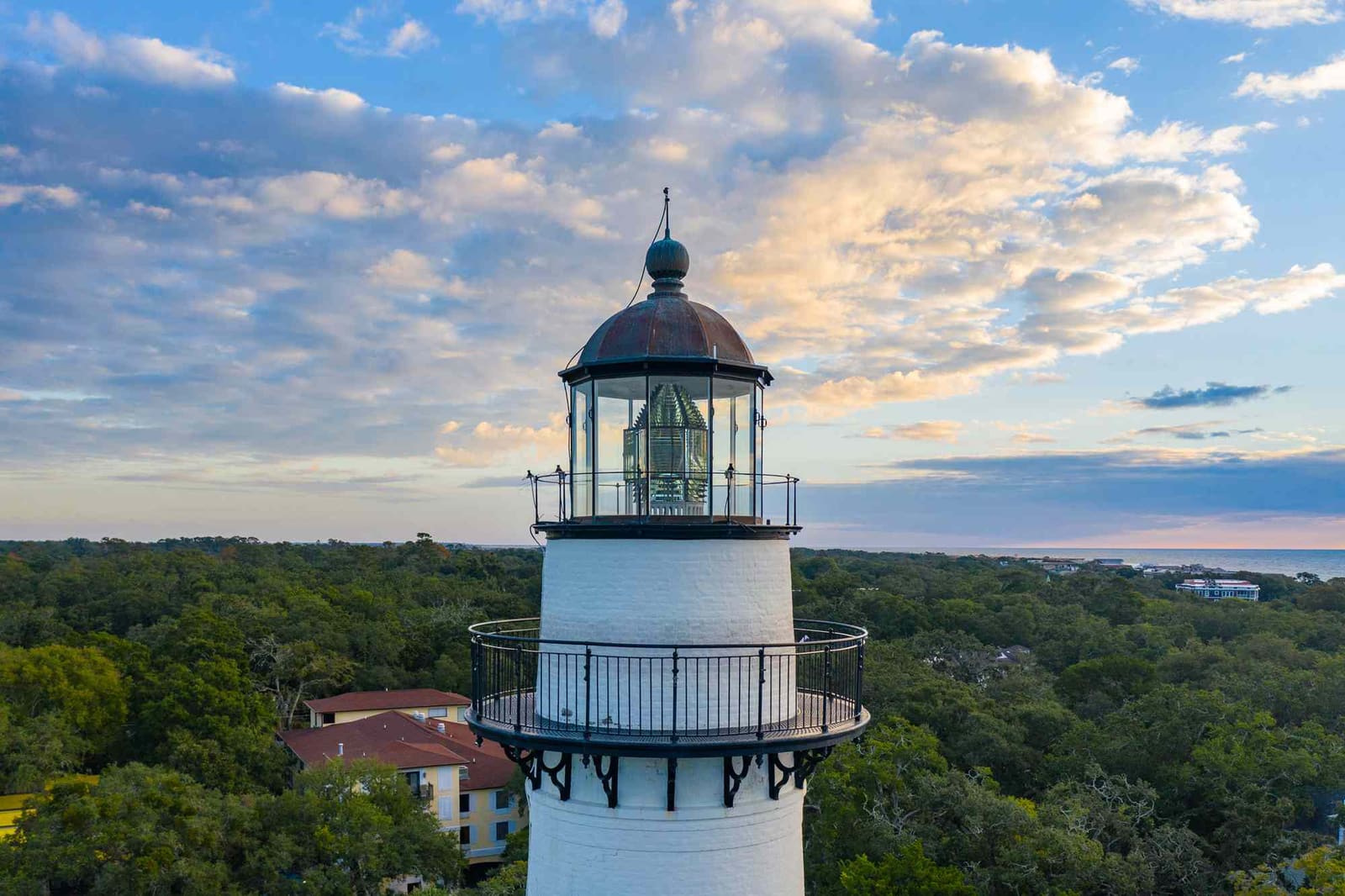
An Island That Rewards the Unhurried
There is a particular quality of light that arrives late afternoon on St. Simons Island, when the sun filters through the canopy of live oaks and Spanish moss, casting shadows that move with the breeze off the Atlantic. It is the kind of light that makes you slow down, that invites you to notice the way the maritime forest gives way to tidal marsh, the way the island seems to exist in its own time zone, one measured not in minutes but in tides and the flight paths of egrets.
At Global Chic Voyage, we have watched coastal destinations evolve over the years, some leaning into development, others retreating into exclusivity. St. Simons Island, the largest of Georgia's Golden Isles, has managed a quieter path. Recognized as the top U.S. island in the 2026 World's Best Awards survey, it offers something increasingly rare: accessibility without compromise, polish without pretense.
This is not an island that announces itself. There are no dramatic cliffsides or volcanic peaks, no celebrity-studded resorts. Instead, St. Simons unfolds gradually, revealing itself through moss-draped avenues, miles of bicycle paths that thread through neighborhoods where architecture speaks to centuries rather than trends, and a coastline that shifts from wide sandy beaches to intimate tidal creeks within the span of a morning ride.
The Geography of Ease
St. Simons sits roughly seventy miles south of Savannah, connected to the mainland by a causeway that somehow functions as a psychological threshold. Cross it, and the pace changes. The island stretches approximately twelve miles long and three miles wide, dimensions that make it large enough to explore yet intimate enough to navigate without the exhaustion that comes with sprawling resort complexes.
The island's infrastructure reflects a philosophy we have come to appreciate in our travels: designed for movement, not speed. More than two dozen miles of bicycle paths connect beaches to village centers, golf courses to historic sites. Unlike destinations where cycling feels like an afterthought or a fitness activity, here it becomes the natural mode of transport, a way to experience the island's ecology up close, to smell the salt marsh at low tide, to pause at a weathered dock and watch the shrimp boats return.
For families, this geography offers a particular kind of freedom. Children can range more widely, grandparents can keep pace, and the logistics that often complicate multigenerational travel simplify. The island is large enough to accommodate different rhythms - the golfers rising early, the beachgoers claiming their stretch of sand, the history enthusiasts tracing Civil War fortifications - yet compact enough that everyone reconvenes for dinner without an hour's drive.
A Golfer's Understated Paradise
Golf on St. Simons does not announce itself with signature architects' names or tournament pedigree alone, though both exist here. Instead, it integrates into the landscape, courses woven through ecosystems that predate them by millennia. Maritime forests, tidal marshes, and the particular challenge of coastal wind create conditions that reward local knowledge and punish hubris.
The island hosts several courses that have attracted both serious players and those who appreciate golf as a way to spend four hours in a landscape. Sea Island Golf Club, accessible to guests of certain properties, has hosted professional tournaments, yet the experience remains rooted in place rather than spectacle. Fairways run alongside marshes where herons hunt at dawn; the back nine at certain courses require reading not just greens but tides.
What we find compelling is how golf here functions as both sport and immersion. A round becomes an ecological education, the caddie as likely to point out an osprey nest as to recommend a club selection. For groups traveling together, golf provides structure without dominating the itinerary. Tee times accommodate early risers; spouses and non-players have an island to explore; and the nineteenth hole becomes a place to compare not just scorecards but sightings, the anhinga drying its wings, the alligator sunning on the pond bank.
The Village and Its Vernacular
The island's commercial heart, known simply as the Village, clusters near the southern tip around the historic pier. Here, the architecture maintains a scale and vernacular that feels organic rather than themed. Shops occupy structures that might once have been fishermen's cottages or maritime offices, their adaptations respectful rather than precious.
We have seen countless coastal villages attempt this balance and fail, either fossilizing into museum pieces or surrendering to chain retail. St. Simons achieves something rarer: a living community that happens to welcome visitors. The bookshop stocks regional authors alongside bestsellers. The outfitters rent kayaks but also serve locals provisioning for fishing trips. Restaurants range from seafood shacks where the catch determines the menu to white-tablecloth establishments that understand Low Country cuisine as a discipline, not a marketing term.
The pier itself extends into the sound, a gathering place at sunset when the light turns the water to copper and the lighthouse - one of only five surviving lighthouses in Georgia - stands in silhouette. It is a scene that could slide into sentimentality, yet somehow remains grounded, perhaps because it is populated by fishermen checking lines alongside couples taking photos, by teenagers jumping from the pilings and elders watching from benches, a cross-section that reminds you this is a place people live, not just visit.
Accommodations That Understand Context
Luxury accommodation on St. Simons takes several forms, but the properties that resonate most deeply are those that understand their context. The King and Prince Beach & Golf Resort, a reader favorite in multiple surveys, occupies oceanfront property that could easily have been developed into something overwrought. Instead, it maintains a scale and aesthetic that defer to the landscape.
Rooms face either ocean or forest, and the distinction matters. Ocean-facing accommodations capture the rhythm of tides and the theater of sunrise; forest-facing rooms offer the acoustic privacy of rustling palmettos and the cooling shade of the canopy. The resort's amenities - pools, dining, spa - are comprehensive without being overwhelming, designed for groups who want options but not obligations.
For those seeking a different vernacular, the island also offers historic inns and vacation rentals in neighborhoods where live oaks form cathedral ceilings over streets, where evening walks pass beneath limbs that have stretched toward the Atlantic for two centuries. These accommodations suit travelers who prefer to inhabit a place rather than observe it from a resort perimeter, who want to shop at the same markets as residents, to discover the coffee roaster that opens at dawn for the fishing crowd.
The Pull of Tidal Rhythms
What distinguishes St. Simons from beach destinations further south or island escapes further north is its tidal landscape. The marshes that fringe much of the island are neither land nor sea but something in between, an ecosystem that floods and drains twice daily, creating habitat for an astonishing density of life. Oysters filter the water. Crabs scuttle through cordgrass. Fish spawn in the shallows. Birds - herons, egrets, ibis, roseate spoonbills - time their hunting to the tides.
This is not scenery; it is system, and spending time here attunes you to its rhythms. Kayak tours timed to high tide allow passage into channels that become impassable mud flats hours later. Fishing guides know which creeks will hold redfish on the falling tide, where flounder lie in ambush as the water drains. Even a simple walk along the marsh edge becomes a lesson in reading the landscape, in understanding how everything connects.
For families, these tidal ecosystems offer education without didacticism. Children who might glaze over in a museum become fascinated by fiddler crabs, by the architecture of oyster beds, by the question of how a marsh that looks empty at first glance can support such abundance. We have found that these experiences - unstructured, curiosity-driven, rooted in direct observation - often become the memories that endure long after resort amenities fade from recollection.
Why This Island, Now
Recognition as a top island destination inevitably raises questions about what comes next, whether acclaim becomes the first step toward the kind of transformation that erodes the qualities that earned the recognition in the first place. St. Simons faces this tension, as do all places that balance preservation with welcome.
What gives us confidence in the island's trajectory is its existing infrastructure of protection. Much of the island is woven through with conservation easements, historic districts, and community land trusts. Development is constrained not by lack of interest but by deliberate planning that recognizes ecological limits. The causeway itself functions as a bottleneck, preventing the kind of traffic volume that overwhelms other coastal destinations on summer weekends.
More fundamentally, the island's appeal rests not on novelty but on continuity, on the things that have drawn visitors for generations: the quality of light through live oaks, the reliability of tides, the way an island large enough to explore never feels crowded, even in season. These are not attributes that change with trends or that require constant reinvention to maintain relevance.
For travelers seeking a coastal escape that accommodates multiple generations, multiple interests, and multiple paces without fracturing into separate vacations, St. Simons offers a compelling answer. It is an island that rewards both the golfer's early tee time and the grandparent's afternoon on the porch, the teenager's kayak expedition and the couple's quiet dinner, not by being all things to all people but by providing a landscape generous enough to hold them all.
The Return Factor
At Global Chic Voyage, we have learned to trust one metric above all others: the return factor, the percentage of visitors who come back, often repeatedly, often bringing new generations. St. Simons scores high by this measure, not because it reinvents itself each season but because it does not need to. The island you visit this year will be recognizable a decade hence, and that continuity is itself a luxury in an era of constant disruption.
The families we have spoken with who return annually speak of traditions that build over time: the same rental cottage, the same stretch of beach, the same evening walk to the pier. Yet they also speak of discovery, of how an island they thought they knew reveals new dimensions, a hiking trail they had not explored, a tidal pool they had overlooked, a restaurant that opened in a renovated boathouse.
This balance - between the familiar and the fresh, between preservation and evolution - is difficult to achieve and easy to disrupt. St. Simons has managed it thus far, and the recognition it has earned reflects not innovation but integrity, the patient work of maintaining a place that does not need to be anywhere other than exactly where it is, doing exactly what it has always done: offering refuge, restoration, and the particular pleasure of an island that exists in its own time.
Photo: Michelle Holton / Adobe Stock
Spot something wrong? Email editors@globalchicvoyage.com. We log every correction publicly.
RELATED
SEE ALL →
25 Jul 2026 / 5 min
21 Jul 2026 / 5 min
10 Jul 2026 / 5 min
8 Jul 2026 / 5 min