Where Water Meets Seclusion: The New Geography of In-Room Pools
From overwater villas suspended above coral gardens to hillside suites carved into ancient rock, privacy has become the ultimate luxury amenity
The Intimacy of Water
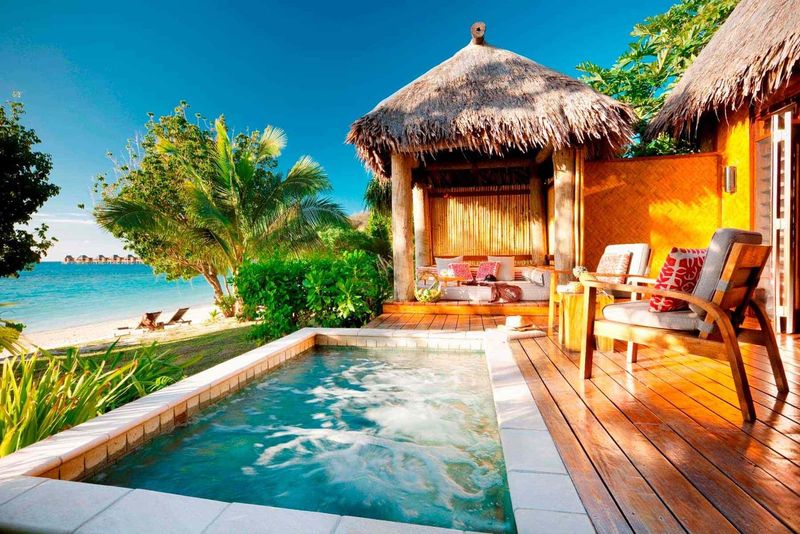
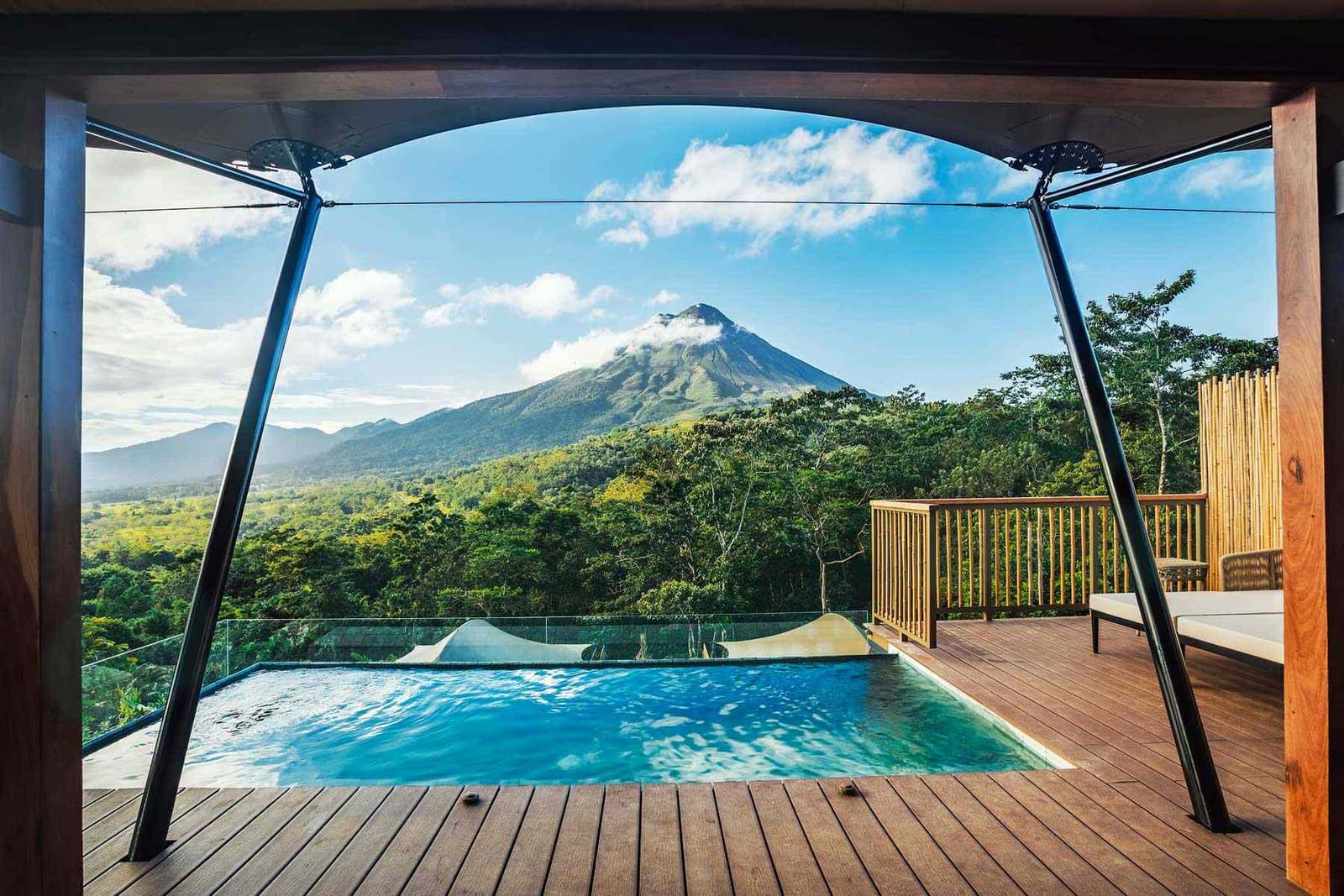
There is a particular kind of quiet that descends when you slip into a pool no one else will enter. No chlorine-heavy public lanes, no resort guests negotiating loungers at dawn. Just limestone edges warm under your palms, water the temperature of skin, and a view that belongs, for the moment, only to you. At Global Chic Voyage, we've watched the private in-room pool transform from a rare indulgence into something approaching expectation among travelers who measure luxury not in thread count but in solitude.
The shift is architectural as much as philosophical. Twenty years ago, a plunge pool in your suite was a gimmick, a sales point for honeymooners. Today, it's a design statement about how we want to inhabit space when we travel, about the value of unobserved leisure, about water as both threshold and sanctuary.
Geographies of Privacy
The Maldives understood this first. Overwater bungalows with lagoon-access pools were never just about swimming; they were about erasing the boundary between constructed space and ocean, about waking to find the Indian Ocean lapping at your private terrace while reef sharks ghosted past below. The hotels we've returned to, those with the most thoughtful execution, treat the pool not as add-on but as the room's organizing principle. At properties like Soneva Jani, the water slide that corkscrews from bedroom to lagoon isn't whimsy; it's a vertical translation of the Maldivian philosophy that play and luxury need not be separate categories.
But the vocabulary of in-room pools has grown more varied. In Santorini, infinity plunge pools cantilevered over caldera cliffs perform a different function entirely. Here, the water is mirror and frame, a way of capturing the Aegean's impossible blue while maintaining the privacy that mass tourism has otherwise obliterated from the Greek islands. Canaves Oia Epitome carves its suites into volcanic rock, and the pools, fed by rainwater and heated geothermally, feel less like amenities than like extensions of the island's ancient relationship with water scarcity and abundance.
The Architecture of Seclusion
Italy's approach is more theatrical. At Monastero Santa Rosa on the Amalfi Coast, the infinity pool in the suite once occupied by a cloistered nun gazes out over the same Tyrrhenian vistas she would have contemplated in silence. The irony is intentional. What was once ascetic denial, the turning away from earthly pleasure, has become its opposite: immersion in beauty so complete it borders on the devotional. The water temperature is calibrated to body warmth, the tile hand-glazed in Vietri's centuries-old kilns. You float, and the line between sacred and profane blurs.
In Bali, the conversation shifts again. At Capella Ubud, the tented pool villas reference the island's kelod-kaja cosmology, the sacred axis between sea and mountain. The plunge pools here are small, almost austere, lined with Javanese stone and positioned to face the Keliki forest canopy. The design language is clear: this is not a pool for laps or Instagram; it's for ritual, for the Balinese practice of melukat, water purification. You're invited to borrow the form without appropriating the meaning, to understand that in this geography, water is never just water.
Couples and the Currency of Solitude
The demographic driving this architecture is unmistakable. Couples, yes, but more specifically, couples seeking refuge from the performance of travel. No poolside cocktail service, no need to navigate shared spaces in swimwear, no invisible labor of socializing with fellow guests. The in-room pool offers something rarer than luxury: the permission to be unseen.
At Aman Venice, where the palazzo suites overlook private gardens, the pool is heated year-round and enclosed by 16th-century walls. You can swim in January while snow dusts the Dolomites to the north, utterly alone in a city that receives 30 million visitors annually. The privacy is almost defiant. It whispers that Venice can still be intimate, still be yours, if you're willing to pay for walls.
In Morocco, Amanjena's basin-style pools in each pavilion nod to the Saadian dynasty's fondness for reflecting pools, for water as mirror and metaphor in desert climates. The surface catches the Atlas peaks at dusk, and you realize the pool is less about swimming than about framing the landscape, about creating a private aperture through which to witness the particular gold of Maghrebi light.
What We're Really Buying
The practical considerations are worth naming. In-room pools require constant filtration, heating systems that don't hum through the night, drainage that won't flood teak decking. The properties that excel understand this is engineering before it's romance. At Alila Villas Uluwatu, the limestone-clad pools in each villa are fed by a closed-loop system that recycles greywater, a nod to Bali's freshwater scarcity. The luxury is invisible infrastructure, the kind that lets you float at midnight without thinking about pumps.
But what we're purchasing, ultimately, is control over experience. The in-room pool is the antithesis of the resort's communal fantasy, the idea that leisure is best enjoyed in company, that a swim-up bar and poolside DJ constitute paradise. For a certain kind of traveler, the one who has tired of performing relaxation, the private pool is a return to an older, quieter idea of escape. It's the recognition that sometimes the most restorative thing you can do is slip into water no one else will touch, under a sky that asks nothing of you.
The Future of Floating
We're beginning to see innovations that suggest where this is heading. At Six Senses Zighy Bay in Oman, the pool villas now feature adjustable currents for lap swimming, turning the plunge pool into a training tool without sacrificing its intimacy. In Japan's Hoshinoya Tokyo, the rooftop onsen-style pools use volcanic stone from Hakone and are designed for the Japanese practice of shinrin-yoku, forest bathing, translated into an urban context. The water is secondary to the ritual it enables.
And in the Seychelles, North Island's villas have begun incorporating biophilic design principles, with pools that transition seamlessly into natural rock formations, blurring the line between constructed and found. You swim into a granite crevice that existed long before the villa, and the pool becomes a way of experiencing the island's pre-human geology without leaving your suite.
The Measure of Luxury
At Global Chic Voyage, we've come to see the in-room pool as a litmus test for a property's design philosophy. Is it thoughtful or gratuitous? Does it respond to climate, culture, landscape, or is it simply a box checked on a luxury amenity list? The best examples are never about the pool itself. They're about what the pool allows: a private relationship with place, with water, with the person you're traveling alongside. They're about the luxury of being unobserved, of moving through your day without negotiating shared space, of floating under stars that belong, for that moment, only to you.
The geography of these pools tells us something about where privacy is still possible, where architecture can carve out solitude even in heavily touristed landscapes. From the Maldives to Italy, from Bali to Morocco, the in-room pool is a kind of cartography, mapping the places that still understand silence as the rarest amenity. And in an industry often accused of sameness, of exporting a homogenous vision of luxury, these pools offer something else: a deeply local response to the question of what it means to be alone, together, in water.