Where Warm Water Meets the World: Hotels That Understand the Ritual of Soaking
From volcanic stone basins in Bali to terraced copper tubs in Tuscany, eighteen properties where the private hot tub is less amenity than philosophy.
The Architecture of Stillness
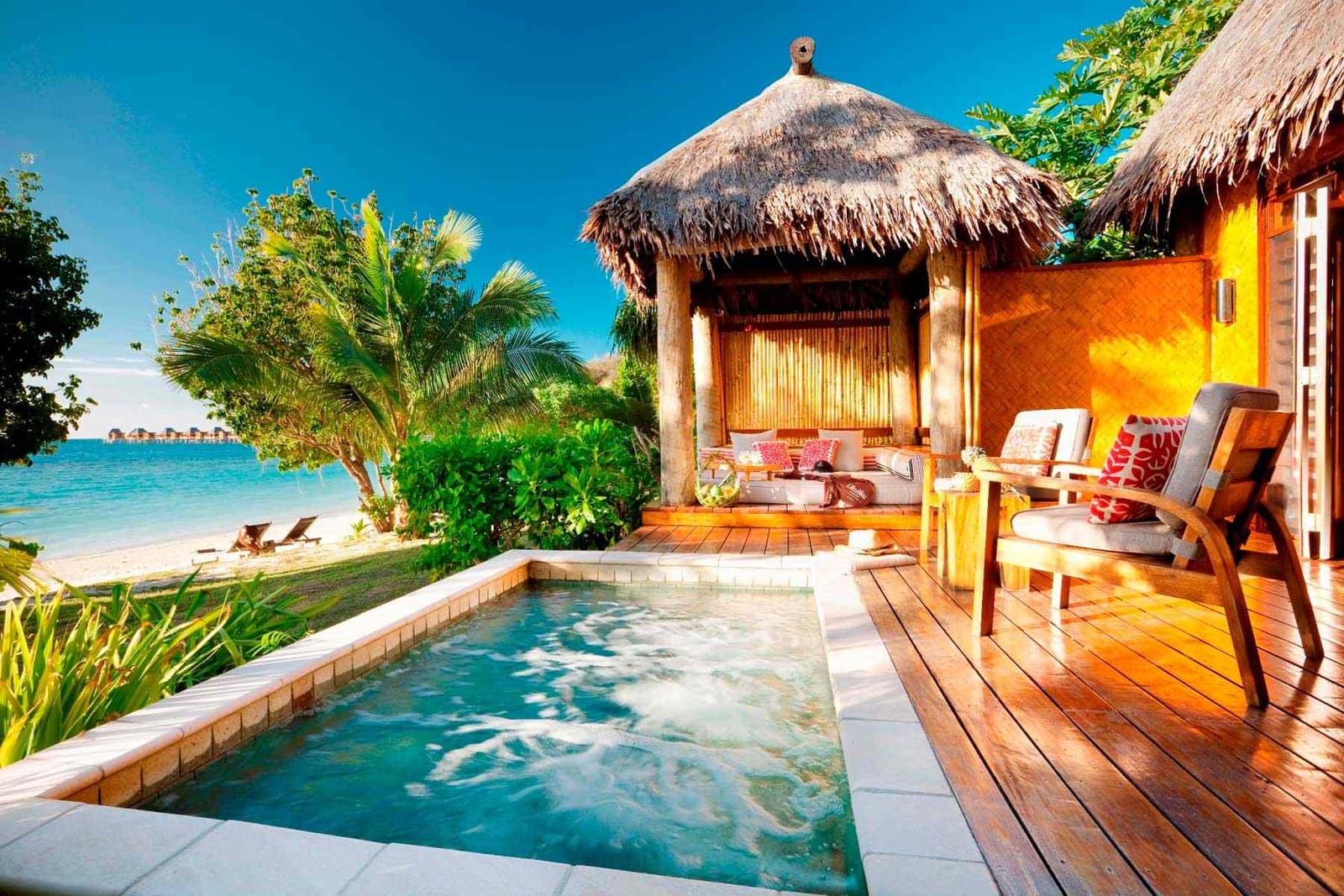
There is a particular quality of silence that settles over water when it is heated just beyond body temperature and contained within view of something larger: a mountain range, an ocean, a forest canopy dense enough to filter moonlight. The hot tub, in its most considered iterations, becomes a kind of liminal architecture. Neither entirely indoors nor fully exposed, it occupies the threshold where privacy meets immersion, where the body's boundaries soften and the mind follows.
Eighteen properties scattered across continents have grasped this understanding. They have positioned copper basins on Tuscan hillsides, carved volcanic stone into bathing vessels in Bali, and suspended glass-walled soaking pools above alpine valleys. What unites them is not a commitment to luxury for its own sake, but rather a recognition that the act of soaking, done right, is both ancient ritual and modern necessity.
Volcanic Geographies and Island Geometries
In Bali, several resorts have begun integrating traditional stone carving techniques into their soaking facilities. The volcanic rock native to the island retains heat differently than manufactured materials, creating a thermal experience that shifts subtly over the course of an hour. One villa property near Ubud positions its tubs to face rice terraces that descend in geometric precision, so that the act of bathing becomes inseparable from the rhythms of cultivation visible below.
The Maldives offers a different logic altogether. Here, overwater villas extend wooden decks into lagoons, and hot tubs are recessed into the planking so that the rim sits level with the horizon. The effect is disorienting in the best sense: sea and sky blend, and the heated water creates a microclimate that hovers between elements. At night, bioluminescence occasionally drifts past, turning the surrounding ocean into a field of scattered light.
Mediterranean Elevations
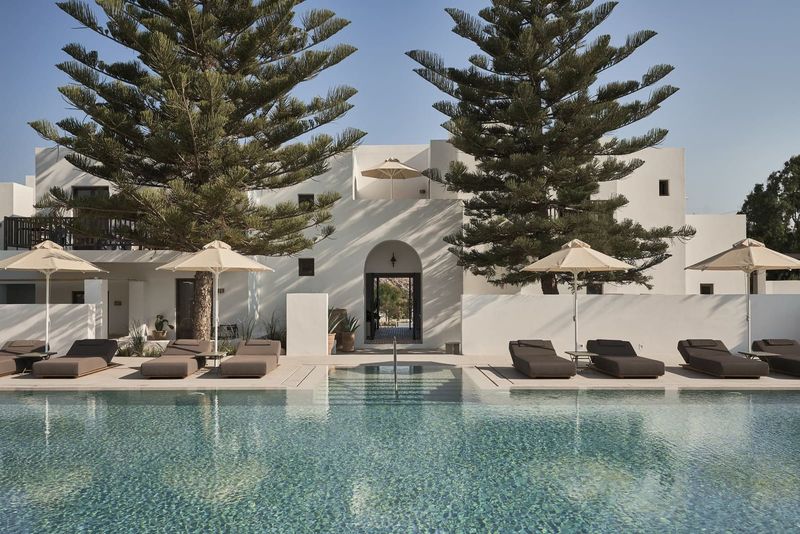
Santorini's caldera-facing hotels have long understood the power of altitude combined with heat. But the most compelling examples avoid the obvious infinity-edge drama in favor of something quieter. One boutique property carved into the cliffside places its tubs in semi-enclosed caves, where whitewashed stone walls curve overhead and the view is framed rather than panoramic. The effect is less about spectacle and more about focus: the eye drawn to a specific slice of volcano, a particular quality of late-afternoon light on water.
In southern Italy, a handful of agriturismos and converted masserias have installed copper tubs on their grounds, often in walled gardens where citrus trees provide both shade and scent. The copper itself becomes part of the sensory equation, warming quickly in summer sun and developing a patina that shifts from rose to verdigris depending on mineral content in the water. These are not installations designed for Instagram, but for the kind of extended soaking that requires a book, a carafe of wine, and no particular schedule.
Alpine Clarity and Northern Light
The Swiss Alps present their own set of conditions. Here, the contrast between frigid air and heated water becomes the point. Several chalets and mountain hotels position outdoor tubs on balconies where snow accumulates on the rim even as steam rises into subzero air. The practice borrows from Scandinavian tradition, where the shift between hot and cold is understood as a form of vascular therapy, a way of resetting the nervous system through temperature extremes.
In Iceland, where geothermal activity makes heated water less luxury than geological fact, a few boutique properties have moved beyond the communal hot pot model to offer private soaking spaces fed by natural springs. The water here carries a faint sulfuric note and a mineral density that leaves skin feeling coated, almost slick. It is not universally pleasant, but it is undeniably specific to place, a reminder that not all bathing is meant to be neutral or soothing.
Desert Silence and Starlight
The American Southwest has produced some of the most architecturally ambitious private soaking installations. In Utah and Arizona, resorts positioned near national parks have embedded hot tubs into red rock formations or cantilevered them over canyon edges. The desert air is so dry that steam dissipates almost immediately, and the silence at night is comprehensive enough to make audible the small sounds of water moving, of breath, of fabric shifting.
One property in southern Utah uses reclaimed wood and rusted steel for its tub surrounds, materials that echo the stratified rock visible in every direction. The aesthetic is less spa than sculpture, less amenity than land art. Guests report a disorienting sense of scale, where the vastness of the landscape makes the contained warmth of the tub feel both insignificant and intensely precious.
Tropical Canopies and Rain
In Costa Rica, several ecolodges have threaded hot tubs into rainforest settings where the canopy overhead is so dense that rain arrives in stages, filtered through multiple layers of leaves before reaching the water's surface. The experience is less about view than about sound: the layered percussion of water on water, the calls of howler monkeys at dawn, the rustle of leaf-cutter ants moving through undergrowth.
Thailand's northern highlands offer a variation on this theme. Here, hill tribe villages have been joined by a scattering of boutique retreats where traditional wooden architecture houses contemporary bathing facilities. Tubs are often positioned on open-air decks, with only a roof overhead, so that soaking becomes a way of inhabiting weather rather than sheltering from it. During monsoon season, the experience verges on overwhelming: warm water, cool rain, mist rising from the valleys below.
The Mechanics of Privacy
What separates these eighteen properties from the hundreds of hotels that simply install a jetted tub on a balcony is a commitment to privacy that goes beyond walls or curtains. It requires understanding sightlines, acoustics, the way light moves across a space at different times of day. The best examples position their soaking facilities so that guests feel neither exposed nor enclosed, but rather held in a kind of benevolent solitude.
This is harder to achieve than it sounds. It requires architects and landscape designers to think not just about the tub itself, but about the twenty feet surrounding it: what grows there, what reflects light, what absorbs sound. It requires maintenance staff who understand that a private hot tub is not a swimming pool, that water chemistry and temperature control demand different calibrations. And it requires a willingness on the part of ownership to limit capacity, to ensure that the promise of privacy is not undermined by the economic pressure to maximize occupancy.
Rituals Worth Keeping
The ritual of soaking is older than most built structures humans have left behind. From Roman thermae to Japanese onsen, from Icelandic hot pots to the sweat lodge traditions of indigenous North America, the practice of immersing the body in heated water crosses cultures and centuries. What these eighteen hotels offer is not a reinvention of that ritual, but a continuation of it under contemporary conditions, where privacy has become its own form of luxury and where the distance between daily life and genuine rest often requires geographic intervention.
To soak alone, or with only chosen company, in water heated to the narrow band of temperature that the body reads as neither hot nor merely warm, while surrounded by landscape that operates on a scale indifferent to human presence: this is not indulgence so much as recalibration. It is a way of remembering that the body is not only a vessel for productivity, but also a site of sensation, capable of pleasure that requires nothing more than heat, water, and time.