Where to Find the Soul of Tallinn Beyond the Old Town
From Soviet-era salons to forest-edged beaches, an artist and curator share the Estonian capital's quieter rhythms - and the places they crave when Venice calls them away.
The City They Leave Behind
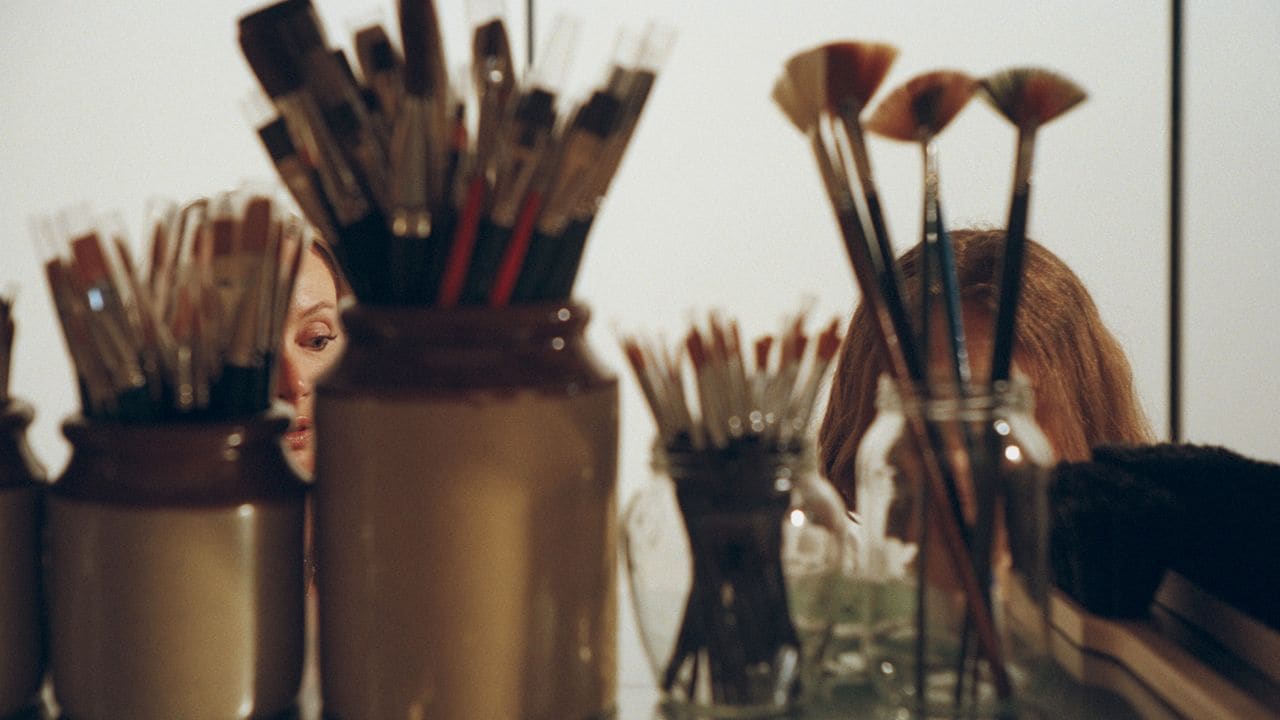
When Merike Estna pours paint onto canvas each morning at the Estonian Pavilion in Venice, she does so in full view of strangers. Over the course of the 2026 Biennale, twenty-two canvases will coalesce into a single six-metre-wide painting, the floor of the former Church of Santa Maria Assunta slowly transformed into a field of color and gesture. It is a public act, slow and cumulative, and it is also a kind of homesickness made visible.
At Global Chic Voyage, we have long believed that a city reveals itself not in monuments but in the places its people return to - the cafés where artists linger, the bookshops that stock translations no one else bothers with, the beaches that feel like secrets even when they are not. Estna and curator Natalia Sielewicz, who conceived the pavilion together, offered us a map of Tallinn that bypasses the medieval ramparts and digs instead into the textures of everyday life: the Soviet-era restaurant that never stopped being relevant, the upcycled fashion collective operating by appointment only, the forest you can reach on foot in half an hour.
What follows is not a greatest-hits list but a portrait of a city as lived by two people who know it intimately enough to miss it.
The Cafés That Anchor the Day
Near Balti Jaam, the city's main railway station, sits Karjase Sai, a bakery-café that Estna and Sielewicz describe as essential. Weekend crowds are a given, but the coffee is brewed with precision and the pastries are worth the wait. It is the kind of place that functions as punctuation in a working day, a pause between studio hours and meetings, a threshold between movement and stillness.
Elsewhere, tucked inside the ARS Art Factory, a complex of artist studios on Pärnu Road, is Klorofüll, a vegan café that operates like a monthly residency for ingredients. The menu shifts with the season and the harvest, each iteration composed with the kind of attention usually reserved for gallery installations. The café is not widely advertised; you have to know it is there, and that discretion is part of its appeal.
Then there is Pegasus, which opened as a café in 1962 and became, during the Soviet period, a gathering point for writers and visual artists. It has since evolved into a restaurant, still occupying its original building, still serving black bread that Estna and Sielewicz single out as exceptional. What endures is not nostalgia but relevance - Pegasus remains woven into the social fabric of Tallinn, a place where conversations continue across decades.
Art Spaces That Resist Convention
The Contemporary Art Museum of Estonia, known locally as EKKM, occupies a renovated boiler house in the northern reaches of the city. Founded in 2006 by a collective of artists and a historian, it operates outside the state system, artist-run and fiercely independent. The building itself - industrial, angular, unapologetically raw - sets the tone for the programming, which tends toward the experimental and the politically engaged.
Estna and Sielewicz also point to the Estonian Museum of Design and Applied Arts, a smaller institution that approaches visual culture through the lens of objects. Exhibitions here do not attempt sweeping narratives; instead, they unpack the ideological weight embedded in textiles, furniture, ceramics, and garments. It is a way of reading history sideways, through the material traces of daily life, and it feels particularly resonant in a country whose twentieth century was marked by occupation and rupture.
Both spaces reflect a broader Estonian sensibility: a preference for understatement, a distrust of spectacle, a belief that meaning accumulates slowly.
A Forest at the Edge of the City
Thirty minutes on foot from the center, the Merimets forest opens up - a stretch of pine and birch that feels, Estna and Sielewicz note, entirely removed from the urban grid. It is a reminder that Estonia is a country where wilderness is never far, where the capital itself sits lightly on the land.
From the forest, a longer walk along the coast leads to Stroomi Beach, then onward to Kopli and the Põhjala Creative Factory, another cluster of designer studios, cafés, and informal gathering spaces. The route threads together disparate parts of the city, linking nature to industry to culture without fanfare.
This is not a walk designed for tourists, not a heritage trail or a scenic promenade. It is simply the way someone who lives here might spend an afternoon - moving between forest and shore, stopping for coffee, lingering in a studio if the door is open.
Books, Garments, and the Circular Impulse
Opposite St. Nicholas' Church, Rüütel & Matilda English Bookshop offers second-hand volumes in poetry, fiction, theory, and art. What distinguishes it, according to Estna and Sielewicz, is a shelf dedicated to Estonian writers in English translation - a small but significant gesture in a literary landscape where translation is often an afterthought.
Then there is Sorcerer, an artist-led fashion collective that operates by appointment only from a studio on Kaevuri Street. Every piece is upcycled, one of a kind, and shaped by a design philosophy that dissolves boundaries between gender, function, and ornament. Garments are sculptural, bags are architectural, and jewellery carries traces of myth. It is fashion as ritual object, and it reflects a broader Estonian ethos: resourcefulness, invention, a refusal of waste.
Why These Places Matter
What Estna and Sielewicz offer is not a curated itinerary but a way of seeing. Their Tallinn is a city of thresholds - between Soviet past and digital present, between forest and urban core, between the global art circuit and the local bakery. It is a place where artist-run institutions thrive, where circular fashion is not a trend but a practice, where a restaurant from 1962 still matters.
At Global Chic Voyage, we recognize this kind of cartography. It is the map drawn by people who leave a place often enough to know what they miss, who understand that a city's soul is not in its postcard views but in its rhythms, its textures, its quiet insistences. Tallinn, as they describe it, is a city that does not announce itself. It waits to be discovered, and it rewards patience.
When the Venice Biennale closes in November, Estna's painting will be complete, a single expansive work that began with a pour of paint onto the floor. It will be shipped home, and so will she. And when she returns, we imagine she will walk to Karjase Sai, order coffee, and settle back into the rhythms of a city that never stopped moving, even while she was away.