The Quiet Architecture of Sleep: Building a Bedroom That Feels Like Sanctuary
From the weight of linen to the temperature of darkness, the elements that transform a room into a place of true rest have less to do with luxury than with understanding how the body finds peace.

The Memory of Perfect Sleep
There is a particular quality to the sleep you find in certain hotel rooms. Not every hotel room, not even most, but the ones that seem to understand something fundamental about rest. You wake in them without alarm, without the usual negotiations with consciousness, and for a moment you cannot remember where you are. The body has sunk so completely into ease that geography becomes irrelevant.
This is not about thread count alone, though thread count plays its part. It is about the accumulation of small, deliberate choices, each one removing a single obstacle between you and the kind of sleep that restores rather than merely interrupts waking. The question, then, is whether these choices can be transplanted. Whether a bedroom in a third-floor flat in Manchester or a converted loft in Melbourne can offer the same dissolution into rest.
The answer, it turns out, lies in understanding what those rooms are actually doing.
Foundations: Where the Body Meets Support
A mattress is not neutral territory. It is the single surface that will hold your weight for a third of your life, and the difference between one that understands your body and one that fights it can be measured in the quality of your waking hours.
The Bryte Balance Smart Bed, featured at Carillon Miami Wellness Resort, approaches this with a kind of technological attentiveness, using smart cushions that adjust firmness throughout the night, redistributing pressure as your body shifts. Tammy Pahel, vice president of spa and wellness at the resort, also points to the Tempur-Pedic LuxeBreeze for its cooling technology, a feature that addresses one of the most common sleep disruptions: the slow accumulation of heat beneath blankets.
For those seeking similar quality at a more accessible price, the Saatva Classic Luxury Firm mattress offers three firmness options, each engineered to provide the kind of support that does not announce itself but simply allows the body to stop working. Several hotel groups now sell their own sleep products directly, including the Four Seasons Signature mattress, for travellers who want to know exactly what they are trying to recreate.
The principle here is simple: if there is a single place to direct resources, this is it. A good mattress is not an indulgence. It is infrastructure.
The Architecture of Softness
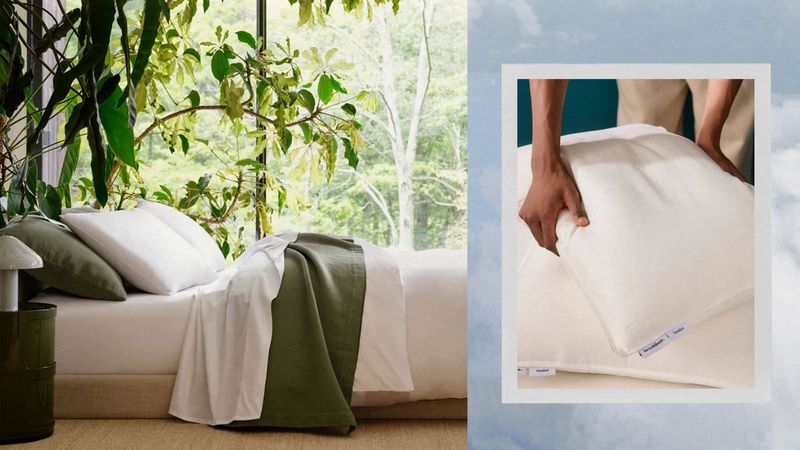
Pillows occupy a strange space in the hierarchy of sleep. They are small, easily replaced, and yet they dictate the angle of your neck, the openness of your airway, the degree to which your body can fully release tension. At Six Senses Ibiza, guests find Hanse pillows, firm and fluffy, chosen for their ability to hold shape without collapsing. Karen Smith, wellness director at the property, also recommends Naturalmat for its range of goose and duck down options, as well as wool for those who prefer a firmer feel.
Down pillows have a particular kind of softness, the sort that seems to anticipate the shape of your head before you rest it. But for those with allergies or tighter budgets, alternatives have improved dramatically. Quince's Premium Down Alternative pillow offers a choice between soft, medium, and firm, bringing customisation to a price point that makes experimentation possible. Saatva's latex pillow, meanwhile, shares the same balance of softness and support found in the brand's mattresses, with the added advantage of breathable material that stays cool through the night.
The goal is not to replicate a hotel pillow exactly. It is to find the one that allows your head to rest without adjustment, without the small, unconscious movements that fragment sleep.
Layers: The Skin of the Bed
Sheets are where luxury becomes tactile. The difference between percale and sateen is not merely aesthetic; it is the difference between crisp and smooth, between a surface that breathes and one that drapes. Brooklinen's Classic Percale sheets, made from 100 per cent cotton with a 270-thread-count, offer the crisp, cool feel that many associate with high-end hotel beds. Nicolas Lukac, the brand's director of emerging channels, describes them as inspired by "that perfectly crisp, luxurious feel we've come to know and love from hotel beds." The brand's Luxury Sateen sheets, by contrast, provide a smoother, more polished finish.
For those who wake in the night overheated, the material matters as much as the weave. Pahel recommends Frette for superior comfort and durability, while Nollapelli and Sijo's AiryWeight eucalyptus bedding are both designed with moisture-wicking properties that address the problem of heat retention directly. Eucalyptus fibres, in particular, have gained attention for their silky texture and ability to regulate temperature.
The choice here is personal, but the principle is universal: the surface closest to your skin should feel like an extension of comfort, not a compromise.
The Invisible Elements
A five-star bedroom is not only what you see. It is what you do not hear, what you do not notice, the small interventions that remove friction from the process of falling asleep. Vivianne Garcia-Tunon, vice president of wellbeing for Auberge Resorts Collection, describes the goal as prioritising "style, comfort, and innovation" in equal measure.
Sound machines address one of the most common sleep disruptors: inconsistent noise. The LectroFan EVO offers a range of white, brown, and pink noise, as well as electronic fan sounds, creating a sonic baseline that masks irregular sounds. The Hatch Restore goes further, functioning as both sound machine and sunrise alarm, with options for guided meditations and bedtime stories, turning the device into a tool for managing the transition into and out of sleep.
Light, too, requires management. Blackout curtains eliminate the problem of streetlights and early sun, while an eye mask like the Alaska Bear Silk Sleep Mask provides a portable solution. Garcia-Tunon also recommends dimmable lights to create an environment that signals rest well before you lie down, and a charging station, such as the Aro, that keeps phones out of reach, removing the temptation to scroll.
These are not luxuries. They are the removal of obstacles.
Scent as Memory
Fragrance operates differently from other elements of a bedroom. It does not provide physical comfort, but it does something subtler: it creates association. A scent encountered repeatedly in a state of rest becomes a trigger for that state, a shortcut to the mental space where sleep is possible.
Chrissy Fichtl, founder of home fragrance brand Apotheke, recommends layering scents throughout a home, with clean, crisp fragrances for the bedroom. White Vetiver, she notes, is "the ultimate luxury scent," though Canvas and Charcoal are also popular for their upscale feel. Other brands offer scents tied to specific places: Acqua di Parma evokes the Mediterranean, while Glasshouse Fragrances draws on memories of Rio de Janeiro and Kyoto. DS & Durga creates oddly specific olfactory landscapes, including Big Sur After Rain and Wild Brooklyn Lavender.
The choice of scent is less important than its consistency. The goal is to build an association, to train the body to recognise this particular combination of molecules as the prelude to rest.
The Rituals of Transition
A hotel robe is not strictly necessary for sleep, but it serves a function nonetheless: it marks the boundary between the day and the night, between the world outside and the sanctuary of the bedroom. The Company Store's cotton long robe, made with plush terry-cloth, is both soft and absorbent, ideal for the minutes after a shower. The St. Barts linen robe by Rough Linen offers something lighter, more suited to warmer climates or those who prefer breathable fabric.
Slippers, too, are part of this ritual. The Ritz-Carlton Frette microfiber slippers provide cushioning and embroidered detailing, while Bombas' Sunday Slippers use memory foam footbeds to create the sensation of walking on cloud.
These items are not about mimicking a hotel. They are about creating a series of small, repeated actions that signal to the body: here, now, you can stop.
The Cumulative Effect
No single element transforms a bedroom into a place of true rest. It is the accumulation, the careful attention to each layer, each sense, each potential disruption. The mattress that supports without announcing itself. The pillow that holds your head at the correct angle. The sheets that feel cool and smooth. The darkness that is complete. The sound that is consistent. The scent that signals safety.
A five-star hotel room is not a collection of expensive objects. It is a system designed around a single goal: to remove every obstacle between you and the kind of sleep that feels like sanctuary. That system can be built elsewhere. It requires only the willingness to see rest not as a luxury, but as a design problem with specific, solvable parameters.
The body knows when it has found such a place. It stops negotiating. It simply sleeps.