Where Istanbul Hides Its Quieter Self
Beyond the domes and the bazaars, the city offers neighborhoods that live at a gentler pace - and rewards those who wander off the usual route.
The City Between the Monuments
There is a moment, usually on the second or third day, when the sheer density of Istanbul begins to reveal itself. You have seen the domes, walked the length of the Grand Bazaar, stood beneath the cascading columns of the Basilica Cistern. And then, turning down a side street in Çukurcuma or climbing the hill toward Cihangir, you realize the city has been holding something back - a quieter version of itself, one that doesn't announce its presence with minarets or tour groups.
At Global Chic Voyage, we have watched travelers return from Istanbul with two distinct sets of memories: the monuments, yes, but also the neighborhoods. The latter tend to linger longer. They are the parts of the city where you stop performing the role of tourist and begin to simply inhabit the place - where a shopkeeper offers tea without expectation, where laundry hangs between buildings like bunting, where the smell of slow-cooked lamb drifts from an open kitchen window.
This is not to diminish the landmarks. The Hagia Sophia and Topkapi Palace deserve their reputations, and any visit to Istanbul that skips them would be incomplete. But the city's texture - its actual daily rhythm - lives elsewhere, in pockets that require a bit more curiosity and a willingness to get lost.
The Weight of History, Measured in Marble
The Hagia Sophia still commands attention, even after fifteen centuries. Its dome seems to float above the city, a feat of engineering that remains quietly astonishing. Originally constructed under Emperor Justinian in 537 AD, the structure served as the world's largest cathedral before the Ottomans converted it into a mosque in 1453. The interior layers these histories without apology: Byzantine mosaics depicting the Virgin Mary and Emperor Justinian share space with Ottoman calligraphy and a mihrab adorned in ornate tilework. The upper gallery offers the clearest view of these overlapping eras, where gold mosaics catch the light at angles that suggest they were designed to do exactly that.
The museum behind the main building, housed in the former Land Registry Office and opened in 2023, provides context that the monument itself cannot. Fragments of original mosaics sit alongside blueprints and digital reconstructions, charting the building's transformation across empires and faiths.
Topkapi Palace, perched above the Bosphorus in the Fatih district, operated as the administrative center of the Ottoman Empire for nearly four centuries. The complex sprawls across courtyards and pavilions, each section revealing a different aspect of court life. The Imperial Treasury holds the Topkapi Dagger, encrusted with diamonds and emeralds, and the Spoonmaker's Diamond, an 86-carat gem with exceptional clarity. The Harem, richly decorated with Iznik tiles in vivid blues and reds, offers a glimpse into the sultan's private quarters, though the term "private" feels relative in a space this lavish.
Beneath the city, the Basilica Cistern presents a different kind of grandeur. Built in the sixth century, the ancient reservoir spans 106,000 square feet, supported by 336 marble columns. Atmospheric lighting pulses through the space, casting soft distortions across the ceiling and wet stone walls. The effect is both eerie and reverent, a reminder that infrastructure, too, can be monumental.
Markets That Still Breathe
The Grand Bazaar, founded in 1461, remains one of the world's oldest and largest indoor markets. It encompasses more than 60 covered streets and some 4,000 shops, attracting between 250,000 and 400,000 visitors daily. Hawkers call out to passersby, displaying handmade wood and metal crafts, traditional Iznik ceramics, colored glass lanterns, fresh spices, and jewelry. Prices are negotiable, and haggling is expected. Some vendors offer tea while you browse, a gesture that feels both transactional and genuinely hospitable.
The market's scale can be overwhelming, but its energy is undeniable. This is commerce as performance, a tradition that has endured for more than five centuries.
Across the Bosphorus on the Asian side, Kadıköy offers a quieter counterpoint. Its markets remain less frequented by visitors, which means the prices reflect local expectations rather than tourist budgets. Fresh fish is laid out on beds of ice, barrels overflow with fragrant spices, and the atmosphere is decidedly functional. Olimpiyat Kokoreç, a hole-in-the-wall spot at the top of Güneşli Bahçe Street, specializes in grilled fish sandwiches topped with lemon and a tangy salad mixture. Further along the street, wooden tables with checkered linens line the cobbled road, where diners gather without ceremony.
Neighborhoods That Reveal Themselves Slowly
Çukurcuma has long been Istanbul's antiques district, though that designation undersells its charm. The houses themselves are a mishmash of shapes and colors - miniature red-roofed dwellings sit next to slim, towering townhouses with sweeping bay windows. Wooden furniture and ornate carpets spill onto the cobblestoned streets, creating an open-air gallery of sorts.
Alaturca House stocks traditional Turkish rugs on shelves that climb toward the ceiling. Karadeniz Antik is known for its collection of statues, while Samdan Antique specializes in midcentury furniture. But the district has expanded beyond antiques. At 3rd Culture, visitors find cushion covers, traditional Turkish linen towels, and lampshades covered in geometric patterns. Vintage clothing shops - Notio Bene Vintage, Mink Vintage, and Leila Boutique - cluster along the corner of Cukur Cuma Street and Boğazkesen Street. Özlem Tuna, slightly further down Boğazkesen Street, displays rows of pastel-colored ceramics and delicate tulip-shaped tea cups.
When shopping fatigue sets in, the Tavern offers a chic respite. The cocktail bar features guest DJs and a menu that includes fried wontons stuffed with confit duck leg and beef tenderloin roasted in black garlic marinade - a menu that reflects Istanbul's ongoing conversation between tradition and contemporary appetite.
Monuments That Reward the Detour
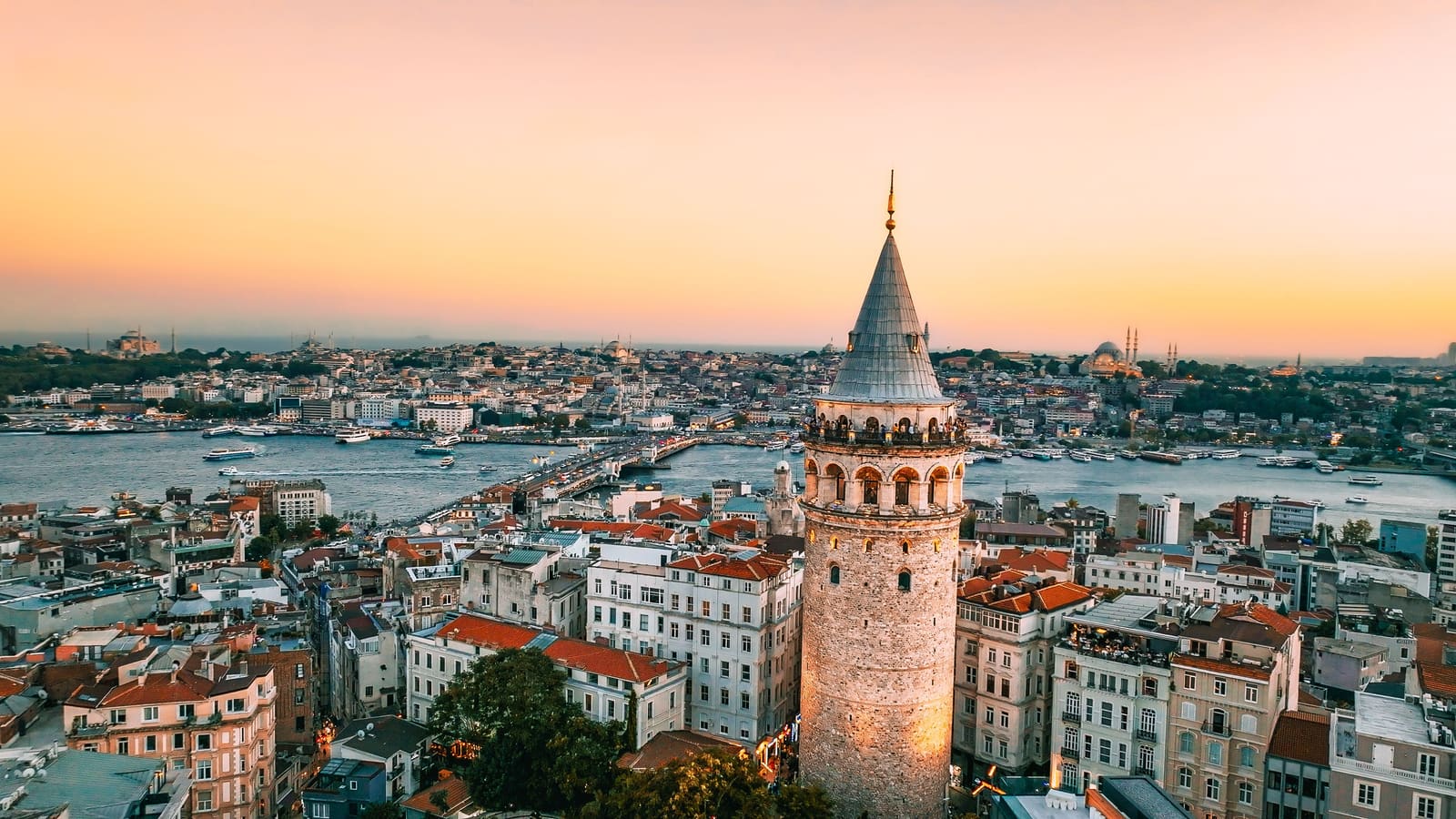
Galata Tower, built in 1348, remains one of Istanbul's most recognizable landmarks. Originally the tallest structure in the city, it overlooks the north side of the Golden Horn and has been included on the UNESCO World Heritage list since 2013. Local legend associates the tower with Ahmed the Wise, an Ottoman inventor who allegedly used it as a launching point for a flight across the Bosphorus in 1632, propelled by artificial wings. The 360-degree panoramic view from the top remains impressive, as does the collection of historical artifacts displayed on the lower levels.
The Ortaköy Mosque, located on the waterfront near the Bosphorus Bridge, offers a different kind of architectural experience. This 18th-century Neo-Baroque temple is notably ornate, with carved stone decorations and minarets unlike any other mosque in the city. Inside, hand-painted calligraphy panels created by Sultan Abdülmecid I line the walls. The mosque's small size belies its visual impact, and the juxtaposition with the modern bridge creates a striking contrast between Istanbul's layered eras.
The Zeyrek Çinili Hammam, reopened in September 2023 after a 13-year restoration, represents another kind of preservation. Originally commissioned by Ottoman admiral Barbarossa in the 16th century, the bathhouse was named for the Iznik tiles that once covered its surface. The restoration uncovered a collection of archaeological relics now displayed in the hammam's on-site museum. Visitors can experience a range of treatments using the fully restored facilities or take a guided tour available in Turkish or English on Wednesdays. The site, located in the UNESCO World Heritage-listed neighborhood of Zeyrek, offers both historical immersion and contemporary wellness.
The Bosphorus from the Water
The Bosphorus Strait connects the Black Sea in the north to the Sea of Marmara in the south, dividing Istanbul's eastern and western halves. The waterway is filled with a constant flow of vessels - ferries, fishing boats, cargo ships - each contributing to the city's working rhythm. While there are plenty of vantage points along the banks, the strait is best experienced from the deck of a river cruise. These are plentiful and often surprisingly affordable, offering a way to see many of the city's riverside landmarks in a single journey - a practical solution in a city where navigating by road can be labyrinthine.
What We Return For
Istanbul's appeal is not subtle. The city announces itself with domes and minarets, with markets that sprawl across entire districts, with waterways that bisect continents. But its real character emerges in the margins - the neighborhoods where shopkeepers greet passersby by name, the hammams that have been restored with care, the side streets in Çukurcuma where antique dealers still spill onto the cobblestones.
These are the parts of Istanbul that resist easy categorization. They are not hidden, exactly, but they do require a certain kind of attention - a willingness to wander, to accept tea from a stranger, to follow a scent drifting from an open doorway. The monuments will still be there, magnificent and immovable. But the quieter corners, the ones that reveal how the city actually lives, are worth the detour.