Mexico's Quiet Corners: Where Color, Culture, and Coast Converge
Beyond the resort strips, a country of volcanic islands, colonial courtyards, and copper canyons reveals itself to those willing to wander.
A Geography of Wonder
There is a moment, somewhere between Mexico City's sprawl and the first glimpse of Oaxaca's sierra, when the landscape shifts from urban hum to something older. The light changes. The air carries pine and copal. We've traveled this route dozens of times at Global Chic Voyage, and each crossing reminds us why Mexico remains one of the world's most texturally rich destinations. It is not merely beautiful in the postcard sense. It is beautiful in the way a well-worn plaza is beautiful: layered, lived-in, impossible to replicate.
Mexico's appeal has never rested solely on its beaches, though the coastline stretches nearly ten thousand kilometers. Instead, the country's magnetism lies in its ability to hold contradictions. Colonial grandeur sits beside pre-Columbian ruin. Desert abuts jungle. Silence and celebration coexist within a single afternoon. For travelers seeking more than the predictable arc of resort and return, Mexico offers a different proposition: immersion in places where beauty is inseparable from history, ecology, and the rhythms of daily life.
The Pull of the Colonial Heartland
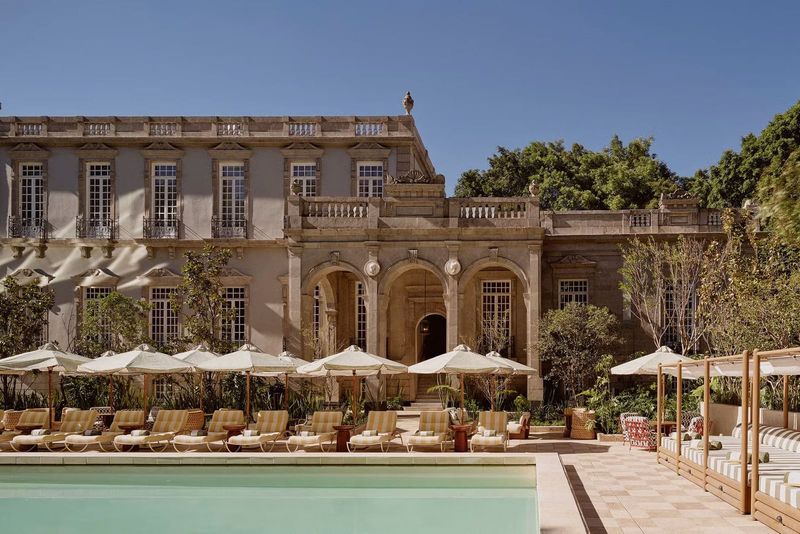
In the Bajío region, towns like San Miguel de Allende and Guanajuato have long attracted artists, writers, and those fleeing colder climates. San Miguel's appeal is architectural. Its streets rise and fall in pastel waves, church domes punctuating the skyline like exclamation points. The town has been protected by heritage designation for decades, which means no neon, no high-rises, no visual interruption of the 18th-century silhouette. What remains is a place where stone and stucco age gracefully, where courtyards hide behind wooden doors, and where light at dusk turns everything amber.
Guanajuato, an hour north, takes a different approach. Built into a ravine, the city is a vertical maze of tunnels, plazas, and staircases. Its university lends it youthful energy; its silver-mining past lends it wealth in built form. We've walked its callejones at dawn, when the only sound is the sweep of brooms on cobblestone, and again at night, when student musicians fill the alleys with son jarocho and bolero. Both times, the city felt like a stage set that happened to be inhabited.
Coastal Complexity Beyond the Familiar
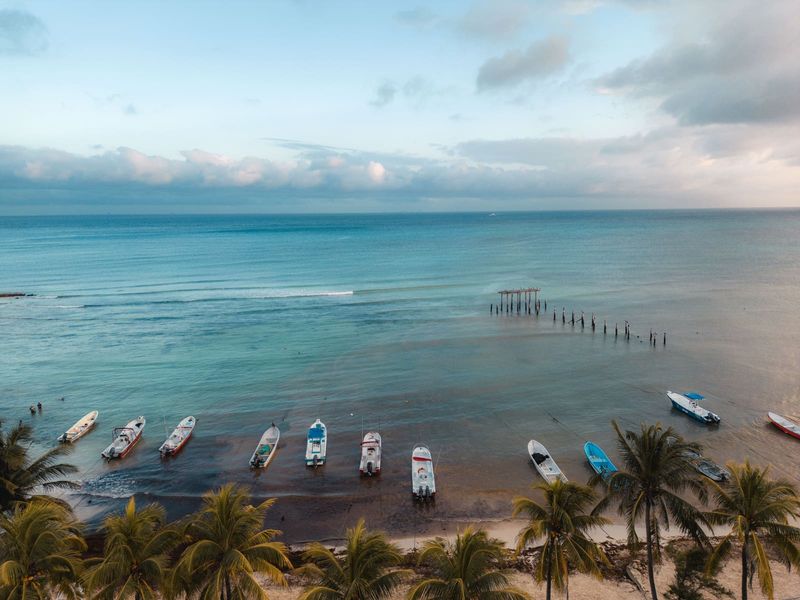
Mexico's beaches are not monolithic. The Caribbean side, along the Riviera Maya, offers turquoise shallows and reef systems. The Pacific side, from Puerto Vallarta to Oaxaca's coast, delivers stronger surf, darker sand, and a wilder edge. Between these poles lie dozens of variations: the bioluminescent bays of Holbox, the cliffside drama of Acapulco, the mangrove labyrinths of Sian Ka'an.
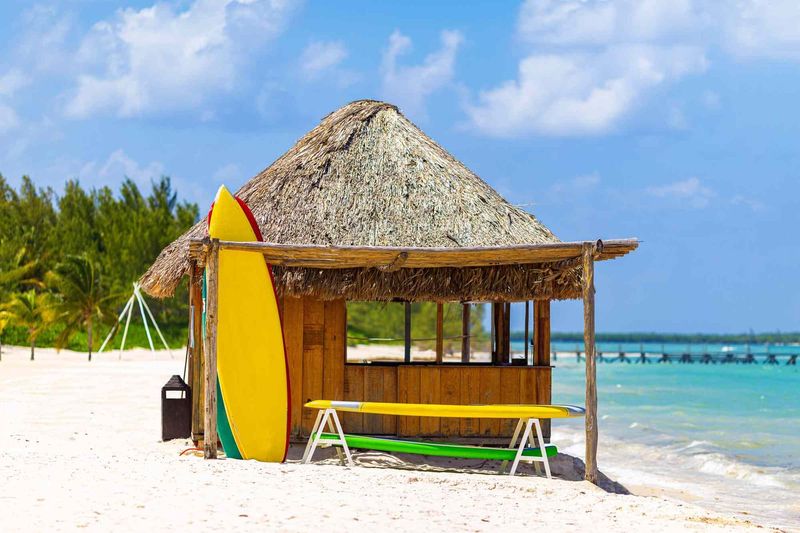
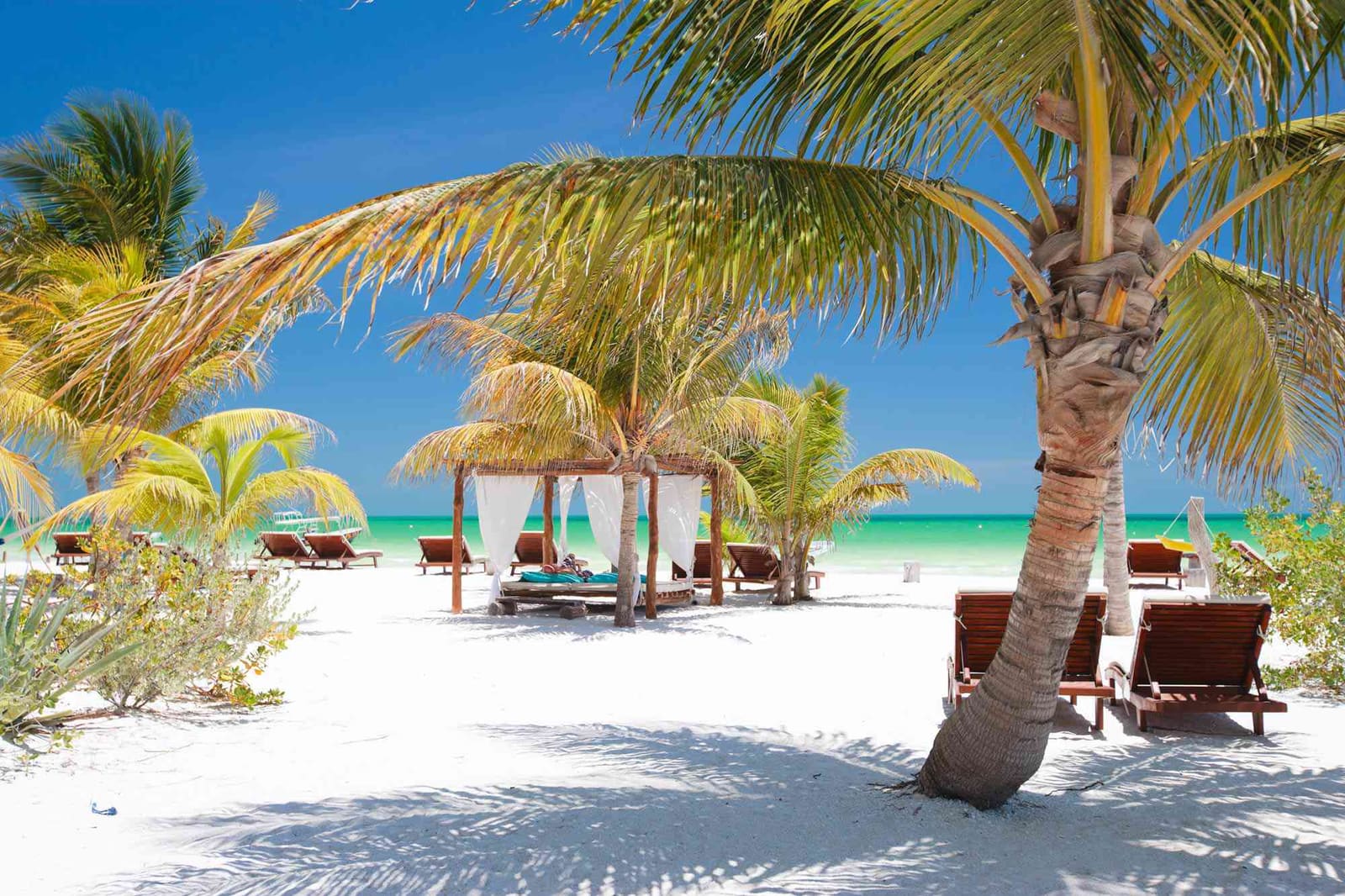
Isla Holbox, off the Yucatán's northern tip, remains one of the few Caribbean islands in Mexico where cars are scarce. Golf carts and bicycles dominate. The streets are sand. Flamingos wade in shallow lagoons, and whale sharks pass offshore between June and September. The island's aesthetic is deliberately low-key: painted wooden signs, hammocks strung between palms, restaurants that serve ceviche in plastic bowls. It is the antithesis of the mega-resort model, and that restraint is precisely what draws travelers tired of choreographed leisure.
Further south, the beaches near Tulum have evolved rapidly over the past decade. What was once a handful of palapas has become a corridor of boutique hotels, yoga shalas, and farm-to-table restaurants. The transformation has been contentious, environmental concerns rising alongside development. Yet the coastline itself, where the jungle meets the sea in a tangle of green and blue, retains its elemental appeal. The Mayan ruins perched above the water remain one of the most photographed sites in the country, and for good reason: few archaeological zones offer such immediate visual drama.
The Desert's Austere Beauty
Northern Mexico, often overlooked in favor of southern warmth, presents a landscape of stark contrasts. The Copper Canyon system in Chihuahua is deeper and more extensive than the Grand Canyon, a series of gorges carved by six rivers. The Rarámuri people have lived in these canyons for centuries, their villages accessible only by foot or narrow trail. The train that traverses the region, the Chepe, offers one of the continent's most scenic rail journeys, climbing from sea level to over two thousand meters, crossing bridges and tunnels that cling to canyon walls.
In Baja California, the desert meets the sea in a collision of ecosystems. The peninsula's interior is a study in survival: cardon cacti, some over three hundred years old, rise like sentinels. Roadside shrines mark where travelers have paused. The Gulf of California, known as the Sea of Cortez, is a marine biodiversity hotspot, its waters home to over nine hundred fish species. Jacques Cousteau once called it the world's aquarium, and the designation holds. Snorkeling near Isla Espíritu Santo, we've encountered sea lions curious enough to circle, their movements more graceful than any choreography.
Mountain Towns and Cloud Forests
Altitude shapes much of Mexico's interior. At two thousand meters and higher, the air cools, the vegetation shifts, and a different rhythm takes hold. Puebla, southeast of the capital, is a city of Talavera tiles and baroque churches, its historic center a UNESCO site. The nearby town of Cholula claims the world's largest pyramid by volume, though much of it lies hidden beneath a colonial church built atop the pre-Hispanic structure. The layering is literal, and it speaks to the country's palimpsest quality, where one era is built over another without fully erasing what came before.
In Chiapas, the highland town of San Cristóbal de las Casas sits in a valley surrounded by pine forests. Its indigenous markets are among the most vibrant in Mexico, textiles woven in patterns specific to each community. The town serves as a base for exploring the region's natural wonders: the turquoise cascades of Agua Azul, the limestone canyon of Sumidero, the Lacandon Jungle that stretches toward Guatemala. Each excursion reveals a different facet of Chiapas' ecological wealth, from cloud forest to tropical lowland.
Islands That Time Nearly Forgot
Mexico's island geography extends beyond the well-known. Isla Mujeres, a short ferry ride from Cancún, retains a village feel despite proximity to mass tourism. Its western shore is calm, suitable for swimming; its eastern shore faces open sea, waves crashing against rocky outcrops. The island's name, "Island of Women," derives from Mayan sculptures found here, figures dedicated to Ixchel, goddess of fertility and the moon.
Further south, the island of Cozumel is synonymous with diving. Its reefs are part of the Mesoamerican Barrier Reef System, the second-longest in the world. Visibility often exceeds thirty meters, and the marine life ranges from nurse sharks to eagle rays. The island's interior, less visited, holds Mayan ruins and cenotes, the limestone sinkholes that punctuate the Yucatán Peninsula.
The Oaxacan Synthesis
If any region distills Mexico's multiplicity, it is Oaxaca. The state encompasses Pacific coast, highland valleys, and cloud forests. Its capital, Oaxaca City, is a center of gastronomy, craft, and culture. The markets overflow with mole paste, mezcal, textiles, pottery. Nearby, the archaeological site of Monte Albán commands a hilltop, its plazas and pyramids aligned with astronomical precision. Zapotec and Mixtec civilizations left their mark here, and the contemporary indigenous presence remains strong.
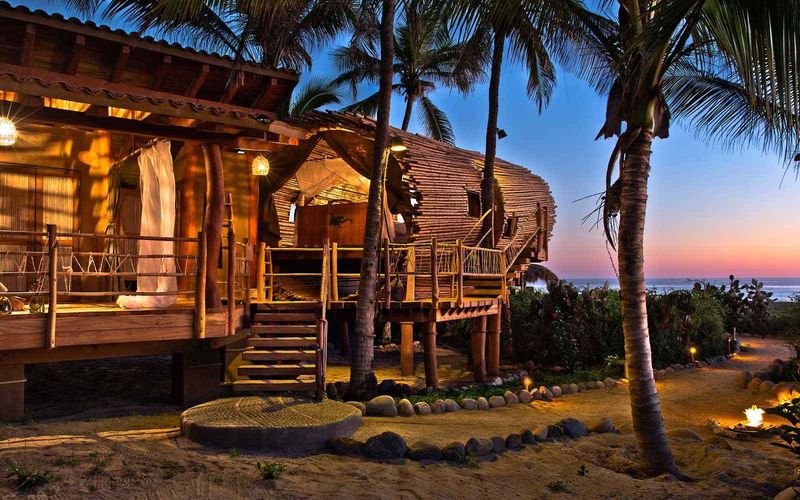
The coast, three hours south, offers a different Oaxaca. Puerto Escondido and nearby beaches like Mazunte and Zipolite draw surfers, yogis, and those seeking a slower pace. The waves at Zicatela are formidable, host to international surf competitions. Inland, the mezcal-producing regions around Santiago Matatlán show another facet: agave fields stretching across hillsides, distilleries operating with techniques unchanged for generations. We've sat in palenques, sipping smoky spirits while the maestro mezcalero explains terroir as precisely as any Burgundian vigneron.
Why These Places Endure
At Global Chic Voyage, we return to Mexico not out of habit but out of recognition. The country offers a rare combination: accessibility and depth, familiarity and surprise. Its beauty is not static. It shifts with season, with light, with the angle of approach. A plaza visited at midday reveals different details than the same plaza at dusk. A beach in December feels distinct from that same stretch in July.
Mexico's destinations endure because they are not theme parks. They are functioning places, where beauty coexists with complexity, where history is not museumified but present in the fabric of daily life. The colonial towns remain inhabited, their courtyards and churches part of ongoing community. The islands support fishing economies alongside tourism. The archaeological sites are sacred to descendants of those who built them.
This layering, this refusal to simplify, is what keeps us coming back. Mexico does not package itself for easy consumption. It asks for attention, for willingness to look beyond the surface, for patience to let a place reveal itself over days rather than hours. And for those who accept that invitation, the rewards are substantial.
Navigating the Terrain
Planning a journey through Mexico's most compelling destinations requires consideration of distance, climate, and rhythm. The country is large, nearly two million square kilometers, and transportation varies. Domestic flights connect major cities; buses reach smaller towns. Driving offers flexibility, particularly in regions like Baja or the Yucatán, where coastal roads link one beach to the next.
Seasonality matters. The Pacific coast sees rain from June through October; the Caribbean side remains drier. Highland towns are temperate year-round, while desert regions swing between daytime heat and nighttime chill. Cultural calendars also shape experience. Day of the Dead in Oaxaca or Michoacán transforms cemeteries into candlelit gatherings. Semana Santa, the week before Easter, brings processions to colonial towns.
We've found that the most rewarding itineraries balance variety with depth. Rather than attempting to cover the entire country in a single trip, focusing on a region allows for immersion. A week in Oaxaca, moving between city, coast, and mezcal country. Ten days in the Yucatán, alternating between archaeological sites, cenotes, and Caribbean beaches. A fortnight in the north, tracing the Copper Canyon and Baja's length.
The Invitation to Look Closer
Mexico's beauty is not subtle, but it is also not simple. The colors are saturated, the flavors bold, the landscapes dramatic. Yet beneath the immediate visual impact lies a more nuanced appeal. It is in the way light filters through a carved wooden screen in a colonial church. In the rhythm of waves against volcanic rock. In the scent of copal smoke and marigold during November's commemorations.
These are the details that linger after return, the sensory memories that resist flattening into photograph or anecdote. They are what transform a visit into a relationship, a single trip into the first of many. Mexico invites not just tourism but engagement, not just observation but participation. And for those willing to accept that invitation, the country offers an inexhaustible archive of wonder.