Where Baja's Desert Meets the Vine
Valle de Guadalupe has quietly become one of Latin America's most compelling wine destinations, blending Mexican terroir with a landscape that feels part Tuscany, part frontier.
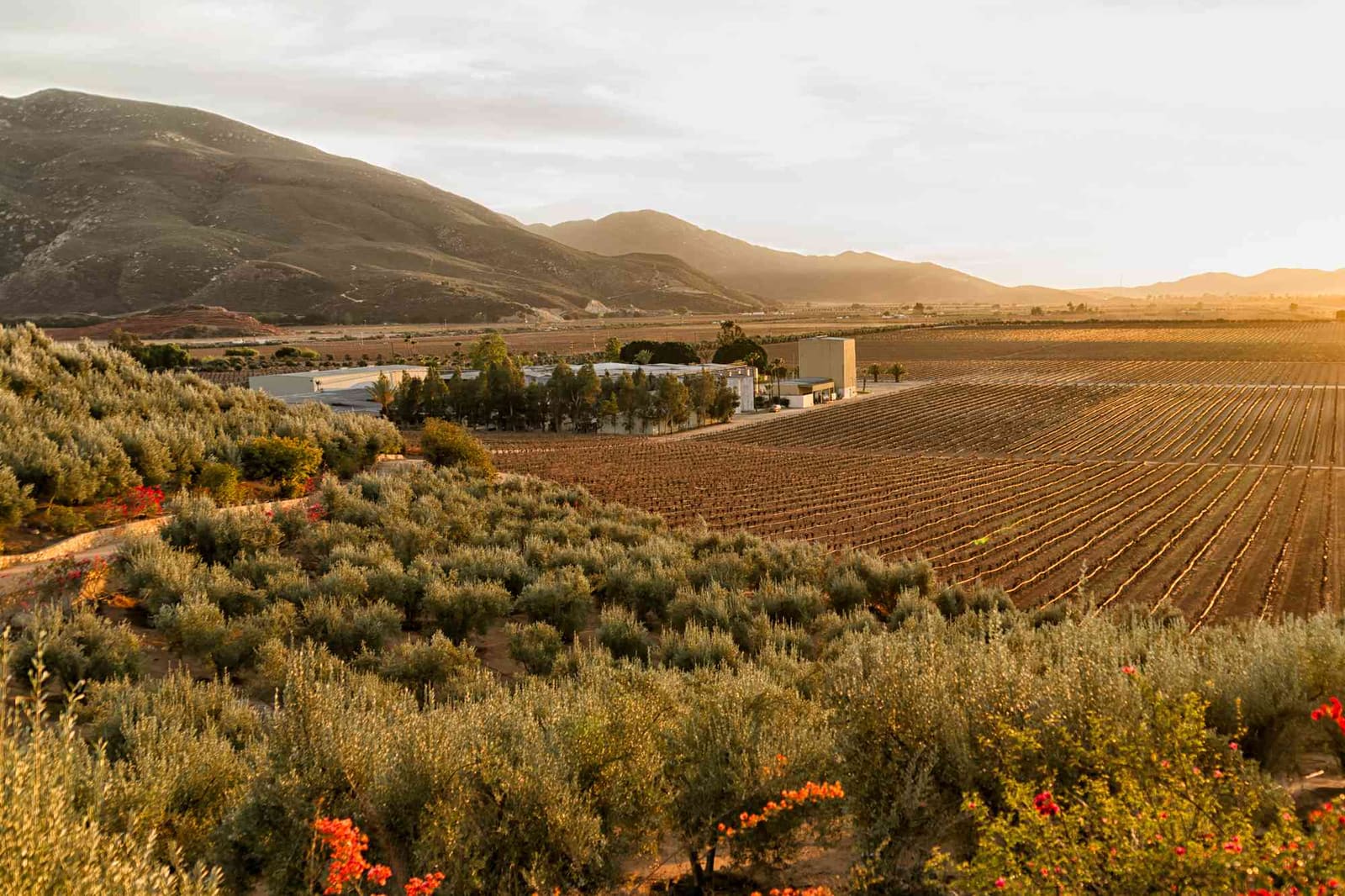
A Valley That Refuses Easy Comparison
The road from Ensenada climbs gently, and somewhere between the Pacific fog and the first row of vines, the light changes. It becomes warmer, more amber. Valle de Guadalupe announces itself not with signage but with a shift in the air - drier, scented faintly with wild sage and earth turned over by recent rain. At Global Chic Voyage, we've watched this valley transform over the past decade from a weekend escape for Tijuana locals into a full-fledged wine country that now rivals anything in South America for ambition and soul.
The comparisons are inevitable. Napa, Tuscany, even Mendoza - each name gets invoked, and each falls short. Because Valle de Guadalupe, tucked into the hills of Baja California, carries something distinctly its own: a rawness, a sense that the land is still negotiating its identity, still deciding how much it will reveal. More than a hundred wineries now dot the valley floor and the surrounding hillsides, some housed in sleek modernist structures, others in repurposed barns where the tasting room doubles as the winemaker's living quarters.
The Terroir of Two Worlds
What makes Valle de Guadalupe compelling is its geographic in-betweenness. The valley sits roughly ninety minutes south of the California border, close enough to share certain climatic traits with San Diego County yet far enough to escape the regulatory and aesthetic homogeneity that can flatten wine regions into theme parks. The soils here are granitic and alluvial, the summers hot and bone-dry, the winters mild. Mediterranean, yes, but with an edge - temperatures can swing wildly between day and night, a diurnal range that winemakers prize for preserving acidity in grapes that might otherwise go flabby under the Baja sun.
The vines themselves tell a story of migration and adaptation. Nebbiolo, Tempranillo, Grenache, Chenin Blanc - grapes that traveled here from Europe via California, replanted by Italian and Spanish immigrants in the early twentieth century, then largely forgotten until a new generation of Mexican vintners rediscovered them in the 1990s. Now the valley produces wines that taste neither purely Old World nor New, but something hybrid and occasionally revelatory: reds with structure and restraint, whites with salinity and grip.
Architecture as Expression
The hotels and tasting rooms that have emerged in recent years reflect a design philosophy rooted in restraint and materiality. Adobe walls, rammed earth, reclaimed wood - these are the textures that recur. At a handful of boutique properties scattered across the valley, the architecture feels less like decoration and more like an extension of the landscape, low-slung and sun-bleached, built to frame views rather than dominate them.
We've stayed at properties where the rooms open directly onto vineyards, where breakfast is served under pergolas draped in grapevines, where the only sound at night is wind moving through the rows. The aesthetic borrows from Tuscany's agriturismos, certainly, but filters it through a Mexican sensibility - brighter textiles, terracotta tiles, courtyard fountains that echo the region's mission heritage. The effect is less curated than it might be in Napa, more improvised, as if each property is still figuring out what it wants to be.
The Winemakers and Their Philosophies
The winemakers themselves tend to be young, many trained abroad but drawn back by the valley's potential and its relative freedom. Regulations here are lighter than in Europe or even California, which means experimentation is not only possible but expected. Natural fermentations, minimal intervention, amphora aging - techniques that in other regions might read as fashionable here feel more like necessity, born from limited budgets and a desire to let the terroir speak without interference.
Conversations in tasting rooms often veer into philosophy. One winemaker we spoke with described his approach as "listening to the vineyard," a phrase that might sound precious elsewhere but here feels earned. He farms organically not out of ideology but because the valley's isolation and dry climate make it practical. Another producer, a woman who left a career in Mexico City to start her own label, talked about reclaiming indigenous winemaking knowledge, experimenting with fermentation vessels made from local clay.
Eating in the Valley
The food scene has evolved in tandem with the wine. A handful of restaurants now operate out of the wineries themselves, serving meals that blur the line between rustic and refined. Expect wood-fired ovens, whole fish grilled over mesquite, vegetables grown on-site. The cuisine draws heavily from Baja's coastal larder - octopus, clams, sea urchin - but filtered through techniques that feel European in their precision.
One chef we know, who spent years cooking in Spain before returning to Ensenada, describes his style as "Baja Med," a fusion of Mediterranean method and Mexican ingredient. His tasting menus might include aguachile made with local white wine and olive oil, lamb slow-roasted with wild herbs foraged from the hills, desserts built around goat's milk cajeta and valley honey. The wines, naturally, are poured by the glass, chosen to match each course, often from producers whose vineyards are visible from the dining terrace.
The Question of Scale
Valle de Guadalupe's growth raises questions that other wine regions have grappled with, often too late. How much is too much? At what point does a place tip from discovery into overdevelopment, from intimacy into spectacle? The valley is grappling with these tensions now. Water is scarce, infrastructure strained. Some longtime residents worry that the influx of tourists and investors will price out the families who have farmed here for generations.
Yet there remains a sense, at least for now, that the valley has not yet hardened into a brand. Visits still feel exploratory rather than packaged. You can wander into a winery unannounced, strike up a conversation with the winemaker, leave with a case of wine that never sees distribution beyond Baja. The hotels, while polished, are small enough that they cannot absorb large tour groups. The roads remain narrow, unpaved in places, resistant to the kind of traffic that would turn the valley into a wine-themed amusement park.
When to Go, and How
Timing matters. Harvest season, late August through October, brings a particular energy - the vineyards busy with pickers, the air thick with fermenting must. But the valley is equally compelling in spring, when wildflowers carpet the hills and the vines are just beginning to bud. Summer can be punishingly hot; winter, while mild, sees occasional rain that turns the dirt roads to mud.
Most visitors base themselves in one of the valley's boutique hotels or rent a casa particular, a private house tucked into the vineyards. From there, the rhythm is slow: a winery visit in the morning, a long lunch, perhaps another tasting in the late afternoon when the heat has softened. Evenings are spent on terraces, watching the light drain from the hills, the temperature dropping twenty degrees in an hour.
Driving is necessary - the valley sprawls, and public transport is nonexistent. Hiring a driver for the day is common, especially if you plan to taste seriously. The alternative is to stay put, to choose one or two wineries and settle in, to let the valley come to you rather than chasing it down.
What We're Watching
At Global Chic Voyage, we're watching Valle de Guadalupe not just for what it is but for what it might become. The valley stands at an inflection point, poised between authenticity and aspiration, between local and global. The next few years will determine whether it can grow without losing the qualities that make it compelling - the sense of discovery, the rawness, the feeling that you are witnessing something still in formation.
For now, it remains one of the most exciting wine regions we know, a place where the landscape still dictates the terms, where the winemakers are driven more by curiosity than commerce, where a meal can stretch into evening and feel less like dining than like a form of communion with place. The valley offers no guarantees, no curated experiences, no certainty that the winery you visit today will still be there next year. And that, perhaps, is precisely the point.