Tuscan Coastlines and Hill Towns: A Week of Parmigiana, Fast Boats, and Perfect Sunsets
From the Russian-lip theatre of Forte dei Marmi to the wine cellars of Pienza, a journey through the slower, richer rhythms of central Italy

The Theatre of Bagno Bruno
There is a particular quality to lunch on the Versilian coast in August, when the beach clubs fill with tanned bodies and the parade of human ambition becomes a spectacle unto itself. At Bagno Bruno in Forte dei Marmi, the food arrives as reliably excellent as ever: grilled branzino, crudo di mare, perhaps a plate of spaghetti alle vongole that tastes of salt and summer. But the real show unfolds tableside, where certain guests have embraced cosmetic enhancement with such enthusiasm that one begins to wonder whether their surgeons were briefed on aesthetics or industrial design. The lips, in particular, have reached proportions that defy both anatomy and subtlety, somewhere between inflatable liferaft and architectural statement.
At Global Chic Voyage, we have long observed that luxury travel is as much about people-watching as it is about place. And Forte dei Marmi in high season offers both in abundance: the Apuan Alps rising behind the town, the Tyrrhenian stretching blue and infinite ahead, and in between, humanity in all its vain, sun-drenched glory.
South Toward Porto Ercole
The drive south from Forte dei Marmi begins smoothly enough, the autostrada unspooling through pine forests and past exits for hill towns you promise yourself you will visit one day. But once the toll road ends near Grosseto, the pavement quality takes a sharp, punishing turn. The car begins to thump and swerve, the suspension protesting, and you are reminded that even in Italy, infrastructure is a lottery of funding and political will.
The destination, however, justifies the bruising. Il Pellicano, perched on a rocky promontory near Porto Ercole, remains one of those rare resorts that has aged into itself with grace. The property has seen some updates since our last visit: new outdoor furniture from Kettal now populates the terraces, sleek and contemporary against the classic bones of the place. The bar staff wear burgundy uniforms that suggest someone in management understands the power of a well-tailored silhouette. And the wine list has expanded to include some fine Sicilian bottles, the kind that make you linger over dinner and lose track of time.
What has not changed is the feeling of the place: unhurried, confident, a little bit grand without tipping into pomposity. The hotels we return to most often are the ones that know what they are and refuse to chase every passing trend.
An Evening Afloat
Monday evening brought an invitation to join friends for a sunset cruise aboard a large rigid inflatable boat, the kind of vessel that moves fast and handles the chop with muscular ease. The proportions, mercifully, were more balanced than those lips up the coast. Onboard: gin and tonics in proper glassware, a journalist whose book on vanished communities is both haunting and utterly compelling, and the sort of easy conversation that only happens when the engine is off and the anchor is down.
We motored north along the coast, the cliffs catching the late afternoon light, then cut the engine and dived into the rolling Tyrrhenian. The water was that particular blue-green you find only in this part of the Mediterranean, cool enough to wake you up, warm enough to stay in. Back on deck, the sun dipped behind the silhouette of Elba, turning the sky pink and gold. It was one of those moments that no amount of planning can manufacture: the right people, the right light, the right stillness.
Travel, at its best, is less about ticking off landmarks than about these unscripted intervals, the ones that linger in memory long after the museums and monuments have blurred together.
Into the Hills
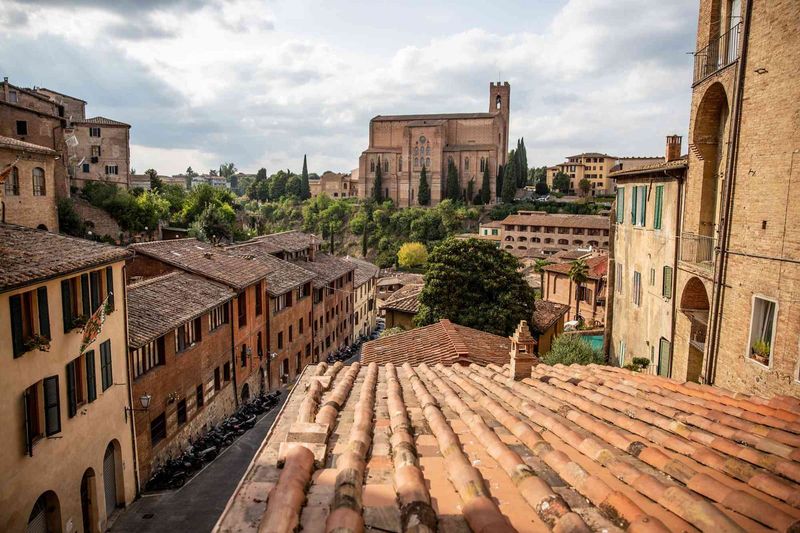
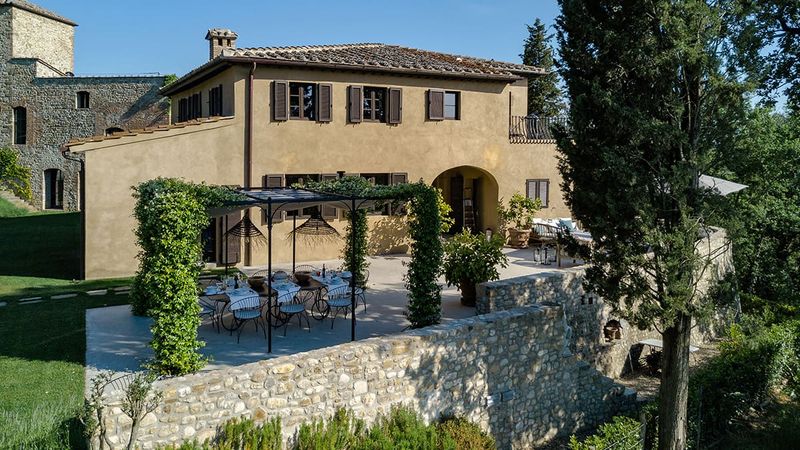
By Tuesday morning, the pull of the Val d'Orcia was too strong to resist. We left early, stopping in a nearby village for cornetti and espresso, then pointed the Land Cruiser inland. The roads grew narrower as we climbed, the forests denser, the GPS insisting we were on course even as the pavement gave way to gravel and the trees pressed in on both sides. One hundred minutes later, we arrived at a private estate near Pienza, the kind of place that does not advertise and does not need to.
The house was filled with the sort of guests you encounter only at a certain level of travel: a head of state here, a celebrated actor there, all of them content to spend two days eating parmigiana di melanzane, playing board games with singing, and debating the state of Europe over wine from the surrounding hills. The host, a woman of formidable taste and warmth, had arranged a side trip to Castiglioncello del Trinoro, a village so small and so beautifully restored that it feels like a secret even when you are standing in it.
The Monteverdi hotel there is worth the detour on its own: a collection of medieval buildings transformed into a study in understated elegance, all stone and linen and views that stretch to the horizon. This is the kind of hospitality that understands luxury as a function of restraint, not excess.
A Stormy Eclipse and Geopolitics
On Wednesday night, a rare eclipse darkened the Tuscan sky, and we watched from the terrace as clouds rolled in and thunder rumbled over the valley. The storm broke just as totality arrived, the heavens opening in a way that felt almost biblical. Inside, over another bottle of wine, the conversation turned to the fragility of European unity, the slow erosion of transatlantic ties, the sense that the continent is sleepwalking through a moment that demands clarity and will.
It is a strange thing, to sit in a place of such beauty and contemplate the precariousness of the world that makes it possible. But perhaps that is what places like this are for: to remind us what is worth defending, and what we stand to lose if we fail.
The Enoteca in Pienza
Thursday morning meant wine shopping in Pienza, a town that has managed to remain charming despite the tour buses. Enoteca di Ghino is the kind of shop where the owner knows every bottle, every producer, every vintage, and will guide you toward discoveries you did not know you were looking for. We filled the back of the car with boxes: Brunello di Montalcino, Vino Nobile di Montepulciano, a few outliers from smaller estates that do not export beyond Tuscany.
Should you overindulge in Ghino's expertise and find yourself in need of a rest, La Bandita Townhouse is a short walk away, a cosy boutique hotel that understands the art of the afternoon nap.
Reflections in St. Moritz
By week's end, we were back in St. Moritz, the car unpacked, the wine cellared, the tan already beginning to fade. After a swim in the lake and dinner in town, we found ourselves at the cinema for a screening of a new Hollywood epic, a sprawling retelling of ancient myth that substituted star power for geographic plausibility and mid-Atlantic accents for any sense of place.
It was a curious end to a week spent chasing authenticity: to sit in the dark and watch a film so disconnected from the textures and tones of the world it purported to depict. The casting felt like a committee decision, the costumes like a revival of gauzy 1980s resort wear, the dialogue like something overheard at a tech conference. Even the dog, a Portuguese breed with navigation supposedly in its genes, seemed an odd choice for a hero who spent a decade lost at sea.
But perhaps that is the point. The real odyssey is not the one on screen, with its CGI cyclops and improbable banquets, but the one we undertake when we leave the house and point the car toward the unknown. The one that involves narrow roads and stormy skies, strangers who become friends, and sunsets that require no special effects.
Why We Return
At Global Chic Voyage, we have spent years searching for places that feel true, that offer more than a pretty photograph or a well-designed lobby. The Tuscan coast and the Val d'Orcia hills are among them: regions that reward the detour, the slow lunch, the extra night. They are places where the rhythms of life still follow the sun and the seasons, where a good meal is a form of communion, and where beauty is not a product to be consumed but a condition to be inhabited.
We will return, as we always do, when the summer crowds have thinned and the light turns golden again. And we will fill the car with wine, and take the long way, and remember why we started traveling in the first place.