The Seven-Day Rail Odyssey Where Barolo and Brunello Meet the Iron Road
A new slow-travel itinerary threads northern Italy's vineyard country by private train, pausing for cellar visits and long lunches under the vines.
The Rhythm of Rails and Vines
There is a particular quality to the light that falls through train windows in late afternoon, the way it catches dust motes and throws gold across upholstery, the way it softens the hills rolling past. In northern Italy, where the Langhe give way to the Chianti hills over the course of a week, that light becomes a kind of clock, marking not hours but harvests, not minutes but the slow turn of seasons in the glass.
A new seven-day rail itinerary has begun to trace this arc, moving at the speed of conversation rather than connection, pausing not at platforms but at cellars, at long tables set in the shadow of pergolas, at estates where the family name on the bottle is the same one above the door. The journey, operated by a private consortium of heritage rail operators and regional wine authorities, runs from the Piedmontese town of Alba southward through Asti, Genoa's hinterland, and the length of Tuscany, terminating in Montalcino. It is designed for those who measure a day's success not in sights ticked off but in conversations held, in the weight of a glass in the hand, in the particular pleasure of arriving somewhere slowly enough to notice the change.
A Moving Basecamp Through Appellation Country
The train itself is a restored consist of 1960s carriages, refurbished to a standard that favours comfort over ostentation. Cabins are panelled in walnut, fitted with linen that is changed daily, and equipped with wide windows that do not open onto air conditioning but onto air itself, the scent of pine and fermenting must drifting in as the landscape shifts. There is a dining car where breakfast is served at a single seating, a lounge car with deep chairs and a collection of books on viticulture, and a small observation platform at the rear where passengers gather in the evening with an aperitivo.
The itinerary is structured around the vineyards rather than the other way round. Each day the train halts at a siding or a disused country station, and passengers disembark for visits that have been arranged in advance but feel, in their unhurried unfolding, almost accidental. These are not the trophy estates that appear on every list, though a few of those are included. More often they are smaller holdings, family operations where the winemaker is also the host, where the cellar is cool and smells of oak and earth, where lunch is set out in a courtyard and lasts until the light begins to slant.
Piedmont's Nebbiolo Heartland
The first two days are spent in the Langhe, the rolling country south of Alba where Nebbiolo is king. The train sidles into a siding near Barolo on the morning of the second day, and passengers are met by a pair of guides who lead them on foot into the vineyards. The vines here are old, gnarled, planted on slopes so steep that tractors cannot navigate them. Harvest, when it comes, is still done by hand.
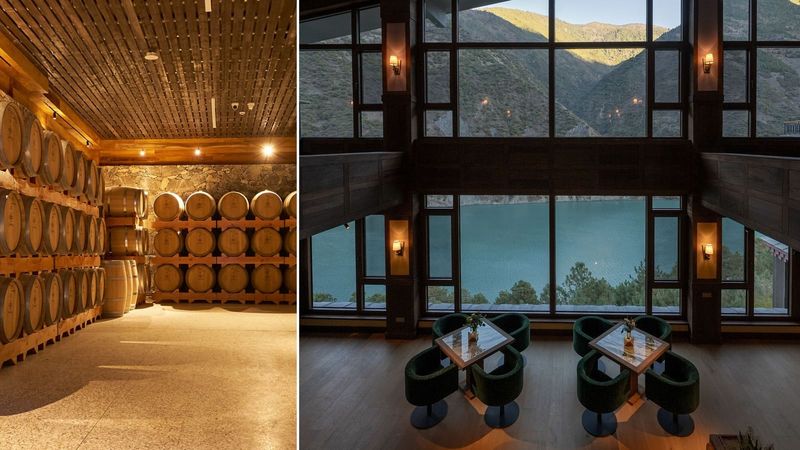
The estate visit that follows is to a producer whose family has farmed this particular hillside since the 18th century. The tasting takes place in a vaulted cellar where the temperature never rises above 15 degrees Celsius, even in August. The wines are poured without commentary at first, the winemaker preferring to let the liquid speak before he does. When he does speak, it is in the dialect of the region, translated by one of the guides, and his observations are less about tannins and acidity than about weather and waiting, about the year his grandfather lost an entire vintage to hail, about the particular challenge of knowing when to pick.
Lunch is served in the garden, under a canopy of wisteria. The menu is fixed, built around the season and the cellar: tajarin with butter and white truffle shavings, brasato al Barolo, panna cotta. The wine is the estate's riserva, opened without ceremony and poured generously. Conversation drifts from table to table, in Italian and English and French, and the afternoon stretches long.
The Ligurian Interlude
On the third day the train descends toward the coast, skirting Genoa and threading the narrow valleys that climb back into the Apennines. This is not wine country in the way Piedmont is wine country, but there are vineyards here all the same, terraced into the hillsides, planted with Vermentino and Pigato. The stop is brief, a single estate visit in the hills above Portofino, where the wines are crisp and saline and taste of the sea even though the grapes are grown inland.
The estate is smaller than those in Piedmont, the production modest, but the welcome is no less warm. The owner is a woman in her seventies who took over the vineyard from her father and has spent the past four decades replanting, experimenting, coaxing something distinctive from soil that everyone told her was better suited to olives. Her wines are served with focaccia baked that morning, with anchovies and tomatoes from the garden, and the tasting becomes a kind of argument, good-natured but insistent, about what Ligurian wine can be.
Tuscany's Long Descent
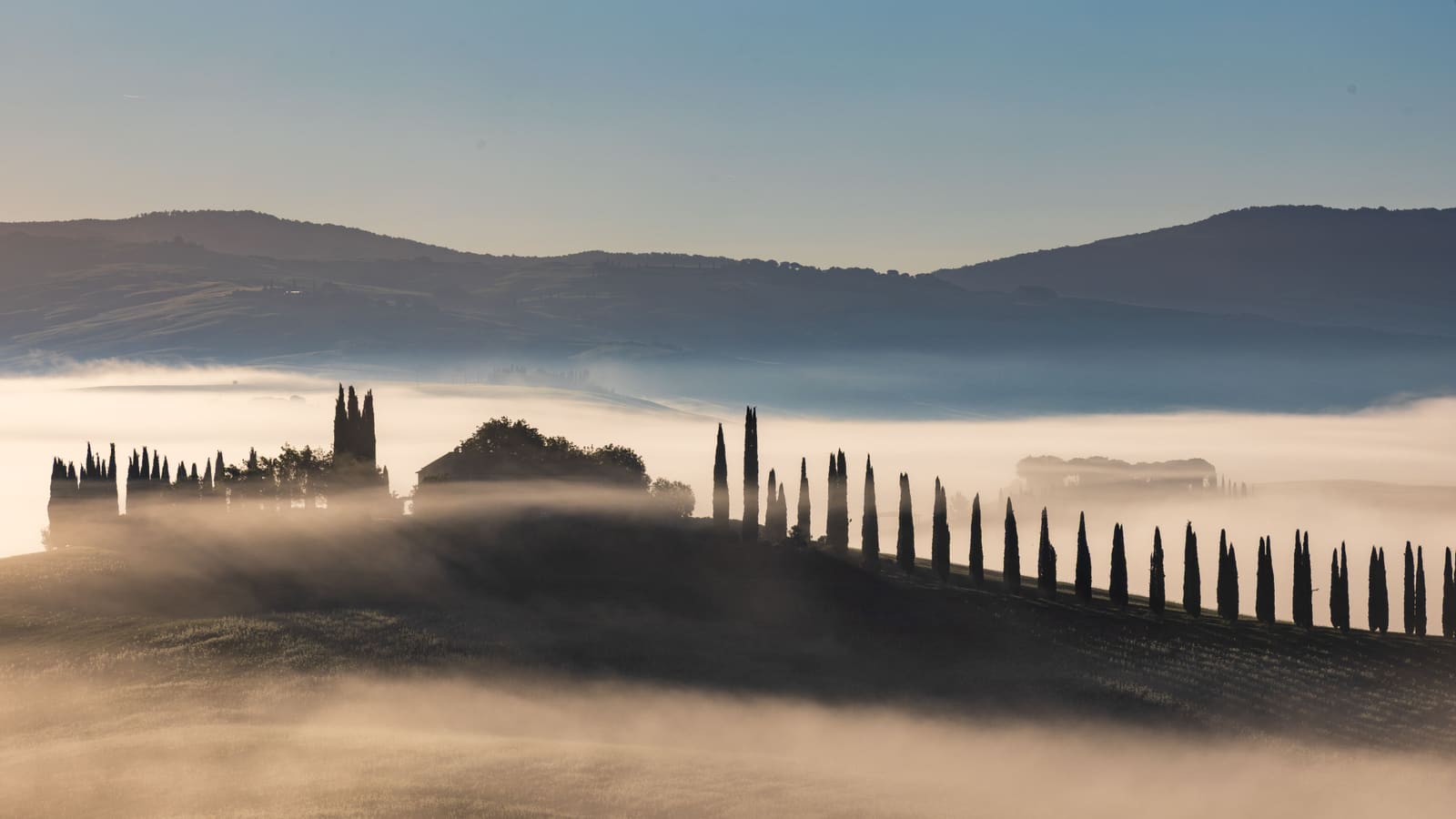
The second half of the journey is Tuscan, and the landscape changes accordingly. The hills are rounder here, the cypresses taller, the light softer. The train moves south through Chianti Classico, pausing for a day in the hills between Greve and Radda, then continuing toward Montepulciano and finally Montalcino, where the itinerary concludes.
Each stop follows a similar pattern: disembarkation in the early morning, a walk through the vineyards, a cellar visit, a long lunch. But the particulars vary. In Chianti the estate is a sprawling affair, part vineyard and part olive grove, with a villa that has been in the same family for six generations. The tasting includes not only wine but also the estate's own olive oil, poured over bread and tasted alongside the Sangiovese as a lesson in terroir. In Montepulciano the visit is to a cooperative, a collective of small growers who pool their fruit and their labour, and the tasting is held in a warehouse-like space that smells of must and machinery, the wines poured from unlabelled bottles, the conversation turning to the economics of small-scale production.
The final day is spent in Montalcino, in the shadow of the fortress, at an estate that produces Brunello. The vines here are younger than those in Piedmont, planted in the 1980s when the appellation was still finding its feet, but the wines are no less serious. The tasting is formal, conducted in a purpose-built sala that overlooks the vineyards, and the winemaker is a man in his forties who studied enology in California and returned to take over the family business. His approach is less traditional than some of his neighbours', more interventionist, and the wines reflect that: polished, powerful, built for ageing.
The Case for Slow Miles
What distinguishes this itinerary from the many other wine-focused journeys available in Italy is not the access, though the access is considerable, nor the exclusivity, though the group size is capped at 24 passengers. It is the pacing. The train moves slowly, stopping often, and the stops themselves are long. There is time to linger, to ask questions, to wander off alone into the vineyard and stand among the vines. There is time, too, to do nothing at all, to sit in the lounge car with a book or on the observation platform with a glass and watch the country unspool.
This is a kind of travel that resists the usual metrics. There are no monuments here, no queues, no timed entries. The satisfaction is quieter, harder to quantify. It is the satisfaction of having spent a week moving through a landscape slowly enough to understand it, of having tasted not just the wines but the particularity of the places that produce them, of having arrived at the end not exhausted but restored.
The itinerary runs twice annually, in May and October, timed to the shoulder seasons when the vineyards are either just flowering or just harvested, when the weather is mild and the estates are not overrun. Bookings are handled through a consortium of travel agents specialising in rail journeys, and the cost includes all meals, all tastings, and all estate visits, though not the wine consumed at dinner, which is ordered from a curated list and charged separately.
What the Glass Holds
By the final evening, as the train idles in the Montalcino station and passengers gather one last time on the observation platform, the week has accumulated a weight. Not the weight of exhaustion but of immersion, of having spent enough time in one place, or one kind of place, to feel its rhythms. The conversations have grown easier, the questions more specific, the silences more comfortable. The wines, too, have begun to arrange themselves in memory, not as a list but as a sequence, each one a marker of a particular hillside, a particular afternoon, a particular table.
This is the quiet promise of slow travel: not that it will show you more, but that it will show you differently. The train, the vineyards, the long lunches under the vines are not an escape from the world but a way of attending to it, of giving it the time it requires to reveal itself. And in a season when speed is the default and efficiency the expectation, that kind of attention feels less like luxury than necessity.