The Quiet Architecture of Sleep: What Grand Hotels Know About Bedding
From thread count to temperature regulation, the linen choices that separate a restless night from true repose.
The Memory of Morning Light
There is a particular quality to waking in a well-made bed. Not the jolt of an alarm or the slow drag of obligation, but the kind of surfacing that feels earned - a gradual return from somewhere deep. The grand hotels understand this. They have always understood it. The five-hundred-thread-count Egyptian cotton, the down duvet with its cloudlike heft, the pillows that yield and then support: these are not luxuries in the decorative sense. They are the infrastructure of rest.
For decades, the hospitality industry has refined the science of sleep into something approaching an art form. What guests often mistake for indulgence is, in fact, precision engineering - a carefully calibrated system of fabrics, fills, and finishes designed to regulate temperature, wick moisture, and cradle the body through its nightly cycles. The question is no longer whether such comfort can be replicated at home. The question is which elements matter most, and why.
The Economics of Thread Count
Thread count has long served as shorthand for quality, but the metric itself is more complicated than marketing suggests. A sheet labeled 800-thread-count is not necessarily twice as luxurious as one at 400. Beyond a certain threshold - generally between 300 and 600 - the gains become marginal, and the feel of the fabric begins to depend more on fiber length, weave structure, and finishing treatments than on sheer density.
The finest hotel linens tend to favor long-staple cotton, whether Egyptian, Pima, or Supima. These fibers produce a smoother surface, with fewer loose ends to pill or fray. The weave matters, too. Percale, with its crisp, cool hand, suits warm climates and hot sleepers. Sateen, woven to emphasize the weft threads, offers a softer, silkier drape at the cost of slightly less breathability. Neither is objectively superior. Both have their partisans.
What separates a truly excellent sheet from a merely acceptable one is often the finishing process. Mercerization, a treatment that swells the cotton fibers and increases luster, can elevate a mid-range fabric into something that feels almost liquid against the skin. Double-brushing, typically applied to flannel, softens the nap without sacrificing durability. These are the invisible refinements that distinguish a hotel's house linen from the generic white goods stacked in a department store.
The Weight of Down
If sheets are the foundation, the duvet is the envelope. And here, the choices multiply. Down remains the gold standard for warmth-to-weight ratio, but not all down is created equal. Fill power - the measure of how much space one ounce of down occupies - ranges from 500 to 900. Higher fill power means more loft, more air pockets, and therefore more insulation per ounce. A 700-fill-power duvet will be lighter and puffier than a 500-fill-power one of equivalent warmth.
The best hotel duvets often blend down and feather in carefully controlled ratios. Pure down is warmer and lighter, but feathers add structure and prevent the fill from shifting too much over time. The ratio typically hovers around 90-10 or 80-20, down to feather. Anything below 75 percent down begins to feel noticeably heavier and less responsive.
For those with allergies or ethical concerns, synthetic alternatives have improved dramatically in recent years. High-quality polyester fills now mimic the loft and breathability of down with surprising fidelity, and they wash more easily. But they do not last as long, and the best of them still cannot quite replicate the way natural down seems to breathe and adjust to the body's microclimate.
The Pillow Problem
No element of hotel bedding is more personal, or more contentious, than the pillow. Some sleepers want a fortress of support. Others want to sink into something close to liquid. The proliferation of pillow types - memory foam, latex, down, down-alternative, buckwheat, shredded foam, gel-infused, cooling - suggests that the industry has yet to arrive at a universal solution. Perhaps there is none.
What the best hotels have learned is to offer choice. A pillow menu, once a novelty, is now standard at upper-tier properties. Guests can request firm or soft, high or low, hypoallergenic or natural. The logic is sound: a pillow that works for a side sleeper may torture a back sleeper, and vice versa. Loft, density, and compressibility are variables that depend entirely on individual anatomy and preference.
Still, certain principles hold. A pillow should keep the spine aligned, neither craning the neck forward nor letting the head drop back. It should maintain its shape through the night, not flatten into a pancake by 3 a.m. And it should be washable, or at least encased in something that is. The pillow protector, often overlooked, is as important as the pillow itself - a barrier against oils, allergens, and the slow accumulation of dust mites.
Temperature and the Microclimate
The body's core temperature drops as it prepares for sleep, and maintaining that coolness is essential for deep rest. This is where fabric choice becomes critical. Cotton, linen, and bamboo-derived rayons are all naturally breathable, allowing heat and moisture to escape. Polyester, by contrast, tends to trap both, creating a clammy microclimate that can disrupt sleep even if the sleeper does not fully wake.
Some hotel bedding now incorporates phase-change materials - fabrics embedded with microscopic capsules that absorb heat when the body is warm and release it when the body cools. The technology, originally developed for astronauts, has migrated into high-end mattress pads and duvet covers. The effect is subtle but real: a narrower range of temperature variation through the night, and fewer instances of kicking off the covers or burrowing deeper.
Linen, the oldest of the luxury fibers, remains unsurpassed for its thermoregulatory properties. It is cooler than cotton in summer, warmer in winter, and improves with every wash. Its texture, slightly nubby and irregular, is not to everyone's taste, but those who convert tend to become evangelists. A linen sheet set is an investment, but one that can last a decade or more with proper care.
The Aesthetic Question
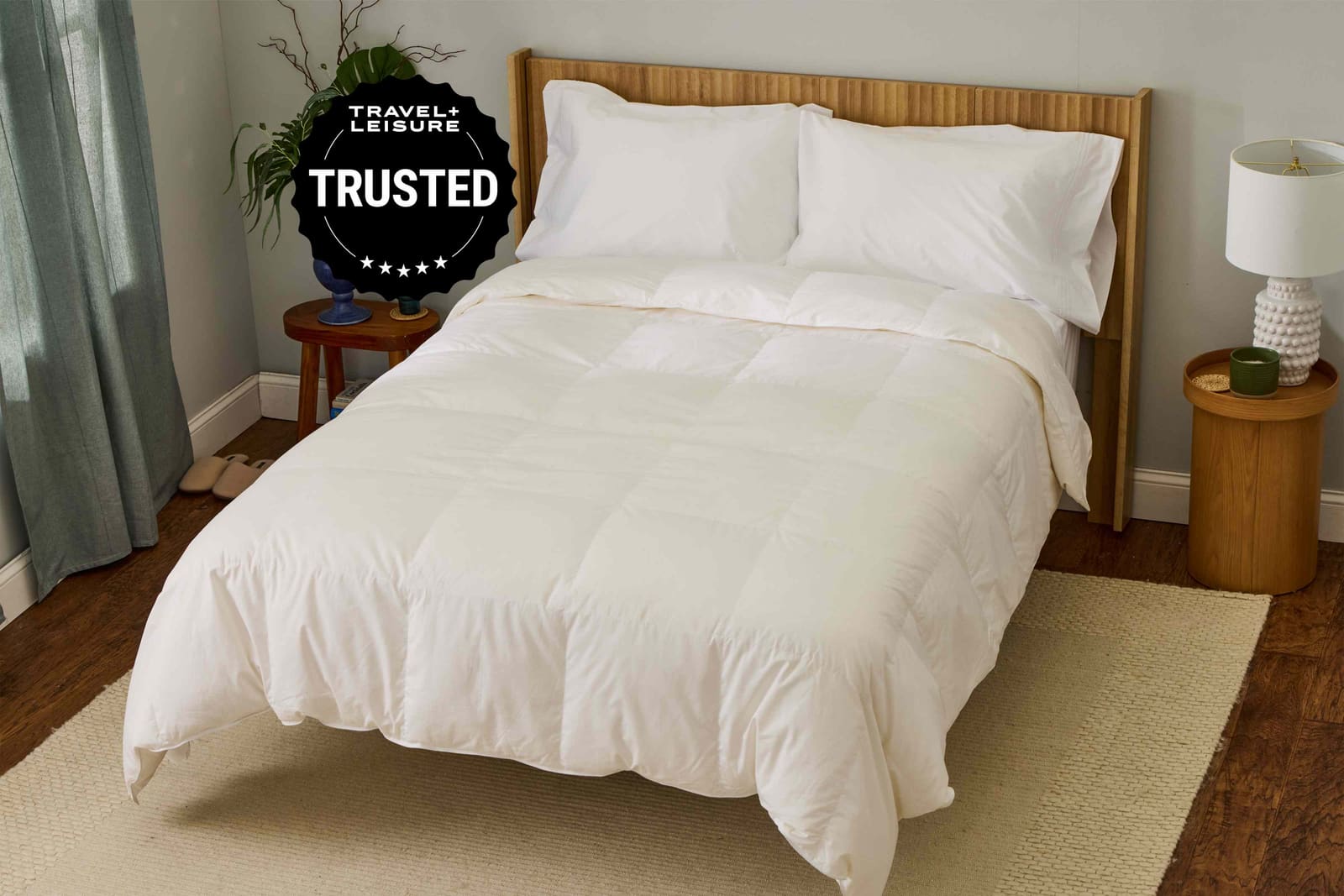
Function may dictate fabric, but aesthetics shape the experience. A bed dressed entirely in white communicates a certain kind of luxury - clinical, pristine, hotel-like in the most literal sense. But white is also unforgiving. It shows every stain, every wrinkle, every lapse in maintenance. Some prefer the softness of ivory or the depth of charcoal gray, colors that hide imperfections and feel less institutional.
The best hotel bedding balances visual simplicity with tactile richness. A duvet cover with a subtle jacquard weave, a sheet hem finished with a narrow band of satin stitching, a pillowcase that closes with mother-of-pearl buttons rather than an envelope fold - these are details that register subliminally, contributing to an overall sense of care and quality without announcing themselves.
Layering also matters. A lightweight blanket folded at the foot of the bed, a quilted coverlet between the sheet and the duvet, a throw pillow or two for afternoon reading - these elements add flexibility and visual interest. They allow the bed to function as more than a place to sleep, transforming it into a kind of domestic retreat.
The Case for Simplicity
For all the talk of thread counts and fill powers, the most important variable may be the simplest: cleanliness. Fresh sheets, a duvet aired out in sunlight, pillows that smell faintly of lavender or eucalyptus - these are the sensory cues that signal rest. Hotels change linens daily, a standard few homes can or should replicate. But weekly washing, proper drying, and occasional rotation of pillows and duvets will do more for sleep quality than any single purchase.
There is also the matter of making the bed. The act itself, performed with care, sets a tone. Corners tucked, pillows plumped, the duvet smoothed flat - it is a small ritual, but one that separates the bedroom from the rest of the house. A well-made bed invites rest in a way that a rumpled one does not. The hotels know this. They have always known it.
What to Bring Home
If the goal is to recreate hotel sleep at home, the path forward is surprisingly straightforward. Begin with a set of high-quality cotton sheets, 300 to 600 thread count, in a weave that suits your climate and preference. Add a duvet with at least 700 fill power, or a high-grade synthetic alternative if down is not an option. Invest in pillows that match your sleep position, and protect them with zippered cases. Layer a lightweight blanket for temperature control, and wash everything regularly.
The rest is refinement. A mattress pad to extend the life of the mattress and add a layer of cushioning. A bed skirt to hide the box spring, if aesthetics matter. A throw at the foot of the bed, for those evenings when a full duvet feels like too much. None of these are essential, but each contributes to the overall architecture of comfort.
The grand hotels have spent a century perfecting this formula, and the results are now accessible to anyone willing to prioritize sleep as seriously as they prioritize travel. The distance between ordinary rest and true repose is not measured in miles. It is measured in thread count, fill power, and the quiet attention paid to the space where we spend a third of our lives.