Partying Inside a Melting World
On Iceland's Langjökull glacier, a rave in a 1,600-foot ice tunnel becomes both celebration and elegy for a landscape that may not survive the century.
A Portal in the Ice
The glitter has frozen into crystalline tracks down her cheeks. Kali Van Horn, a thirty-year-old architect from Brooklyn, presses her back against the wall of Langjökull, Iceland's second-largest glacier, and lets the bass reverberate through 500 billion tons of ancient ice. Around her, a hundred people sway in winter coats trimmed with lavender fur, their light-up scarves casting fractured rainbows across blue walls that have taken millennia to form.
This is not a typical club night. The crowd has driven for hours across western Iceland's highlands, their vehicles fitted with spiked tires that crunch over gravel and textured ice, climbing to 1,300 meters above sea level. When the cars inevitably get stuck, drivers leap out to release air from the tires, redistributing weight so the convoy can continue its ascent. The destination: a metal-wrapped portal bored into the glacier itself, the entrance to a 1,640-foot labyrinth carved entirely from compressed snow that fell thousands of years ago.
Van Horn describes the experience as healing. It is also, whether the dancers fully grasp it or not, a kind of farewell.
The Economics of Ephemera
The eleven-hour excursion carries a $600 price tag and draws just one hundred attendees, part of a larger gathering called Iceland Eclipse that brought more than 3,000 people to the Snæfellsnes Peninsula in mid-August. The festival offered cacao ceremonies, lectures on whale communication, and late-night raves timed to extend the euphoria of a total solar eclipse two days prior. The energy borrows from Burning Man, leaning into heady conversation and communal ritual, but the glacier event stands apart in both ambition and exclusivity.
Fridrik Olafsson, forty-one, co-produced the festival with a philosophy of restraint. He chose not to haul heavy audio or lighting equipment up to Langjökull, trusting that the setting would do the work. Days before the glacier rave, storms with gusts approaching seventy miles per hour tore through the festival grounds, damaging three main-stage tents and destroying fifty glamping structures. Crew members worked around the clock to salvage the event. What Icelanders might call a windy day left foreign attendees shaken.
Still, the Into the Glacier excursion, a collaboration with a company that offers daily tours inside Langjökull, went ahead as planned. Olafsson had previously organized similar events for Secret Solstice, an Icelandic festival he founded that once offered million-dollar ticket packages for groups of six, complete with private jets and personal chefs. The glacier rave represents a distilled version of that luxury ethos: intimate, expensive, ephemeral.
Inside the Frozen Cathedral
The tunnel walls glow faintly as visitors navigate the labyrinth, their crampons scraping against ancient ice. A staff member slides the spiked traction devices onto hiking boots with practiced ease, joking about Cinderella treatment. The passage opens into a wider chamber designed like a chapel, wooden benches arranged beneath an archway, faux flowers forming a heart on one wall.
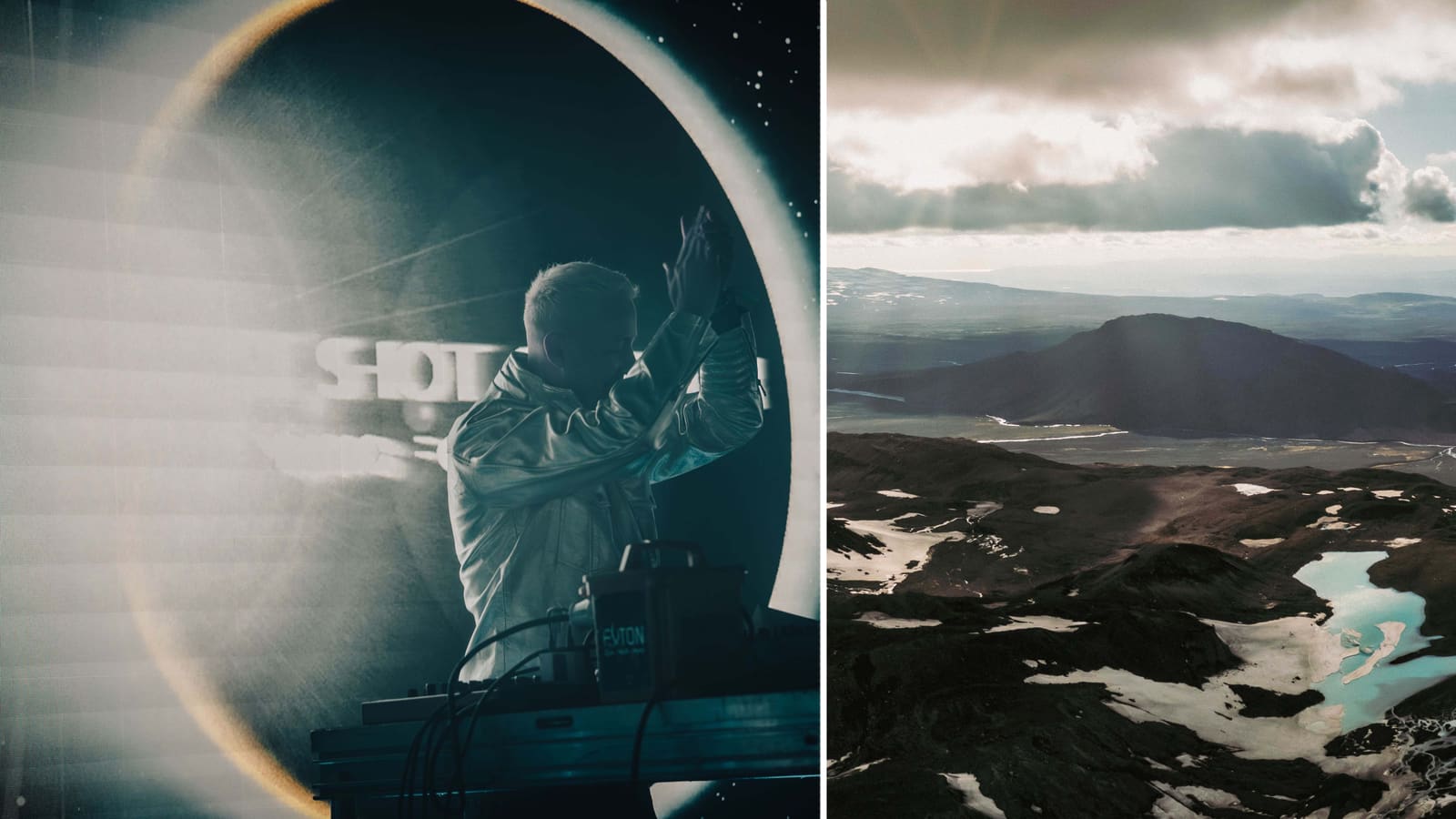
Hjalamroli Hjalmrsson, a bearded guide whose age he describes as "young and old at the same time," explains that the tunnel is the largest manmade ice structure of its kind. The acoustics are strange. Bass drowns in the echo, bouncing off walls in a way that recalls a vast warehouse, but with the peculiar dampening effect of frozen water. Two Icelandic DJs, Hólmar Thor Filipsson and Margeir Steinar Ingólfsson, spin house and techno tracks, taking their cue, they later insist, from the glacier itself.
Ingólfsson brought a gift for the ice: water collected by a friend, a glacier specialist, from icecaps around the world. He placed a few drops near the DJ booth. Thor Filipsson describes the night as concentrated, almost sci-fi, a shared first-time experience for everyone present.
Cans of pink vodka cocktails appear in gloved hands. The flavor is called Flamingo, a vague descriptor that tastes like liquified candy. Festival staff circulate with plastic bags, collecting trash to leave the glacier undisturbed. The two-drink maximum is enforced. Hours pass in a hypnotic blur before the crowd trickles back down to the base camp, about ten minutes from the ice cave entrance.
The Memory Held in Ice
Lyndsay Klebba, a thirty-six-year-old writer from Chicago, wears a fluffy yellow hat and a pashmina printed with spotted mushrooms. She decided to visit Iceland after a DNA test revealed Viking heritage. Most of the party, she spent pressed behind the DJ booth, her heart against the ice to feel the bass. At one point she wandered into an alcove and caught droplets trickling from the ceiling on her tongue. The freshest water she had ever tasted, she says.
Mitch Morales, CEO of IMXP and founder of Iceland Eclipse, describes ice as a vessel for history. The frozen layers inside Langjökull date back thousands of years, each stratum a record of what was happening in the world when that snow fell. He likens the glacier to a temple, a place of memory and reverence. His company is planning an "Eclipse Trilogy" of annual totality events; he recently scouted sites in Luxor and is considering Australia or New Zealand for future editions. Eventually, he says, he wants to host an eclipse viewing on the moon.
The notion of a glacier as temple is not purely metaphorical. Stone structures in Egypt honor what came before. A rave inside melting ice, however unintentional, performs a similar function.
Last Chances
As the convoy descends, small signs mark where Langjökull once extended. The glacier lost an estimated twenty-nine percent of its mass between 1890 and 2019, according to a study published in Frontiers in Earth Science. Klebba notes that the spot where they danced would have been buried under ice forty years ago. The miles they drove to reach the current edge are a measure of retreat.
The phenomenon has a name: last-chance tourism. Travelers seek out landscapes threatened by global warming, drawn by the urgency of disappearance. Langjökull has already outlived Okjökull, a nearby glacier that lost enough mass to be stripped of its name in 2014. The suffix jökull, meaning glacier, was dropped. What remains is simply Ok.
Hayley Sharkey, a twenty-seven-year-old public relations coordinator from Miami, wears a blue snow jacket with faux-fur cuffs. She admits that the knowledge of impending loss was a factor in her decision to attend. Future generations, she says, will not understand the sensation of natural ice surrounding them. The feeling will become myth.
What Gets Preserved
The question of how to honor a vanishing landscape is thorny. A rave inside a glacier can feel like celebration or desecration, depending on perspective. The organizers emphasize care: trash collected, no heavy machinery left behind, a light footprint in a fragile environment. Yet the very act of gathering there, of driving spiked vehicles up the ice and boring tunnels into its heart, is an assertion of human presence in a place that may not withstand it.
What remains after the music stops is not just memory but a record of priorities. The cost of the ticket, the distance traveled, the hours spent in a frozen cathedral all suggest that rarity has become its own currency. The glacier is valuable not only because it is beautiful or ancient, but because it is disappearing.
The tunnel will remain open as long as the ice does. Daily tours continue, ferrying visitors into Langjökull to marvel at its blue glow and improbable architecture. The rave was a single night, a convergence of sound and cold and bodies moving in a space that will not exist forever. Van Horn, the architect with glitter on her face, called it healing. Others might call it a vigil. Both are true.
The ice holds what it has always held: layers of snow pressed into permanence, water locked in time, the memory of weather that fell before anyone now alive was born. The difference is that now we know how to measure its loss, and some of us choose to dance inside it while we can.