When Orlando Becomes a Sanctuary: Finding Quiet Luxury Beyond the Theme Parks
Conrad Orlando at Evermore proves that Florida's most-visited destination can offer something altogether different: a serene retreat built on crystal lagoons, botanical spa rituals, and the kind of stillness that makes you forget the roller coasters entirely.
A Different Kind of Florida
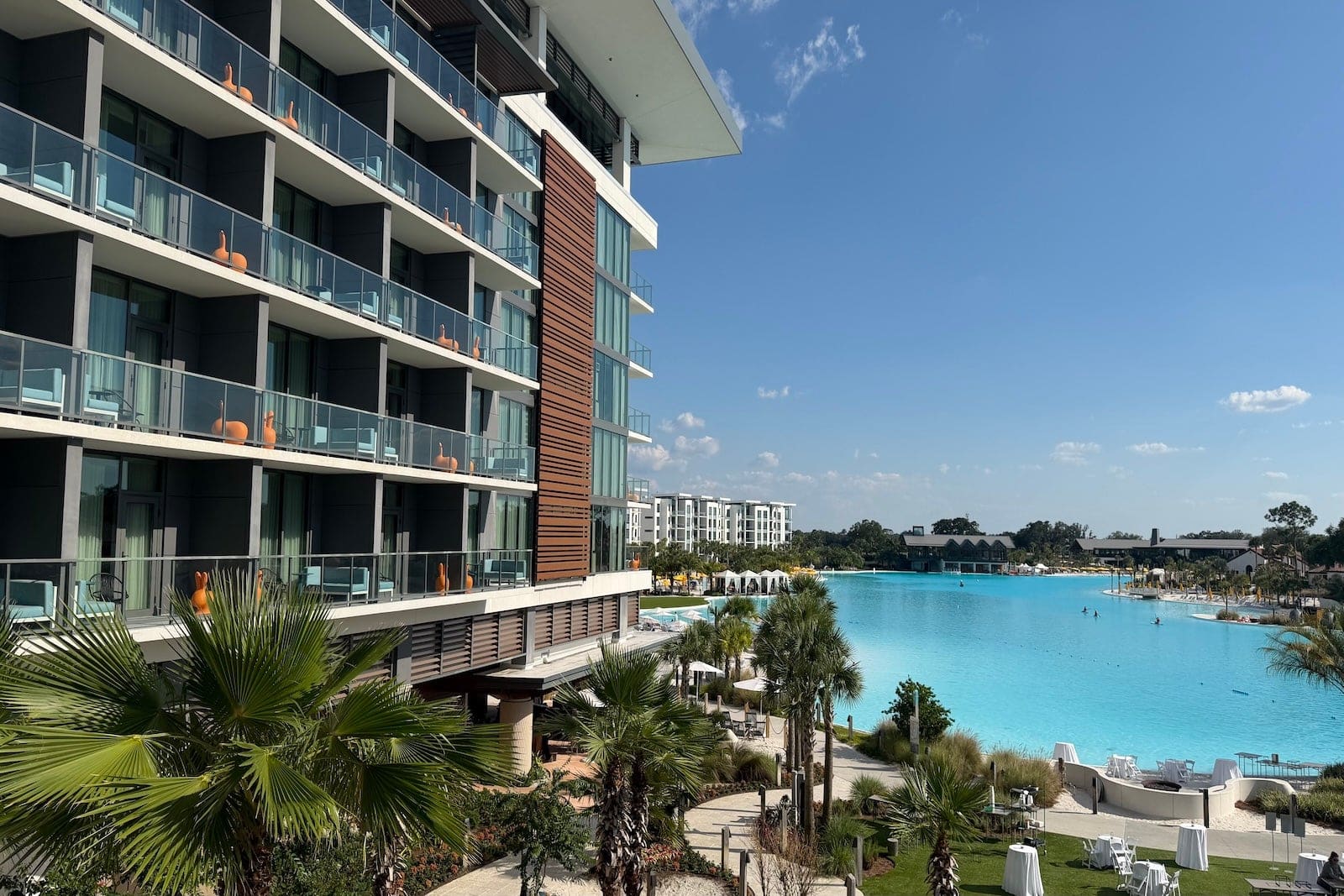
There is a moment, just after dawn, when the shore of Evermore Bay turns rose-gold and the air smells faintly of citrus blossoms. The lagoon stretches eight acres, its water engineered to a Caribbean clarity, and the only sound is the occasional rope swing arcing over the surface. This is Orlando, but not the Orlando most travelers know. No queues, no parade music drifting across parking lots. Just white sand, hammocks strung between palms, and the particular kind of quiet that makes you realize how loud the rest of your life has been.
At Global Chic Voyage, we have watched Florida's luxury hospitality landscape shift over the past few years. The state has always drawn millions for its attractions, but a new generation of properties is betting that visitors crave something beyond adrenaline and nostalgia. Conrad Orlando at Evermore, which sits fifteen minutes from Walt Disney World in Lake Buena Vista, is perhaps the clearest expression of this evolution. It is a resort designed not to amplify the theme-park experience but to counterbalance it, offering a retreat where the architecture speaks in low tones and the itinerary revolves around rest.
What makes this kind of getaway newly accessible, however, is not just the emergence of such properties. It is the way certain travel tools, particularly co-branded hospitality credit cards, have democratized access to experiences that once sat firmly in the aspirational column. The Hilton Honors American Express Surpass Card, currently offering an elevated welcome bonus of 130,000 points after meeting a modest spending threshold, becomes a kind of skeleton key. Combined with automatic elite status, quarterly credits, and accelerated earning rates, it transforms the economics of a luxury weekend entirely.
The Calculus of Attainable Luxury
Luxury travel, for most of us, involves a negotiation. We weigh the cost of a room against its intangible qualities, the breakfast against the view, the spa treatment against the memory it might leave. The Surpass card recalibrates that negotiation by layering benefits in a way that compounds across a single stay.
Consider the welcome bonus first. According to current valuations, 130,000 Hilton Honors points can cover multiple reward nights at a property like Conrad Orlando, depending on seasonality and availability. But the real leverage comes from what happens once you arrive. Automatic Gold status, a feature of the card itself, unlocks space-available room upgrades at select properties. In practice, this can mean the difference between a standard king and a wellness suite with private access to the spa's outdoor water garden, a serene enclave featuring a vitality pool, cold plunge, and hot-soak tub tucked among native Florida greenery.
Gold status also delivers daily food and beverage credits at participating U.S. properties, an 80% earning bonus on points accrued during the stay, and a fifth night free when booking standard rooms with points. That last benefit is quietly transformative for anyone planning a longer escape. A five-night reward stay becomes 20% more efficient simply because you carry the card.
Then there is the $200 annual Hilton credit, structured as up to $50 in statement credits per calendar quarter for purchases made directly with Hilton properties. The quarterly cadence removes the pressure to spend it all in one trip. Spa services, on-property dining, resort fees, even activity bookings qualify. For a weekend focused on restoration, this credit becomes an invitation to indulge without the usual mental arithmetic.
The Wellness Suite and the Water Garden
The wellness room at Conrad Orlando is a study in intentional design. Neutral tones, blackout shades that actually work, a rainfall shower with eucalyptus-scented amenities. But the defining feature is access to the spa's water garden, a privilege typically reserved for treatment guests. Here, the design borrows from ancient bathing traditions: alternating hot and cold immersion, open-air soaking tubs surrounded by ferns and flowering vines, the kind of space that encourages you to lose track of time.
I spent an afternoon there, moving between the cold plunge and the hot soak, reading intermittently, watching the light shift through the canopy. Later, I booked the aromatic floral bathing treatment, a 90-minute ritual that involves a custom blend of botanical aromatics and mineral salts tailored to your mood and skin needs. The therapist asked whether I wanted to feel grounded or uplifted, then mixed accordingly. I chose grounded. The result was a soak infused with lavender, chamomile, and something faintly resinous that I could not place but that left me feeling deeply, almost absurdly, calm.
The following day, I returned for the hibiscus peptide power facial, a treatment that layers vitamin-rich serums and gentle exfoliation to firm and brighten. My skin felt noticeably different afterward, the kind of immediate result that makes you wonder why you do not do this more often. Using the Surpass card's quarterly credit here felt less like a transaction and more like permission, a small psychological shift that made the splurge easier to justify.
The Lagoon, the Shuttle, and the Resort Fee
Conrad Orlando's resort fee, a near-universal fixture in U.S. hospitality, covers access to Evermore Bay, the property's centerpiece. The lagoon is a feat of engineering: crystal-clear water maintained through a filtration system that rivals any natural spring, designated swimming zones, white-sand beaches imported and groomed daily. There are hammocks, rope swings, paddleboards. Families gather near the shallow end; couples claim the hammocks farthest from the main beach. It is the kind of amenity that justifies a resort fee, if such a thing can ever truly be justified.
The fee also includes complimentary private shuttle service to the Disney parks, a thoughtful touch for guests who want to dip into the theme-park experience without committing to a full immersion. The shuttles run on a schedule, air-conditioned coaches with plenty of room for strollers and shopping bags. I took the shuttle to Epcot one evening, wandered the World Showcase, ate Moroccan lamb and French pastries, then returned to the Conrad to decompress. The contrast was striking: from sensory overload to serene lagoon in under 20 minutes.
Because the resort fee is charged as a Hilton property expense, putting it on the Surpass card earns 12 points per dollar, the highest earning rate on the card. It is one of those quiet value propositions that adds up over the course of a stay.
Dining as a Points Strategy
Every meal at Conrad Orlando becomes an opportunity to earn toward the next trip. On-property dining, whether at Ceiba, the rooftop Mexican restaurant with sightlines to Epcot's evening fireworks, or Sofia's Trattoria, which overlooks the lagoon, earns 12 points per dollar when charged to the Surpass card. Off-property restaurant spending, including meals at Disney resort dining venues, earns 6 points per dollar.
I had dinner at Ceiba on my second night, a leisurely affair that stretched past sunset. Aguachile with compressed watermelon, duck carnitas with mole negro, a mezcal cocktail that tasted faintly of smoke and citrus. The food was confident, the kind of cooking that respects its source material without overcomplicating it. The bill, charged to my room and then to the Surpass card, earned nearly 1,000 points. Breakfast the next morning at Sofia's, a buffet spread that included everything from Italian pastries to made-to-order omelets, added several hundred more.
The cumulative effect of this earning structure is that the trip begins to fund its own sequel. Dining, spa treatments, resort fees, even incidental charges like poolside drinks, all of it accrues at accelerated rates. By the end of a weekend, you have earned enough points to cover a future night or two, creating a kind of virtuous cycle.
The Broader Landscape
Conrad Orlando is not an anomaly. It is part of a broader shift in how luxury hospitality brands are approaching high-traffic leisure markets. The playbook used to be simple: locate near the attractions, offer shuttle service, keep prices competitive. But as travelers have become more discerning and more willing to pay for experiences that feel distinct, properties like Conrad have emerged to serve a different appetite.
This is happening across Florida. Miami's luxury hotel scene has exploded in the past decade, with properties that emphasize design, wellness, and culinary programming over proximity to South Beach. The Gulf Coast has seen a similar evolution, with resorts in Naples and Sarasota investing in spa experiences, farm-to-table dining, and architectural distinction. Even the Keys, long dominated by laid-back beach motels, now host a handful of high-end escapes that cater to travelers seeking something more refined.
Orlando, perhaps more than any of these markets, needed this kind of alternative. The city has always been synonymous with family vacations and theme-park marathons, a reputation that has both fueled its growth and narrowed its appeal. Properties like Conrad Orlando expand the narrative, offering a reason to visit that has nothing to do with roller coasters or character meet-and-greets.
The Question of Access
Luxury travel has always involved gatekeeping, explicit or implied. Price is the most obvious barrier, but there are others: knowledge of where to go, how to book, which loyalty programs to cultivate, which credit cards to carry. The rise of co-branded travel credit cards has not eliminated these barriers, but it has lowered them. A card like the Surpass, with its combination of a substantial welcome bonus, automatic elite status, and built-in credits, effectively redistributes access.
This is not to say that such tools make luxury travel universally attainable. They do not. But they do shift the threshold, making experiences that once required significant disposable income or years of loyalty-program accrual available to a broader swath of travelers. The Surpass card's annual fee, after the first year, is $150. The welcome bonus alone, valued at roughly $650 based on typical point redemptions, more than covers that cost. Add in the $200 annual Hilton credit, the free night reward after $15,000 in spending, and the ongoing earning rates, and the value proposition becomes difficult to ignore.
For travelers who prioritize hotel stays over airline loyalty, who prefer the predictability of a strong hospitality brand to the uncertainty of boutique properties, this kind of card becomes a foundational tool. It does not replace discretionary spending, but it stretches it, allowing for the occasional splurge without the accompanying guilt.
What Remains After the Getaway
I left Conrad Orlando on a Sunday morning, the lagoon already dotted with early swimmers, the spa water garden still and steaming in the cool air. The drive back to the airport took twenty minutes, past the familiar signage of International Drive and the looming presence of the theme parks. The contrast felt even sharper in retrospect: the difference between a vacation built around stimulation and one built around restoration.
Orlando will always be a theme-park city. That identity is too deeply embedded, too economically vital, to shift entirely. But the emergence of properties like Conrad Orlando suggests that the city is capable of holding more than one story at a time. For travelers willing to look beyond the attractions, there is a version of Orlando that feels almost secret: quieter, more considered, designed for the kind of rest that actually restores.
The tools that make this version accessible, credit cards included, are worth understanding not as gimmicks but as mechanisms of access. They do not create luxury where none exists, but they do make it easier to reach. And in a travel landscape that often feels optimized for those with the most resources, that accessibility matters. It expands who gets to experience places like Conrad Orlando, who gets to soak in a botanical bath at dawn, who gets to return home feeling genuinely rested.
At Global Chic Voyage, we believe that the best travel is not about checking boxes or collecting experiences. It is about finding the places and rhythms that allow you to return to yourself. Sometimes, unexpectedly, that place is Orlando. You just have to know where to look.