Where Archipelago Memory Meets Cathedral Light
Inside Merah Putih, the Seminyak restaurant where Balinese tradition rises through rain-catching columns and teak-pod mezzanines.

A Room That Breathes Upward
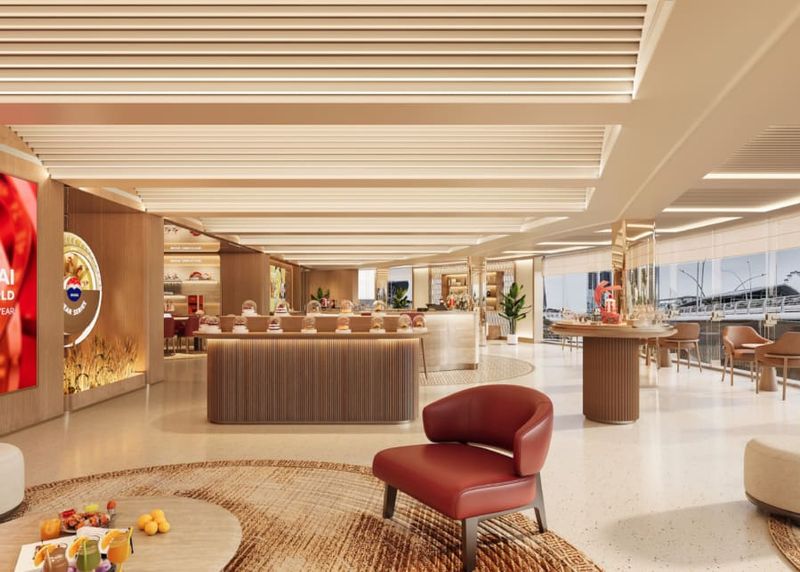
Step through the entrance on Jalan Petitenget and the ceiling pulls your gaze skyward. Columns stretch toward open air, designed to catch rain when the monsoon sweeps across Seminyak. Palm fronds rise between tables. Water moves quietly through features that map the floor like tributaries. Above, three teak pods hover on the mezzanine, their latticed walls glowing amber under low light. This is Merah Putih, a dining room that borrows scale from cathedrals and warmth from the kampung, where Indonesian cooking finds a stage equal to its complexity.
Since opening in 2013, the restaurant has held its ground on a strip better known for surf clubs and imported wine lists. The choice here tilts inward: recipes drawn from islands across the archipelago, ingredients that grow within a few hours' drive, and a kitchen led by Balinese Executive Chef Wiwik, who has spent over a decade travelling Indonesia to decode regional techniques. The result is a menu that treats jackfruit rendang and crispy duck with the same ceremony Paris reserves for duck confit, minus the Eurocentric framework.
Recipes Carried Across Water
Chef Wiwik's approach rests on a simple premise: Indonesian flavour cannot be replicated elsewhere. The bumbu paste ground in Balinese kitchens, the balance of sweet soy and chilli that defines Javanese cooking, the coastal char of Jimbaran fish grills all rely on ingredients and methods rooted in specific geographies. Her menu reads like an edible atlas. The ikan bakar arrives with ginger flower and jicama, its char recalling the beachside warungs of Jimbaran. Pangsit dumplings fold tofu and mushroom into coconut and local greens, a combination that leans vegetarian without announcing it. The bak pao steamed buns come stuffed with either jackfruit rendang or Sumatran beef, both versions carrying the deep, slow-cooked warmth of rendang's spice paste.
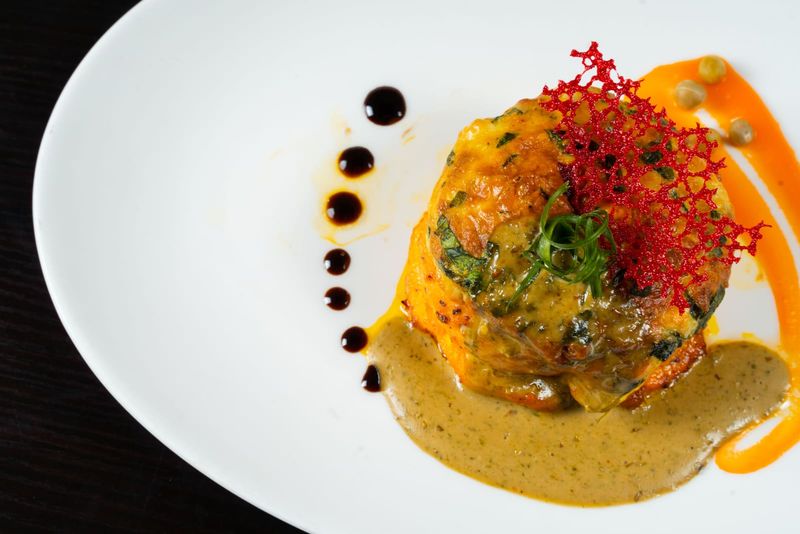
But the dish that commands repeat orders is the bebek goreng, Bali's crispy duck. The skin shatters under a fork. Beneath, the meat pulls apart in strands, dressed with spicy balado and pickled palm heart that cuts through the richness. It is the kind of dish that justifies the evening, the kind you measure other duck against for months afterward.
Prices begin at 180,000 Indonesian rupiah for large mains, with a 10 per cent government tax and 7.5 per cent service charge applied. Expect to spend between 400,000 and 550,000 rupiah per person when drinks are included.
The Tasting Menu as Itinerary
For those unwilling to choose, Merah Putih offers a tasting menu that functions as a guided tour. It opens with yellowfin tuna rujak, the fish dressed in the sweet-sour-spicy trinity that defines the salad. A Balinese squid salad follows, then a duck soup that arrives in a bowl deep enough to cradle. The mains layer bak pao, pangsit, and ayam bakar, the grilled chicken carrying smoke and spice in equal measure. Dessert pivots to mango sorbet and a kalamansi brûlée, the latter's citrus snap resetting the palate after the parade of chilli and coconut.
The tasting menu is priced at 690,000 rupiah per person, subject to the same taxes and service charges. Vegan, vegetarian, and gluten-free versions are available, each adapted without compromise. The kitchen treats dietary restrictions not as obstacles but as variables within a broader equation, one that prioritises flavour above all.
Dishes are designed for sharing, an echo of rijsttafel's communal logic but without the colonial baggage. Order widely. Pass plates. Let the table become a democracy of taste.
Snake Fruit Arak and Tabanan Chocolate
Agung Ari has been mixing drinks at Merah Putih since the restaurant opened, which makes him as much a founding member as any stone or beam. His cocktails read Indonesian but drink international, a trick of translation that takes kalamansi, snake fruit, and jackfruit from nearby farms and bends them into recognisable forms. The Merah Putih Sour riffs on the New York Sour with snake fruit arak, turmeric syrup, a house-made pineapple and coconut cordial, and a float of French Pinot Noir. The White Chocolate Martini sources its chocolate from Tabanan, a regency two hours north where cacao grows in volcanic soil.
All syrups, cordials, and bitters are made in-house, part of a broader push toward low-waste bartending. Ari uses scraps from the kitchen, citrus peels that would otherwise be discarded, fruit that has passed its visual prime but retains flavour. The result is a bar program that operates with the same respect for ingredients as the kitchen, one that sees potential in what others might compost.
The standout offering is the Flavours of Indonesia, a tasting flight of five cocktails, each representing a different region. The specifics shift with the season and the harvest, but the structure remains: five glasses, five islands, five ways of understanding how Indonesia tastes when filtered through spirits and ice.
Teak Pods and Elevated Sightlines
The three teak pods on the mezzanine are the restaurant's architectural punctuation, elevated perches that overlook the dining floor below. Each pod seats a small group, intimate enough for a couple, large enough for a private celebration. Together, they accommodate up to 30 guests, making them a favoured choice for occasions that require both spectacle and discretion.
Reservations for the pods, and for the restaurant in general, should be made well in advance. Merah Putih books out most nights, particularly on weekends. Walk-ins are rare. The bar, by contrast, operates on a first-come basis, though even there, arriving early improves your odds.
Lunch service runs from noon to 3:00 PM, dinner from 5:30 PM onward. At lunch, the restaurant offers a special nasi campur, the mixed rice plate that functions as Indonesia's culinary shorthand, available only during daylight hours. The pace is slower then, the light softer, the dress code more forgiving. Dinner tilts formal. Smart casual is the unspoken standard. Leave the beachwear at the villa.
What Endures in Seminyak
Seminyak cycles through openings and closures with the speed of a tropical storm. Beach clubs rebrand. Cafés shutter after a season. Merah Putih, now in its second decade, has outlasted most of its contemporaries not by chasing trends but by anchoring itself in something older. The recipes Chef Wiwik cooks were not invented for Instagram. They predate tourism, predate the villas that now crowd Petitenget, predate the idea that Bali should taste like anywhere but itself.
The restaurant does not pander. It does not soften spice for timid palates or explain itself in apologetic footnotes. It assumes you are curious enough to meet Indonesian cooking on its own terms, and it rewards that curiosity with food that lingers long after the bill is settled. In a neighbourhood defined by transience, Merah Putih offers something increasingly rare: a sense of place that cannot be exported, replicated, or franchised. You come for the architecture. You return for the bebek goreng. You stay because the room, the food, and the cocktails all insist that Indonesia deserves this kind of attention.