The Imperial Bloomsbury Revives an Edwardian Icon Behind Russell Square
A century-old landmark returns with interiors that honour literary Bloomsbury without pastiche, softening Brutalist bones with midcentury warmth and a rooftop view over the city.
A Neighbourhood of Thinkers and Garden Squares
Russell Square sits at the quieter end of London's intellectual geography. The streets around it once sheltered Virginia Woolf, E.M. Forster and the rest of the Bloomsbury Group; Charles Darwin and Charles Dickens kept addresses nearby. The architecture leans Gothic along Gower Street, where gargoyles crouch above doorways, and the garden squares offer the kind of enclosed green silence that makes the rest of the city feel optional. It is a district that attracts readers, archivists and anyone who prefers a good bookshop to a louder form of entertainment.
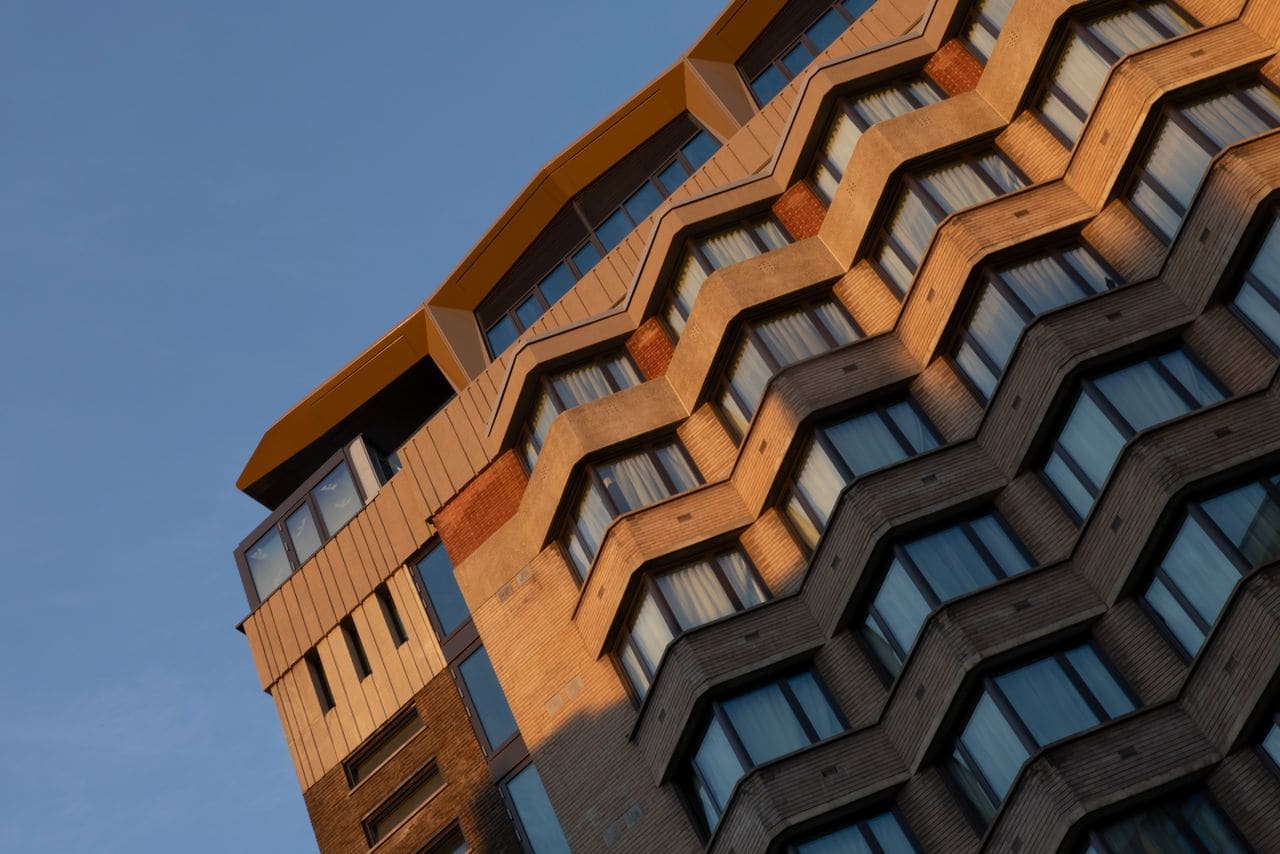
Just behind the square's main thoroughfare, The Imperial Bloomsbury has reopened after a full reimagining of its interiors. The building itself dates to 1905, designed by Charles Fitzroy Doll with a concrete façade that has weathered more than a century of London weather. Architects at Cube Design retained that exterior and restored many original features, while Trevillion Interiors and Keane Brands conceived new interiors for the 357 rooms.
Layering History Without Reproducing It
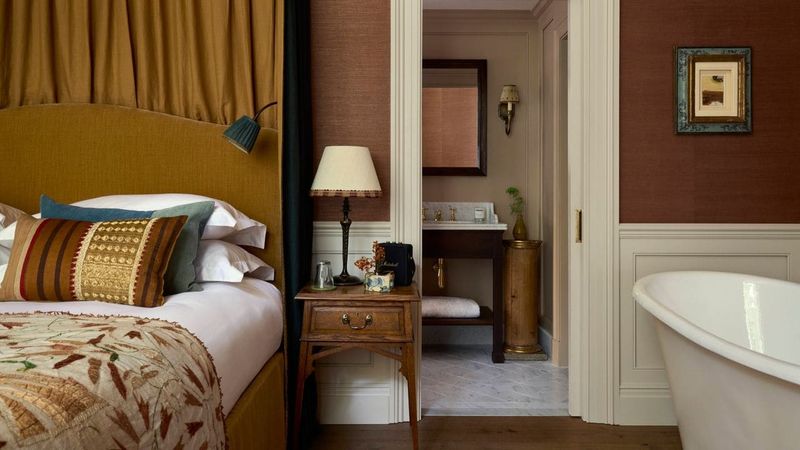
The design brief, according to Keane Brands, was to avoid period reproduction. Instead, the team treated the building as a series of overlapping eras: the original Edwardian and neo-Gothic character, followed by later modernist additions that introduced bold concrete forms. That concrete became what the designers call a "Brutalist canvas", softened with midcentury furniture, warm textures and carefully integrated lighting.
Architectural geometry appears in subtle patterns and detailing rather than as dominant motif. Curated artwork and references to Bloomsbury's literary heritage anchor the interiors to place, but the result reads as contemporary rather than nostalgic. Natural timber, upholstery and textured fabrics counterbalance the building's harder surfaces. Curved furniture and organic forms offset the façade's strong geometry, while layered, golden lighting and planting bring warmth to spaces that might otherwise feel austere.
The Room with the Hidden Bath
Every room in the hotel leans towards warmth and comfort, but The Hideaway stands apart. It features a small outdoor terrace with seating and a bathtub tucked beneath a pavilion, a playful gesture that reinterprets the standard hotel bathroom. The concrete that defines the building's identity remains visible, but richer materials make the space feel welcoming rather than cold.
Premium categories - City, Horizon, Hideaway, Nest and Beacon - grant access to The Bell Room and Terrace, a lounge reserved for guests in those tiers. The room takes its name from five bells that have occupied the adjoining terrace since the hotel first opened. It functions as a place to unwind over board games, grazing menus or quiet conversation, away from the public areas.
A Rooftop Bar That Earns Its View
On the tenth floor, Arcus offers cocktails and light plates against a panoramic view of Bloomsbury and beyond. The BT Tower glows in the distance, and the room itself was lively on a recent evening, avoiding the hollow atmosphere that sometimes afflicts hotel dining spaces. The cocktail list balances original creations with familiar classics, and the food menu skews towards snacks rather than full meals. Steak and lamb tacos both deliver on flavour without attempting to be more than what they are.
Hotel restaurants can feel transactional, a place to eat because convenience outweighs choice. Arcus sidesteps that trap by leaning into its setting. The view becomes part of the experience, and the energy in the room suggests that guests and locals alike have found a reason to return.
A Gym with Space to Move
The fitness centre is larger than the standard hotel offering, with a full array of Technogym machines, free weights and kettlebells. An outdoor terrace provides a place to cool down after a session. The space accommodates light resistance training, kettlebell circuits and bodyweight exercises comfortably, though it is not equipped for heavy lifting or personal-best attempts. For a city hotel, the generosity of space is notable.
Walking Distance to Bloomsbury's Quieter Corners
From the hotel, the British Museum sits within easy walking distance. En route, Gordon Square offers Momo's Garden Café, a small coffee stand known for its banana bread and a flat white that meets the standard the name implies. Gower Street reveals Gothic details overhead, and Store Street leads to Treadwell's, a bookshop specialising in magic and witchcraft that feels entirely in keeping with the neighbourhood's character.
Behind the hotel, Fortitude Bakehouse occupies a tucked-away spot in the mews, offering excellent pastries and bread. From there, Marchmont Street runs northward past cafés, restaurants and pubs towards the British Library and King's Cross station. For those seeking an escape from the tourist density around the museum, these quieter routes offer an alternative rhythm.
An Escape Within the City
The Imperial succeeds by balancing respect for its past with a contemporary sensibility. It does not attempt to recreate an Edwardian interior or lean too heavily on Bloomsbury's literary associations. Instead, it uses those elements as a foundation, layering in warmth, texture and thoughtful design choices that make the building feel relevant rather than preserved. In a neighbourhood defined by its intellectual history and garden-square calm, the hotel offers a place to stay that mirrors those qualities without mimicking them.