Five Corners of the World Where November Becomes a Revelation
From mirrored salt flats in the Andes to art-filled days in Brussels, the year's eleventh month rewards those who step off the calendar
When the World Slows Down
There is a particular quality to November light, the way it slants lower and longer across landscapes that have spent months accommodating the restless energy of peak season. At Global Chic Voyage, we have come to regard the eleventh month as a kind of secret handshake between seasoned travelers and the places they love: a mutual understanding that the best experiences often arrive when urgency departs.
This year, five destinations present themselves not as alternatives to the usual late-autumn itinerary but as arguments for an entirely different approach. They share little in common geographically, yet each offers what November does best: clarity, spaciousness, and the opportunity to move through a place at its own tempo rather than tourism's.
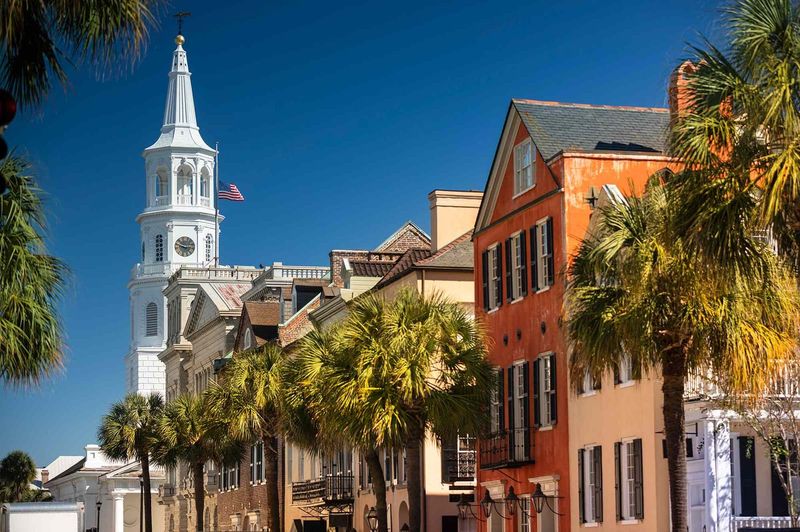
The Lowcountry at Its Most Legible
Charleston in November sheds its humidity like an old skin. The air turns breathable, the camellia bushes begin their slow unfurling, and the city's newly expanded dining landscape becomes suddenly, gloriously accessible. Without the summer crush, securing a table at Bareo, where chef Nikko Cagalanan applies Japanese technique to Filipino staples, shifts from competitive sport to pleasant possibility. At Kaia, chef Raheem Sealy layers Caribbean sensibility onto an Asian framework, creating dishes that feel both familiar and entirely new.
The recent opening of The Cooper along the waterfront has brought with it The Crossing, a dining room that looks out over Charleston Harbor while pulling flavors from both the Mediterranean and the Lowcountry itself. The hotel represents the latest in a wave of properties redefining what hospitality means in a city that has always understood grace but is now learning to pair it with contemporary vision.
Beyond the table, Charleston's November calendar leans literary. The Charleston Literary Festival, running from early to mid-month, assembles voices that span genres and generations. The event draws writers who have shaped contemporary American letters, offering readings and conversations in venues throughout the Holy City. For those traveling with family, the Harvest Festival provides a counterpoint: hayrides, bluegrass performed by local bands, and the kind of unhurried afternoon that defines Southern autumn.
The recently redesigned Colonial Lake and the expanded Caw Caw Interpretive Center, which added 35 acres of ecologically significant land in 2025, offer spaces where the city's relationship with water and wilderness becomes tangible. November foliage here does not blaze the way it does farther north; instead, it whispers in ochre and rust.
A Mirror Held to the Andes
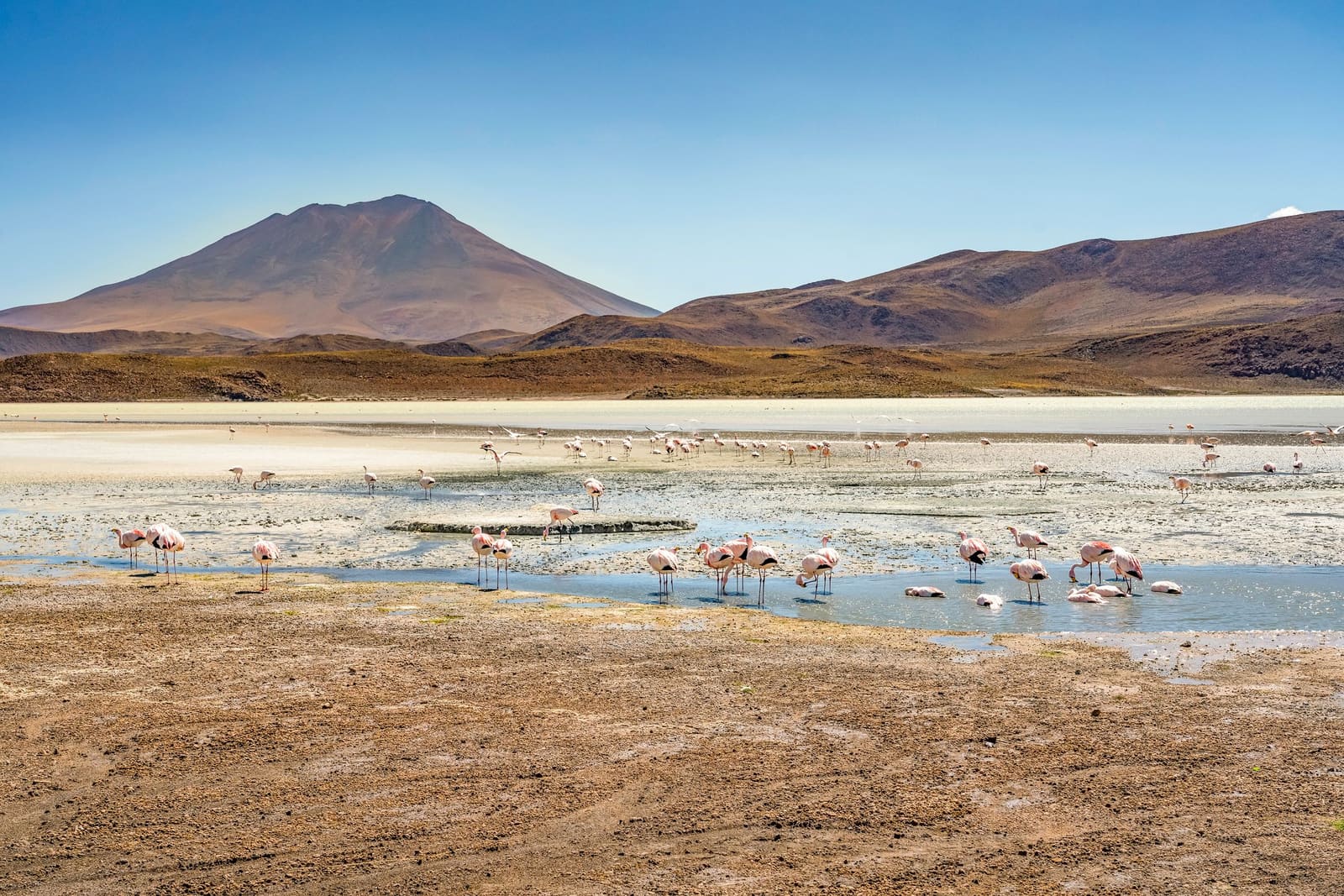
The Salar de Uyuni in southwestern Bolivia measures roughly 4,000 square miles, making it the largest salt flat on Earth. But numbers fail to convey what happens when the wet season arrives between November and April, transforming the mineral expanse into a single immense mirror. Cloud formations drift across the surface; at night, the Milky Way doubles beneath your feet. The effect is disorienting in the best possible way, collapsing the distance between earth and cosmos.
The broader Potosí region holds other wonders: the sculptural rock formations of Valle de las Rocas, the crimson waters of Laguna Colorada tinted by algae and minerals, and Laguna Verde shimmering in improbable emerald beneath the Licancabur volcano. Operators like Hidalgo Tours and Crillon Tours navigate these high-altitude landscapes in vehicles equipped for both comfort and terrain, with itineraries that move between extremes, from the salt flats to the Green Lagoon.
The opening of Casa Gastón in March introduced a new dimension to travel in the region. Named for the late Gastón Ugalde, widely regarded as the father of contemporary Bolivian art, the property functions as both museum and hotel. Ten minimalist rooms provide a base, while site-specific artworks throughout the space engage directly with the reflective landscape visible through every window. The collection does not merely decorate; it interprets, offering a lens through which to understand the surreal geography outside.
Traveling here in November means accepting the wet season as feature rather than flaw. The water that pools across the flats is precisely what creates the reflection, turning a geological curiosity into something approaching the sublime.
When Paris Moves to Brussels
For the next several years, Brussels will hold a piece of Paris within its borders. The Centre Pompidou, closed for renovation in its home city, has relocated a significant portion of its collection to Kanal - Centre Pompidou, a multidisciplinary cultural hub occupying the former Citroën garage at Place de l'Yser. The space opens in late November, bringing with it not only artworks but an entire program of performances, screenings, workshops, and a rooftop restaurant with views that stretch across the Belgian capital.
The timing shifts Brussels from a city often overshadowed by Antwerp's design credentials into a destination with genuine cultural urgency. While Antwerp continues to claim the legacy of the Antwerp Six and the avant-garde fashion they birthed, Brussels now holds something Paris cannot offer at the moment: access to one of the world's great modern art collections in a building that is itself an architectural conversation between industrial past and contemporary purpose.
The city has long hosted Art Brussels each April and the Belgian Grand Prix each July, but the arrival of the Pompidou collection creates a reason to visit outside those tentpole events. The ongoing restoration of the Dome Project at Place de la Bourse, Belgium's first department store, adds another layer to the narrative of a city reclaiming and reimagining its built heritage.
November in Brussels means fewer tourists and more locals, the kind of ratio that allows a place to reveal itself without performance. The Standard, Brussels and the newly arrived Corinthia Grand Hotel Astoria Brussels provide lodging that matches the city's current mood: confident, contemporary, and quietly ambitious.
An Archipelago That Resists Overexposure
The Bazaruto Archipelago off the coast of Mozambique remains largely unknown outside a narrow circle of travelers, which is precisely why those who do know it return. White sand dunes rise above water so clear it seems almost theoretical. Coral reefs shelter sea turtles and dugongs, the gentle marine mammals that sailors once mistook for mythical sirens.
Azura Marlin Beach on Benguerra Island offers just ten villas, each designed around the principle that luxury means privacy rather than spectacle. On the mainland, Sussurro, which earned a place on the Gold List for 2026, recently added a family suite and introduced the Mutukwa Picnic, an experience that transports guests to a private sandbank amid what locals call floating forests, mangrove ecosystems visible at low tide.
The gateway town of Vilanculos, also spelled Vilankulo, serves as both transit point and destination. Saudade, with six rooms, and Villa Coco, with three suites and a family room, provide small-scale accommodations that prioritize connection to place over amenities. Guided dhow tours through Mangalisse Bay follow traditional sailing routes, while snorkeling excursions in the seagrass meadows reveal three species of seahorse found nowhere else.
November in the Southern Hemisphere brings calm seas and clear skies, the kind of conditions that make island-hopping and water-based exploration not just possible but ideal. New flight connections between Gorongosa, Beira, and Vilanculos have made it easier to pair time in the Bazaruto region with visits to Gorongosa National Park, creating bush-to-beach itineraries that showcase Mozambique's ecological range.
Wine Country Without the Crowds
Adelaide has always served as the gateway to South Australia's wine regions, Barossa most prominently, but late 2026 marks a shift in the city's own identity. The $330 million redevelopment of Market Square doubles the size of Central Market, already one of the Southern Hemisphere's largest fresh produce markets. The expansion brings rooftop terraces, residential space, and the first Australian location of the UK-based Treehouse Hotel, expected in early 2027.
Other openings punctuate the calendar: Little National, a 238-room property arriving in September, and Crystalbrook Sam in late December, a 13-story addition from a brand known for wellness-focused lifestyle hotels and dining that draws locals as much as guests. These properties do not replace Adelaide's established hospitality scene so much as they expand its vocabulary, offering alternatives to the traditional wine-country lodge or city-center business hotel.
November in Adelaide means spring turning toward summer, temperatures warm enough for outdoor dining but not yet oppressive. The direct flight between San Francisco and Adelaide has made reaching South Australia significantly easier for North American travelers, eliminating the need for multiple connections through Asia or the Middle East. For those already in the region, routing through Hong Kong or Singapore remains the most efficient approach.
The city's proximity to Barossa means that cellar visits and farm-to-table meals remain central to any itinerary, but Adelaide itself now warrants more than a single overnight. The combination of new hotels, the expanded market, and the steady rhythm of a city that has never needed to prove itself makes November an ideal time to visit, before summer crowds arrive and before the urgency of year-end travel takes hold.
The Calendar as Compass
What these five places share is not climate or culture but timing. November asks travelers to reconsider what peak season means, to value accessibility over exclusivity, and to move through destinations when they are most themselves rather than most crowded. The light changes, the pace shifts, and suddenly the experience of being somewhere becomes less about seeing it and more about inhabiting it, however briefly.
At Global Chic Voyage, we have watched November evolve from shoulder season afterthought to a month that rewards the kind of traveler who understands that the best stories often unfold in the margins, when the world slows down just enough to let you catch up.