The Knox Arrives on Dallas's Katy Trail with 140 Rooms and a Green-Hued Vision
Auberge's newest property opens in January along one of the city's most walkable corridors, bringing European-inflected dining and a wellness programme built around thermal rituals.

A Corridor Reborn
The stretch of Knox Street that curves toward the Katy Trail has always carried a certain pedestrian charm unusual for Dallas - cafés spill onto pavements, boutiques cluster under awnings, joggers weave between dog walkers on the converted rail line. Into this pocket of urban greenery arrives a hotel that takes its name from the street itself: the Knox, Auberge Collection's 140-room addition to a neighbourhood that has long resisted the blank-faced towers typical of the wider metro.
Opening on 29 January, the property occupies a site where the trail's tree canopy meets the commercial hum of Knox Street, a positioning that Auberge has leaned into with design choices that blur the boundary between indoor refuge and the leafy corridor outside. Reservations are now open, with nightly rates beginning at one thousand US dollars.
Interiors That Answer to the Canopy
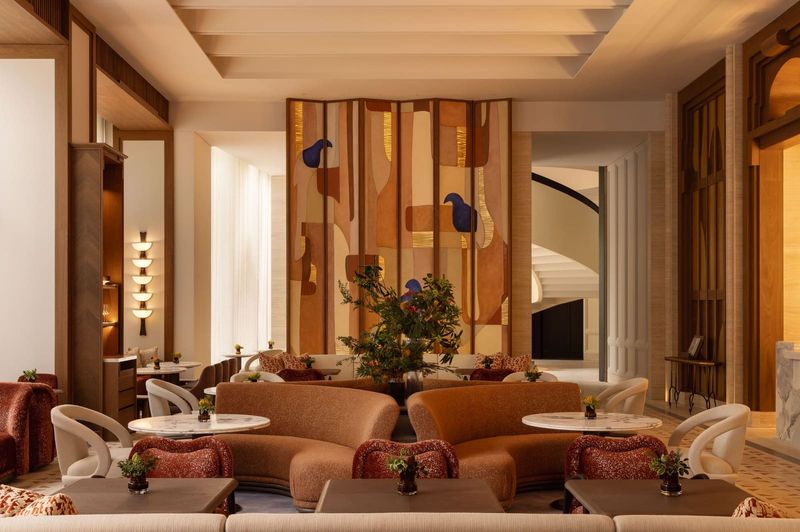
Martin Brudnizki Design Studio, the London firm behind a roster of high-profile hospitality projects, was tasked with translating the Knox Street context into spatial language. The result is a palette anchored in emerald and ochre - tones lifted, according to the design brief, from the dappled light and seasonal foliage visible through the hotel's windows.
Guest rooms feature wallpaper printed with oversized animal motifs in gold and amber, a choice that might read as maximalist elsewhere but here feels calibrated to the neighbourhood's own visual exuberance. Bathrooms continue the chromatic thread: green lacquer frames mirrors, while warm marble - veined in rust and cream - covers floors and shower surrounds. In select suites, floral wallpaper climbs from baseboard to ceiling, paired with custom upholstery in saturated hues.
The spatial hierarchy is clear. Standard accommodations emphasise colour and pattern; larger suites introduce separate living and dining zones designed to function as temporary apartments. The Manse, the most expansive offering, includes a private gym, a wellness room, a bar, and a media lounge. The Promenade, spanning two thousand one hundred square feet, mirrors that domestic ambition with its own bar setup, expansive living room, and multiple dining configurations.
For guests planning extended stays, the Knox offers three named apartment units - Abbott House, Hester House, and Hyland House - each with two or three bedrooms, full kitchens, and private outdoor space. These units retain hotel services but function as standalone residences. An additional forty-eight privately owned residences, designed by Chad Dorsey Design, occupy separate floors.
Dining as a Layered Proposition
The culinary programme at the Knox unfolds across four distinct venues, each calibrated to a different hour and mood. The signature restaurant centres on American idiom - regional produce, straightforward technique - whilst an indoor-outdoor salon takes its cues from European café culture, with an emphasis on extended, unhurried meals.
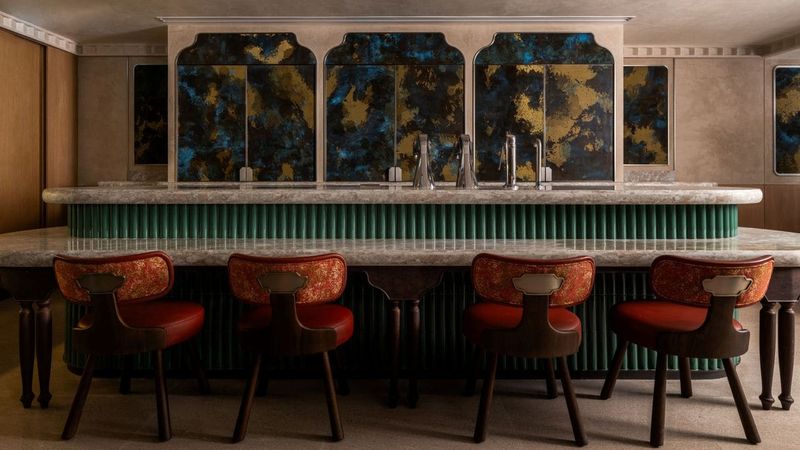
Evening brings a lounge designed to evoke the spatial intimacy of a speakeasy, low-lit and acoustically muffled. The fourth venue, poolside, overlooks the Dallas skyline and functions as both daytime café and sunset gathering point. The intention, according to the hotel's programming, is to create a series of micro-environments that together map onto the rhythms of a full day, from breakfast through late-night aperitif.
Wellness Anchored in Ritual
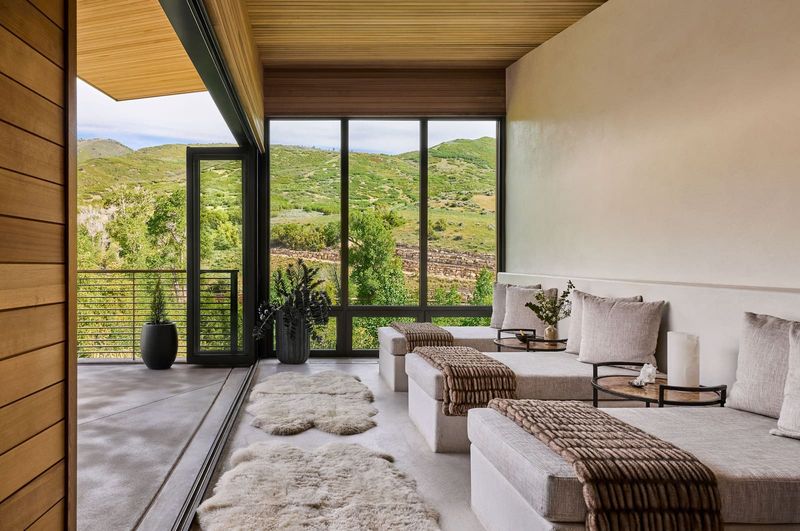
Auberge's Wellbeing programme, a format the group has deployed across its portfolio, arrives at the Knox with an emphasis on thermal practice. The spa includes facilities for contrast bathing - alternating hot and cold immersion - alongside skin therapies and treatments framed around longevity rather than immediate aesthetic correction.
The approach is holistic in the clinical sense: protocols are designed to be repeatable, building cumulative benefit over multiple sessions rather than delivering a single indulgent afternoon. It is wellness as discipline, softened by luxury finishes and attentive service but rooted in a philosophy that privileges consistency over spectacle.
Event Infrastructure and Civic Ambition
The Knox also positions itself as event infrastructure, with multiple rooms sized for weddings, corporate gatherings, and private functions. This is a revenue stream, certainly, but also a bid for civic relevance - a way for the hotel to embed itself in the social fabric of a neighbourhood that skews local rather than transient.
Rick Fidel, regional vice president and general manager, described the project in a statement as "more than a hotel," a phrase that in this context gestures toward the property's multi-use ambition. The Knox aims to serve both overnight guests and Dallas residents seeking a venue for milestone events, a dual audience that requires spatial flexibility and programming that extends beyond the typical hotel calendar.
A Neighbourhood Calculus
What distinguishes the Knox from other luxury hotel openings is less the individual amenities - thermal baths and Martin Brudnizki interiors are well-trodden territory - than the specificity of its address. Knox Street is not a blank canvas; it is a neighbourhood with established rhythms, a walkable scale, and a demographic that already includes design-literate residents and visitors.
The question, then, is whether a hotel can slot into that context without overwhelming it, whether one hundred forty rooms and four dining venues can coexist with the low-rise texture that currently defines the corridor. Auberge's bet is that design sensitivity and a commitment to neighbourhood engagement - expressed through event hosting, local partnerships, and public-facing dining - will allow the Knox to function as addition rather than disruption.
Time will reveal whether that calculus holds. For now, the property represents a wager that Dallas's luxury hospitality market has room for a model that privileges context over spectacle, that trades on proximity to the Katy Trail rather than attempting to create an insular world behind lobby doors. In a city often defined by its sprawl, that kind of urban intimacy is itself a form of luxury.