The Art of Sailing Between Seasons
Why repositioning voyages reveal a quieter, more contemplative side of ocean travel
A Different Kind of Discovery
The crocodile hatchlings appeared first as shadows, indistinguishable from the mud and leaves at the water's edge. Ten travelers stood squinting at the Costa Rican wetland, cameras raised, seeing nothing. Then movement. A dozen tiny reptiles materialized where moments before there had been only stillness, their prehistoric forms suddenly unmistakable. The group exhaled collectively, delighted by what patience and a guide's insistence had revealed.
This moment in the Curú Wildlife Refuge captured something essential about repositioning voyages, those in-between journeys when ships move from one seasonal homeport to another. Unlike itineraries designed to showcase marquee destinations, these sailings exist for logistical necessity. The ports are often secondary considerations, chosen for geography rather than tourism infrastructure. Yet that utilitarian purpose creates something unexpectedly valuable: routes that feel less curated, more discovered.
At Global Chic Voyage, we've watched the repositioning cruise evolve from industry secret to sought-after experience among a particular kind of traveler. The appeal lies not in what these voyages promise, but in what they quietly offer when no one is trying too hard to impress.
The Economics of Migration
Ships do not teleport between the Caribbean winter season and an Alaskan summer. They must physically travel those thousands of nautical miles, and cruise lines prefer not to do so with empty staterooms. The solution is pragmatic: reduce fares significantly to fill cabins on routes that serve operational needs rather than marketing departments.
The financial equation shifts in interesting ways. Cabin rates can drop to half what comparable sailings cost during peak seasons. For travelers with flexible schedules, this creates opportunities to experience ships and service levels that might otherwise stretch budgets. One couple sailing from Central America to Mexico mentioned they had booked three repositioning voyages in the past eighteen months, effectively doubling their time at sea for the same annual vacation spend.
Yet the calculation cannot stop at stateroom cost. These are one-way journeys by definition. Airfare to different embarkation and disembarkation cities adds expense that traditional round-trip cruises avoid. Longer voyages mean more days purchasing drinks, specialty dining, shore excursions, and connectivity. The financial advantage exists, but it requires careful accounting of the full picture.
Time as the Essential Ingredient
The passenger manifest on these transitional sailings skews heavily toward retirees, and the reason is structural rather than coincidental. A repositioning voyage might span two weeks or four, sometimes longer. The ship maintains no particular schedule except its own need to arrive at the next seasonal deployment. Port calls can be leisurely or nonexistent for days at a stretch.
This temporal generosity excludes anyone bound by conventional vacation allotments. We spoke with passengers who had been aboard for three weeks already, having joined in the Caribbean before transiting the Panama Canal. Others planned to remain through the ship's arrival in the Pacific Northwest several weeks hence. A few decided mid-voyage to extend their bookings, unwilling to leave when their original segment ended.
The rhythm suits a particular disposition. Days unfold without urgency. Meals arrive on schedule, but everything else bends around personal preference. Books get finished. Conversations with tablemates deepen beyond pleasantries. The ocean itself becomes destination enough.
Ports Without Precedent
Traditional cruise itineraries repeat with comforting predictability. The same Caribbean loop, the same Mediterranean highlights, refined over years until shore operations achieve near-perfect efficiency. Repositioning routes follow no such template. The ship needs to reach a specific latitude by a certain date; the ports in between are educated guesses about where infrastructure and interest might align.
This creates an unusual dynamic. Passengers visit places the ship may never call again. Costa Rican nature reserves, small Mexican coastal towns, Central American harbors without purpose-built cruise terminals. The crew arrives as unfamiliar with these stops as the guests, everyone navigating together.
That unfamiliarity carries both liberation and risk. Without the polish of repeated visits, ports can feel more authentic, less performed for tourist consumption. But they can also lack the amenities travelers accustomed to luxury expect. A tender operation might run slowly. A promised excursion might underwhelm. Weather or political considerations can erase a port call entirely, and alternative options may not exist.
For passengers drawn to these voyages, the uncertainty is feature rather than flaw. Each stop feels less like a destination and more like a discovery, closer to expedition travel than conventional cruising.
The Sea as Subject
Three consecutive days without land in sight will reveal who genuinely loves ships and who tolerates them as transportation between ports. Repositioning voyages offer abundant time to contemplate the former question. The vessel itself becomes the experience, its public spaces and daily rhythms the main event.
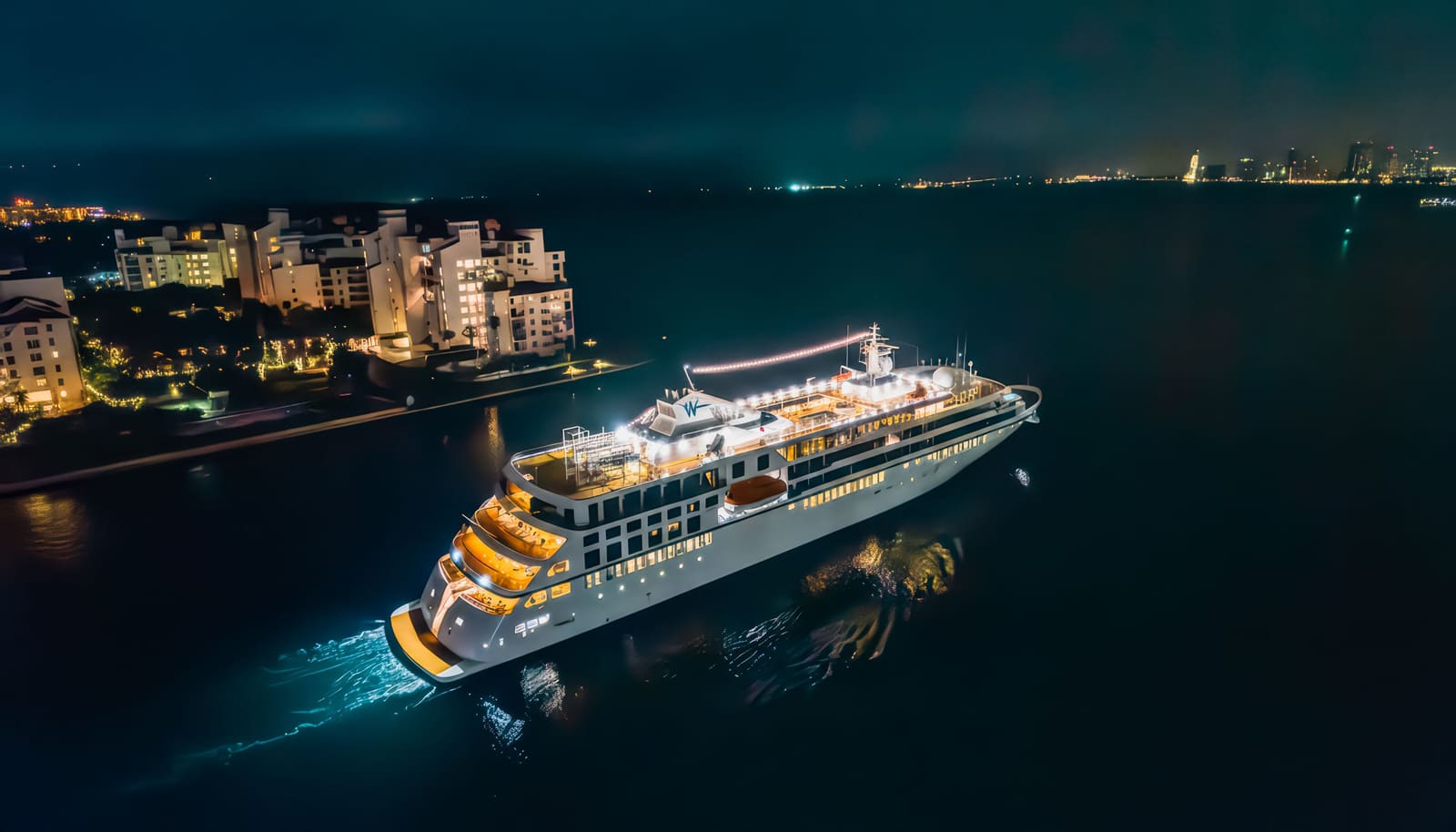
Modern small-ship design anticipates this. Forward-facing observation lounges with floor-to-ceiling glass and deep sofas invite hours of ocean-watching. Multiple dining venues allow variety without repetition. Enrichment programming fills afternoons with lectures from naturalists, astronomers, historians. Open-bridge policies let curious passengers observe navigation and chat with officers about maritime operations.
The smaller passenger count on these sailings changes the social equation. With time and proximity, the same faces appear at trivia competitions, cooking demonstrations, sunset cocktail hours. Friendships form more easily than on larger ships where crowds create anonymity. Solo travelers find conversation partners. Couples discover dining companions.
For those who approach ocean travel as retreat rather than theme park, the abundance of sea days becomes the primary attraction. Mornings with espresso and nautical charts. Afternoons in shaded deck chairs, reading interrupted only by the occasional whale sighting. Evenings that move slowly from dinner to live music to stargazing from an aft deck.
The Comfort of the Familiar
A repositioning cruise asks passengers to embrace considerable uncertainty about where they will go and what they will find. That leap of faith becomes easier when the ship itself is known territory. Brand loyalty matters more on these voyages than on conventional itineraries.
The majority of passengers on many repositioning sailings are repeat customers of the cruise line. They understand the service standards, know the dining venues, have realistic expectations about amenities and atmosphere. This existing relationship creates confidence that even if ports disappoint or weather interferes, the onboard experience will satisfy.
For first-time guests, the learning curve compounds. Not only are they navigating an unusual itinerary with unfamiliar ports, they are simultaneously learning a new ship's layout, staff, and culture. The combination can feel disorienting, leaving less mental space to appreciate the repositioning voyage's particular pleasures.
The wisdom, then, is to save these journeys for cruise lines you already trust. Let the ship be your anchor point while the itinerary floats free. When a naturalist insists that the brown lump in a distant tree is actually a howler monkey, intoxicated on fermented fruit and draped across a branch in torpor, you will have developed enough faith to believe him. And to wait long enough to see it move.
The Geography of Transition
We have noticed that repositioning voyages attract a specific traveler archetype: curious rather than checklist-driven, comfortable with improvisation, more interested in the quality of time than the quantity of sights. These are people who understand that sometimes the most memorable journeys are the ones designed for getting somewhere else.
The ships will continue their seasonal migrations regardless of whether staterooms fill. But the travelers who join these transitional sailings transform logistics into experience, finding value in the margins between planned seasons. They return with stories of ports no brochure promised, wildlife sightings that required patience to perceive, and days at sea that felt less like waiting and more like arriving.
In an age when most travel itineraries are optimized for efficiency and photographed to exhaustion before you board, there remains something quietly radical about voyages that exist simply to move a ship from one ocean to another. The repositioning cruise is not for everyone. But for those it suits, it offers a reminder that sometimes the best destinations are the ones you encounter on the way to somewhere else.