The Architecture of Gathering: How One Founder Built a Fifteen-Year Experiment in Cultural Hospitality
Arnaud Frisch has spent a decade and a half proving that nightlife can serve as connective tissue between art forms, not just a backdrop for them.
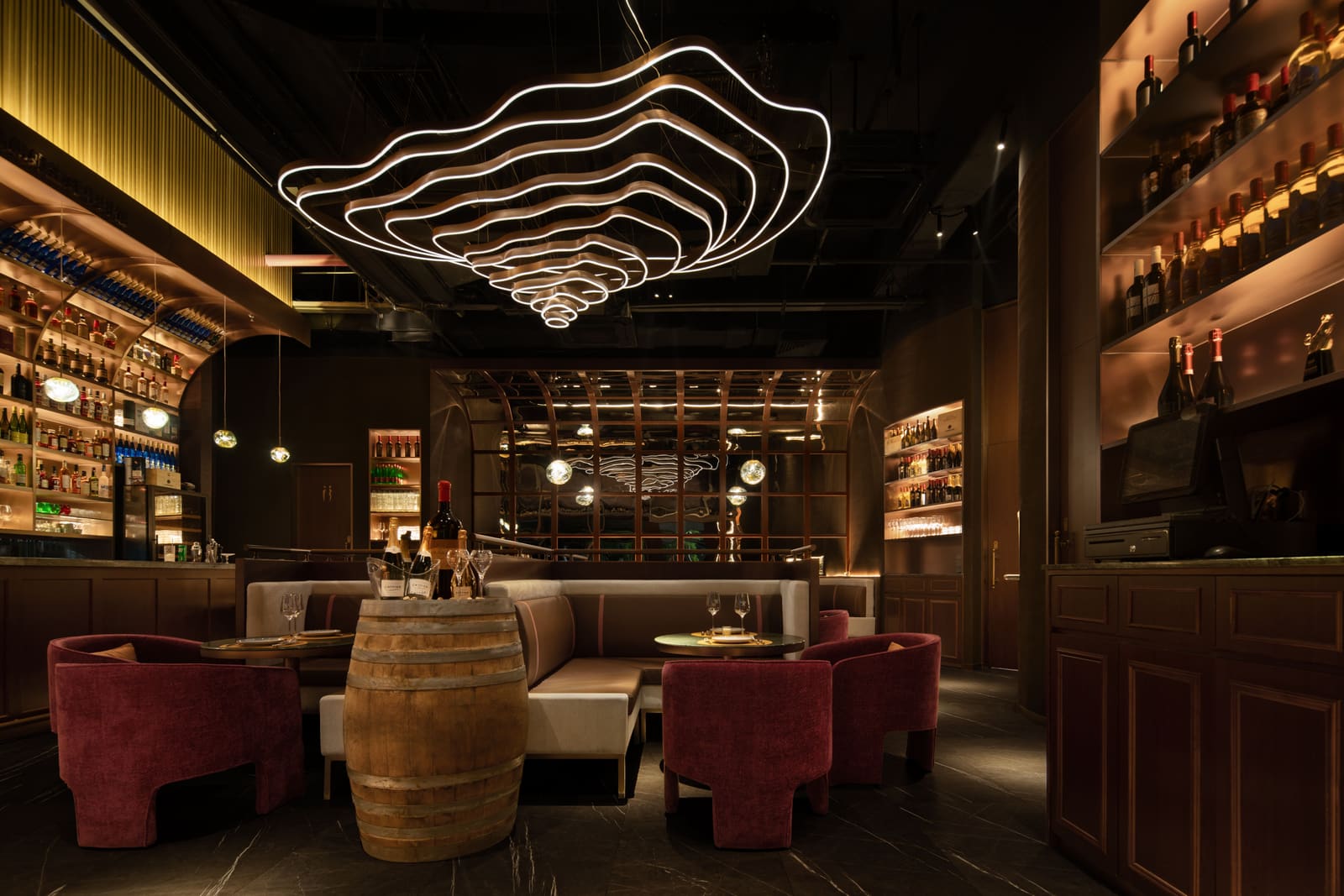
A Room That Started as Fiction
The film showed a theatre draped in red velvet, a stage where a woman sang in Spanish, and a name that lodged itself in memory: Silencio. When Arnaud Frisch opened a members' club in Paris bearing that name in 2011, he was borrowing more than a title from Mulholland Drive. He was borrowing a proposition: that a night out could feel less like consumption and more like stepping into a world with its own internal logic. The interiors, designed by David Lynch, occupied the former printing halls of L'Aurore, a newspaper that once filled those rooms with ink and urgency. What replaced it was quieter, stranger, and harder to categorise.
Fifteen years on, Frisch describes the early instinct not as homage but as hypothesis. Could a venue function as a meeting point for disciplines that rarely shared the same roof? Cinema, literature, fashion, and music each carried their own audiences, their own vocabularies. Silencio proposed that those vocabularies belonged to a single conversation.
Learning by Opening Doors
Frisch's education in venue-making began in the electronic music scene of 1990s Paris, where attending parties gradually turned into an interest in creating them. Social Club, which he launched with partners, addressed the city's hunger for electronic music and found an audience that returned week after week. Wanderlust, a rooftop club, revealed something else: how a venue could shift the rhythms of a neighbourhood, drawing people to an area they might not have visited otherwise, depending on the season and the programme.
Each project taught him that replication was the enemy of relevance. According to Frisch, every venue must respond to its surroundings, its moment, and the community it hopes to cultivate. His other ventures - Salò, FVTVR - have followed that principle, each one shaped by a different set of constraints and possibilities.
The Programme as Editorial
At Silencio, the calendar has become a form of curation. Lana Del Rey performed her first Paris concert there. Virgil Abloh played his first DJ set within those walls. Prince, Björk, and Kendrick Lamar have all taken the stage. Filmmaker Larry Clark, designer Michèle Lamy, director Gaspar Noé, and novelist Bret Easton Ellis have all passed through, contributing to what Frisch calls "the same editorial universe" - a shared sensibility that privileges provocation, craft, and a certain refusal of easy categorisation.
The membership model funds that breadth. Private events punctuate the public programme, and screenings or talks carry equal weight with musical performances. For Frisch, the value lies not in exclusivity for its own sake but in repeated encounters. A well-connected opening generates buzz; sustained engagement requires something else. He wants people to return often enough that introductions give way to familiarity, and familiarity to collaboration.
Famous names help, but they are not the objective. Frisch's view is that a venue can create conditions - invite the right people, offer them freedom, treat their work seriously - but it cannot dictate what a place comes to mean. That meaning accumulates through the projects people remember, the conversations that continue elsewhere, and whether artists choose to return.
Different Cities, Different Geometries
Paris remains Silencio's home, but the concept has travelled. In Ibiza, Moredesign furnished a location in Cala Molí with timber, raffia, and sandy floors, accommodating art exhibitions, live music, and long lunches by the Mediterranean. Artist Miranda Makaroff contributed to the opening in 2021, and the addition of Japanese restaurant Urusai in 2024 brought architect Kulapat Yantrasast into the fold.
In New York, designer Harry Nuriev configured the space around a rectangular red dance floor, framed by curtains, LED strips, and reflective padding. The geometry was simpler, the energy more direct. Frisch insists that each location begins with an examination of its architecture, its neighbourhood, and the cultural landscape it inhabits. Replication, he says, is impossible.
Silencio des Prés, which opened in 2021 in the former Beau Regard in Paris, combined a restaurant, terrace, and cinema, designed by Studio KO. It has since closed. Joséphine, a collaboration with Virgil Abloh at the Théâtre du Châtelet, ran from 2019 until March 2020. Both were short-lived, but Frisch does not speak of them as failures. They were responses to specific moments, and those moments passed.
Berlin and the Logic of the Pop-Up
Later this month, Silencio will occupy the former Watergate nightclub in Kreuzberg, overlooking the Spree. The pop-up will run until May 2027, but it will not operate as a single programme. Instead, a different collective will take over each weekend, shaping the music, the crowd, and the atmosphere. The model allows successive organisers to bring their own following to a space already embedded in Berlin's nightlife geography.
For the opening, artist and architect Marc Leschelier is collaborating with Studio Karhard, with lighting by Studio Raito and visual identity by Bureau Borsche. Leschelier's practice draws on construction and heavy industry, lending the temporary occupation a vocabulary of weight and solidity. Frisch admires the precision and economy of Leschelier's approach: a few elements deployed with care can generate presence and atmosphere without excess.
Silencio has grown accustomed to temporary arrangements. It has appeared at the Venice Biennale, the Cannes Film Festival, Art Basel Miami Beach, and, in February, at the West Hollywood Edition during Frieze Los Angeles. These pop-ups function less as marketing exercises than as experiments in portability. Can the editorial logic of Silencio translate to a three-night residency? Can it adapt to a city it does not know well?
What Fifteen Years Have Taught
Frisch is considering a hotel, though he offers no timeline. His interest in hospitality has always extended beyond music: screenings, dinners, and conversations have been part of the programme from the beginning. A place to stay would simply extend that thinking, allowing guests to move between activities without leaving the same address.
Younger audiences, he has noticed, no longer feel the need to declare allegiance to a single scene. They move between music, fashion, art, and food, following their interests rather than their identity. That fluidity has shaped his programming. A screening or a panel discussion can draw the same crowd that arrives later for a DJ set, and the overlap is the point.
A book collecting Silencio's first fifteen years is due in September 2027. Frisch has no shortage of material: photographs, programmes, anecdotes. But he is wary of nostalgia. A club, he argues, cannot be preserved like a museum. It must respond to new generations, new artists, and the changes unfolding in the city around it. The past provides a foundation, but it cannot dictate the future.
The Limits of Intention
Frisch returns often to the idea that a venue's cultural significance cannot be manufactured. A founder can choose collaborators, design interiors, book performers, and set a tone. But whether a place becomes meaningful - whether it earns a place in the memory of a city - depends on forces beyond intention. It depends on the quality of the work presented, the encounters that occur, and whether the people who pass through feel that something happened there that could not have happened elsewhere.
Fifteen years in, Silencio remains an experiment. The hypothesis has held: creative disciplines can share the same address, and the friction between them can generate something more interesting than any single discipline could produce alone. But the experiment is ongoing, and its success is measured not in anniversaries but in whether people continue to show up, and what they choose to make when they do.